Nicola Griffith - Hild
Здесь есть возможность читать онлайн «Nicola Griffith - Hild» весь текст электронной книги совершенно бесплатно (целиком полную версию без сокращений). В некоторых случаях можно слушать аудио, скачать через торрент в формате fb2 и присутствует краткое содержание. Город: New York, Год выпуска: 2013, ISBN: 2013, Издательство: Farrar, Straus and Giroux, Жанр: Историческая проза, на английском языке. Описание произведения, (предисловие) а так же отзывы посетителей доступны на портале библиотеки ЛибКат.
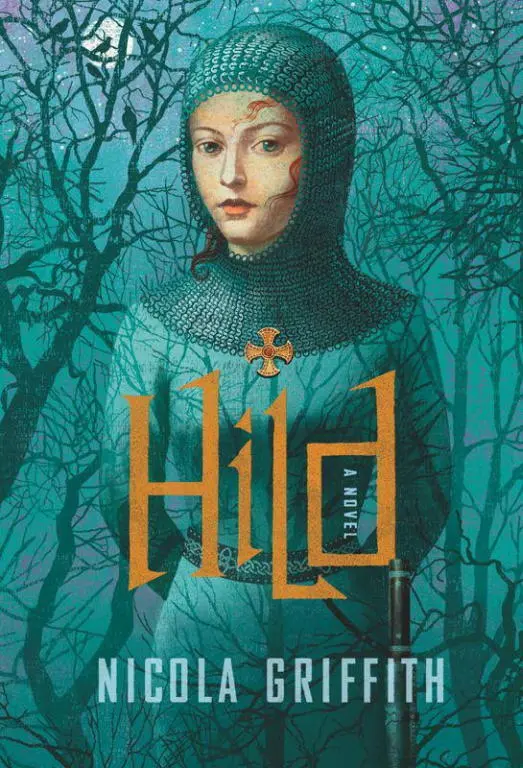
- Название:Hild
- Автор:
- Издательство:Farrar, Straus and Giroux
- Жанр:
- Год:2013
- Город:New York
- ISBN:978-0-374-28087-1
- Рейтинг книги:5 / 5. Голосов: 1
-
Избранное:Добавить в избранное
- Отзывы:
-
Ваша оценка:
Hild: краткое содержание, описание и аннотация
Предлагаем к чтению аннотацию, описание, краткое содержание или предисловие (зависит от того, что написал сам автор книги «Hild»). Если вы не нашли необходимую информацию о книге — напишите в комментариях, мы постараемся отыскать её.
But now she has only the powerful curiosity of a bright child, a will of adamant, and a way of seeing the world—of studying nature, of matching cause with effect, of observing her surroundings closely and predicting what will happen next—that can seem uncanny, even supernatural, to those around her.
Her uncle, Edwin of Northumbria, plots to become overking of the Angles, ruthlessly using every tool at his disposal: blood, bribery, belief. Hild establishes a place for herself at his side as the king’s seer. And she is indispensable—unless she should ever lead the king astray. The stakes are life and death: for Hild, for her family, for her loved ones, and for the increasing numbers who seek the protection of the strange girl who can read the world and see the future.
Hild is a young woman at the heart of the violence, subtlety, and mysticism of the early Middle Ages—all of it brilliantly and accurately evoked by Nicola Griffith’s luminous prose. Working from what little historical record is extant, Griffith has brought a beautiful, brutal world—and one of its most fascinating, pivotal figures, the girl who would become St. Hilda of Whitby—to vivid, absorbing life.
Hild — читать онлайн бесплатно полную книгу (весь текст) целиком
Ниже представлен текст книги, разбитый по страницам. Система сохранения места последней прочитанной страницы, позволяет с удобством читать онлайн бесплатно книгу «Hild», без необходимости каждый раз заново искать на чём Вы остановились. Поставьте закладку, и сможете в любой момент перейти на страницу, на которой закончили чтение.
Интервал:
Закладка:
Cian considered that. “So no matter what presents Edwin sends or what pretty words Eadfrith speaks, Paulinus will spoil it all by flinging insults about like a dog shaking off the rain?”
Hild nodded. “Cats and dogs. They won’t be able to help it.”
He pulled a plate of bark from the alder and drew his knife. “I’m still not sure I want to go to Gwynedd. Eadfrith… worries me.”
She remembered the Eadfrith of long ago, nuzzling a girl in the heather, laughing, telling her Hild was a hægtes in a cyrtel. She had never liked him.
He turned the bark this way and that in the light. “Eadfrith’s like the king.”
“The king has won all his battles.”
“But he has a dint in his arse from sitting so much on the fence.”
“He does jump, in the end.” But she wondered about her mother’s thoughtful look.
“But will Eadfrith?”
“Um?” She thought about it. “It depends how many men the king sends.”
He tossed the bark into the river. It floated away like a tiny raft. He sheathed his knife. “Lintlaf thinks the Gwynedd war band is fourscore.”
Triple the enemy number was usually held to be the right number for overwhelming force: a guarantee of Cadwallon bending the knee. But twelvescore was a lot of men to send just for a talk, especially when the West Saxons and Mercians were allied, Elmet unsecured, and the harvest due.
She fished her carnelians from her purse and wrapped them around her wrist. “Still, you should go. Meet your people.” She let the beads flash in the sun and grinned. “Besides, you might get presents.”
Five days later Edwin sent Eadfrith west with Paulinus and four priests, sixscore gesiths, and Cian. Osfrith went back to making Clotrude squeal every night—and during the day, too, Gwladus said, and in this heat!—Edwin to brooding like a moulting hawk in his hall, and Æthelburh and James the Deacon to conferring about music.
“I don’t know what she sees in it,” Begu said to Hild as they counted the skeins of yarn from Elmet that Breguswith had asked them to sort. “Eighteen, nineteen, twenty. That makes threescore of the red. It’s nothing you can hum.” She pulled a soft sack closer and peered dubiously at the green skeins inside. “And this is nothing we can use.” She lifted a badly dyed hank of wool to the light. “More yellow than green.”
Hild was thinking about the king. Dint in his arse indeed. Sixscore against fourscore. A bold war leader certain of his men might force a battle at those odds. But if Eadfrith did not no one would call him craven out loud. Not in enemy territory. Cian would be angry. But at least he’d be safe.
“They should be whipped.”
“Um?”
“The Elmetsætne. They should be whipped.”
At least it was Anglisc people she wanted to whip this time. “Give it to me.” Hild pulled a thread from the skein and rolled it between forefinger and thumb. Poor stuff: short-fibred, coarse, and uneven. Not even worth redyeing. She would tell her mother. Her mother would tell the king that he was being fed worthless goods as tribute from the leaderless Anglisc of Elmet. Edwin would brood further and build elaborate stories in his head about why he had not yet brought Elmet firmly into the Northumbrian fold. “Put everything back in the sacks,” she said. “Gwladus will carry it— Where is Gwladus?”
“Spitting in Lintlaf’s mead, I expect.”
Lintlaf had returned from the West Saxon campaign with a fistful of gold and the news that he’d turned down an offer of Dyfneint land, Because why would I want to live so far from all the action, with no one to talk to but wealh? And when he pulled Gwladus onto his lap she had not resisted—she was a slave, what choice did she have?—but later Begu had seen her spit in the cup she filled for Lintlaf and hand it to him, smiling.
Hild went to find her mother. She told her of the wool.
Breguswith listened, nodding.
“You’re not surprised,” Hild said.
“They have no lord. No one to protect them or watch for them in bad times. So they protect themselves and hoard their best against the day, yet know they should send the king something so he’ll leave them alone. Meanwhile, he tells himself they’ll come to him of their own accord.” She smiled. “So let’s not worry the king with this just yet. Let’s wait for news from Gwynedd. Why take an unnecessary risk? No. Always approach kings with answers, not questions.”
In bed that night, Hild listened with half an ear while Begu wondered aloud if Wilnoð, the queen’s gemæcce, might be pregnant. “It would explain the handfasting to Bassus in such a hurry.”
Hild, still thinking about her mother, said, “Listen to everything the queen says.”
“You already told me that.”
“I mean it.”
“You didn’t mean it before?”
Hild closed her eyes. How did Begu always make simple things seem so slippery?
“I need information.”
“Why?”
“My mother is… She’s planning something. Making up a pattern to weave all the threads into, to tell a story. I want to know if it’s based on anything real. Listen carefully for anything about the north. Or the king’s sons. Please?”
Begu made an indistinct noise: She was falling asleep. She fell into sleep like a stone into a well. She always had, even in her little linden-wood bed in Mulstanton. There was no stopping her once she started to drop.
Hild talked anyway. Of Osric—he would be back from Arbeia at the mouth of the Tine once the harvest was in and the season’s last trade goods shipped—and how she wished her mother hadn’t taken his part. She didn’t understand why her mother was doing it. Their bodies didn’t lean towards each other the way Onnen’s and Mulstan’s did, or Lintlaf’s and Gwladus’s had. And Edwin didn’t trust him. It was just a matter of time. Then she wondered about Fursey: Was he in East Anglia with Hereswith yet? Would he like it there? She missed him—she missed the gleam of his wit, she missed his information. Where would she get information now? And Onnen: Had she had her baby? Was it a boy or a girl? Would it look like Onnen or Mulstan, or maybe Cian…
The moon rose. Begu snored gently.
In the weaving huts at Goodmanham the women worked in two sets of two. For days, the weather was perfect: steady sun and a light breeze from the northwest smelling of wildflowers and ripening corn. Hild, decent in veil band and girdle, strong hands disguised with rings, sometimes worked with her mother setting up loom patterns, but often with Begu and the queen and Wilnoð, relaxing in the back-and-forth of conversation about nothing in particular as they lifted the warps, shot the shuttle, and beat the weft. There were advantages to being ignored by the king.
Hild studied Wilnoð. She looked as plump as a winter wren. Begu was right.
The infant Eanflæd lay on her stomach on a striped cloth by Æthelburh’s feet, wriggling about, sometimes lifting herself onto her hands and being surprised by the late-afternoon sunlight slanting through the open roof door, sometimes stretching her hands in the direction of the hanging loom weights and cooing. Whenever Æthelburh or Wilnoð spoke, Eanflæd looked at them and beamed gummily. Her hair and eyelashes were fine and sooty, darker even than Æthelburh’s. Very like those of Cygnet, Hild’s mare.
Hild stood and stretched. Her fingertips brushed the thatch.
The queen said to Wilnoð, “Look at that. Like a young oak. I doubt even Bassus could reach so high.”
“Oh, he could. If he jumped.” They laughed at the very idea of red-cloaked Bassus so risking his dignity.
“Cian could,” Begu said. “I think.”
Читать дальшеИнтервал:
Закладка:
Похожие книги на «Hild»
Представляем Вашему вниманию похожие книги на «Hild» списком для выбора. Мы отобрали схожую по названию и смыслу литературу в надежде предоставить читателям больше вариантов отыскать новые, интересные, ещё непрочитанные произведения.



Обсуждение, отзывы о книге «Hild» и просто собственные мнения читателей. Оставьте ваши комментарии, напишите, что Вы думаете о произведении, его смысле или главных героях. Укажите что конкретно понравилось, а что нет, и почему Вы так считаете.