Nicola Griffith - Hild
Здесь есть возможность читать онлайн «Nicola Griffith - Hild» весь текст электронной книги совершенно бесплатно (целиком полную версию без сокращений). В некоторых случаях можно слушать аудио, скачать через торрент в формате fb2 и присутствует краткое содержание. Город: New York, Год выпуска: 2013, ISBN: 2013, Издательство: Farrar, Straus and Giroux, Жанр: Историческая проза, на английском языке. Описание произведения, (предисловие) а так же отзывы посетителей доступны на портале библиотеки ЛибКат.
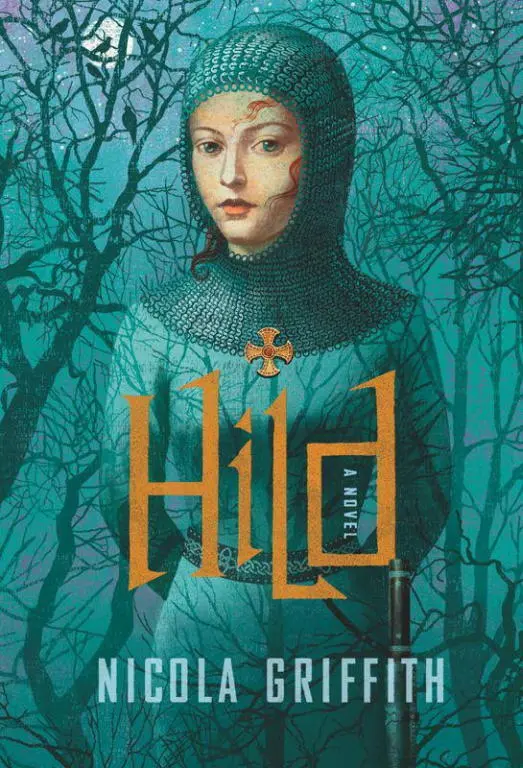
- Название:Hild
- Автор:
- Издательство:Farrar, Straus and Giroux
- Жанр:
- Год:2013
- Город:New York
- ISBN:978-0-374-28087-1
- Рейтинг книги:5 / 5. Голосов: 1
-
Избранное:Добавить в избранное
- Отзывы:
-
Ваша оценка:
Hild: краткое содержание, описание и аннотация
Предлагаем к чтению аннотацию, описание, краткое содержание или предисловие (зависит от того, что написал сам автор книги «Hild»). Если вы не нашли необходимую информацию о книге — напишите в комментариях, мы постараемся отыскать её.
But now she has only the powerful curiosity of a bright child, a will of adamant, and a way of seeing the world—of studying nature, of matching cause with effect, of observing her surroundings closely and predicting what will happen next—that can seem uncanny, even supernatural, to those around her.
Her uncle, Edwin of Northumbria, plots to become overking of the Angles, ruthlessly using every tool at his disposal: blood, bribery, belief. Hild establishes a place for herself at his side as the king’s seer. And she is indispensable—unless she should ever lead the king astray. The stakes are life and death: for Hild, for her family, for her loved ones, and for the increasing numbers who seek the protection of the strange girl who can read the world and see the future.
Hild is a young woman at the heart of the violence, subtlety, and mysticism of the early Middle Ages—all of it brilliantly and accurately evoked by Nicola Griffith’s luminous prose. Working from what little historical record is extant, Griffith has brought a beautiful, brutal world—and one of its most fascinating, pivotal figures, the girl who would become St. Hilda of Whitby—to vivid, absorbing life.
Hild — читать онлайн бесплатно полную книгу (весь текст) целиком
Ниже представлен текст книги, разбитый по страницам. Система сохранения места последней прочитанной страницы, позволяет с удобством читать онлайн бесплатно книгу «Hild», без необходимости каждый раз заново искать на чём Вы остановились. Поставьте закладку, и сможете в любой момент перейти на страницу, на которой закончили чтение.
Интервал:
Закладка:
The first time they passed such a farm, Paulinus motioned to his priests and turned his horse from the path, obviously preparing to go make them kneel to their God. But Edwin shook his head. The second time, they’d heard the bleating of sheep but seen no sign of the animals. “Lord King, they’re hiding their riches,” the Crow said, but again Edwin gestured for him to stay with the wagons.
“They’re Anglisc, and proud. We’ll bring them to heel, but not yet.”
At their next stop—another wagon mired in the mud—Edwin sent for Cian. Hild came with him.
“That’s a fine cloak, boy.”
“A gift from Gwynedd, my king.”
“A wealh cloak, bright and bold.”
“Yes, my king,” Cian said.
“It wouldn’t hurt if you rode a little ahead of the wagons. Make sure you and your bright and bold wealh cloak are seen. Keep the maid at your side.”
Hild and Cian broke through the trees at the crest of the rise and looked down at Caer Loid Coit.
She remembered—as much from dream and song as from life—a grassy slope with a well-tended wide way leading to a massive blackthorn hedge and timber gate, around which some king of the long ago had thrown up a flinty earthwork and ditch, which in turn had gradually softened and greened over the generations. Then, the gates had stood open during the day; blue peat smoke seeped from the eaves of the mixed-timber and stone hall, and people went about their lives: the goosegirl with her hazel switch, the milkmaid—such red hands; she hadn’t remembered that for years—the old man with the leather apron who sharpened sickles in summer, butcher knives in autumn. She smelt the ghosts of toasting malt, sour mash, and, from the orchards to the north and west, apples. Past the apples and plums had stood the tiny stone church whose scruffy priest and his wife made the worst bannock cakes in all Elmet but who were always ready to smooth disputes between folk not mighty enough to be judged by the king. To the south and east of the enclosure, the hazel wood, ash coppice, and the elm wood full of jackdaws. Behind everything, the Aire, wide and slow. On the far bank, clothing the rise in gold and bronze—up and up, as far as one could see—the great forest of mixed oak and elm that gave the country its name.
The river was still there, and beyond it the oak and elm—the canopy thinner than it should be, with this early autumn—but there was no smoke, no people, no sound but the drip of rain and the pour of the river.
Cian’s mount stamped and sidestepped. Cygnet settled for turning her head against Hild’s slack rein and rolling her eye, trying to see what was upsetting her rider.
Ceredig’s royal enclosure lay dark and broken and forlorn: the gate torn down, the roofs fallen in, the coppice overstood. Scrub broke the once hard-packed dirt of corral and path, and bare saplings poked through the collapsing wattle of the goose pen. A buzzard wheeled at the crest of the far ridge, its belly flashing pale against the dark cloud. It called twice, kee-wik kee-wik , cut across the river, soared over the tangle of branches that had once been carefully tended rows of apples and plums, and vanished.
Hooves thumped up the rise behind them: Edwin, Paulinus, the tufa bearer, Coelfrith, Osric.
“So,” Edwin said, and the Anglisc word was lumpy and alien to Hild. “We’ll tear it down and build a better one.”
They tore it down: every stone, every gate, every leaning timber on the near side of the river.
Edwin’s men and the Crow’s priests strode into the trees, to the wealh houses with their just-returned pigs and unsuspecting owners, rounded up every able-bodied man, woman, and child, and drove them, clutching what they had in the way of billhooks and mattocks and mallets, to the ruined enclosure. Over the next fortnight, as the sun broke free of the clouds and the early autumn retrod its steps to a threadbare copy of late summer, Osric, with an eye to his own likes, supervised the cutting of every tree but one within five hundred paces of the ditch—every tall elm, every wide oak, sending up clouds of cawing rooks and jackdaws—even the orchard, though with patient snedding many of the trees could have been brought back. Paulinus insisted that the tiny church be pulled apart, stone by stone, though the wealh had to be encouraged with ox goads for that. The font and altar stone, finely carved, he put on a cart.
It was seeing the thorn hedge torn up and burnt that made Cian rub his lip with his knuckle and turn away. Hild swapped her staff to her left hand and reached past his cloak with her right and tugged his belt, as she had long ago, and they walked to the river.
“Those roots were planted in the days of Coel Hen,” he said in British.
“They grew strong in the days of Eliffer of the Great Retinue,” she said, in the rhythm of the dirge.
“And were mighty when the princes Gwyrgi and Peredur were born.” Amen , a priest would have said. Woe! , a bard.
Cian said, “My people.”
By the river, gesiths were throwing stones at the roots of the lone willow where one had spied a fish shadow. Chub or perch, she knew. She felt, suddenly, a memory of hot sun on her bare back as she and Cian squatted by the ditch, fishing for tadpoles under Onnen’s keen eye, though perhaps that, too, was part of some song she had made her own.
They turned and walked south along the bank. After a while they were among the elms. She remembered moss on her cheek, a stream of jackdaws crying Home now! Home! , the faint honk of geese. Something inside her threatened to break and spill.
“My people,” Cian said again. “Food for wolves, food for the ravens.”
She shook her head, trying to catch and pin the memory she knew was her own.
“They’re not dead?”
She shook her head again, and her memory eeled into the dappled shadows thrown by dreams and song.
“Then where are they?”
He was thinking of the men of the Old North, princes with their fish-scale mail and bright swords and mead-soaked voices. The glorious, arrogant dead. Not the flea-ridden, filth-caked Loides being whipped by Osric. She wanted to explain, but she couldn’t let go of the memory swimming now into the deep—and, in following it, was three again. She lifted the edge of his new cloak—the one that could have been the twin of the one worn by Cadfan’s messenger, Marro, had it not been red and black—and shook it.
He didn’t understand at first, but she pointed at the Loides and kept shaking it. Then he did.
“Those are not my people!” he said in Anglisc, and the memory dived away, deeper than she could follow.
She breathed carefully, as though unused to air. “Then whose are they?”
The Loides sat in small groups around their tiny fires, hunched in what rough cloth they had been able to snatch up when the Crow’s men herded them to the river.
Hild squatted by a woman who reminded her of someone—Guenmon maybe, someone sensible—and gestured for Gwladus to come forward with the basket. “Bread,” she said in British to the woman. “And hard cheese. You’ll see it’s shared?”
The woman looked at her. “I will. Your name, lady?”
“Hild.”
The woman nodded. “So tall. Like your da.”
“You knew him?”
The woman laughed. Hild was astonished by that laugh. It wasn’t bitter, not the laugh of a woman torn from her home and driven like a goat, but a laugh like spring, the laugh of a young girl. “Know the Anglisc king-in-exile!” Two other Loides looked up, though they were so hunched and dirty and the firelight so wavering that Hild knew that they were human only by their smell. “No, chickie, I used to watch him ride out past my geese, in his fine byrnie and thick blue cloak, and once he smiled at me, and I smiled at him, saucy-like, and dreamt in my foolish dreams that he might one day climb off his horse and say, Lweriadd, here’s a pretty for you, and a kiss .”
Читать дальшеИнтервал:
Закладка:
Похожие книги на «Hild»
Представляем Вашему вниманию похожие книги на «Hild» списком для выбора. Мы отобрали схожую по названию и смыслу литературу в надежде предоставить читателям больше вариантов отыскать новые, интересные, ещё непрочитанные произведения.


Обсуждение, отзывы о книге «Hild» и просто собственные мнения читателей. Оставьте ваши комментарии, напишите, что Вы думаете о произведении, его смысле или главных героях. Укажите что конкретно понравилось, а что нет, и почему Вы так считаете.