Nicola Griffith - Hild
Здесь есть возможность читать онлайн «Nicola Griffith - Hild» весь текст электронной книги совершенно бесплатно (целиком полную версию без сокращений). В некоторых случаях можно слушать аудио, скачать через торрент в формате fb2 и присутствует краткое содержание. Город: New York, Год выпуска: 2013, ISBN: 2013, Издательство: Farrar, Straus and Giroux, Жанр: Историческая проза, на английском языке. Описание произведения, (предисловие) а так же отзывы посетителей доступны на портале библиотеки ЛибКат.
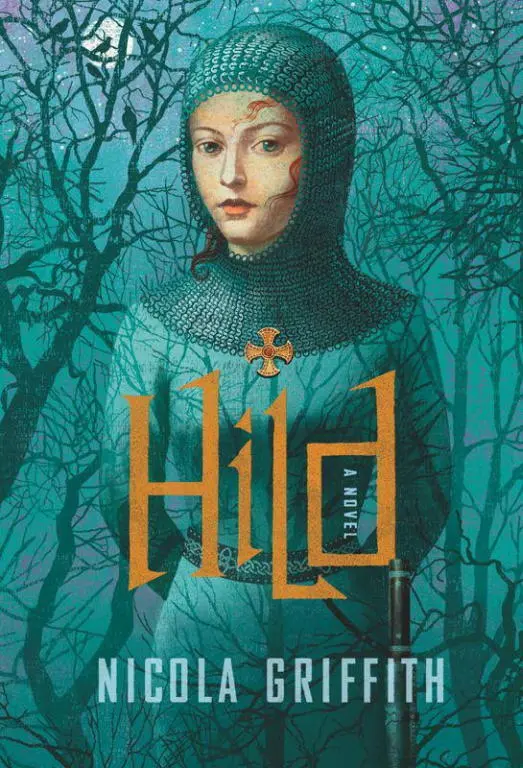
- Название:Hild
- Автор:
- Издательство:Farrar, Straus and Giroux
- Жанр:
- Год:2013
- Город:New York
- ISBN:978-0-374-28087-1
- Рейтинг книги:5 / 5. Голосов: 1
-
Избранное:Добавить в избранное
- Отзывы:
-
Ваша оценка:
Hild: краткое содержание, описание и аннотация
Предлагаем к чтению аннотацию, описание, краткое содержание или предисловие (зависит от того, что написал сам автор книги «Hild»). Если вы не нашли необходимую информацию о книге — напишите в комментариях, мы постараемся отыскать её.
But now she has only the powerful curiosity of a bright child, a will of adamant, and a way of seeing the world—of studying nature, of matching cause with effect, of observing her surroundings closely and predicting what will happen next—that can seem uncanny, even supernatural, to those around her.
Her uncle, Edwin of Northumbria, plots to become overking of the Angles, ruthlessly using every tool at his disposal: blood, bribery, belief. Hild establishes a place for herself at his side as the king’s seer. And she is indispensable—unless she should ever lead the king astray. The stakes are life and death: for Hild, for her family, for her loved ones, and for the increasing numbers who seek the protection of the strange girl who can read the world and see the future.
Hild is a young woman at the heart of the violence, subtlety, and mysticism of the early Middle Ages—all of it brilliantly and accurately evoked by Nicola Griffith’s luminous prose. Working from what little historical record is extant, Griffith has brought a beautiful, brutal world—and one of its most fascinating, pivotal figures, the girl who would become St. Hilda of Whitby—to vivid, absorbing life.
Hild — читать онлайн бесплатно полную книгу (весь текст) целиком
Ниже представлен текст книги, разбитый по страницам. Система сохранения места последней прочитанной страницы, позволяет с удобством читать онлайн бесплатно книгу «Hild», без необходимости каждый раз заново искать на чём Вы остановились. Поставьте закладку, и сможете в любой момент перейти на страницу, на которой закончили чтение.
Интервал:
Закладка:
Perhaps Hild only imagined the queen and Wilnoð deliberately not looking at each other.
But then Begu was talking about Eanflæd—she’d be teething soon, no doubt, look how she was drooling, and she bet that Hild’s fine carnelian beads would never be safe again, the baby would always be wanting to stuff them in her mouth. From there they talked of the best smooth stones for a baby to gum—Æthelburh claimed to have had an agate circle to chew as a child, “The very colour of your eyes,” she told Hild—and what herbs worked best when the endless wailing and bleeding gums began. They had reached a discussion of fennel when Hild felt the vibration of hoofbeats, a horse ridden at speed. Then they all heard it, followed by the messenger’s shout: “ News for the king! News from Gwynedd! ”
The hall didn’t have the light of the weaving hut but it was too hot for torches. Edwin sat in his great chair, his gesiths ranged about him, Coelfrith at his right hand, and the tufa looming behind him in the shadow and half-light.
He was livid.
Hild glanced at the messenger, sitting on a bench out of the way, trying to eat while the scop pestered him with questions. She would have to wait her turn for news of Cian.
Everyone was there, waiting to hear Edwin’s pronouncement: the gesiths, James the Deacon, Coifi and one of his underpriests, a visiting emissary from Rheged, even dazed-looking Osfrith. On the women’s benches on the left side sat the queen and her ladies, including Breguswith and Begu, most giving a decent appearance of spinning.
Edwin stood.
“Am I not the overking of the Angles?” No one was foolish enough to speak. “It was a simple enough message. Acknowledge me overking and keep your miserable mountain fastness. Hard to misunderstand.” He looked around the assembly, settled on the emissary from Rheged. “Wouldn’t you say?”
The emissary, there only to deliver the news of the death of Rhoedd the Lesser, said carefully, “Perhaps Cadwallon king did not misunderstand, lord.”
“Don’t name that nithing king in my hall!” Edwin roared. “Soon he’ll be king of nothing! He will kneel at my feet in shackles and watch as I burn his hall and use his women and sell his children as slaves. I’ll hack off his limbs and stake them at the four corners of his land. I’ll salt his fields. I’ll tear out the tongues of those who speak his name. I spit on him!”
He spat on the rushes before him. One by one, every man in hall hawked and spat.
Hild refilled James the Deacon’s cup with Rhenish wine. “I imagine the bishop’s anger was almost as great as the king’s,” she said. Worse , the messenger had told her. He’d also told her that Cian had sent her a message: He had a bold new cloak from his kin. Hild had given the messenger a ring pulled from her thumb and tucked away the news to ponder later.
James nodded, sipped. “The letter was in Stephanus’s hand, of course, so it was smooth and bold as usual—a lovely hand that man has, lovely. If he sang half as well as he wrote… No, no. No more for me. Oh, very well, just a little.”
“So Paulinus was angry.”
“Incandescent. He said to make sure that by the time he got back every single wealh priest was to be gone from Goodmanham. Even that pathetic wisp up by the well.”
“The priest of Saint Elen?”
“Even so. And then we must rid the entire kingdom, he said. Rip them out, root and branch. All spies, he said. But I doubt most of them can even read, never mind write secret messages to a king they’ve never seen. And how I’m supposed to do it all in two days I don’t know.” He shook his head, setting his grey curls abounce. He pushed his cup aside with regret and tapped the brown-bound book on the bench. “Now. Where did we get to yesterday?”
“James, son of Zebedee and brother of John.”
James beamed. “Most beloved of Christ.”
“Yes,” Hild said. She liked hearing James’s stories. She liked his accent, hot and spicy as mulled wine. Even his Latin, when he spoke it: such a different Latin to Fursey’s.
“I visited his shrine you know. In Iberia. Gold, gold everywhere, studded with gems of every colour. More gems than stars in the sky. And, oh, the singing there. Like the angelic host. It makes me weep to think of it.”
She refilled his cup. “Did James like music?”
“Of course he liked music! He was the brother of the beloved of Christ! His soul was as fine as silk, and as pure. He lived in a country full of sun and wine and fine food. Until the wicked Herod Agrippa struck off his head with a sword. Is that all kings can think of, swords?”
Then he was off, talking of swords and how they should all be thrown in the sea, that life should be love and music, a heaven on earth of angels and sunshine, of wine flowing like water, and kings of ancient and settled lineage whose people were all happy, all obedient to their church, and of priests who tended their flock and didn’t worry about kings and armies and imaginary spies!
Gwladus caught her as she was leaving the deacon’s rooms. “Herself wants you to eat with her in hall.” She handed Hild a ring—a yellow stone, big and gaudy, though not as heavy as it looked—to replace the one the messenger now wore. Hild slid it onto her thumb. “Hold still,” Gwladus said. She adjusted Hild’s veil band. “Osric is back. With Oswine.”
Hild sighed.
“Shall I say I couldn’t find you?”
Hild shook her head. “Go find Begu. Tell her Cian’s safe and will be back the day after tomorrow.”
Gwladus nodded, and Hild knew the news that the men were returning in two days would be sold around the kitchen: a bannock cake here, a cup of milk there.
Hild sat with her mother and Osric and Oswine at a corner of the table. At the other end of the hall, gesiths sang something maudlin about hearth and hall. When Osric touched her mother’s hand, Hild kept her spine straight and her expression pleasant. It wouldn’t fool her mother but Osric wouldn’t know how much she longed to take her seax to his throat, to open it as she had opened that man’s forearm on the dock at Tinamutha. Instead, she twisted the new ring round and round, as any bored young maid might. It was slightly too big. It wasn’t nearly as fine as the one she’d given the messenger.
Oswine was paying more attention to the gesiths’ end of the hall, clearly longing to be one of them. Hild reminded herself to talk to him when no one might overhear.
“When is Eadfrith due back?” Osric said, not bothering to lower his voice: Grimhun, on the lyre, had clumsy hands, which only encouraged the other gesiths to sing louder to drown out the sour notes.
“Tomorrow,” Hild and her mother said together. They looked at each other.
“I had it from James, from Paulinus,” Hild said.
“From the queen herself,” said Breguswith.
“Then soon we’ll move on Elmet,” Osric said.
Hild and her mother nodded: of course. If Gwynedd and Mercia joined forces, Elmet would be the only buffer between the allied army and Northumbria, more important than ever. Edwin must secure it.
“He must garrison Elmet and name me as ealdorman.” Osric slapped the board with both hands. “And don’t even think about counselling me to more patience!” One or two gesiths glanced over. He leant forward. “I waited when he took Deira and Bernicia. I waited when he gave Lindsey to that soft-handed reeve. I’m Yffing. I have men, a strong son, healthy daughters. Elmet is mine by right. And I’m tired of waiting.”
Hild saw that he would not listen to her mother on this. So, clearly, did her mother: She did that thing women do that Hild didn’t yet understand. From one moment to the next her body turned pliant and soft: willow rather than oak.
Читать дальшеИнтервал:
Закладка:
Похожие книги на «Hild»
Представляем Вашему вниманию похожие книги на «Hild» списком для выбора. Мы отобрали схожую по названию и смыслу литературу в надежде предоставить читателям больше вариантов отыскать новые, интересные, ещё непрочитанные произведения.









Обсуждение, отзывы о книге «Hild» и просто собственные мнения читателей. Оставьте ваши комментарии, напишите, что Вы думаете о произведении, его смысле или главных героях. Укажите что конкретно понравилось, а что нет, и почему Вы так считаете.