Nicola Griffith - Hild
Здесь есть возможность читать онлайн «Nicola Griffith - Hild» весь текст электронной книги совершенно бесплатно (целиком полную версию без сокращений). В некоторых случаях можно слушать аудио, скачать через торрент в формате fb2 и присутствует краткое содержание. Город: New York, Год выпуска: 2013, ISBN: 2013, Издательство: Farrar, Straus and Giroux, Жанр: Историческая проза, на английском языке. Описание произведения, (предисловие) а так же отзывы посетителей доступны на портале библиотеки ЛибКат.
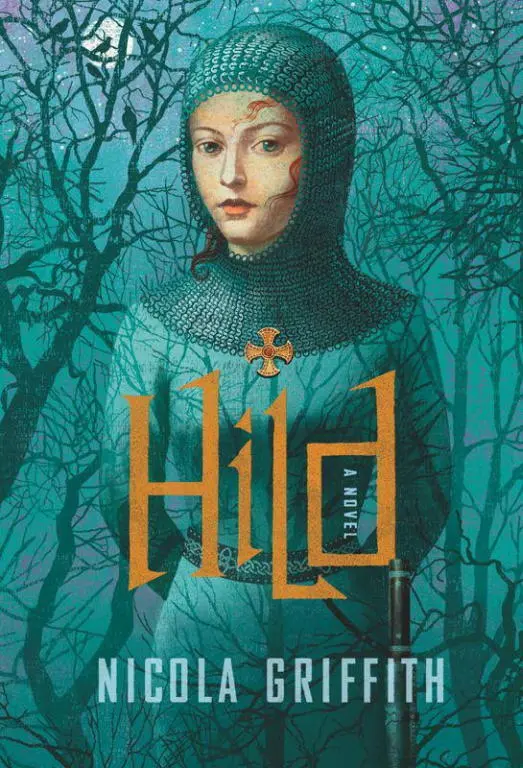
- Название:Hild
- Автор:
- Издательство:Farrar, Straus and Giroux
- Жанр:
- Год:2013
- Город:New York
- ISBN:978-0-374-28087-1
- Рейтинг книги:5 / 5. Голосов: 1
-
Избранное:Добавить в избранное
- Отзывы:
-
Ваша оценка:
Hild: краткое содержание, описание и аннотация
Предлагаем к чтению аннотацию, описание, краткое содержание или предисловие (зависит от того, что написал сам автор книги «Hild»). Если вы не нашли необходимую информацию о книге — напишите в комментариях, мы постараемся отыскать её.
But now she has only the powerful curiosity of a bright child, a will of adamant, and a way of seeing the world—of studying nature, of matching cause with effect, of observing her surroundings closely and predicting what will happen next—that can seem uncanny, even supernatural, to those around her.
Her uncle, Edwin of Northumbria, plots to become overking of the Angles, ruthlessly using every tool at his disposal: blood, bribery, belief. Hild establishes a place for herself at his side as the king’s seer. And she is indispensable—unless she should ever lead the king astray. The stakes are life and death: for Hild, for her family, for her loved ones, and for the increasing numbers who seek the protection of the strange girl who can read the world and see the future.
Hild is a young woman at the heart of the violence, subtlety, and mysticism of the early Middle Ages—all of it brilliantly and accurately evoked by Nicola Griffith’s luminous prose. Working from what little historical record is extant, Griffith has brought a beautiful, brutal world—and one of its most fascinating, pivotal figures, the girl who would become St. Hilda of Whitby—to vivid, absorbing life.
Hild — читать онлайн бесплатно полную книгу (весь текст) целиком
Ниже представлен текст книги, разбитый по страницам. Система сохранения места последней прочитанной страницы, позволяет с удобством читать онлайн бесплатно книгу «Hild», без необходимости каждый раз заново искать на чём Вы остановились. Поставьте закладку, и сможете в любой момент перейти на страницу, на которой закончили чтение.
Интервал:
Закладка:
“You’re the goosegirl!”
“Aye, once upon a time.”
“I never knew your name.”
Gwladus snorted. Lweriadd. A lofty name for someone wrapped in sacking: Lweriadd, daughter of Belenos the sun god; Lweriadd, mother of Beli Mawr.
“Lweriadd of the Loides, enjoy your bread and cheese.”
“We’ll need more. And blankets. Or at least the time and tools to build a shelter.” She stabbed her thumb up at the gauzy clouds dimming the waxing moon: thin but dark, dark blue—the kind of blue any woman would kill to get from her dyes—a blue that meant more rain. “Tell that to the whipping thegn.”
“I’ll see you get them. If you don’t, ask for me or for Gwladus here.”
“Or for that fine lordling in the British cloak you walk about with?”
Wealh, even tired and hungry wealh—especially tired and hungry wealh—noticed everything. Hild nodded. “Cian, son of Onnen.”
“Ah.”
While the Loides toiled by the Aire, Edwin sat with his counsellors beneath the one great oak left standing. Beneath it, his men had built a rough shelter: a reed roof, one solid wall behind him, and painted leather curtains to each side. His tufa stood at his right hand, his scop on the left, and about a brazier his travelling court. Most perched on three-legged stools—if their body servants had thought to bring one; some stood.
Edwin said to Osric, “Take the men out to every farm and hamlet in Elmet. Tell the Anglisc to send men who can speak for them, to be here at the full moon.”
“They’ll be here.” He patted the whip in his belt. “If they like their skin.” His men laughed.
“They’re Anglisc, cousin, not wealh. Persuasion will work well enough. Promise them mead. I doubt they have anything at home but ale and milk. Mead and meat.”
“And song,” Hild said. Her stool was padded with a brown-and-marigold cushion.
The scop preened.
Edwin dismissed Osric with a pleasant smile and turned to Coelfrith. “Pyr will sort the feast. I need you to ride out on another task.”
The highfolk of Elmet and their spearmen would be his first shield wall, his buffer, should Gwynedd join with Mercia. But highfolk were only the crop of a land. To know the land itself, you had to know the fields the crop sprang from. You had to know the ways and byways of lesser folk.
When Coelfrith bowed and left, Hild followed him. He was only a dozen years Hild’s senior but lately his face was settling into worry lines like those of his father before he’d been named ealdorman of Lindsey.
“You’ll need men for this task who’ll behave,” she said. “I know who’d suit. You’ll need guides; I’ll find them. But I come with you.”
Coelfrith agreed. “Dawn.”
Hild went to find Lweriadd. She found her with a young girl and a stripling with a bruised arm, rolling a chunk of trimmed elm trunk to the foundation ditch of the new hall.
“The king requires a survey of Elmet: its strong places, sound and broken, and its husbandland, farmed and fallow.”
Lweriadd straightened. “Why should I care what he wants?”
The young girl spat. The stripling picked a splinter from the pad of his thumb, but Hild could tell from the cant of his head that he was listening. His chin had a look of Lweriadd and the bruise was very like those made by an ox goad.
“The king is not Osric Whiphand. And we are the king’s. We need folk we may trust to guide us.”
“We?”
“I ask it. Hild, daughter of Hereric, friend to the last king of the Loides. And Cian Boldcloak, who had his first sword from the hand of Ceredig king.” She nodded at the stripling. “And perhaps the guide may find less trouble while guiding than in the rolling of logs.”
They assembled at dawn in the white river mist: Coelfrith, Hild, Cian, Eadric, Grimhun, who had an eye for fortification, if no hand for the lyre, and the brothers Berht, who held torches that stained the mist an eerie red. Gwladus would stay by the river, Hild’s eyes and ears while she was gone.
With a swirl of mist, the stripling appeared, wearing a piece of patched cloak tied to his shoulders by an assortment of yarns and with nothing at his rope belt but a fist-size sack. The bruise on his arm had darkened from red to purple. He stood by Hild’s knee and touched a fist to his chest.
“Morud ap Addoc.”
She said to Coelfrith, “This is Morud son of Addoc, a man of the Loides commended to me.” She arranged her cloak and said to Morud in British, “You know what we want to see?”
That cant of the head. “The hard edges first, no doubt. Berewith and Aberford.”
“Berewith,” she said.
Morud trotted away, leaving them to follow in whatever order they chose.
At Berewith Grimhun shook his head without getting off his horse. “One good rain and water would run gushing through the wall, there, and soon your fort would be knee deep in mud.”
Berhtnoth tucked one foot up on his mount’s withers and scratched his left buttock. “So why did their king come here, then, if it’s so useless?”
Hild was watching Morud. “Tell us the story now, Morud ap Addoc, as we ride to Aberford. Tell us of the last of Ceredig king in Elmet. Was he fleeing?”
“He was not! He marched with his war band, proud and fair…”
Hild smiled to herself. They would all get dreamy-eyed and gesith-like now, for a while, lost in the just-so sparkle of setting sun on gilded armour, the brave snap and ripple of banners, the proud step of the horse. The marching through moonlight. The Anglisc didn’t even understand the words, but they knew the rhythm. And Cian, though he knew the song, would be lost for hours.
Ceredig had never made it to his last stand at Aberford. That was not his wyrd.
Grimhun fell in love with Aberford, the deep and narrow beck, the straight road with its sturdy bridge. “Look at that!” he said. “There’s no crossing it except by the bridge. And those walls! How high is that bank? It must rise eight paces. There’s even… yes.” He pointed at a narrow trench. “Just waiting for a stockade. Though they didn’t have time.” He scrambled down from his horse, which promptly began to crop the grass. “Banks, dikes, beck, a stone road…” He bent and cut the turf, ripped up a clod, crumbled the dirt between his fingers. “I could build with this.” He wiped his seax absently on his tunic, saying to Coelfrith, “With a score of men I could make this place tighter than a Lindsey maid’s—” He turned red and sheathed his seax without looking at Hild. “I could make it tight.”
Coelfrith dismounted, dug up his own clod. Sniffed his fingers. Hild could smell it from her mount: good dirt, rich, well drained. “How long would you need?”
“Good enough to delay an army? A month. Full moon after next, say.”
“And how fast could you make it strong enough to fight off a band of mead-mad farmers?” In case Edwin couldn’t win them with sweet words and strong drink.
“We’d need axes, shovels, rope—”
“I can have them here the day after tomorrow.”
Grimhun turned slowly, squinting. “And men?”
“I’ll bring them with the tools.”
“I’ll need a dozen, well fed.” Coelfrith nodded. “Seven days from today, then.”
They ate sitting on their cloaks on the south slope of Becca Bank.
“I’m happier out of that wood,” Berhtnoth said. “Drip drip drip.”
“It isn’t always like that,” Cian said.
“No,” said Berhtred. “Sometimes it snows.”
Cian threw a clod at his head.
They talked of the unusual weather: the early leaf fall, this unexpected sun.
“The first thing we’ll need is a shelter,” said Grimhun. “It won’t be warm when the sun goes down, and I know you’re all as soft as girls.”
Читать дальшеИнтервал:
Закладка:
Похожие книги на «Hild»
Представляем Вашему вниманию похожие книги на «Hild» списком для выбора. Мы отобрали схожую по названию и смыслу литературу в надежде предоставить читателям больше вариантов отыскать новые, интересные, ещё непрочитанные произведения.


Обсуждение, отзывы о книге «Hild» и просто собственные мнения читателей. Оставьте ваши комментарии, напишите, что Вы думаете о произведении, его смысле или главных героях. Укажите что конкретно понравилось, а что нет, и почему Вы так считаете.