Nicola Griffith - Hild
Здесь есть возможность читать онлайн «Nicola Griffith - Hild» весь текст электронной книги совершенно бесплатно (целиком полную версию без сокращений). В некоторых случаях можно слушать аудио, скачать через торрент в формате fb2 и присутствует краткое содержание. Город: New York, Год выпуска: 2013, ISBN: 2013, Издательство: Farrar, Straus and Giroux, Жанр: Историческая проза, на английском языке. Описание произведения, (предисловие) а так же отзывы посетителей доступны на портале библиотеки ЛибКат.
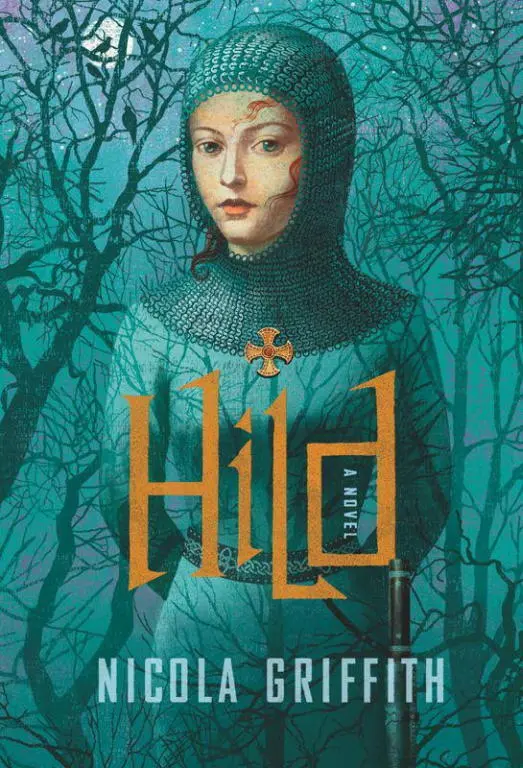
- Название:Hild
- Автор:
- Издательство:Farrar, Straus and Giroux
- Жанр:
- Год:2013
- Город:New York
- ISBN:978-0-374-28087-1
- Рейтинг книги:5 / 5. Голосов: 1
-
Избранное:Добавить в избранное
- Отзывы:
-
Ваша оценка:
Hild: краткое содержание, описание и аннотация
Предлагаем к чтению аннотацию, описание, краткое содержание или предисловие (зависит от того, что написал сам автор книги «Hild»). Если вы не нашли необходимую информацию о книге — напишите в комментариях, мы постараемся отыскать её.
But now she has only the powerful curiosity of a bright child, a will of adamant, and a way of seeing the world—of studying nature, of matching cause with effect, of observing her surroundings closely and predicting what will happen next—that can seem uncanny, even supernatural, to those around her.
Her uncle, Edwin of Northumbria, plots to become overking of the Angles, ruthlessly using every tool at his disposal: blood, bribery, belief. Hild establishes a place for herself at his side as the king’s seer. And she is indispensable—unless she should ever lead the king astray. The stakes are life and death: for Hild, for her family, for her loved ones, and for the increasing numbers who seek the protection of the strange girl who can read the world and see the future.
Hild is a young woman at the heart of the violence, subtlety, and mysticism of the early Middle Ages—all of it brilliantly and accurately evoked by Nicola Griffith’s luminous prose. Working from what little historical record is extant, Griffith has brought a beautiful, brutal world—and one of its most fascinating, pivotal figures, the girl who would become St. Hilda of Whitby—to vivid, absorbing life.
Hild — читать онлайн бесплатно полную книгу (весь текст) целиком
Ниже представлен текст книги, разбитый по страницам. Система сохранения места последней прочитанной страницы, позволяет с удобством читать онлайн бесплатно книгу «Hild», без необходимости каждый раз заново искать на чём Вы остановились. Поставьте закладку, и сможете в любой момент перейти на страницу, на которой закончили чтение.
Интервал:
Закладка:
“I saw a sword that might have come over with your forefathers: a hilt looking like cheese squeezed in a man’s fist.” Hild knew what he meant; she’d seen swords like that hanging in the firelight, brought down when the scop sang of times past: a ridged hilt, sometimes bound with wire, always with a name and a list of dead kings to its credit.
“I saw a Loid with an inlaid spear today,” she said. “A dot and a cross on the blade.” Ceredig’s mark.
Cian looked up from his bread and honey. “A king’s man?”
“His son, maybe. If you want to ask him, he’s with the Anglisc of that rich steading west of Saxfryth’s. They’re camped south of the orchard—or what was the orchard.”
At the noon meal, Hild saw Cian sitting with the Loid at a fire of fragrant applewood stumps, listening, nodding, whittling away at his root, while the man mimed thrusting and slamming with his shield. Behind them, slave wealh watched over by Osric’s men worked on the king’s new hall.
Tenscore men and not a few women settled down under a moon bright and white as polished chalk. The air was still and sharp, the river slow. Bonfires roared between the people and the wood, driving the dark back, keeping the wights under the trees.
They had listened to the scop’s stirring songs of hearth and hall, gold and honour, and the fate of man. They had drunk jar after jar of spiced ale, and eaten the oxen that had pulled their wagons from Goodmanham. The first beef most of them had eaten in years. Good red meat that made them feel like heroes.
The king rose, gleaming with gold, and to many of the men there—full of more beer and food, aye, and better, than they’d had in an age—he seemed a song made flesh, a hero of old, a king worth listening to. And while the king’s men passed among the crowd with mead—mead! the drink of warriors!—the scop declaimed the king’s lineage: Edwin the son of Ælla, the son of Yffi, the son of Wuscfrea, the son of Wilgisl, the son of Westerfalca, the son of Sæfugl, the son of Sæbald, the son of Segegeat, the son of Swebdæg, the son of Sigegar, the son of Wædæg, the son of Woden. A son of kings, and he stood among them like an equal. The scent of mead made them glad. Their hearts beat high.
Edwin said in a great voice, “I have never lost a battle. I have two strong sons, with many more to come. Kings—Briton, Saxon, Angle—bend the knee before me. Like the men of Lindsey, you may now look to me as lord. I swear to keep your larders full, your pasture free from marauding Mercians, your fields unburnt by the savage men of Gwynedd. I stand between you and harm. To you I extend the cloak of the king’s justice, the king’s vengeance, the king’s protection. In return I ask no more than before. Indeed, I will ask less, no more than any man can bear. But you must give it, in full and with goodwill. And your neighbours will be responsible for you and you for your neighbours. Your tithe weights must be fair, your cloth fine, your kine healthy. Smell the mead, now, men of Elmet. It is a gift from your king. Will you take it?” He lifted his great jewelled cup, a cup, surely, like one a god might drink from. “Men of Elmet, will you drink with me? Will you swear your oath?”
With a roar like a host, they shouted Yea! and Aye! and Edwin king! They drank, and drank again, and the scop and his drummers and whistle men set up a merry tune.
The bonfires burnt low and men drew into groups around smaller fires. The gesiths had their own fires near the wagons, and many farmers were already sleeping, but perhaps half a hundred lingered, unwilling to end the night. Someone was plinking on an old lyre, playing the tune of a bawdy song that he kept getting wrong.
Hild sat with Gwladus, half asleep, wrapped in her cloak, half aware of murmured Anglisc on her right, British on her left. Cian was nearby, she thought, and Morud, but she was not sure where. She drifted, dreaming of the ridge over the valley, the beck, the pond. That pollarded oak at the head of the mene was hollow…
Gradually she became aware of a conversation, an Anglisc man saying, “‘I’ll ask less,’ he said. But that black-haired priest kept asking, ‘How many sheep? How many milch cows? How many pigs?’ The gleam in his eyes didn’t promise less .”
“He’ll keep us safe,” a younger voice said. “He said so.” Hild knew that kind of voice: a stripling, ready to run to war for glory and gold, the kind of voice that ended torn out on a muddy, bloody field. “You, wealh, bring me more ale.”
The sudden silence was as sharp as salt. Hild opened her eyes. The young Angle with the glory voice looked just as she’d imagined: unkempt blond hair, downy moustaches, flushed face, muscled like a young bullock. The man he faced was a little older, a hand’s-breadth shorter: the Loid who had carried the spear of a king’s man. But all weapons were under guard for the night, by order of the king, and farmers didn’t wear the jewels of a gesith, and the young Angle didn’t know that this Loid was his own man.
Two Angles got up and stood behind the Loid—farmers from the same steading. They had hands on their eating knives.
And then Cian was there, sheathing his whittling knife, squatting easy by the fire, smiling, beer jar swinging from one hand. The Anglisc gold at his throat and on his hands gleamed, the red checks of his bold Welsh cloak glowed.
He said, “Once upon a time, if there was such a time, an Anglisc farmer built his steading alongside a Loid. The Loid owned a hen, a fine hen, that laid one egg every morning as the sun came up. Every morning the Loid’s wife would carry the egg from the coop to the kitchen to break into his beer for breakfast. One day, she looked in the coop and there was no egg. But then she saw into the Angle’s garth and there was her foolish hen, sitting on her egg.”
“You said it was a fine hen,” called someone from the crowd.
“It was the finest hen that ever clucked, though being a hen, it was not very bright, and thought an egg was a great achievement no matter on whose land it was laid.” He took a pull of the ale. “So the wife fetched her husband, the Loid, and he began to step over the ditch to fetch the hen when the Angliscman steps out of his hall, sees the hen, and picks up the egg. The Loid shouted, ‘That’s my egg!’ but the Anglisc shouted back, ‘It was laid on my land!’
“They shouted at each other—for they’d not had breakfast and were testy—and finally the Loid said, ‘My people have a way of solving disputes,’ and the Anglisc said, ‘Good, then tell me what it is because I fancy this egg while it’s still warm.’ So the Loid said, ‘I kick you in the balls and count how many times I can sing the bread song before you manage to get back up. Then you kick me in the balls and see how long it takes me to get up. Whoever gets up quicker wins the egg.’
“The Anglisc, being brave and strong, agreed to this. So the Loid went to find his boots, his best boots, with the reinforced lace holes, and put them on, and hopped over the ditch. ‘Are you ready?’ he called, and the Anglisc stood with his feet wide and his jaw set, and the Loid ran at him like a cart horse and kicked the Anglisc as hard as he could in the balls. The Anglisc fell to the ground clutching himself, gasping then howling then cursing in agony, while the Loid sang the bread song a score and twice. Eventually the Anglisc stood up and said, ‘Now it’s my turn to kick you.’”
Cian put the jar down and leaned back on his hands. The crowd leaned forward.
“And then the Loid tucked his hen under his arm, stepped back smartly, and said, ‘Keep the fucking egg!’”
Читать дальшеИнтервал:
Закладка:
Похожие книги на «Hild»
Представляем Вашему вниманию похожие книги на «Hild» списком для выбора. Мы отобрали схожую по названию и смыслу литературу в надежде предоставить читателям больше вариантов отыскать новые, интересные, ещё непрочитанные произведения.


Обсуждение, отзывы о книге «Hild» и просто собственные мнения читателей. Оставьте ваши комментарии, напишите, что Вы думаете о произведении, его смысле или главных героях. Укажите что конкретно понравилось, а что нет, и почему Вы так считаете.