Nicola Griffith - Hild
Здесь есть возможность читать онлайн «Nicola Griffith - Hild» весь текст электронной книги совершенно бесплатно (целиком полную версию без сокращений). В некоторых случаях можно слушать аудио, скачать через торрент в формате fb2 и присутствует краткое содержание. Город: New York, Год выпуска: 2013, ISBN: 2013, Издательство: Farrar, Straus and Giroux, Жанр: Историческая проза, на английском языке. Описание произведения, (предисловие) а так же отзывы посетителей доступны на портале библиотеки ЛибКат.
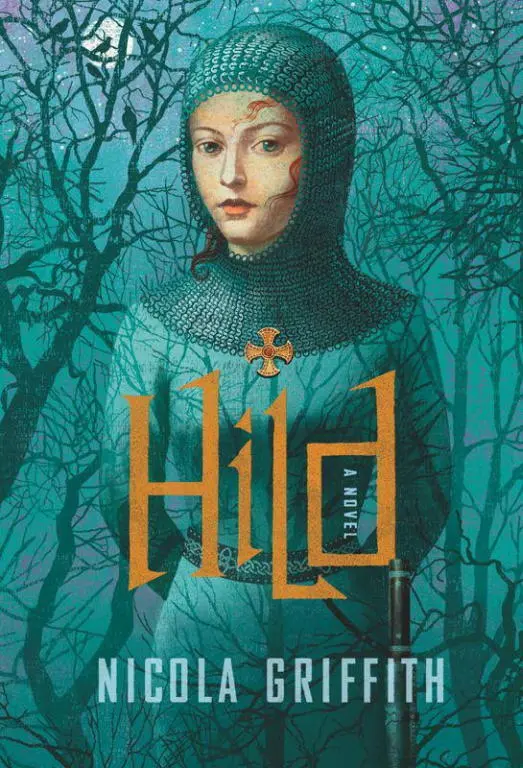
- Название:Hild
- Автор:
- Издательство:Farrar, Straus and Giroux
- Жанр:
- Год:2013
- Город:New York
- ISBN:978-0-374-28087-1
- Рейтинг книги:5 / 5. Голосов: 1
-
Избранное:Добавить в избранное
- Отзывы:
-
Ваша оценка:
Hild: краткое содержание, описание и аннотация
Предлагаем к чтению аннотацию, описание, краткое содержание или предисловие (зависит от того, что написал сам автор книги «Hild»). Если вы не нашли необходимую информацию о книге — напишите в комментариях, мы постараемся отыскать её.
But now she has only the powerful curiosity of a bright child, a will of adamant, and a way of seeing the world—of studying nature, of matching cause with effect, of observing her surroundings closely and predicting what will happen next—that can seem uncanny, even supernatural, to those around her.
Her uncle, Edwin of Northumbria, plots to become overking of the Angles, ruthlessly using every tool at his disposal: blood, bribery, belief. Hild establishes a place for herself at his side as the king’s seer. And she is indispensable—unless she should ever lead the king astray. The stakes are life and death: for Hild, for her family, for her loved ones, and for the increasing numbers who seek the protection of the strange girl who can read the world and see the future.
Hild is a young woman at the heart of the violence, subtlety, and mysticism of the early Middle Ages—all of it brilliantly and accurately evoked by Nicola Griffith’s luminous prose. Working from what little historical record is extant, Griffith has brought a beautiful, brutal world—and one of its most fascinating, pivotal figures, the girl who would become St. Hilda of Whitby—to vivid, absorbing life.
Hild — читать онлайн бесплатно полную книгу (весь текст) целиком
Ниже представлен текст книги, разбитый по страницам. Система сохранения места последней прочитанной страницы, позволяет с удобством читать онлайн бесплатно книгу «Hild», без необходимости каждый раз заново искать на чём Вы остановились. Поставьте закладку, и сможете в любой момент перейти на страницу, на которой закончили чтение.
Интервал:
Закладка:
“You can?” Edwin leaned back, hands on the arms of his chair, his eyes on Hild. “Hear that, Coelfrith? Perhaps I should put our seer in charge of provisioning. No doubt her seer sight would show the deer in the wood and the fish under the bank.”
“Or you could send Osric and his men directly back to Tinamutha instead of him going back through York.” It would keep him away from her mother.
The king waved away her suggestion. He looked her up and down, then smiled. “You may bring your people. But not a mouthful of our supplies, not a sip, not a bite, not for you nor any of your people. Still want them?”
“Yes, Uncle.”
“It’s uncle now, is it? Ha!” He pounded the arm of his chair and laughed. “Coelfrith, bring my niece a stool, bring us a jar of mead, and either sit yourself or go pack something. And when you’re fetching the mead, get the Crow in here.” He stretched his boots to the brazier. “I’ll be glad to get back to four walls and a roof. So tell me, Niece, before that black-skirted crow gets here, how do you see Elmet?”
“Uncle?”
“The saddle’s barely off my horse and you appear to be acquiring a household. Why? What have you seen?”
“I have seen, as you have, Uncle, enough to gladden any heart. Take Aberford.”
“I believe I have. Twice.”
“Yes, Uncle. But it’s more than a fort. It’s surrounded by good sheep land. There’s water, a road—a path right to the Humber. Remember Eorpwald’s gold workshops? An overking could build folds and weaving huts by the score there, make cloaks for trade. Ship them to Coelgar at Lindsey. It would be the biggest exchange for wool in the land. The Frisians would come, and the Franks.”
He leaned down and pulled off one boot, scratched at his ankle. “Why Lindsey? Why let Coelgar’s people have a piece of it? If Eorpwald can build a wīc for trade, so can I.”
“Where?”
“York. That was your mother’s idea.” He put his boot back on, wriggled his feet, stretched again. “What else should I know?”
Her mother’s idea. “There are bandits on the Whinmoor, trees for any purpose you could name south of the river, and good cattle country beyond that.” A wīc. At York. Another weft in the great weave. “But the land’s half empty. The people… They hide. They don’t trust each other. They’d work if they felt safe. If they knew they had the king’s goodwill.”
“That’s why I brought them here.”
“That’s why you brought the Anglisc.”
The weir sounded suddenly loud.
She was in it now. “Elmet is… underused. It could grow rich.” Which means the king would grow rich. “But only if people work. Only if they know that the land they clear, the hall they build, and the corn they sow will be safe. That no one will be fighting. That they aren’t Anglisc taking from Loid or Loid taking back from Anglisc.”
“It seems you’ve already spoken for me on that, or so Coelfrith hears from Pyr: no more Anglisc, no more Loid, only Elmetsætne.”
He sounded more curious than angry. But you could never tell with a king.
“Uncle, lord King, they need to know they can’t take from each other, and that whoever the king names as their lord won’t take from them, either.” Osric and his whips. “The first two years are all work, and the winters will be hard. Why risk that, if someone will just come along and take it once the land is giving crops?” She paused. “But if you tell them protection with no tithe for three years, they’ll do it. In five years, your tithes will double.” A longer pause. He was still listening. “Tell them the king’s niece will do it, too.”
“She will?”
“Uncle, I’ve seen a place. Such a place! Two leagues north and west. A great ridge, overlooking a wooded mene. A valley with bog and beck and bramble. Somewhat wet, yes. But, oh, what it could be. What it once was. Fish and krebs, herbs and honey, a millstream, corn growing round about… It will be a land of lard and cream, of beef and strayberries and songbird pie!”
“You will show me this place.”
“I will, my king. Though it’s not on the way to York. And it’s… wet, just now.”
“People?”
“None that I saw. One of the Elmetsætne told me they all left in the long ago, when it grew wet.”
“Wet, you keep saying. It sounds like a bog. You’re daughter of an ætheling of Deira and a princess of Kent. Niece and seer to the overking. It wouldn’t be seemly for you to live in a bog.”
“I wouldn’t live there.”
“No, because you’re my seer. But you want it. Tithe free. With my sworn men here and at Aberford ready to protect it. For nothing. Because it will be an example to my would-be thegns.”
“I… Yes.”
“A birth day gift worth a bit more than that cup I gave you last year.”
“Then…”
“Then the mene wood is yours. But in exchange it’ll be your task, along with Coelfrith, to apportion Elmet to would-be thegns. Make sure they all understand this Elmetsætne notion of yours.”
She bowed. A king’s bargain. He gave her something worthless to him in return for something from her he wanted very much. But, there again, so did she.
“And tell Stephanus. He has some notion of writing it all down, scratch scratch scratch. Strange men, these Christlings. Ah, Paulinus. Come sit. We were just talking about bogs.”
“Bogs, my lord?”
“Bogs.” He turned back to Hild. “Describe it to Stephanus. To a limit of thirty hides. With no tithe for… five years.”
“Thank you, Uncle.” The whole valley!
“Only yours, mind. Everyone else gets three years. You have someone to run it?”
“I… Yes, Uncle.”
“Good. I need you by my side. And now you should go pack your things.”
When her people gathered at the board for their last meal in Elmet, Hild drew aside the man with the hood.
“Rhin. Tell me, yes or no. Are you the priest I sent Morud to warn, near Aberford?”
He met her gaze steadily—his eyes were big and red-brown, surrounded by fatigue-stained pits like those of a goshawk—but said nothing.
“That was a fine steading, a rich, strong holding where men of all kinds got along. If I said I need a man to help me make that happen in another place, a man who can read, what would you say?”
After a long pause, he nodded once, slowly.
“Let me tell you of the place, particularly of the pollarded oak at the head of the valley. Hollow, and dry…”
15
IN YORK, the first day of Blodmonath dawned unseasonably mild. High, bright clouds coated the sky as evenly as egg foam. Larks and starlings gathered in flocks on the stubbled fields on either side of the Fosse and every now and again lifted in rushes for the south. To the north, just beyond the louring yew woods, darker rain clouds drifted towards the walls of the inner fort, threatening the rebuilding.
The wīc would grow in the fork of the Ouse and Fosse between the fort and the outer wall. The span of outer wall between Dere Street and the Ouse had long ago fallen into ruin. Edwin had cleared the rubble, redug the ditches, and drained the land. His two new Frankish stonemasons, rebuilding the walls of the inner fort, were notoriously finicky about the damp and the temperature of the strange sandy mud they mixed to stick the stone together. They worked slowly. Edwin fretted. To defend a wīc a fort must be strong. They’d have to make do with a hedge to protect the northeast end of the wīc field.
Hild rose without waking Begu or Gwladus. She wanted to see the laying of the great hedge.
What seemed to Hild to be half the women and men of the vale of York worked in the field that would be the wīc. Children ran about with jars. No one seemed to care about the possibility of rain. They were happy to carry their billhooks and hand axes and knives to the scrubby flatland and work for good portions of food and beer while their children herded their pigs in the wood south of the river to fatten on the early mast fall. This year there would be enough for every pig. There would be bacon and ham and sausage to feed every family all winter. There would be plenty of pork fat to soothe chilblains and fry the mushrooms soon to sprout in the east pasture and along the ditches of the west fields. One or two old women muttered now and again, and shook their heads—such mildness was uncanny, and trouble would come of it—but old women always said such things.
Читать дальшеИнтервал:
Закладка:
Похожие книги на «Hild»
Представляем Вашему вниманию похожие книги на «Hild» списком для выбора. Мы отобрали схожую по названию и смыслу литературу в надежде предоставить читателям больше вариантов отыскать новые, интересные, ещё непрочитанные произведения.




Обсуждение, отзывы о книге «Hild» и просто собственные мнения читателей. Оставьте ваши комментарии, напишите, что Вы думаете о произведении, его смысле или главных героях. Укажите что конкретно понравилось, а что нет, и почему Вы так считаете.