Nicola Griffith - Hild
Здесь есть возможность читать онлайн «Nicola Griffith - Hild» весь текст электронной книги совершенно бесплатно (целиком полную версию без сокращений). В некоторых случаях можно слушать аудио, скачать через торрент в формате fb2 и присутствует краткое содержание. Город: New York, Год выпуска: 2013, ISBN: 2013, Издательство: Farrar, Straus and Giroux, Жанр: Историческая проза, на английском языке. Описание произведения, (предисловие) а так же отзывы посетителей доступны на портале библиотеки ЛибКат.
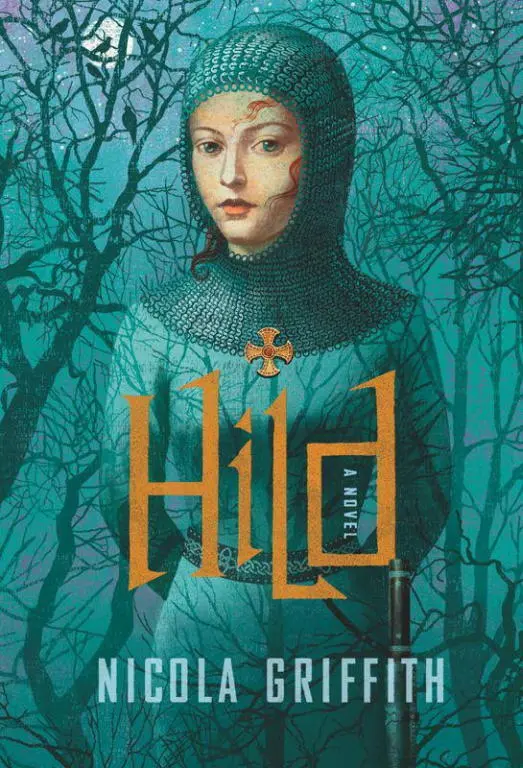
- Название:Hild
- Автор:
- Издательство:Farrar, Straus and Giroux
- Жанр:
- Год:2013
- Город:New York
- ISBN:978-0-374-28087-1
- Рейтинг книги:5 / 5. Голосов: 1
-
Избранное:Добавить в избранное
- Отзывы:
-
Ваша оценка:
Hild: краткое содержание, описание и аннотация
Предлагаем к чтению аннотацию, описание, краткое содержание или предисловие (зависит от того, что написал сам автор книги «Hild»). Если вы не нашли необходимую информацию о книге — напишите в комментариях, мы постараемся отыскать её.
But now she has only the powerful curiosity of a bright child, a will of adamant, and a way of seeing the world—of studying nature, of matching cause with effect, of observing her surroundings closely and predicting what will happen next—that can seem uncanny, even supernatural, to those around her.
Her uncle, Edwin of Northumbria, plots to become overking of the Angles, ruthlessly using every tool at his disposal: blood, bribery, belief. Hild establishes a place for herself at his side as the king’s seer. And she is indispensable—unless she should ever lead the king astray. The stakes are life and death: for Hild, for her family, for her loved ones, and for the increasing numbers who seek the protection of the strange girl who can read the world and see the future.
Hild is a young woman at the heart of the violence, subtlety, and mysticism of the early Middle Ages—all of it brilliantly and accurately evoked by Nicola Griffith’s luminous prose. Working from what little historical record is extant, Griffith has brought a beautiful, brutal world—and one of its most fascinating, pivotal figures, the girl who would become St. Hilda of Whitby—to vivid, absorbing life.
Hild — читать онлайн бесплатно полную книгу (весь текст) целиком
Ниже представлен текст книги, разбитый по страницам. Система сохранения места последней прочитанной страницы, позволяет с удобством читать онлайн бесплатно книгу «Hild», без необходимости каждый раз заново искать на чём Вы остановились. Поставьте закладку, и сможете в любой момент перейти на страницу, на которой закончили чтение.
Интервал:
Закладка:
“So,” said the king, “you’ve come. I’ve sent messages all day.”
“Yes, Uncle.”
“Where were you?”
“Watching the hedge-laying.” She accepted a cup of wine from Wilnoð, and smiled her thanks at the queen.
“At least that’s up,” Edwin said. “Or so Coelfrith tells me.”
She sipped, and nodded. “It’s beautiful.”
“Beautiful, ugly, who cares. It’s done. It’s the wall I care about now.”
“That’s why I’m here.”
“Good. Do something about those masons. If they’re not moaning about the sand, they’re complaining about the damp or fussing about the mallets. The wrong size, they say, the wrong weight, the wrong balance. Mallets!”
“They’ll work tomorrow because there’ll be no working for anyone soon. Bad weather is coming.”
Pine resin spat in the hearth.
“You’ve seen this?”
“The birds told me. Bitter cold, or fierce wind, or a hurtle of hail, I couldn’t say. But it’s bad, and it’s coming.”
Edwin swore and kicked his chair. “I want that tower up by Yule!”
Hild reached past her mother and Begu for the breast of mutton cooling in its own fat. She tore the top layer of skin away with her teeth and juice dripped on her overdress. Gwladus sighed—but quietly, Breguswith had a heavy hand—and passed Hild a torn loaf to soak up the worst of it.
Oeric stood by the door, relaxed enough to have set aside his sword, but not willing to sit with Hild with others present. Hild wondered what was wrong with his face, then realised he was trying to grow a beard.
Breguswith was talking. “… just hen birds, you say?”
Hild nodded.
“And tired? What about the chaffinches? No matter, we’ll have one of your people set a watch for the cock birds on higher ground tomorrow. Do any of them know enough to tell the difference? You need to train one of your swelling household in birds.”
“I can go myself if it comes to it,” Hild said. She would take Cian and Oeric. They could get in some practice away from prying eyes.
They discussed birds and clouds and other weather portents. Begu chipped in with a story about a magpie attacking a hen, or so she’d heard, she’d been very little, but she remembered her mother’s woman, Guenmon, saying—Guenmon, Hild remembered Guenmon, didn’t she?—saying it was because the magpie knew there’d be nothing left with the cold snap coming…
When Breguswith left—no doubt to find Osric—Hild held out her wrist for Gwladus to unfasten the carnelians. “Did you and Morud take that food to the east field?”
She nodded. “Though I could have done with Oeric’s manly strong arm to help.”
Oeric, staring stolidly ahead, blushed the colour of the coals. Hild reminded herself to have a word with him about not stooping to Gwladus’s lure. Lintlaf could kill him without breaking stride.
The sky was again high and white and the afternoon even warmer than the day before. At the east field, there was no sign of the flocks of exhausted redwings and fieldfares. She wondered if she had imagined the whole thing. Even Linnet and her mother, standing stiffly by the old grey matting of brush they’d piled to one side to be dragged to the walls and chopped into kindling chunks for the bread ovens, were calling her lady and giving her yes and no answers. Perhaps it was her gold, perhaps it was the presence of Cian and Oeric, though they were behaving like boys, throwing stones at a bare white branch poking from the brush.
She shaded her eyes against the high white brightness and studied the fields. Nothing but the tidy stubble, looking picked cleaner than the day before.
But as she turned to go she heard the rippling whistle, Per-r-r-r-rit , of a snow bunting—a month early—and hoped Detlin had driven the fence stakes extra deep.
The moon rose, a thin sliver. The torches by the wall roared. The Frankish masons shouted at their men to hurry. Another layer of carefully shaped stone rose above the foundation. It didn’t match the Roman work: different stone, different style.
Hild gestured to the chief mason, a burly, big-bellied man with no moustaches, his hair white with stone dust, who trotted over, a Christ amulet bouncing on his chest.
“Will it be wet or cold we should worry over?” he said.
“Both.”
“Both! Christ protect us! The king will be unhappy. The mortar is very difficult. If it’s to be wet, it’s one mixture, for cold, another.”
“Both,” she said. “Cold. Then wind. Then bitter cold. Cold enough to break iron. The first cold will come tonight. Tie everything down, and get the Crow to pray.”
“How long will it blow? Will it be wet?”
She stared at him. “Why don’t you ask your Crow to ask your Christ?”
He went back to his men. In the odd flare and pool of torchlight she watched him wave his arms, exhorting them to greater effort, pointing to her, telling them she could visit terrible consequences upon them if they didn’t give their best. Then they all crossed themselves.
Two chaffinches huddled together on top of a heap of stone. Young birds by their colour. Their first winter.
The wind died. The pour of the rivers in the distance seemed muffled. Something ghosted by her, flickering palely through the torchlight, then there was just one finch on the wall.
An owl, noiseless as a feathered cloud, glided away in the moonlight, a songbird in its left foot. Fate goes ever as it must.
The rain puddles of the day before turned hard and milky white. Frost loosened the last leaves clinging to the oak and elm in the west forest. They dropped silently, startling the pigs rooting through the leaf mould for nuts. The masons, bundled in hoods and wraps, directed men to pack the walls in straw and tie everything down twice.
The king sent word for people to gather in hall. The queen opened her bower to her women and Hild. The king, trusted gesiths, and queen’s men, including Cian and Bassus and Lintlaf, disposed themselves about the bench in front of the hall side of the bower curtain. Helping Begu settle their bedding next to her mother’s reminded Hild of the early days, when Edwin’s household had been small enough to sleep together in one hall.
After noon, the wind began to pick up, sliding like a filleting knife between wool and skin. Black-bellied clouds sailed over the horizon from the north and east.
The gale ripped the last acorns from the branches, wrenched the branches from the trees, and tore the trees out at the root. Pigs, and a woodcutter and his family, died, crushed.
Then came the hail, angling over the fields, beating birds and foxes to death, thrashing the river to froth. Women and men who had to walk from the hall to the kitchens, or who emptied night soil on middens, came back battered and bloodied. After that, no one left. The hail turned to rain, then snow. The wind died then picked up. Two thrushes flew into the great hall and fluttered around under the rafters until they found a place to hide from sight. The next morning they woke half the hall with cheerful—but loud, so very loud—song. A gesith threw a beer mug at the great crossbeams, but it was still half full and splashed another, who rose with a roar, eating knife in hand, and stabbed the man next to him before he was fully awake.
Breguswith and Hild, wrapped in otherworldliness, left the queen’s bower to stride through the midden that the hall had already become and tend the man’s wound. Hild held his skin together while her mother sewed as impersonally as she would a torn shift.
It lasted three days. In hall, men drank, women whispered, and the scop sang himself hoarse.
Читать дальшеИнтервал:
Закладка:
Похожие книги на «Hild»
Представляем Вашему вниманию похожие книги на «Hild» списком для выбора. Мы отобрали схожую по названию и смыслу литературу в надежде предоставить читателям больше вариантов отыскать новые, интересные, ещё непрочитанные произведения.





Обсуждение, отзывы о книге «Hild» и просто собственные мнения читателей. Оставьте ваши комментарии, напишите, что Вы думаете о произведении, его смысле или главных героях. Укажите что конкретно понравилось, а что нет, и почему Вы так считаете.