Nicola Griffith - Hild
Здесь есть возможность читать онлайн «Nicola Griffith - Hild» весь текст электронной книги совершенно бесплатно (целиком полную версию без сокращений). В некоторых случаях можно слушать аудио, скачать через торрент в формате fb2 и присутствует краткое содержание. Город: New York, Год выпуска: 2013, ISBN: 2013, Издательство: Farrar, Straus and Giroux, Жанр: Историческая проза, на английском языке. Описание произведения, (предисловие) а так же отзывы посетителей доступны на портале библиотеки ЛибКат.
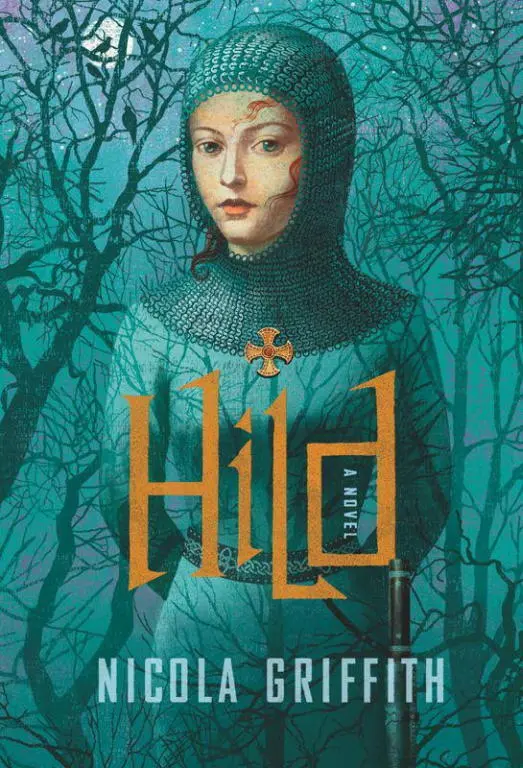
- Название:Hild
- Автор:
- Издательство:Farrar, Straus and Giroux
- Жанр:
- Год:2013
- Город:New York
- ISBN:978-0-374-28087-1
- Рейтинг книги:5 / 5. Голосов: 1
-
Избранное:Добавить в избранное
- Отзывы:
-
Ваша оценка:
Hild: краткое содержание, описание и аннотация
Предлагаем к чтению аннотацию, описание, краткое содержание или предисловие (зависит от того, что написал сам автор книги «Hild»). Если вы не нашли необходимую информацию о книге — напишите в комментариях, мы постараемся отыскать её.
But now she has only the powerful curiosity of a bright child, a will of adamant, and a way of seeing the world—of studying nature, of matching cause with effect, of observing her surroundings closely and predicting what will happen next—that can seem uncanny, even supernatural, to those around her.
Her uncle, Edwin of Northumbria, plots to become overking of the Angles, ruthlessly using every tool at his disposal: blood, bribery, belief. Hild establishes a place for herself at his side as the king’s seer. And she is indispensable—unless she should ever lead the king astray. The stakes are life and death: for Hild, for her family, for her loved ones, and for the increasing numbers who seek the protection of the strange girl who can read the world and see the future.
Hild is a young woman at the heart of the violence, subtlety, and mysticism of the early Middle Ages—all of it brilliantly and accurately evoked by Nicola Griffith’s luminous prose. Working from what little historical record is extant, Griffith has brought a beautiful, brutal world—and one of its most fascinating, pivotal figures, the girl who would become St. Hilda of Whitby—to vivid, absorbing life.
Hild — читать онлайн бесплатно полную книгу (весь текст) целиком
Ниже представлен текст книги, разбитый по страницам. Система сохранения места последней прочитанной страницы, позволяет с удобством читать онлайн бесплатно книгу «Hild», без необходимости каждый раз заново искать на чём Вы остановились. Поставьте закладку, и сможете в любой момент перейти на страницу, на которой закончили чтение.
Интервал:
Закладка:
Coelfrith’s woodsmen had already laid out the hedge lines, driving in elm stakes every two feet and marking scrubby trees for saving with splashes of ochre. The strong young men and strapping women grubbed up all the other bushes and saplings. Old men chopped the torn brush into manageable pieces for later. Younger women and unmarried girls cut wands of hazel, and nursing mothers and old women plaited the hazel into great open weaves.
The woodsmen set to work on plashing the marked trees. They lopped a branch here, a branch there—Hild tried to spot the pattern for their choice, but they worked too fast—and with a casual flick of the axe cut the tree almost through at the base and bent it over to weave between the stakes.
The dark, shaped saplings lay all one way like a cat’s just-licked fur. “They point away from the river,” she said to Detlin, the chief of the leathery little men with the hand axes.
He spoke without pausing. “Sap only flows uphill. Point ’em downhill and they’ll die. Just as they will if these splits don’t have time to close up before the frost shoves its fingers into the wood. So I’ll thank you to step aside, lady.”
Hild stepped to one side but didn’t stop watching as he cut and bent hawthorn, sloe, hazel, blackthorn, ash, and the occasional rowan.
“It’ll be pretty in spring,” she said. The thorn blossom would look like snow. In summer there would be sloes for the birds. Bright red rowan berries in autumn and winter.
“Rowan’s for luck,” he said unexpectedly.
Hild nodded. The uneasy weather had them all thinking of luck.
Detlin moved up the marked line. Hild stayed where she was, enjoying the scent of cut wood and torn earth. The combination was as rich and tangy as brine. Another rush of birds poured overhead, flying before the clouds, moving south. Perhaps they’d fly over the East Anglian fens. Perhaps Hereswith would see them. And Fursey. Perhaps it would remind her sister of the need to build a nesting place overseas.
By the time the rain reached them, the hedge was laid in an elegant line, the woven hazel binders laid over the pleachers, and Detlin sawing the stakes off neatly just above the binders.
It was beautiful: The bare hedge glistened thick and sinewy as a dark snake with the white-sliced stake tops like a dotted pattern along its back.
Hild joined the rest of the women, who, along with the old men, were tidying away the loppings, chopping them and bundling them with the grubbed up brush.
The drizzle came and went, a pulsing rhythm of damp that no one much minded, but they wanted to be done before the heavier clouds to the north and east arrived. They began to hurry. Hild helped an old woman and her broad-shouldered daughter tie a bundle of brush. One whippy thorn branch ran over her forearm.
“Gast!” Right over the still-pink scar left by Cian’s sword.
The old woman grinned toothily. “Watch the thorns, missy.”
Hild pressed the arm against her hip, to stop it stinging.
“Your fine dress, too,” said the daughter. Her mother cackled.
Hild wore her oldest overdress, too short by a hand’s width, but still no doubt finer than anything the old woman had ever seen. Gwladus wouldn’t be happy with the new stain. She thought Hild should look like a queen even when shearing sheep. Why try to look like a farmwife? You’re taller than any two of them end to end. They all know who you are.
The old woman, looking behind Hild, stopped cackling. “Eorðe’s tits. Just what we need.” Hild turned: Coifi and two of his priests, wearing their white and green, walking towards the new hedge with great ceremony and deliberation.
They all looked at Coelfrith, who looked at the brush, at the approaching storm cloud, at the priests, and sighed. He motioned everyone to stop and step back to let the priests pass.
The daughter wiped the rain off her face with a meaty forearm and grabbed a jar from one of the runners.
By the westmost root of the hedge, near the road, Coifi used an ox’s shoulder bone to dig a hole, in which he put a rowan branch and a bird—a wren, Hild thought, but couldn’t tell from where she stood—and then the bone. His priests pushed dirt over bone, bird, and branch, and Coifi poured mead on the mound. Then he raised his arms and began to sing a prayer to Woden, for luck and blessing.
“Wish they’d put aside those fancy cloaks and do more than sing,” the daughter said.
Her mother huffed. “Have you ever seen a priest work?”
“The Crow’s priests are just the same,” Hild said, and the daughter passed her the jar. Ale, old and sour, but Hild was thirsty.
The rain picked up. Coifi sang faster.
As soon as the priests were mincing back to the road and thence to the safety of the walls, the women got back to work. The dirt was turning to mud, and the wood was slippery and cold; there was a lot to be done before dark.
Men threw the brush into carts. One was heading for the byres, tree hay for the cattle, the other for half a mile beyond the little river, the east fields and newly coppiced ash grove, to make thorny barriers against browsing deer and strayed goats. Hild and the women followed the field cart.
The daughter spat when they reached the outer field: The old brush barrier, settled and dense, still needed tearing out. A long, hard job, and dark was coming.
They sat on the edge of the ditch to gather their strength. A flock of blackbirds fell out of the sky from the east. One landed heavily, just one hop from half an ear of fallen barley, but it seemed stunned, too tired to move. More birds struggled in: redwings and fieldfares, all young or female, all exhausted. Fleeing weather, Hild thought, or even battling it over the North Sea. So that’s what the larks and starlings had been trying to get ahead of: a big storm or a sudden plummet in temperature. Either promised trouble for the new hedge and half-built tower. She stood.
“Leaving the rest to us, then?” the old woman said. “Creeping off to a hot bath and a warm fire?”
Hild grinned. “And don’t forget the bread dripping with grease, a sizzling slice of beef off the spit, and dried fruit with honey.” No one liked to be lied to. “I’ll send you something.”
“I’d love a bit of roast,” the woman said, and looked old and tired and used. “Never had that.”
“Tell them it’s for Linnet and her mother,” Linnet said.
“I’ll tell them it’s for everyone,” Hild said. “But I’ll tell my woman you’re to get the hero’s portion. A gift of the king himself.” They looked sceptical, but she knew once they saw it, they’d sing the praises of the king and his seer for a year. “But it might be some little while.”
“I don’t doubt we’ll still be here. Better send torches, too.”
“I will. First though, I’ve to tell the king weather is coming.”
“Weather’s here,” Linnet said, pretending to wring out her dress.
“Something more. Worse.”
“When?”
“Not tomorrow. But soon. Maybe tomorrow night, or noon the next day.”
“Bad?”
“Stay indoors if you can.”
“And the pigs?”
“Keep them close until you know the shape of it.”
There were plenty of torches fluttering and roaring under the leather awning the king had put up over his half-built tower—but the only men visible were gesiths bundled in cloaks against the wet. The Frankish masons had downed tools again. Hild decided to find Gwladus first. Her uncle would be irritable, not in a mood to listen to a dirty ragamuffin trying to tell him something he didn’t want to hear. She would have to look every inch the seer.
Hild stood to one side of the king’s hearth, glad of the heat on her tired legs.
Читать дальшеИнтервал:
Закладка:
Похожие книги на «Hild»
Представляем Вашему вниманию похожие книги на «Hild» списком для выбора. Мы отобрали схожую по названию и смыслу литературу в надежде предоставить читателям больше вариантов отыскать новые, интересные, ещё непрочитанные произведения.




Обсуждение, отзывы о книге «Hild» и просто собственные мнения читателей. Оставьте ваши комментарии, напишите, что Вы думаете о произведении, его смысле или главных героях. Укажите что конкретно понравилось, а что нет, и почему Вы так считаете.