Wu Ming - Altai
Здесь есть возможность читать онлайн «Wu Ming - Altai» весь текст электронной книги совершенно бесплатно (целиком полную версию без сокращений). В некоторых случаях можно слушать аудио, скачать через торрент в формате fb2 и присутствует краткое содержание. Год выпуска: 2013, Издательство: Verso, Жанр: Историческая проза, на английском языке. Описание произведения, (предисловие) а так же отзывы посетителей доступны на портале библиотеки ЛибКат.
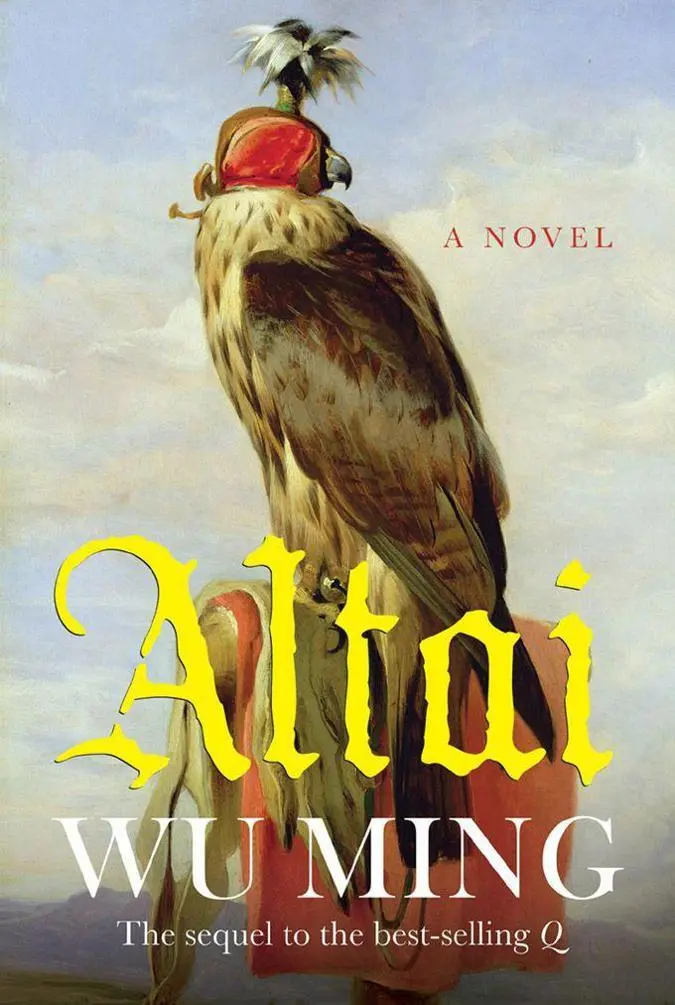
- Название:Altai
- Автор:
- Издательство:Verso
- Жанр:
- Год:2013
- ISBN:нет данных
- Рейтинг книги:3 / 5. Голосов: 1
-
Избранное:Добавить в избранное
- Отзывы:
-
Ваша оценка:
Altai: краткое содержание, описание и аннотация
Предлагаем к чтению аннотацию, описание, краткое содержание или предисловие (зависит от того, что написал сам автор книги «Altai»). Если вы не нашли необходимую информацию о книге — напишите в комментариях, мы постараемся отыскать её.
Through a series of deadly political games leading all the way to the Sultan’s palace in Constantinople, De Zante and his companions spiral headfirst toward a conflict in which the great empires of the Republic of Venice and the Ottomans threaten the very foundations of civilization.
Altai — читать онлайн бесплатно полную книгу (весь текст) целиком
Ниже представлен текст книги, разбитый по страницам. Система сохранения места последней прочитанной страницы, позволяет с удобством читать онлайн бесплатно книгу «Altai», без необходимости каждый раз заново искать на чём Вы остановились. Поставьте закладку, и сможете в любой момент перейти на страницу, на которой закончили чтение.
Интервал:
Закладка:
It was more than sneering defiance. Coming after Querini’s incursion the previous winter, it was clear to everybody that the Ottoman war machine was showing cracks.
“Old Mustafa’s beard is falling out! Not even in Malta did things like that happen to him.”
“Yet some people are clearly dragging their heels. Two hundred thousand soldiers against two thousand, two hundred cannons against fifty, and in seven months we can’t make mincemeat of them?”
A few weeks later, I learned of the arrival of a delegation from La Serenissima, charged with the task of negotiating an exchange of prisoners with the Grand Vizier. They were led by the brother of the archbishop of Famagusta, who belonged to the faction in favor of peace and who had his supporters in both the Grand Council of the Republic and the Divan.
Don Yossef had said that the time for diplomacy was over, and yet Sokollu didn’t seem to be of the same opinion. You could be sure that under the table he was plotting with Venetian delegates to forge an agreement over Cyprus.
I was filled with dull rage. For the first time I felt my faith in Nasi’s plan wavering. Only the fall of Famagusta would put an end to the plots against us.
In fact it was another piece of news that sent the Venetian delegation back. It came on afternoon of distant lightning that sounded like a battle in the middle of the sea.
2
I ran all the way through the rain to Palazzo Belvedere. The news was doubtless going around the city, and I hadn’t much hope of being the first to bring it. I looked for Nasi in vain in the library and in his rooms. The servants told me he was at the Topkapi Palace. I stood there dripping, steam rising from my clothes. Then I dropped to the floor.
When I heard him striding back in I got up, meeting him in the middle of the room, looking into his eyes. I didn’t need to ask him if he knew; his grim expression said everything. He withdrew to the library, and I was about to follow him when the protecting figure of David Gomez appeared in front of me.
“Better to leave him alone,” he said.
“Listen to David, Signor Cardoso. He knows my husband better than anyone.”
We turned around. Donna Reyna had appeared beneath the portrait of her mother, as if she wanted to force us to notice the resemblance. The hostile glance that she exchanged with Gomez before he left didn’t escape me.
“Bad news, I suppose.”
“The pope and Venice have gained the support of other powers besides Spain,” I replied. “Florence, Genoa, the knights of Malta, the Duke of Savoy. . they have all sealed a pact. They call it the Holy League. It’s a new crusade, and they say it’s bound for Cyprus.”
“So I’ll be a queen in name alone?” Her tone rekindled the fury that had been smoldering in me for days.
“If you can’t love him, at least try to respect him!”
“Who says I don’t love him?” she retorted.
“You have an odd way of showing it.”
She shook her head disconsolately. “Even if I wanted to, he wouldn’t let me. You don’t know anything about this family, Signor Cardoso. You see what appears on the surface, the face that everyone in this house shows to others.”
“I see a man with a big plan, a stubborn man with danger on all sides.”
Reyna sighed, and her shoulders slumped. “Go to him, since you can. And stay by his side.” There was no rancor in her words, but there was a hint of bitterness.
I leaned against the library door. No sounds came from inside. I knocked but received no reply, and decided to go in anyway.
The map of Cyprus was spread out on the big table. Beside it, a jug of wine. Nasi was holding a glass. He looked up from the map and beckoned me in.
“Who am I, Manuel?” he asked.
I walked over to the table.
“You are Yossef Nasi, Duke of the Cyclades, prince of Europe, favorite of the Sultan. Future king of Cyprus.”
“That’s the question: What we will be tomorrow,” he said, pointing to one of the shelves. “What do you see up there, Manuel?”
I saw an object that I knew: “Takiyuddin’s optical tube.”
“A gift from our Syrian friend,” Nasi explained. “To see the Cypriot victory in all its magnificence. Nicosia had just fallen; conquest seemed imminent. How different it all seems now.”
I had never seen him in such a dark mood. I struck my fist on the table to force him to look at me. “Why is Famagusta not yielding, Yossef? What if someone has been deliberately impeding the war? Have you thought of that?”
He sighed, as if he had seen that question coming. He said nothing.
“How can you stay here waiting while someone is trying to blow our plan sky-high?”
At last he stirred himself: “What do you think I should do? I can’t fight the war instead of the Turks. Leaving Constantinople is out of the question. If I left, the coast would be clear for Sokollu to set Selim against me.”
“Then send me down there.” He seemed struck by this request. “We have to know what’s happening,” I added. “Let me be your eyes.”
Nasi filled his glass again, and drained the wine in one gulp. A drop slipped into his beard and fell from his chin. His hand darted out to keep the map from being stained, and his elbow struck the jug.
The wine spread quickly over the drawing of the island. A shiver ran down my spine and an image rose up from my memory, a color, as intense as I had left it years ago. My father’s blood. The blood-letting bowl overturning at my feet. I had helplessly retreated to the wall while the dark stain spread across the floor, as if pursuing me into that corner. The servant had hurried to throw a rag on the floor, and the surgeon had beckoned me over to him. I knew from his face that old De Zante was about to leave forever, as tormented by the treatment as he was by the illness. I put my ear to the pale lips that had kissed the cross a moment before.
“Always trust in God and in the strength he gives you.”
Nasi got up and squeezed my shoulders, seeking in my face a confirmation of the determination that had animated my words. At last he said, “So be it. You will be my ambassador. But you can’t go alone; you will need someone with you. Someone we can trust.”
3
The old man was fishing, sitting on the jetty holding his fishing-rod. He turned round when he heard our footsteps.
“Are they biting?” Nasi asked.
“Not at all,” Ismail replied. The bucket beside him was indeed empty. He moved it to let us sit down.
“I’m happy to see you in good health,” Nasi said, dangling his legs in the dark water.
“It’s a day of peace,” the German replied. “Yesterday I shed a burden. I’ve carried it on my back for many years, and now at last I’ve set it down.”
“What burden are you talking about?”
“The story of my life. I’ve finished writing it.”
“Will we be able to read it?” asked Nasi.
“I haven’t yet decided what to do with it,” the old man said. “I met a sage in Mokha; he came from the mountains in the north of India. He talked to me of sacred drawings made in colored sand. It takes hours, even days to draw them, then the wind blows them away and not a trace is left. Perhaps my book is like those drawings.”
We sat there, absorbed in the tranquility of evening, observed by the gulls that poked about in the sand or floated on the water. The sun had already lowered above the Old City, and its glare no longer hurt the eyes. It was hot, but the evening was starting to take the depths of things away and to lengthen their shadows. Ours stretched thinly behind us, like the shadows of marsh birds.
“How is the war going?” Ismail asked, breaking the silence.
Читать дальшеИнтервал:
Закладка:
Похожие книги на «Altai»
Представляем Вашему вниманию похожие книги на «Altai» списком для выбора. Мы отобрали схожую по названию и смыслу литературу в надежде предоставить читателям больше вариантов отыскать новые, интересные, ещё непрочитанные произведения.








Обсуждение, отзывы о книге «Altai» и просто собственные мнения читателей. Оставьте ваши комментарии, напишите, что Вы думаете о произведении, его смысле или главных героях. Укажите что конкретно понравилось, а что нет, и почему Вы так считаете.