Wu Ming - Altai
Здесь есть возможность читать онлайн «Wu Ming - Altai» весь текст электронной книги совершенно бесплатно (целиком полную версию без сокращений). В некоторых случаях можно слушать аудио, скачать через торрент в формате fb2 и присутствует краткое содержание. Год выпуска: 2013, Издательство: Verso, Жанр: Историческая проза, на английском языке. Описание произведения, (предисловие) а так же отзывы посетителей доступны на портале библиотеки ЛибКат.
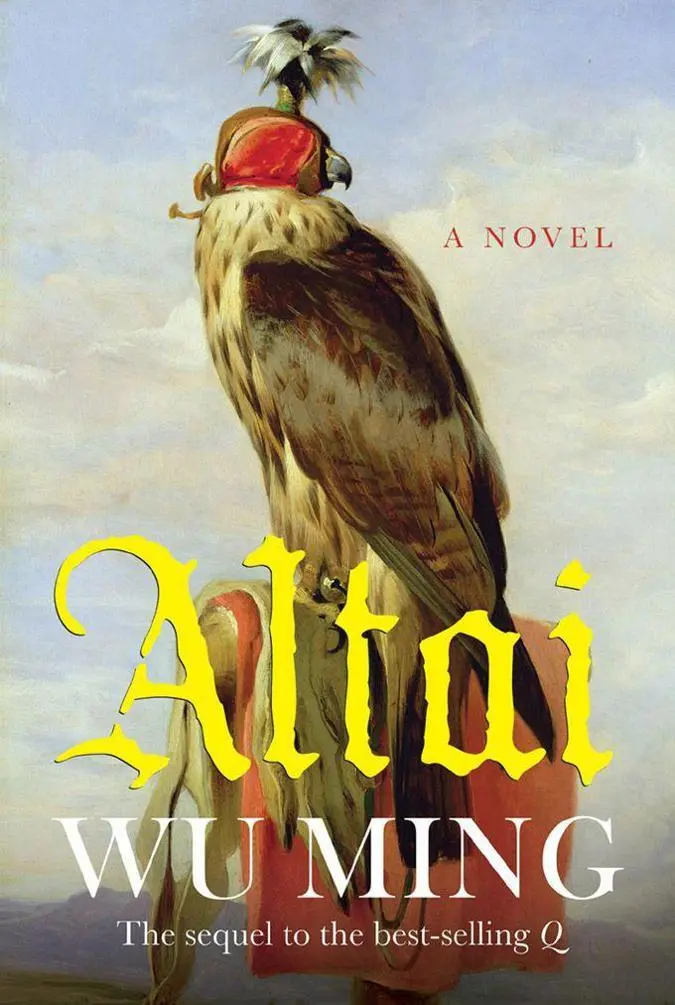
- Название:Altai
- Автор:
- Издательство:Verso
- Жанр:
- Год:2013
- ISBN:нет данных
- Рейтинг книги:3 / 5. Голосов: 1
-
Избранное:Добавить в избранное
- Отзывы:
-
Ваша оценка:
Altai: краткое содержание, описание и аннотация
Предлагаем к чтению аннотацию, описание, краткое содержание или предисловие (зависит от того, что написал сам автор книги «Altai»). Если вы не нашли необходимую информацию о книге — напишите в комментариях, мы постараемся отыскать её.
Through a series of deadly political games leading all the way to the Sultan’s palace in Constantinople, De Zante and his companions spiral headfirst toward a conflict in which the great empires of the Republic of Venice and the Ottomans threaten the very foundations of civilization.
Altai — читать онлайн бесплатно полную книгу (весь текст) целиком
Ниже представлен текст книги, разбитый по страницам. Система сохранения места последней прочитанной страницы, позволяет с удобством читать онлайн бесплатно книгу «Altai», без необходимости каждый раз заново искать на чём Вы остановились. Поставьте закладку, и сможете в любой момент перейти на страницу, на которой закончили чтение.
Интервал:
Закладка:
“Slowly,” said Nasi. “Venetian pride is a hard nut to crack, and I admit that I underestimated it. They’re still fighting, in hope that the Christian fleet will arrive soon.”
Ismail said nothing. He stared at the spot where his line entered the water.
“The pope has achieved his aim,” Nasi went on. “A holy alliance, as in the days of the Crusades. You know him as well as I do. Pope Ghislieri was Carafa’s best pupil. One of those enemies with whom negotiation is impossible. We can only defeat him.”
“You mean the Turks must do it in your place.”
Nasi sighed and shook his head.
“It won’t always be like that. In my kingdom the Jews will be able to create their own fates and defend themselves, once and for all, against the dangers of the world.”
Ismail’s tone grew slightly harsher. “With what weapons, João?”
“The most phenomenal in existence: English artillery. England will supply us with cannons in exchange for a trade base in the Mediterranean. Then we won’t need the Turks anymore.”
The old man didn’t conceal his surprise. “He who plays on two tables runs a double risk.”
“You and I have always taken risks,” Nasi replied. “Listen to me: Who better than the Jews, who have been persecuted forever, can welcome the persecuted people from all over Europe? The kingdom of Cyprus will be able to give asylum to refugees, to free spirits, to victims of the Inquisition. It won’t matter what their creed is, as long as they are willing to build our shared house. Tolerance and harmony will be the foundation of the New Zion.”
“I have been to the New Zion,” Ismail replied. “I have seen the prophets of the Kingdom at work.”
“Are you comparing me to them? To the madmen of Münster?” Nasi dismissed the idea with a wave of his hand. A startled gull took flight, settling a little way off.
“Not with them,” Ismail replied. “To myself in those days.”
“We’re living in different times now,” Nasi said, “and I’m not looking for the apocalypse. Gracia understood, and that’s why she wrote to you. That’s why I’m here. Manuel is leaving for Cyprus with a message for Lala Mustafa. I want you to go with him. You used to go hunting with the general. He respects you.”
Ismail’s mouth shaped itself into a grin. Perhaps he was thinking of Nasi’s words, of his relationship with Lala Mustafa or his former life in Constantinople. We would never persuade him like this. I decided to tell him what I thought.
“You won’t find the answer you’re looking for by staying here.”
The two men turned and suddenly seemed to remember that I was there. I got up, stepping over them both.
“My mother’s last wish was that I should grow up a good Jew. I rebelled against that for all of my life, until I became the opposite, a gadfly to my people. And yet here I am. Perhaps it was meant to be; perhaps I was fated to take such a long and tortuous detour. God’s plan is unfathomable. We cannot know in advance what random events will make us what we are, or know if the means that we choose will turn out to be the right ones. What I do know is that big things are happening. Cyprus is the most ambitious plan that a Jew has ever come up with, and I’m fed up sitting here and waiting. .” I aimed a finger at the old man. “Your defeats don’t mean that there’s no point trying again. You can choose to be useful to a cause again or to stay here trying to catch fish.”
I nodded to Nasi follow me. It was the first time I’d told him what to do, and he obeyed me, albeit reluctantly. He walked behind me, resigned, and then Ismail’s voice rang out in the evening air. “Have you thought of gifts?”
Nasi looked as if he’d been caught off guard, then stopped and replied, “Swords for the officers, silver spurs, harnesses for the horses. .”
I saw Ismail shaking his head. “Something special for Lala Mustafa. He’s a vain old man.” Nasi thought for a few seconds, then his face brightened. “I’ve got exactly what he needs.”
Ismail left his rod where it was. He picked up his stick and joined us. “Sieges are aggravating things, Signor Cardoso, I am aware of that. You won’t like what you see.”
“I’m not going there for pleasure,” I replied.
The old man muttered something, then set off toward the houses.
4
We plowed the waves fast and alone, during those July days. Nasi had put the flagship of his merchant fleet at our disposal, a mahona with an elegant, sinuous line, under the command of a Greek from the Peloponnese. When the wind swelled the sails and impelled the ship along, it seemed to ride the top of a great crest that rose and fell. When the wind subsided, the oarsmen took over. Their coordinated movements, the ancient gestures of pulling, rising, falling and pulling again, meant that we never lost speed. One way or another, the keel sliced the waves like a knife blade, heading south. The crew consisted entirely of marioli , salaried volunteers. No slaves or conscripts on a Jew’s ship.
We carried a personal letter from Yossef Nasi and gifts for Lala Mustafa Pasha. Fazte hermano kon el Guerko fin a pasas el ponte. Become a brother of the Devil until the danger has passed. That was what Nasi had said to me as he handed me the gifts for the general, the man who had been Selim’s tutor and who, unlike Selim, had been on the battlefield for months, amid the flying cannonballs, even though he was the same age as Ismail al-Mokhawi.
During the day we lived on deck, cooked by the sun like herrings set out to dry. At night the stars covered the sky to the horizon.
Hafiz and Mukhtar observed everything with worried eyes: the dark beauty of the sea, the clouds that passed above the mainmast, the flight of the gulls. Ali beguiled the time by roasting and grinding coffee beans, which he then brewed with cinnamon and cardamom. At other times he recited long prayers, or once more honed the blade of his scimitar, producing lugubrious sounds.
Ismail was the one least affected by the rigors of the journey. I struggled to believe that a short time previously he had been in danger of dying. The sea seemed to reinvigorate him and make him even harder than before. He was taciturn, and his friends respected his silence. One afternoon, on the quarterdeck, as he was looking out over the sea, I asked him whether in his long life he had ever been a sailor as well.
“No,” he replied. “But I did trade in the northern seas. Plowing the sea is like crossing the desert. They are free spaces, open to a multitude of possibilities.”
“And yet without the prospect of a landfall we would merely be drifting,” I objected, but I received no reply.
One evening, almost at the end of the voyage, I realized that I hadn’t exchanged a word with a living soul all day. The sun was setting slowly, red in the sky. The men who weren’t at the oars stopped to pray. It was the captain himself who led the worship on the deck, reciting the Koran. Hafiz and Mukhtar joined the others, along with Ali. The few Christians, a little apart from the rest, made the sign of the cross.
I joined Ismail behind the curtain, a place to which he had withdrawn a little while before. I found him naked to the waist, busy greasing his pistols. Drops of sweat shone on his chest, which was covered with white hairs, and on his belly, crisscrossed with scars. On his right forearm I noticed a strip of swollen flesh, perhaps a burn. Around his neck he wore a pendant; it looked like a pierced coin.
“Are you skilled with weapons?” I asked.
From a little trunk at his side he took a short sword in a leather sheath. He handed it to me. “Take this. Keep it under your jacket; no one will see it.” He unsheathed the weapon, a handy, light dagger. The metal visibly bore the marks of time, but the blade had been recently sharpened.
Читать дальшеИнтервал:
Закладка:
Похожие книги на «Altai»
Представляем Вашему вниманию похожие книги на «Altai» списком для выбора. Мы отобрали схожую по названию и смыслу литературу в надежде предоставить читателям больше вариантов отыскать новые, интересные, ещё непрочитанные произведения.









Обсуждение, отзывы о книге «Altai» и просто собственные мнения читателей. Оставьте ваши комментарии, напишите, что Вы думаете о произведении, его смысле или главных героях. Укажите что конкретно понравилось, а что нет, и почему Вы так считаете.