Wu Ming - Altai
Здесь есть возможность читать онлайн «Wu Ming - Altai» весь текст электронной книги совершенно бесплатно (целиком полную версию без сокращений). В некоторых случаях можно слушать аудио, скачать через торрент в формате fb2 и присутствует краткое содержание. Год выпуска: 2013, Издательство: Verso, Жанр: Историческая проза, на английском языке. Описание произведения, (предисловие) а так же отзывы посетителей доступны на портале библиотеки ЛибКат.
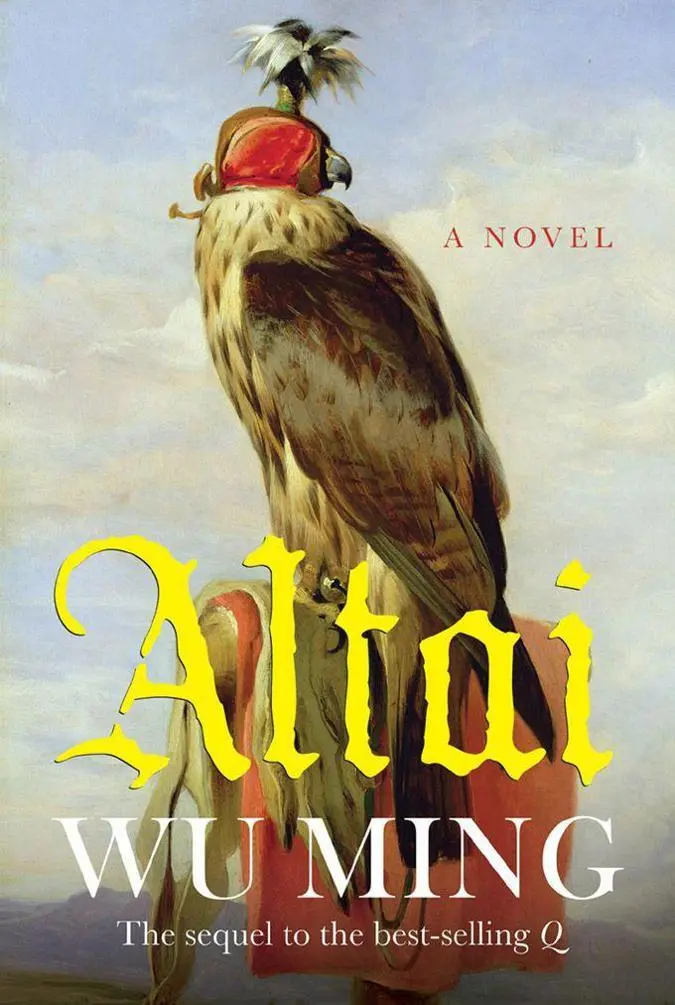
- Название:Altai
- Автор:
- Издательство:Verso
- Жанр:
- Год:2013
- ISBN:нет данных
- Рейтинг книги:3 / 5. Голосов: 1
-
Избранное:Добавить в избранное
- Отзывы:
-
Ваша оценка:
Altai: краткое содержание, описание и аннотация
Предлагаем к чтению аннотацию, описание, краткое содержание или предисловие (зависит от того, что написал сам автор книги «Altai»). Если вы не нашли необходимую информацию о книге — напишите в комментариях, мы постараемся отыскать её.
Through a series of deadly political games leading all the way to the Sultan’s palace in Constantinople, De Zante and his companions spiral headfirst toward a conflict in which the great empires of the Republic of Venice and the Ottomans threaten the very foundations of civilization.
Altai — читать онлайн бесплатно полную книгу (весь текст) целиком
Ниже представлен текст книги, разбитый по страницам. Система сохранения места последней прочитанной страницы, позволяет с удобством читать онлайн бесплатно книгу «Altai», без необходимости каждый раз заново искать на чём Вы остановились. Поставьте закладку, и сможете в любой момент перейти на страницу, на которой закончили чтение.
Интервал:
Закладка:
Perna smiles, puts the sheets in order.
“But for now, get better, old fellow. The last few chapters are always the hardest.”
Ali picks up a red and blue blanket, mutters something and arranges it over the old man’s quivering body. It is dawn, and Ismail has been talking in his sleep, words that sound like delirium, and he is still fighting the fever. The disc of the sun is flooding the horizon with reddish light. Hafiz and Mukhtar have finished their prayers and come in to check on the course of the illness.
“Do you think our sheik will live?”
Ali tries to offer a drink to the old man, who doesn’t recognize him. “If God wills it, Hafiz. What I think is that this man, now, is dead already. In fact he speaks languages that belong to dead men, men of the past. If he opens his eyes and gets back on his feet it will be because God, He who resuscitates, dragged him from the depths of Gehenna.”
Mukhtar kneels next to the old man and grips his hand, murmuring in a half whisper words in a language that is not Arabic.
What sign is it when a rainbow appears, when there has been no rain and the air is dry and clear?
It is that the earth is about to tremble and the whole world shakes.
Rows of horsemen gathering on the crest of a hill.
And the army of the humble has assembled, too, and the cannons vomit fire and flames.
People crouching in prayer. Eviscerated, butchered people, turned to smoke, wind, scraps as far as the eye can see.
What sign is it when the head of a man with a noble soul is exposed and paraded around on top of a pole?
It is that the battle is lost. Lost a thousand times, and the enemy gives no ground, because he never has and never will.
The horizon is moving, it is coming toward us. The horizon, black with armor, with horsemen, men of iron, men who make metallic noises and are already dead, the horizon that is Death, is advancing to crush me.
God. I see them now. The army of princes against the flock of the Lord. Blackened breastplates, helmets in monstrous shapes, grins behind the sallets, smiles from ear to ear, fixed in steel.
It is just dawn. I hear a voice crying, “Magister! Magister!” and it is mine, my own voice as always.
How old are dreams?
I see him on his knees, bent double. “Magister! Get up, for the love of God.” I take him by the shoulders and try to lift him up. He is a leaden statue and I have to lift him. I try my best; I put one knee on the ground and try to turn him, to look him in the face.
There is no face. The features are meaningless.
I shout, get back to my feet, and my eyes seek the horizon that is now running toward us.
It will engulf us. It will drive us into the deepest of holes, the one that we call hell. Inside the flesh, inside the heart, a bitter place, intact after years, after a century, after a millennium, after all the time in which we have been drifting, paper boats, prey to the wind.
I’m sitting in front of a skeleton. It has a snake in its mouth, between its white jaws, and a rat is running around on the cap of its skull. Beneath the bones of its right arm, between the shoulder and the ribcage, it holds a guitar. It laughs. It jokes. It gesticulates with the bones of its other hand, it looks as if it has been delivering a speech for a long time. It tells me about its causes. It invites me to a wild party of death.
Ismail opens his eyes, looks around in the candlelight. Instead of his legs and torso, he sees layers of cloth. His body has disappeared; a merchant must have bought it in exchange for these coarse wool blankets.
He doesn’t know what’s happening. A man’s dark face casts a shadow over his own.
Ismail lets himself drift back. Visions of angels, of djinns spilling from the earth in the form of distorted men and demons. Then his body returns, the empty skin filling like a sausage case being stuffed with mince, or as if someone were blowing into it. From his pelvis to his feet, his legs are constantly moving, his ribs opening and closing; his breathing is difficult; his limbs a willow’s shaken by a raging storm.
I’m thirsty!
This is his voice. It is not from within his prostrate body that he can hear it. But it is his, he recognizes it.
Seventy palms, twelve springs. It is here that the weary Israelites took courage.
“I’m thirsty!”
It is his mouth, the one that is shouting. He sees it in the fragment of mirror, the one he brought with him from Yemen so that he would recognize himself at the end of the journey. The mirror hangs in the air, then falls like a snowflake.
The oasis of Elim. The people of Israel had their hunger assuaged by manna.
“I’m thirsty.”
Ali holds the water to the old man’s mouth, steadies his head as Hafiz finishes the prayer.
And when our signs are rehearsed to them with evidences their only argument is to say, “Bring our fathers, if ye speak the truth.”
Mukhtar is unable to sit still, filled with childish excitement. The Sufi’s face spreads into a tremulous smile as his eyes fill with tears. “You’ve come back, old man! God is great!”
Confused, Ismail asks where he is. “You were on the edge of the other world, and I was dejected because your infidel body would go on suffering, and suffering far worse, in Gehenna. But God, the Patient and the Eternal, must have other plans for you. And for us who follow you.”
The old man’s voice is thin but clear. “For how long. .”
“Three days, Ismail, just like in Elim. Three days of fever and delirium. Hafiz has been reciting the Book all that time. Whenever you went to sleep, I was afraid it would be forever.”
“I dreamed of a rainbow. .”
“Now eat, old man. And thank God, a thousand times for each one of his names.”
Part Three. Mağusa, 21 Safar 978–23 Rajab 979 (July 25, 1570–December 11, 1571)
1
As we awaited information about the fleet, fresh news came in from Italy. After months of difficult negotiations, Pope Pius V had persuaded Philip of Spain to join forces with La Serenissima, to face up to the Ottoman threat in the Mediterranean. The pontiff had contributed a dozen galleys, and the three Christian fleets had chased and waited for one another for weeks, from Zara to Corfu, from Otranto to Messina, finally meeting in Candia, whence they had set off together on the big expedition.
“Yes, but they aren’t heading straight for Cyprus. Our whole fleet is there. You’ll see, they’ll strike in Dalmatia first, or in Negroponte.”
I spent my days in the port and outside the Arsenal, waiting for firsthand news, aware that the distance was already making “news” old. Until that moment, in my job, I had always gathered information in the cities, where every event can be discovered in only a few hours. Now, though, I was interested in a world that seemed to dwell somewhere in the future, ten or twenty days on, the traveling time that separated me from Cyprus, and even more from the Adriatic.
In Constantinople two topics held the floor wherever more than three people came together: the makeup of the enemy fleet, and its chief aim. Everyone was convinced that the Christians had more ships than the Sultan. It was rumored that there were almost two hundred galleys and about a dozen galleasses. As to their target, a fortune-teller from Abkhazia told the wife of Muezzinzade Pasha that the Franks would strike at the mouth of the Dardanelles, and in the barbershops they were already studying a way to transport Orban the Hungarian’s huge bombard across the strait.
Читать дальшеИнтервал:
Закладка:
Похожие книги на «Altai»
Представляем Вашему вниманию похожие книги на «Altai» списком для выбора. Мы отобрали схожую по названию и смыслу литературу в надежде предоставить читателям больше вариантов отыскать новые, интересные, ещё непрочитанные произведения.








Обсуждение, отзывы о книге «Altai» и просто собственные мнения читателей. Оставьте ваши комментарии, напишите, что Вы думаете о произведении, его смысле или главных героях. Укажите что конкретно понравилось, а что нет, и почему Вы так считаете.