Wu Ming - Altai
Здесь есть возможность читать онлайн «Wu Ming - Altai» весь текст электронной книги совершенно бесплатно (целиком полную версию без сокращений). В некоторых случаях можно слушать аудио, скачать через торрент в формате fb2 и присутствует краткое содержание. Год выпуска: 2013, Издательство: Verso, Жанр: Историческая проза, на английском языке. Описание произведения, (предисловие) а так же отзывы посетителей доступны на портале библиотеки ЛибКат.
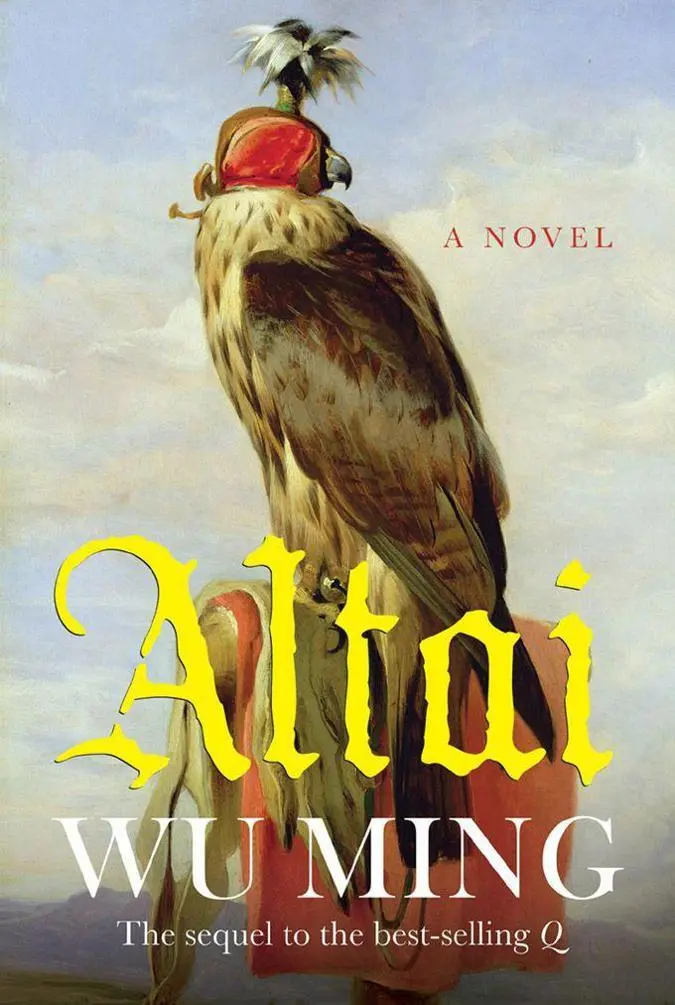
- Название:Altai
- Автор:
- Издательство:Verso
- Жанр:
- Год:2013
- ISBN:нет данных
- Рейтинг книги:3 / 5. Голосов: 1
-
Избранное:Добавить в избранное
- Отзывы:
-
Ваша оценка:
Altai: краткое содержание, описание и аннотация
Предлагаем к чтению аннотацию, описание, краткое содержание или предисловие (зависит от того, что написал сам автор книги «Altai»). Если вы не нашли необходимую информацию о книге — напишите в комментариях, мы постараемся отыскать её.
Through a series of deadly political games leading all the way to the Sultan’s palace in Constantinople, De Zante and his companions spiral headfirst toward a conflict in which the great empires of the Republic of Venice and the Ottomans threaten the very foundations of civilization.
Altai — читать онлайн бесплатно полную книгу (весь текст) целиком
Ниже представлен текст книги, разбитый по страницам. Система сохранения места последней прочитанной страницы, позволяет с удобством читать онлайн бесплатно книгу «Altai», без необходимости каждый раз заново искать на чём Вы остановились. Поставьте закладку, и сможете в любой момент перейти на страницу, на которой закончили чтение.
Интервал:
Закладка:
Then, the same day, it was announced that Venice and her allies had thrust into the Dodecanese, making straight for Cyprus, but when they reached Castelrosso they turned back, after learning that Nicosia had already fallen.
The troops of Lala Mustafa Pasha had entered the Cypriot town after a furious attack on the bastions I had told them about, the ones that Savorgnan hadn’t been able to reinforce. Nasi proposed to toast this news with the finest wine.
It was the eighth day of Rabi’at Thani in the year 978. Two hours after morning prayer, the occupation was complete. The great cathedral in Nicosia was stripped of bones and relics and turned into a mosque.
“I don’t understand these Christians. They say that churches are the house of God, and then they fill them up with bones and dried-up corpses.”
In Galata, fights broke out between Franks of various nations who accused each other of the failure of the Christian fleet. For a long time the kahvehanes were full of tales of the atrocities committed in Nicosia, and the comments on those tales: “They’re complaining that the pigs had their throats slit, but they’re the ones who eat those filthy creatures.”
The news traveled via dispatch riders, by beacon signal, on the wings of messenger pigeons, from the mouths of the returning wounded. Everyone seemed to have a friend, a relative or an acquaintance who had just returned from Cyprus. As I sifted what I overheard, even the vox populi finally came up with important details.
That was how I picked up the rumor of a Venetian reprisal. The peasants of the village of Lefkara had converted to Islam and placed themselves under the protection of the Sultan. The Christians had burst in at night, massacred the inhabitants and set fire to their houses. “Fanatics. Mad infidel fanatics,” I thought for a while. If Venice could still punish people on Cypriot soil, it meant that taking the island from them would be harder than we’d thought.
Yet the Sultan’s troops were already gathering around Famagusta. Mağusa, as the Turks call it: three miles of walls circled by a big trench. Apart from a single bastion, its system of defense was antiquated, no match for the new siege artillery. From the vantage point of Palazzo Belvedere, the fortress looked like a thin shell, which I imagined poised between a present full of expectations and a huge, radiant, tremendous future.
Lala Mustafa invited the captain-general of the stronghold, Marcantonio Bragadin, rector of Famagusta, to surrender. He sent him a bag of partridges, which was rejected. Then the pasha changed registers, and along with an order to surrender immediately he sent Bragadin the putrefying head of Niccolo Dandolo, governor of Nicosia.
When victory is near, it seems good to exalt the virtues of your enemies. So in the autumn, we were able to praise the hopeless courage of Bragadin and the few people shut up in Famagusta, because we were sure that the city would soon fall, just as we were certain that winter was close and that the Lord, from above, watched over the fates of men.
But even then, some said, “Brave? What do you mean brave, that fellow’s just a fanatic. Did they send him a fleet? No. So why doesn’t he just eat the partridges and go and digest them in Venice?”
I walked through the city, startled that every activity continued undisturbed. The comings and goings of human beings, business, prayers, the peace of Friday. The cycle was repeated without interruption; people seemed to be breathing normally, not raggedly as I was. I would have liked all obstacles to be past and ourselves in the safety of the kingdom that awaited us. I forced myself to stay calm, took deeper breaths, drank a glass in a tavern of the port, my ears pricked.
Often I found myself thinking of Dana, but made my mind drift elsewhere, lest I admit to myself that I missed her. I had given her up out of suspicion, fear, loyalty to Yossef Nasi and the cause of my people. I hadn’t repented; I just felt sad. Arianna had taught me a harsh lesson, and never again would I risk being betrayed.
The cold, the wind and the rain came, and began torturing Constantinople, as if she were the city that had to fall, rather than Ammochostos. “Emerging from the sands.” The Greek name of Famagusta seemed to refer to the Sultan’s fleet. Military operations were in abeyance, waiting for the season of fine weather to return. Most of the fleet came back from Cyprus to winter in the Golden Horn.
Nasi was spending more and more time at the Seraglio, trying to cement his friendship with Selim, and perhaps also to control Selim’s moods, to lighten his spirit. The delay in his forecasts no longer seemed to worry him very much.
“In the spring, Manuel. In the spring,” he repeated. In his voice I heard the same tension that had taken hold of me, but it was true, we had to be patient.
Donna Reyna was patient, anyway. After Dana’s departure, she had been confined in her own part of the palace. I hadn’t bumped into her for months.
Ismail also led a secluded life, on the opposite shore of the Bosphorus. When I asked Nasi what he was doing there, he approached the window and studied Asia, beyond the stretch of sea. Black clouds bared their teeth above the strait.
“He’s waiting, as we all are. But not for news of the war.”
“What, then?”
“To find the answer that he came here to seek.”
We then discovered that the old man had fallen ill, a bad tertian fever, and he had lain in bed for weeks, convalescing, without letting us know. In that difficult situation I realized that Nasi really loved this man: He was worried, he went to Scutari several times and wanted his doctor to visit his friend, even though the danger was over.
The weeks passed, and winter reached its peak. Then, one day during Ramadan, the news arrived that sixteen galleys, on the orders of Gianantonio Querini, had surprised the port of Famagusta and managed to force the blockade, sinking three Turkish ships. They supplied the beleaguered town with food, ammunition and soldiers, then set off again, unmolested.
The ships of La Serenissima had arrived when no one expected them. Selim had the bey of Chios decapitated for not keeping watch over the waters of his island. He stripped the bey of Rhodes of the honor of flying the imperial banner on his flagship and keeping his lantern lit on the quarterdeck.
“Not that they did us much damage, mind you, but it certainly isn’t a good sign for our Sultan.” And others bad signs would come.
After months of preparations and a few sporadic attacks undertaken to keep from dying of boredom, as the blossoms unfurled on the branches our fleet resumed the war. In anticipation of this, the authorities of Famagusta cast out the town’s “useless mouths”: women, children, the old and the infirm swarmed into the streets by the hundred. The besieging army let them pass, in fact it offered many of them food, either as an insult to the enemy, or out of pity.
The useful mouths remained on the walls: the mouths that spat fire. And a few days later they began to shout, and their roars shook the Ottoman armies.
On the twenty-second day of Dhu’l-Qa’dah, Lala Mustafa decided to view the troops from a distance that he considered safe: three miles from the city’s bastions. The spectacle was intended to impress the besieged, show them the power of the Sultan’s army: two hundred thousand men at arms, with skins and banners of all colors, and horses, and cannons, and swords glittering in the sun — a vast expanse of flesh and metal. The plain they trod must have been laughing with pride, superiority, the hunger for conquest.
Then, all of a sudden, came distant noises, a sound like hammering in the wind, and after a moment a rain of iron and stone, columns of dust and earth rising to the sky, bodies being crushed or hurled through the air. The Sultan’s sublime army was suddenly clutched in the hands of a demon. The perfect order of the most powerful military force in the world had been shattered by Venetian cannon, whose shots had devoured the three miles of distance in a snap of the fingers, defying the boastfulness of the Turks. Shouts of enthusiasm from the distant loopholes had accompanied the chaotic retreat of the foot soldiers and the rout of the flower of the Ottoman cavalry.
Читать дальшеИнтервал:
Закладка:
Похожие книги на «Altai»
Представляем Вашему вниманию похожие книги на «Altai» списком для выбора. Мы отобрали схожую по названию и смыслу литературу в надежде предоставить читателям больше вариантов отыскать новые, интересные, ещё непрочитанные произведения.








Обсуждение, отзывы о книге «Altai» и просто собственные мнения читателей. Оставьте ваши комментарии, напишите, что Вы думаете о произведении, его смысле или главных героях. Укажите что конкретно понравилось, а что нет, и почему Вы так считаете.