Wu Ming - Altai
Здесь есть возможность читать онлайн «Wu Ming - Altai» весь текст электронной книги совершенно бесплатно (целиком полную версию без сокращений). В некоторых случаях можно слушать аудио, скачать через торрент в формате fb2 и присутствует краткое содержание. Год выпуска: 2013, Издательство: Verso, Жанр: Историческая проза, на английском языке. Описание произведения, (предисловие) а так же отзывы посетителей доступны на портале библиотеки ЛибКат.
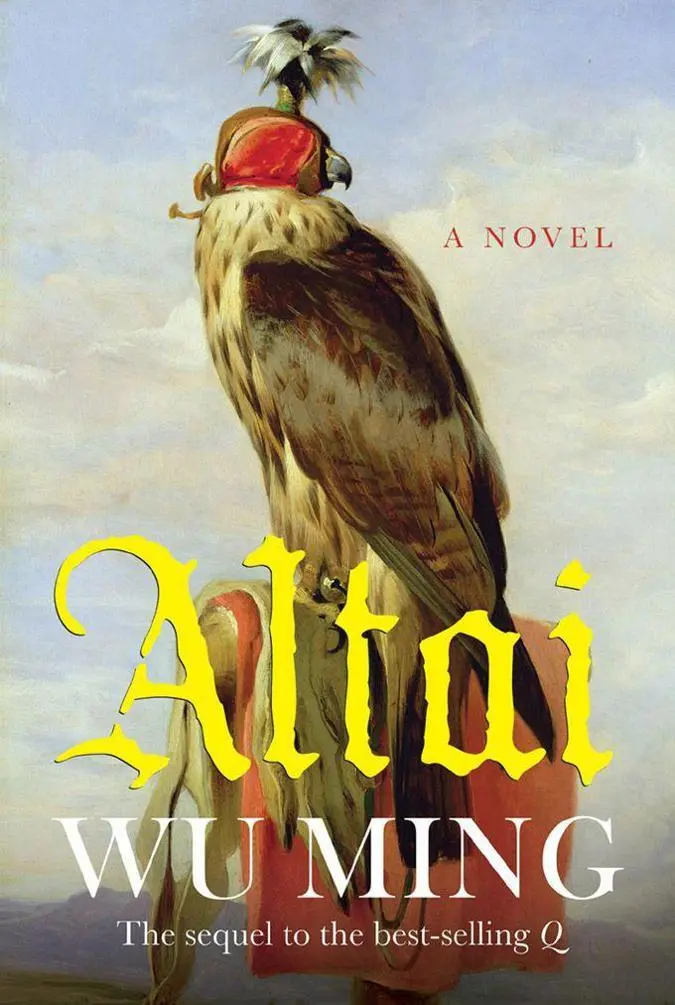
- Название:Altai
- Автор:
- Издательство:Verso
- Жанр:
- Год:2013
- ISBN:нет данных
- Рейтинг книги:3 / 5. Голосов: 1
-
Избранное:Добавить в избранное
- Отзывы:
-
Ваша оценка:
Altai: краткое содержание, описание и аннотация
Предлагаем к чтению аннотацию, описание, краткое содержание или предисловие (зависит от того, что написал сам автор книги «Altai»). Если вы не нашли необходимую информацию о книге — напишите в комментариях, мы постараемся отыскать её.
Through a series of deadly political games leading all the way to the Sultan’s palace in Constantinople, De Zante and his companions spiral headfirst toward a conflict in which the great empires of the Republic of Venice and the Ottomans threaten the very foundations of civilization.
Altai — читать онлайн бесплатно полную книгу (весь текст) целиком
Ниже представлен текст книги, разбитый по страницам. Система сохранения места последней прочитанной страницы, позволяет с удобством читать онлайн бесплатно книгу «Altai», без необходимости каждый раз заново искать на чём Вы остановились. Поставьте закладку, и сможете в любой момент перейти на страницу, на которой закончили чтение.
Интервал:
Закладка:
In the twilight breeze, the old man is prey to long bouts of shivering, not just from the cold. He feels a subtle unease traveling down his bones; his legs are frail as plaster. He has walked for more than two miles, and now he’s wondering if he’ll get home before dark.
His feet sink into the sand, his stick gets stuck. He falls, gets up, falls again.
He shuffles over to a little fishing boat, clutches its edge and drops into it, seeking shelter under the fabric of the sail. His teeth chatter like a crazed machine, a sign that the fever has returned. The same fever that made him late in reaching Tiberias.
The fever of the oasis of Elim.
The sandy course of the wadi opens and narrows, the first channel between rocky highlands, then stretches, leveled by herds, wide enough for the dromedaries to proceed along it several abreast. I take a little sip from my flask, and the water turns my body’s interior into a garden in bloom. There is no wind, but effort is a dull pain that tries to stay hidden.
Silent days, an incessant march, eating on the hoof, pausing only to sleep and pray, men and animals as old as the desert, as the oasis we must reach.
Elim, among the rocks of Sinai, halfway between the Red Sea and the Mediterranean.
In that place, the morning dew turned into manna, to appease the hunger of the Israelites fleeing the pharaoh.
The palms of Elim sway over the fiery sand.
Unloading the dromedaries, preparing the fire, drawing water from the wells.
We eat cooked food, after many days of nothing but dates.
I struggle to swallow a few mouthfuls, then collapse exhausted, without finishing my meal.
“Ismail, shayk !” Hafiz’s face is framed by stars, the smell of damp sand and night.
“Ali, Ali, we’ve found him.” Mukhtar’s voice, choking in her throat.
Sturdy arms lift him up, supporting him under the armpits, gripping his legs.
“What’s happened, old man? Is it the fever again?” The Sufi rests his rough hand on the sick man’s forehead.
Ismail feels the fresh, dry palm caressing his skin. “I’m home now,” he whispers, before closing his eyes.
This is the place where the head will be severed. The wheels groan, the donkeys lower their heads, the cart comes to a standstill. Around us, a pack of rabid dogs has been following our course, and now it is approaching. A vicious gang, barking and foaming at the mouth.
The heretic’s swollen face attracts blows and spittle. There isn’t a shadow of repentance in his face. Only a huge crow spreading its wings.
His neck is on the block. The crowd points and comments, shouts insults, throws mud and rotten vegetables and pots of piss. The sun is halfway through its course.
The executioner spins the axe, tests the blade, looks around so that the pack of dogs has a clear idea of who’s been given the job.
The condemned man shouts his heresy: “Freedom!”
Bones shatter, but one blow is not enough.
It takes another, then another.
Through the first day, Ismail trembles like a leaf. During the night he talks in his sleep, groaning and shouting. Ali stays close to him at all times, practicing the dhikr . The repetition of the divine names is powerful, but Ali also thinks of covering the old man with additional blankets.
Hafiz recites the Koran from memory. From the Sura al-Fatiha to the Sura of men, he can chant every verse of the sacred text.
Praise be to God, the Lord of the Worlds, the Compassionate, the Merciful, King of the Day of Judgment.
Mukhtar picks up shield and urumi and fights, until dawn, the shadow of death.
Beatrice is lying on the bed, much thinner than I remembered. Her eyes are hollow, her cheeks sunken. Her shoulders sink into her pillows as she sips a glass of water with unsteady hands.
“The first and last letter of the word Torah joined form mother. The last and the first form heart.”
I come slowly forward into the room, as though approaching a frightened puppy. It’s eight years since I last heard her voice, eight years that I’ve reconstructed her face from memories no longer true.
“I haven’t long now, Ludovico, perhaps not even a day, and there are so many things that I would like to tell you, but the first, the most urgent, is of Yossef. He needs your help.”
I lean over her, kiss her on her boiling forehead, hug her hard, but I don’t relax my grip in time, and I feel her bones breaking, crumbling, turning to dust and splinters.
I leap back, as if scorched by flames, and look in terror at the pillows.
A pile of skin, ribs and nerves has taken the place of my love.
A gust of wind scatters everything.
During the second day, the old man alternates long intervals of unconscious peace with violent feverish rages. When the madness leaves him, he lies as if all his energy fled with it. Pale, cold, in a sleeplike state that is not sleep.
Hafiz goes on reciting the Koran. Mukhtar listens to him, motionless, kneeling on the prayer mat.
Every man’s fate we have fastened to his own neck: on the Day of Judgment we shall bring out a scroll that he will see spread open. Read your record: Sufficient is your soul this day to make out an account against you.
Ali tries not to despair. He knows that fever, and he has seen Ismail shake it off and return to health within a few days. He gives him some lime tea to drink, and cools his skin with liquors and perfumes.
He wonders what he would do if Ismail died there, two thousand miles from home.
He thinks of Mokha, of the thousand tensions running through the city and finding a focus in the old man, a basin in which to mix, like raging but harmless floods.
He feels a void is opening, spreading through his heart, and everything is becoming futile. Ali curses his own lack of faith, and throws himself headlong into the dhikr .
“You’re not thinking of having it printed in Constantinople, are you? Listen to your old bookseller friend, it would be pointless, you hear? These are things that need to be published in Europe, in the belly of the beast, to give it ulcers. If that genius Oporinus were still alive I would advise you to go to him, in Basilea, but the poor man died of gout two years ago, I don’t know if you knew that. I had my little print works, in Ferrara, and then things took a turn for the worse. In the end the pope managed to impose his will even there, and people like me had to shut up shop.”
Pietro Perna leans against the desk. His hair, the little he has left, is all white, but his shining eyes are the same as ever. He collects the papers and reads them out loud, quickly running through them with his little fingers. He lingers over a phrase, murmurs an enthusiastic comment, pulls grimaces of disapproval, makes annotations on some incomprehensible passages.
“This is a good time for me to be going to England. Things are good here in Constantinople; certainly they drink more wine here than they do in London and the sunsets are unforgettable, but you have to keep too many people happy, always licking someone’s feet, kissing the hem of someone else’s garment, and the third vizier of I-don’t-know-where, the bey of Buggeration, and the pasha, the dragoman, the imam, the cadi, the favorite and her cousin, the black eunuch, the white one, the striped one, the Sultan’s hundred pages, his gardener, the man who scratches his back, the one who rinses his balls: each one of them, from one day to the next, could rise up against you and remember the time you didn’t greet him, that you published a book that insulted his grandmother, that you spoke ill of his tribe. The English are more concerned with the substance, you know? They don’t rot your balls with this kind of nonsense.”
Читать дальшеИнтервал:
Закладка:
Похожие книги на «Altai»
Представляем Вашему вниманию похожие книги на «Altai» списком для выбора. Мы отобрали схожую по названию и смыслу литературу в надежде предоставить читателям больше вариантов отыскать новые, интересные, ещё непрочитанные произведения.








Обсуждение, отзывы о книге «Altai» и просто собственные мнения читателей. Оставьте ваши комментарии, напишите, что Вы думаете о произведении, его смысле или главных героях. Укажите что конкретно понравилось, а что нет, и почему Вы так считаете.