Wu Ming - Altai
Здесь есть возможность читать онлайн «Wu Ming - Altai» весь текст электронной книги совершенно бесплатно (целиком полную версию без сокращений). В некоторых случаях можно слушать аудио, скачать через торрент в формате fb2 и присутствует краткое содержание. Год выпуска: 2013, Издательство: Verso, Жанр: Историческая проза, на английском языке. Описание произведения, (предисловие) а так же отзывы посетителей доступны на портале библиотеки ЛибКат.
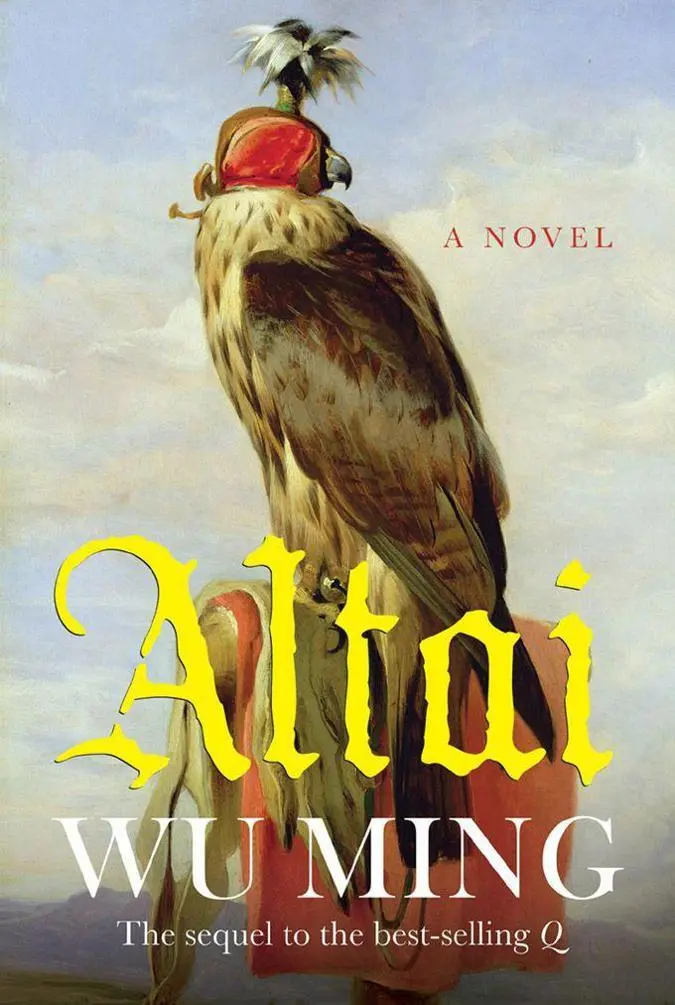
- Название:Altai
- Автор:
- Издательство:Verso
- Жанр:
- Год:2013
- ISBN:нет данных
- Рейтинг книги:3 / 5. Голосов: 1
-
Избранное:Добавить в избранное
- Отзывы:
-
Ваша оценка:
Altai: краткое содержание, описание и аннотация
Предлагаем к чтению аннотацию, описание, краткое содержание или предисловие (зависит от того, что написал сам автор книги «Altai»). Если вы не нашли необходимую информацию о книге — напишите в комментариях, мы постараемся отыскать её.
Through a series of deadly political games leading all the way to the Sultan’s palace in Constantinople, De Zante and his companions spiral headfirst toward a conflict in which the great empires of the Republic of Venice and the Ottomans threaten the very foundations of civilization.
Altai — читать онлайн бесплатно полную книгу (весь текст) целиком
Ниже представлен текст книги, разбитый по страницам. Система сохранения места последней прочитанной страницы, позволяет с удобством читать онлайн бесплатно книгу «Altai», без необходимости каждый раз заново искать на чём Вы остановились. Поставьте закладку, и сможете в любой момент перейти на страницу, на которой закончили чтение.
Интервал:
Закладка:
When I joined him in the big drawing room that morning, he gave me a worried look. I must have looked as if I’d slept on an anthill. I set out my deductions in the clearest and most linear way that my fatigue allowed. I said that there was a chain of distaff-side relationships linking the Imperial Palace, the palace of the Grand Vizier, Ashkenazi’s house and Palazzo Belvedere. Through Dana and Esther Handali, Nurbanu had allied herself with the Jewish gentlewomen who favored Venice. We had been harboring the Lion of Saint Mark within our own walls.
Nasi listened with great attention and few questions. Then he pointed to the painting that hung above the door. The woman in the portrait looked down at us like a wise queen.
He said that he, the nephew of Gracia Nasi, would certainly not have been one to underestimate the power of women. Over the past six months, through Selim, he had given Nurbanu dozens of presents, jewels, precious books, Italian fabrics, mirrors. Anything to soften her resistance to the war. As to Reyna, he added that her rancor was fundamentally comprehensible, and she had no choice but to support him. Perhaps I was right. Perhaps she and Nurbanu were plotting behind our backs, but the war had started now, and female diplomacy was no longer a crucial weapon.
As he said this, he lowered his eyes to the mosaic of the Mediterranean that filled the whole floor. Right beneath our feet was the outline of the island of Cyprus. I asked him what he planned to do with Dana, and his reply left me flabbergasted.
“Nothing. The cannon are speaking now.”
I was speechless, and a queasy sense of unease took hold me. I took my leave and strode away.
Above the garden, a sky full of clouds. At any moment I expected to hear thunder exploding over the hills, but the storm seemed reluctant to break, and flies buzzed crazily around over the grass. My mind echoed with Arianna’s voice. “They forced me, Emanuele. Against my will.”
No, no one had forced Dana. I knew that her kisses weren’t false, or her embraces or the fluids that we had exchanged. And yet suspicion had dug an unbridgeable gulf between us. Doubt and suspicion were my vocation, but that part of me wasn’t the one I felt getting the upper hand; it was the part of me that was frightened by what I had surmised.
And there was another passage of the Scriptures, buried in memories of my life as a Christian, where Jesus says that he doesn’t pour new wine into old bottles, because the new wine bursts them and you lose both bottle and wine. I clenched my teeth in rage and turned on my heel. The rain had started falling, but I didn’t care about that. I stopped under a plane tree, holding my breath, drenched through by the summer storm, staring at the houses of Scutari and the forests of Asia.
A servant informed me that Donna Reyna didn’t want to be disturbed. I shoved him aside and stepped in. She was sitting at her desk. She wore a mauve dress, and her hair was coiled up on her head, revealing her neck. She merely stared at me, as if taking note of my presence, not even slightly surprised. She had the expression and the posture of someone who wants to get back to her business as soon as possible and will not appreciate superfluous words.
I decided to oblige her. “Did you send her to me?”
She didn’t move. “I told you: sometimes servants are freer than their masters.”
The voice was hers, but her face and body were so expressionless that it might have been another woman speaking.
“So it was her idea?”
“No, it was mine.” She leaned into the back of her chair and gave me an icy look. “Because I couldn’t come myself.”
I didn’t try to reply, I didn’t care and I didn’t want to help her read my mind.
“This is the plot that you have discovered, Signor Cardoso. The envy of a woman forgotten, forced to look at life through the eyes of a chambermaid. You men see a plot behind every coincidence, a threat behind your every uncertainty, and perhaps you’re right. And yet you need only look in the mirror to discover the weaknesses that will bring you down.”
I wanted to turn around and go, but her eyes held me back. She spoke her words clearly, as if firing arrows at my pride. “He has asked me to go to Tiberias, and I will certainly not object.” She paused, to enjoy the effect of this information. “Why are you pulling that face? By fleeing, one admits one’s guilt. You should be pleased.”
I cursed her in silence, and found the strength to leave. My soul was a fistful of shards.
36
The water of the Bosphorus was cloudy and agitated, stirred by the wind that passed up the straits from the south. The dock at Ortaköy echoed with shouts, orders given in Turkish and Ladino. Gulls wheeled between the sea and the clouds, in the hope of taking advantage of the gathering.
I took up my position behind a salt-encrusted shed, a storeroom for nets and sails. At the end of a wooden walkway I recognized a mahona belonging to the Nasis, the same one that had dropped off a cargo of refugees on this shore months previously.
She wasn’t there. Perhaps she had already boarded her ship, and I was too late. I had followed a different road from the usual one, slightly longer. I had calculated, or rather hoped, that I would get there just as Dana had emerged from the labyrinth of streets into the open space in front of the slipway. But there was nothing. I stopped to contemplate the scene of dockland life, as if it were a memory.
Then, on the other side of the open ground, a crowd began arriving. Servants from the Palazzo Belvedere were pushing a cart. Lying on it, its roots wrapped in a jute bag, Dana’s carob faced its second move.
She came after it, a leather bag in one hand and the goldfinch’s cage in the other. She was dressed in her smartest clothes, a highly embroidered, sand-colored dress and a silk shawl that covered her shoulders. I admired her proud bearing, not very appropriate to the life of a chambermaid, or a peasant girl in a remote colony. I wondered why she was wearing such a sumptuous dress, and the answer passed through my mind.
If the stuff of which your limbs are molded is good, if your heart and mind are sound, the vicissitudes of fate will be received like guests of honor. That was what Dana was saying.
She climbed onto the ship and cast a glance around, her last before she left the capital. I had a sense that she had seen me, and instead of hiding, I took a step forward, into the open, but she had just disappeared behind a curtain that was to serve as a shelter for her, stretched between a bulwark and the mainmast.
I stood there motionless, trying to imagine her behind that veil. Was she sitting down, or kneeling in prayer? Was she looking to the south, toward the sea that the Turks call White?
I wondered what our fate together might have been. A house, a serene existence, far from the struggles that consume the world. The goldfinch chirruped, suggesting my reply.
Amid a salvo of curses, the mahona pulled away from the shore. Someone on the jetty was waving. The cries of the gulls became shriller, a screech, as if something had been taken away from them.
37
I endured gloomy days, forcing myself to think about what awaited us. Ahead of me lay a great task, but having lost Dana, I felt as if I were facing it after shedding a limb. I had to stir myself. The generally unfocused enthusiasm of the people around me was impressive enough to overcome my feeling of deprivation and discomfort.
The Sultan’s troops had to be below the walls of Nicosia now, in the teeth of Marcantonio Barbaro and Sokollu Mehmet Pasha. It would all be over soon, and then there would be a kingdom to be governed. We needed to prepare.
Читать дальшеИнтервал:
Закладка:
Похожие книги на «Altai»
Представляем Вашему вниманию похожие книги на «Altai» списком для выбора. Мы отобрали схожую по названию и смыслу литературу в надежде предоставить читателям больше вариантов отыскать новые, интересные, ещё непрочитанные произведения.









Обсуждение, отзывы о книге «Altai» и просто собственные мнения читателей. Оставьте ваши комментарии, напишите, что Вы думаете о произведении, его смысле или главных героях. Укажите что конкретно понравилось, а что нет, и почему Вы так считаете.