Wu Ming - Altai
Здесь есть возможность читать онлайн «Wu Ming - Altai» весь текст электронной книги совершенно бесплатно (целиком полную версию без сокращений). В некоторых случаях можно слушать аудио, скачать через торрент в формате fb2 и присутствует краткое содержание. Год выпуска: 2013, Издательство: Verso, Жанр: Историческая проза, на английском языке. Описание произведения, (предисловие) а так же отзывы посетителей доступны на портале библиотеки ЛибКат.
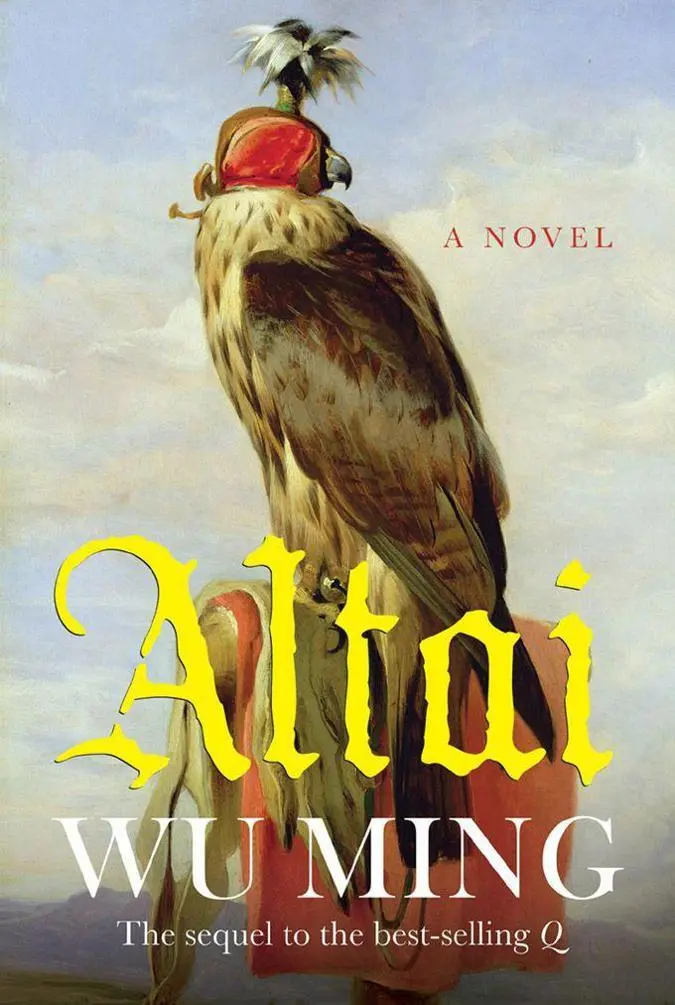
- Название:Altai
- Автор:
- Издательство:Verso
- Жанр:
- Год:2013
- ISBN:нет данных
- Рейтинг книги:3 / 5. Голосов: 1
-
Избранное:Добавить в избранное
- Отзывы:
-
Ваша оценка:
Altai: краткое содержание, описание и аннотация
Предлагаем к чтению аннотацию, описание, краткое содержание или предисловие (зависит от того, что написал сам автор книги «Altai»). Если вы не нашли необходимую информацию о книге — напишите в комментариях, мы постараемся отыскать её.
Through a series of deadly political games leading all the way to the Sultan’s palace in Constantinople, De Zante and his companions spiral headfirst toward a conflict in which the great empires of the Republic of Venice and the Ottomans threaten the very foundations of civilization.
Altai — читать онлайн бесплатно полную книгу (весь текст) целиком
Ниже представлен текст книги, разбитый по страницам. Система сохранения места последней прочитанной страницы, позволяет с удобством читать онлайн бесплатно книгу «Altai», без необходимости каждый раз заново искать на чём Вы остановились. Поставьте закладку, и сможете в любой момент перейти на страницу, на которой закончили чтение.
Интервал:
Закладка:
On Tuesday evening she entered a run-down building in Kuruçesme, where she stayed for a few hours. I discovered that it belonged to a Greek woman; she, too, had been freed from Selim’s harem and was now the wife of his stable master.
On Wednesday afternoon she sold a pile of her embroidered blankets to a cloth merchant, and with the proceeds she bought two brushes and a box of oil paints. That evening, I decided that I might have to change my strategy.
I would have preferred to talk to her calmly, to persuade her to tell me what she knew, but the memory of her reticence offended my pride. If she hadn’t yielded right away, after the parade, to my first request, it meant that at bottom she was more devoted to Donna Reyna than she was to me. On Thursday morning, when I bumped into her in the drawing room, I told her not to come to my room that night. I said nothing more, and went in search of Don Yossef.
During those days I had thought often about how alone my mentor was. Reyna, the Grand Vizier, the Ashkenazic rabbis and even his oldest friend — none of them believed in him. And yet thousands of Jews owed their lives to him. And yet I was there, a living proof that it was possible to change everything. You just had to want it, and with the help of the Lord things could be turned upside down, chaos canceled, balance reestablished. Tikkun olam . That was what Nasi had called it. Righting the world, healing the wound that our people had borne for fifteen hundred years, just as it had healed my own wound, hidden for half my life.
Nasi needed allies, and I intended to tell him as much. The Sultan’s friendship and the money spent on the Cyprus adventure were solid guarantees, but that investment also exposed him to great risks and for many people was a cause for suspicion. It had been Dana who had reminded me of the story of Joseph, whose brothers envied him because of his dreams and sold him to the merchants.
When I found him, he didn’t give me time to speak, and once again he was ahead of me, reading me as you read a book, perhaps one of those rare copies that had attracted Ralph Fitch in the library at Palazzo Belvedere.
He dragged me outside, and with just a few servants escorting us, we lost ourselves in the hubbub of busy humanity in the Christian quarter. He spoke at length as we walked, and it was as if I had transferred my anxieties to his mind without even opening my mouth.
“The Grand Vizier is very strong, even though we have put him in the minority in the Divan. And above all, and never forget this, Mehmet Sokollu is highly astute. By obstructing Ashkenazi we have stayed one of his hands, but he is like an octopus; he has another seven. As for the Ashkenazic rabbis, don’t worry too much. They’ve been holding us hostage forever. They sow uncertainty among our people; they say that Cyprus is a personal whim, a reward for services given to the Sultan. You understand? They use the divisions between Eastern and Western Jews to undermine our project. They say a Sephardic kingdom will arise in the east, when they know very well that I intend to offer a home to everyone, without distinction. A safe refuge for the wanderers of the earth: Jews, moriscos , heretics, slaves. As I did after the fire; you saw the people in my house. They weren’t only Sephardim, and not all of them were even Jews.”
I slowed my pace, overwhelmed by the freight of those words.
“The poor people are with me, but how will we overcome the mistrust of the wealthiest families?” Nasi noticed that he had left me behind, and stopped. “And that’s why we’re here.”
Around us, Venetian and Ottoman accents met: We were in the heart of Galata. “Where are we going?” I asked.
Yossef pointed to a house halfway down the street. “To find ourselves a new ally. Someone who has nothing to lose and everything to gain from joining with us. Come, he’s waiting for us.”
Even today I can’t imagine my face as we stepped inside that house and were invited to sit down in a spacious room, on comfortable cushions, in the presence of the man I had tailed for days.
Solomon Ashkenazi observed us carefully, sipping the coffee that his wife, Bula, had poured into our cups. The Venetian doctor’s clever little eyes darted between Nasi and me. It was clear that the letter that Nasi had sent ahead of him had not revealed the reason for the visit, but Ashkenazi wasn’t a stupid man and he must have guessed something. Perhaps for that reason, when his chief adversary offered to appoint him treasurer of the future Cypriot Jewish kingdom, he didn’t bat an eyelid. At that moment, he was finished: He lived as a recluse. Nasi was giving him the opportunity to climb back up from the abyss into which he had plunged himself. His genius was a blinding light. Bringing the doctor over to his cause and giving him a job in the future government would send a powerful message to the Ashkenazic Jews: It would announce that the new kingdom of Zion was theirs as well.
The master of the house called his wife and told her to prepare lunch, because the guests would be staying. Then he came back and looked at us. We would talk business on a full stomach.
32
I am walking in a rocky desert, beneath a brilliant golden sky. I’m thirsty, my mouth is dry, my clothes are sticking to my back. I walk wearily toward a lonely, black mountain in a range that stands out on the horizon. The outline of the range recalls the towers of a castle. Around peaks pointed like needles, falcons fly.
Having reached the foot of the mountain, I study the obsidian cliffs in search of footholds. I climb, to conquer the peak, but the mineral cuts my fingers, and I think I’m about to plummet when above my head I suddenly see a stone balcony. With a final effort I hoist myself up and find myself in front of an ivory door, set in the side of the mountain, protected by two warriors. They grip metal scourges like the one I saw Mukhtar using, except in place of whips there are bronze-scaled snakes. I want to escape, but the door opens and the two warriors let Dana through, and she comes toward me, takes me by the hand and leads me inside. “ T’estan asperando ,” I hear her saying in the language of my mother.
We pass through identical rooms, one after another. They all look like the hall of the Divan — all that changes is the color of the carpets. In the red room, the Grand Vizier Sokollu is presiding over a meeting of dignitaries and pashas, but no one is speaking, no one is moving, they all look stuffed. In the yellow room, two janissaries, half naked, are fighting with hatchets, their bodies ragged with cuts and wounds. In the turquoise room there is a gigantic cannon that merges with the features of a male member. In the green one, we plow through a sea of praying Muslims, and only when we are surrounded by them do I notice that they are all women, prostrate as they worship the Sultan.
“I’m not a concubine,” Dana says to me in a mechanical voice, and then repeats that they’re waiting for me and pulls me by the arm toward the last room, which is dazzlingly white. On the couch that runs along the walls, woman sit winding huge skeins of thread and nursing children. I look at the babies sucking the breasts, and they resemble adult men, all of them the same, with beards and turbans, like the figures in Turkish miniatures. Other women, in the middle of the hall, form a dancing circle, hand in hand. I think I recognize some of them, but really they all look the same: my mother, Arianna, Reyna. The circle opens up to admit me, and I want to dance with them — the steps look simple, except that I can’t hear the music, I can’t catch the rhythm, and the intention of the movements escapes me; I can’t work out if they’re solemn or sad, macabre or grotesque. So I remain motionless, and I feel my legs are hard, stuck, until Dana kneels in front of me and moves them with her hands, to show me what I’m supposed to do. Behind me, another woman takes hold of my arms and suggests the correct moves, her body pressed against mine. I have to struggle not to be aroused, to concentrate only on the dance, understand the steps, listen carefully to the music. In the end, after many attempts, I manage to follow the dance, first moving on the spot, then back and forth, then in an ever faster pirouette that turns the room into a whirlwind and swallows everything up, drags me away, while Dana approaches a golden grille high up in the wall, slips a hand between the metal meshes and hands something to a long-haired shadow. A woman’s shadow.
Читать дальшеИнтервал:
Закладка:
Похожие книги на «Altai»
Представляем Вашему вниманию похожие книги на «Altai» списком для выбора. Мы отобрали схожую по названию и смыслу литературу в надежде предоставить читателям больше вариантов отыскать новые, интересные, ещё непрочитанные произведения.








Обсуждение, отзывы о книге «Altai» и просто собственные мнения читателей. Оставьте ваши комментарии, напишите, что Вы думаете о произведении, его смысле или главных героях. Укажите что конкретно понравилось, а что нет, и почему Вы так считаете.