Wu Ming - Altai
Здесь есть возможность читать онлайн «Wu Ming - Altai» весь текст электронной книги совершенно бесплатно (целиком полную версию без сокращений). В некоторых случаях можно слушать аудио, скачать через торрент в формате fb2 и присутствует краткое содержание. Год выпуска: 2013, Издательство: Verso, Жанр: Историческая проза, на английском языке. Описание произведения, (предисловие) а так же отзывы посетителей доступны на портале библиотеки ЛибКат.
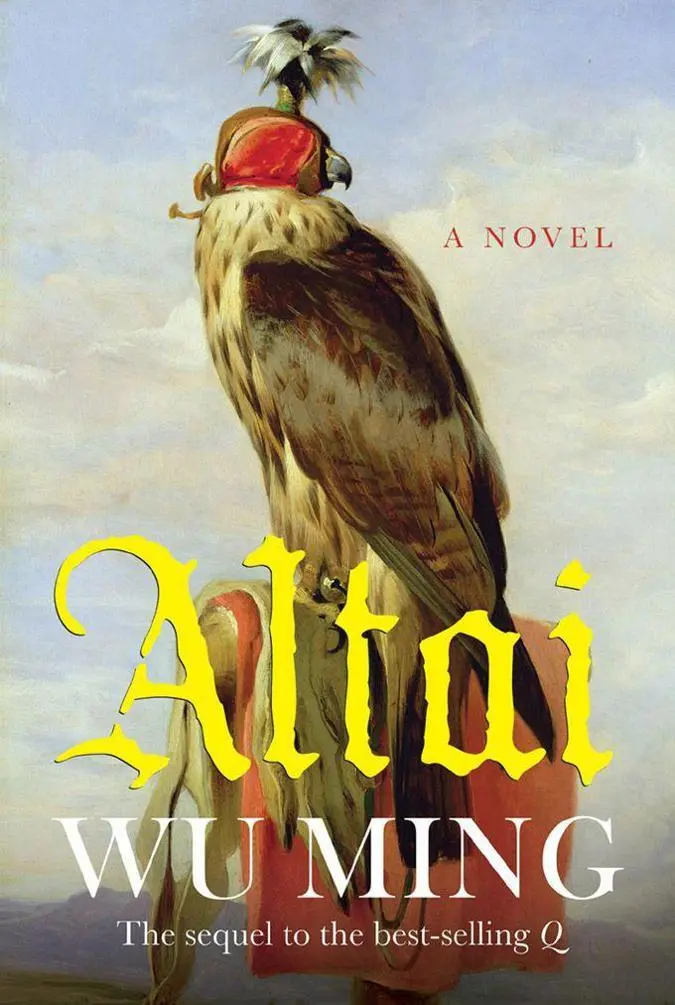
- Название:Altai
- Автор:
- Издательство:Verso
- Жанр:
- Год:2013
- ISBN:нет данных
- Рейтинг книги:3 / 5. Голосов: 1
-
Избранное:Добавить в избранное
- Отзывы:
-
Ваша оценка:
Altai: краткое содержание, описание и аннотация
Предлагаем к чтению аннотацию, описание, краткое содержание или предисловие (зависит от того, что написал сам автор книги «Altai»). Если вы не нашли необходимую информацию о книге — напишите в комментариях, мы постараемся отыскать её.
Through a series of deadly political games leading all the way to the Sultan’s palace in Constantinople, De Zante and his companions spiral headfirst toward a conflict in which the great empires of the Republic of Venice and the Ottomans threaten the very foundations of civilization.
Altai — читать онлайн бесплатно полную книгу (весь текст) целиком
Ниже представлен текст книги, разбитый по страницам. Система сохранения места последней прочитанной страницы, позволяет с удобством читать онлайн бесплатно книгу «Altai», без необходимости каждый раз заново искать на чём Вы остановились. Поставьте закладку, и сможете в любой момент перейти на страницу, на которой закончили чтение.
Интервал:
Закладка:
Selim-sani, Sovereign of the House of Osman, Sultan of Sultans, Khan of khans, Caliph of the faithful and successor of the Prophet. Guardian of the holy cities of Mecca, Medina and Jerusalem, Caesar of the Roman Empire, Padisha of the three cities of Istanbul, Edirne and Bursa, and of the cities of Damascus and Cairo.
That was how the pages had announced Selim’s arrival, following the titles owed to him with a list of his possessions, from Abyssinia to Hungary, from Mesopotamia to Algiers.
How that pompous introduction clashed with his most famous nickname — Sarbosh, the Drunk — and the gossip about his dissolute habits. The subjects who acclaimed him from the benches of the hippodrome knew very well that Sultan Selim, the shadow of God on earth, had obtained those titles only thanks to the death of his brothers, Mustafa and Bayezid, eliminated during his father’s reign after years of plotting and lies.
With a gesture that looked like a blessing, Selim rose to his feet and saluted the people and the troops. Thousands of heads bowed and eyes stared up at him from below, because the Sultan’s face was a rare thing to see. I strained to see, too, wanting to know whether he was really repellent, swollen and light-headed with spirits, as some of the dispatches I had read in Venice said he was. But I was too far away, and the Great Turk immediately went and sat in the shade, on the covered balcony of the great palace of Ibrahim Pasha, which looked out over the ancient Byzantine arena.
The other windows of the building, some of them covered with grilles and shutters, were reserved for members of the imperial family. On either side of the façade, big wooden triple-tiered galleries rose. On one of these sat Yossef Nasi, and David Gomez beside him, a short distance from the dignitaries and the Grand Vizier. The European ambassadors were on the other side. I recognized the Polish voivode, seated beside the Seigneur de Grantrie.
I had taken my place with Donna Reyna and her entourage in a covered stand right in front of the Sultan’s balcony. That put me a few feet away from Dana, who accompanied her mistress, although my attempts to meet her eye had been unsuccessful.
“There’s our Don Yossef enjoying his triumph,” said Donna Reyna, by my side. “He has managed to make everyone submit, and exploited the Sultan’s thirst.”
I didn’t catch the phrase then, and went on watching the parade. Passing below the obelisk of Thutmosis at that moment were the Azabs, the ill-defined troop of irregular infantrymen and those responsible for general field duties, while the higher imperial statesmen paid their respects to the Sultan and received the greetings of the Grand Vizier. In the front rank of senior officials I recognized Kapudan Pasha Muezzinzade Ali, the Great Admiral of the fleet, and Lala Mustafa Pasha, commander-in-chief of the army.
“And here are the Sultan’s champions, who will have to bring about his victory, so that he can show himself worthy to be his father’s son.” Donna Reyna fluttered a crimson fan in front of her face. “But Suleyman would have marched at the head of his soldiers, like a true warrior. Selim prefers to toast their success from the cellar doorway.”
I couldn’t help glancing around, worried that someone might hear her. I tried to meet Dana’s eyes again, but Donna Reyna interposed herself between us, and I had a sense that she did so quite deliberately. Lest I seem rude, I resigned myself to replying. “You don’t seem to have much confidence in the success of this enterprise, Donna Reyna.”
Another red flutter. “On the contrary, Signor Cardoso, I think it will be a real triumph. How could it be otherwise? On one side is Selim, displaying all the power of the Ottoman Empire, and on the other is an undefended island, far away from any possible ally.” She pointed with her fan. “Look at Don Yossef. Look at him carefully, because he is the true author of all of this. And most importantly, he’s the one who’s paying the bill.”
I turned toward her; she was pleased to have attracted my attention.
“The Nasis are bankers, and the only art to which they have ever devoted themselves is finance,” she said. “We pay for the wars of the sovereigns. This time, instead of a useful percentage, it would seem that we are going to receive a crown.”
Nasi wasn’t merely dedicating himself to the most powerful army in the world — he was financing it. Perhaps that was his hope: to move his credit to a more resonant coin than gold and silver. To buy the freedom of the future kingdom. It wouldn’t be the Israelites conquering Jericho, but at least a Jew’s money would make it possible. Watching that great destroying machine pass by, I wondered if it would be enough.
“So it seems that I am about to be a queen,” Reyna went on. “Melancholy and alone.”
“You seem to be neither of those things, my lady,” I lied.
“You couldn’t possibly understand. All women who are forced to live in the shadow of a great man have something in common: hushing up his weaknesses, weaving tapestries in the empty silence of a palace. I’m sure the Sultan’s consort would agree with me.”
“And I’m sure that many women would like to be in your place.”
Rather than turning toward me, she let her eye fall on Dana. “And yet sometimes a servant has more freedom than a queen.”
She said nothing more, but that was enough to spark my suspicion, and suspicion, in a man of my profession, is as vast as a mine and more inflammable than pitch. Those words, addressed to me as she referred with her eyes to Dana, were a precise allusion. I remembered Dana’s words after the first night that I had spent with her. She had told me repeatedly not to tell anyone what had happened between us.
I was a thousand times more harmless, for you, with a dagger in my hand.
I had to discover whether Reyna knew, or even merely imagined, that her chambermaid was spending almost every night in my room.
The cheers of the crowd drowned out my thoughts. A long line of cannon, pulled by oxen and escorted by companies of artillerymen, had entered the hippodrome. There were cannon of every size, caliber and style, embellished with a thousand ornaments, with mouths shaped like the jaws of lions and wolves. Culverins, bombards, mortars, serpentines, siege cannons and half-cannons. A black snake whose tail I still couldn’t see even when the head had traveled halfway around the arena.
Leading the monster was a piece of artillery that would never see the coast of Cyprus, but which the Ottomans venerated like a talisman. It was the huge bombard of the Hungarian engineer Orban, used during the siege of Constantinople. I counted thirty pairs of oxen forced to pull it, and judged that it was at least fifteen feet long. In spite of its size, I suspected that during the siege it had been more of a hindrance than a help. You couldn’t fire it more than twice a day, and that had allowed the Byzantines to rebuild during the night what the cannonballs had destroyed during the day. And yet, more than a century later, that basilisk more than anything else bore witness to the superiority of the Turks over the European fortresses.
Now the guilds of armorers, foundry men and other war-related trades were preparing to close the parade. Out of the corner of my eye I saw Donna Reyna handing a note to Dana and whispering something in her ear. Dana nodded a few times, and then slipped away.
I saw her emerging among the crowd, and a few moments later I excused myself too, to go and join her outside the hippodrome.
When I found her, she was walking quickly along the Imperial Road. I stepped forward and gestured to her to follow me into an alleyway, because in Constantinople it isn’t thought seemly for a man and a woman to stop in the street and talk.
Читать дальшеИнтервал:
Закладка:
Похожие книги на «Altai»
Представляем Вашему вниманию похожие книги на «Altai» списком для выбора. Мы отобрали схожую по названию и смыслу литературу в надежде предоставить читателям больше вариантов отыскать новые, интересные, ещё непрочитанные произведения.








Обсуждение, отзывы о книге «Altai» и просто собственные мнения читателей. Оставьте ваши комментарии, напишите, что Вы думаете о произведении, его смысле или главных героях. Укажите что конкретно понравилось, а что нет, и почему Вы так считаете.