Wu Ming - Altai
Здесь есть возможность читать онлайн «Wu Ming - Altai» весь текст электронной книги совершенно бесплатно (целиком полную версию без сокращений). В некоторых случаях можно слушать аудио, скачать через торрент в формате fb2 и присутствует краткое содержание. Год выпуска: 2013, Издательство: Verso, Жанр: Историческая проза, на английском языке. Описание произведения, (предисловие) а так же отзывы посетителей доступны на портале библиотеки ЛибКат.
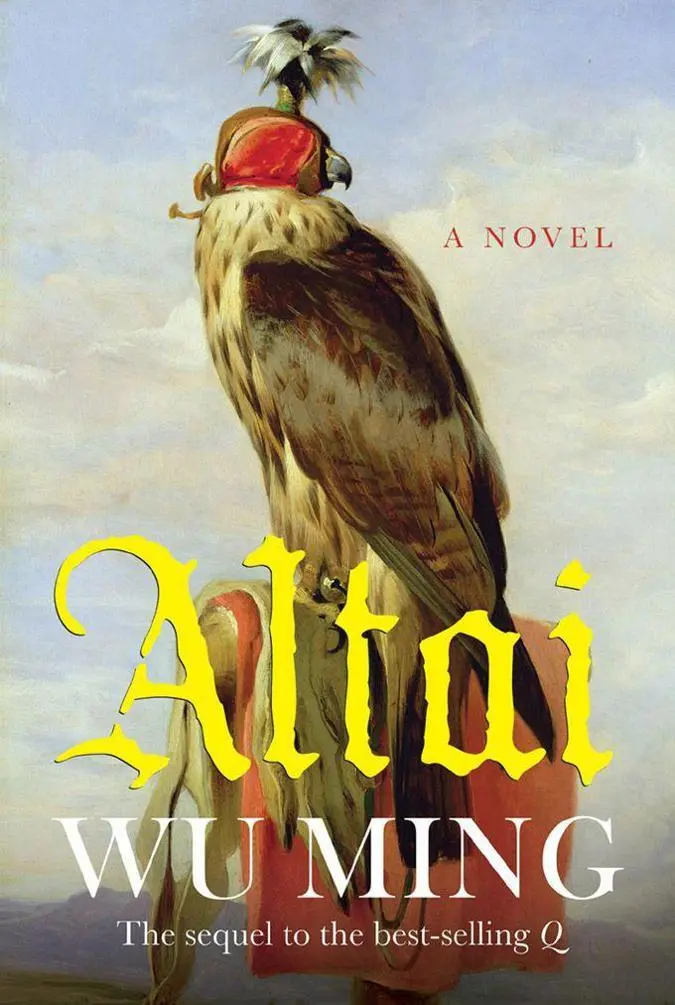
- Название:Altai
- Автор:
- Издательство:Verso
- Жанр:
- Год:2013
- ISBN:нет данных
- Рейтинг книги:3 / 5. Голосов: 1
-
Избранное:Добавить в избранное
- Отзывы:
-
Ваша оценка:
Altai: краткое содержание, описание и аннотация
Предлагаем к чтению аннотацию, описание, краткое содержание или предисловие (зависит от того, что написал сам автор книги «Altai»). Если вы не нашли необходимую информацию о книге — напишите в комментариях, мы постараемся отыскать её.
Through a series of deadly political games leading all the way to the Sultan’s palace in Constantinople, De Zante and his companions spiral headfirst toward a conflict in which the great empires of the Republic of Venice and the Ottomans threaten the very foundations of civilization.
Altai — читать онлайн бесплатно полную книгу (весь текст) целиком
Ниже представлен текст книги, разбитый по страницам. Система сохранения места последней прочитанной страницы, позволяет с удобством читать онлайн бесплатно книгу «Altai», без необходимости каждый раз заново искать на чём Вы остановились. Поставьте закладку, и сможете в любой момент перейти на страницу, на которой закончили чтение.
Интервал:
Закладка:
“That was only the prelude,” I pressed him. “And after that? You left the capital, your allies. .” I paused for a second, before finishing the sentence. “The woman you loved.”
“You’re not one for letting things go, are you? You must have been very good at your job. If we’d met somewhere else, at some other time, I wouldn’t have hesitated to cut your throat.” The unexpected words chilled my blood. “I have spent my life fighting alongside the humble folk,” he continued. “That is my vocation. The vocation of people like Nasi, on the other hand, is to do business with princes and emperors. My place is not at Palazzo Belvedere. I sensed as much that day, after meeting Suleyman, but I chose to wait, to put myself to the test. At my age it’s difficult to give up the love of a woman, to give up having her beside you on the last stretch of your life. And when you decide to do it, you have to put a great distance between you.”
“You’ve talked to me about what you’ve lost. What do you have left?”
My words, spoken on impulse, must have penetrated the shell that protected him, touching him at a sensitive spot. The old man turned to look at the others. Two of them were already sound asleep, but Mukhtar was standing as straight as a figurehead, defying the sea to unbalance her. Or perhaps it was Hafiz.
“Just them.”
“Why do they always go with you?”
The night breeze hissed among the sails, made the joints creak, and together with the breaking of the waves against the keel it seemed to be composing a tune.
“I bought Hafiz and Mukhtar from a Portuguese slave trader who wanted to be rid of them. He thought he’d found a stable boy and a concubine, but when he worked out what kind of warriors they were, he took fright. I gave them their freedom, and since then they’ve called me ‘Baba,’ as if they were the children I never had.” He paused, as if to keep a hint of emotion at bay, and again I thought of the man I had for years called father, even though he wasn’t. “Ali came back to Mokha five years ago, after being away for a long time. His sheik died in Mecca while on the pilgrimage, and he headed south. He is a dervish, a Sufi. He was a great help to us during the rebellion last year. Perhaps you have heard that the rebels were heretics. They say that about all rebels. The truth is that they were peasants who were weary of being robbed by Turkish officials, and those religious men gave them a voice. Thanks to Ali, I was able to go on buying coffee from the insurgent tribes. Between us, we convinced the Zaydis to leave the city just before the Sultan’s fleet arrived. We avoided a bloodbath in Mokha.”
Far from appeasing my curiosity, his stories aroused it still more, if possible, but now the old man began preparing for sleep, adjusting the mat he was sitting on and arranging his traveling bag as a pillow. I had just enough time for one last question, and decided to come out with it.
“The other day, at your house, I understood that you disapproved of Don Yossef’s project. So why did you decide to help him?”
“I don’t really disapprove of it,” he said, resting his head on his bag. “But, you see, if you want to catch a hare, whether you hunt it with hounds or with a falcon, on foot or on horseback, it will always be a hare. Freedom, on the other hand, never remains the same; it changes according to the way you hunt. And if you train dogs to catch it for you, you may just bring back a doggy kind of freedom.”
I thought I understood what he was getting at, and tried to cloak my understanding under the authority of a famous piece of writing, one that the Consigliere had wanted all his subordinates to know by heart: “Machiavelli wrote that you must keep your eye on the end, not the means.”
“Yes, Yossef often used to say the same thing.” He closed his eyes and arranged himself on his side. “Over the years, I’ve learned that the means change the end.”
He wished me a good night’s sleep. I watched him drifting off, then, exhausted, I decided to lie down as well. Before closing my eyes, I looked up. The silhouette of Mukhtar, or perhaps Hafiz, was still there, watching motionlessly over everyone’s dreams.
26
We put in at a teeming little town. The ships en route for the Aegean, toward Smyrna, often moored at those docks. When storms lashed the White Sea, the boats and their cargoes sought refuge there. From the inland regions of Mysia and Anatolia came foodstuffs on their way to the capital. Judging by what Ismail said, the man we were looking for was a spider in the middle of this web, and the town, Bandirma, was his nest.
A unit of janissaries stood guard by the lighthouse, amid the fishermen’s stalls and the cases and barrels ready for lading. Their feathered hats were visible above the heads of the crowd. And as we walked along the quay, I saw their eyes watching our every step.
“Stop!” the captain ordered us.
Above his bushy mustache his expression was icy. A scar furrowed his face. Instinctively, our company closed ranks. The janissaries came closer. The captain narrowed his eyes. “Who are you and where do you come from?”
“I’m a coffee merchant and these are my colleagues. My name is Ismail al-Mokhawi.”
“Mokhawi?” The captain’s piggy eyes fixed on Ali. “Are you Yemenis?”
“Damned dogs, get back to your homeland!” muttered someone behind him.
Ismail remained impassive. “We are all subjects of the Sultan, God have mercy on him, and we are under his protection.”
The captain of the janissaries clicked his tongue and said, “He looks like a renegade Frank to me, and as to your friend,” he pointed at Ali, “we’ve seen plenty like him, down in Yemen. Heretic dogs, ready to cut your throat while you sleep.”
I noticed that the activity in the port had ceased. The people had formed a sort of circle, roping off the arena where the cocks were about to fight. I noticed Ali slipping his fingers around the hilt of his scimitar. Hafiz and Mukhtar had their hands on their belts. Ismail raised a hand, asking for calm. “These men aren’t rebels. If the Sultan’s standard is flying over Mokha again, it’s down to me. It was I who ensured that you could come in without paying a blood price.”
The captain didn’t seem very interested. He spat on the ground, as the onlookers pressed in behind the janissaries, who struggled to contain them. A leg appeared out of the scuffling crowd and kicked at the old man’s stick. Ismail managed not to fall. Mukhtar stepped to his side, shielding him.
The soldiers were irresolute, torn between their duty to contain the crowd and their desire to settle their scores with those whom they perceived as enemies. The captain of the janissaries drew his sword and spun about, threatening all the people around them. Meanwhile we retreated. Hafiz and I now faced the janissaries, while Mukhtar clung to Ismail and Ali, her hand on the hilt of her sword, opening up a path behind us. The captain barked at us not to move, while the people, who continued to rage at us, seemed ready to overwhelm his men. Then Mukhtar put her hand to her belt and drew a weapon that I had never seen before: a hilt from which long strips of steel protruded, supple and twisting. These, when whirled in the air above our heads, gave off sparks and a sound that chilled the blood. The crowd fell silent, and the captain of the janissaries froze where he stood. Ismail rested his hand on his pistol. Time seemed to stop.
Then the captain moved toward us, breaking the spell. The crowd roared. Ismail leveled his weapon, and the Indian girl prepared to bring hers down so that the steel blades first shredded the soldier’s hat, then did more serious damage below. I waited for the tragedy to happen.
Читать дальшеИнтервал:
Закладка:
Похожие книги на «Altai»
Представляем Вашему вниманию похожие книги на «Altai» списком для выбора. Мы отобрали схожую по названию и смыслу литературу в надежде предоставить читателям больше вариантов отыскать новые, интересные, ещё непрочитанные произведения.











Обсуждение, отзывы о книге «Altai» и просто собственные мнения читателей. Оставьте ваши комментарии, напишите, что Вы думаете о произведении, его смысле или главных героях. Укажите что конкретно понравилось, а что нет, и почему Вы так считаете.