Wu Ming - Altai
Здесь есть возможность читать онлайн «Wu Ming - Altai» весь текст электронной книги совершенно бесплатно (целиком полную версию без сокращений). В некоторых случаях можно слушать аудио, скачать через торрент в формате fb2 и присутствует краткое содержание. Год выпуска: 2013, Издательство: Verso, Жанр: Историческая проза, на английском языке. Описание произведения, (предисловие) а так же отзывы посетителей доступны на портале библиотеки ЛибКат.
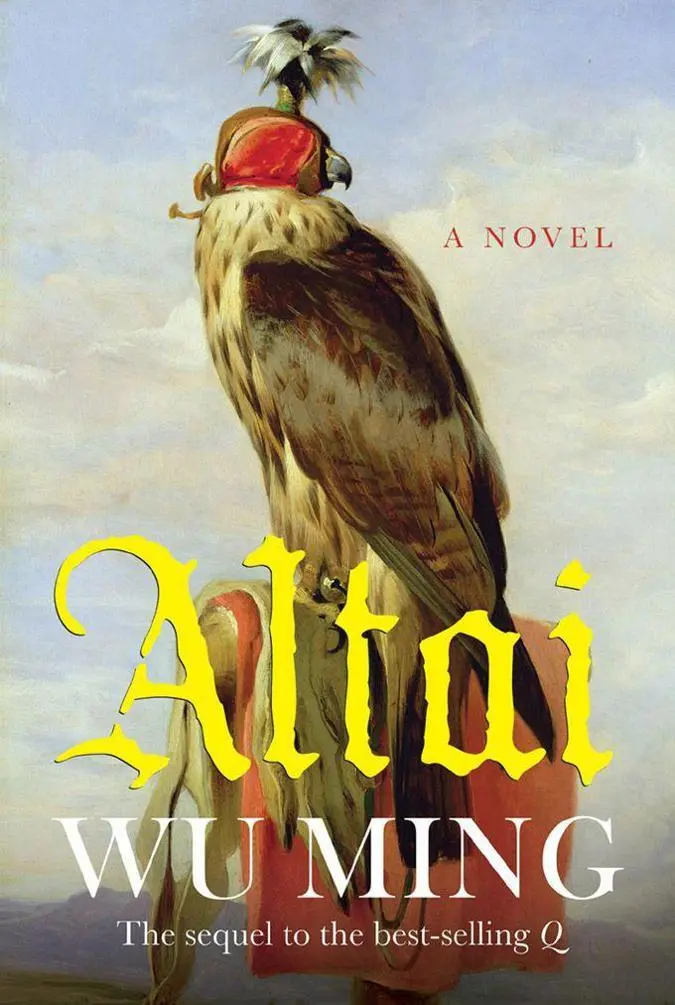
- Название:Altai
- Автор:
- Издательство:Verso
- Жанр:
- Год:2013
- ISBN:нет данных
- Рейтинг книги:3 / 5. Голосов: 1
-
Избранное:Добавить в избранное
- Отзывы:
-
Ваша оценка:
Altai: краткое содержание, описание и аннотация
Предлагаем к чтению аннотацию, описание, краткое содержание или предисловие (зависит от того, что написал сам автор книги «Altai»). Если вы не нашли необходимую информацию о книге — напишите в комментариях, мы постараемся отыскать её.
Through a series of deadly political games leading all the way to the Sultan’s palace in Constantinople, De Zante and his companions spiral headfirst toward a conflict in which the great empires of the Republic of Venice and the Ottomans threaten the very foundations of civilization.
Altai — читать онлайн бесплатно полную книгу (весь текст) целиком
Ниже представлен текст книги, разбитый по страницам. Система сохранения места последней прочитанной страницы, позволяет с удобством читать онлайн бесплатно книгу «Altai», без необходимости каждый раз заново искать на чём Вы остановились. Поставьте закладку, и сможете в любой момент перейти на страницу, на которой закончили чтение.
Интервал:
Закладка:
Ismail raised his right hand in greeting and called out a name in a loud voice.
Young men with thin beards replied with profuse salutations and low bows. One of them said he was the son of the man we were looking for, and that his father would be delighted by our visit.
So they guided us to his presence. He was a man of Ali’s age, tall and handsome, who towered above his mount and emanated a calm, mild strength. He got off his horse and we did the same. The hooded falcon perched on his right arm stayed obediently in its place.
From the tone of the greetings and the brief allusions to old memories, I understood that Ismail had been close to the man who was welcoming us. As he introduced him to us, he listed all of his titles, and at last I knew who he was. Hassan Agha, the Great Falconer and second chief huntsman to the Sultan. That evening, back in Palazzo Belvedere, I would discover that he was the husband of Princess Shah, daughter of Selim, and remember with surprise his simple, cordial manners. His friendship with Ismail was doubtless the true motive for that attitude, but perhaps another factor was his habit of living among fields and bushes, in close contact with animals, and not in the halls of a lordly palace, surrounded by deference and submission.
It was thus that I learned that Ismail, during his years in Constantinople, had taken part in Hassan Agha’s hunting parties, along with some illustrious lovers of the sport, one of whom was the fifth vizier, Lala Mustafa, whom I had met at the Divan.
We got back on our horses, and reached the top of a hill, the highest in the area. Below us, beyond a grove of willows and flowering bulrushes, the calls of ducks and toads revealed the presence of a stretch of water.
The falconer removed the hood from his bird, and the creature took flight with a nervous flutter of wings. It soared to a high altitude and began playing in the gusts of wind. Hassan Agha’s men came down among the marsh grasses, beating the ground with their sticks. A flock of ducks rose from the depths.
The falcon flew a few more turns, then fell in a vertiginous dive upon its prey, which it grabbed with its claws. The victim’s flight was cut short in a cloud of down and feathers. The young horsemen hurled themselves toward the spot where it had fallen, and came back to us bearing the falcon, which still gripped the duck in its claws. Hassan Agha drew it to his arm with a big piece of meat. While the falcon was eating, he slipped the prey from its clutches and put it in his bag.
“You Europeans like the company of dogs,” he said, stroking the bird with a finger. “Submissive creatures, anxious to please man, as devoted servants desire to please their master. Hunting with a falcon, on the other hand, is a matter of trust and mutual self-interest.”
The bird’s bright white plumage was streaked with a rainy pattern of dark grey patches. I had never seen an animal like it, and as politely as I could I asked the falconer what kind of bird it was.
“They say that its mother comes from the icy marshes at the edge of the world,” he replied, “and its father from the deserts of central Asia, the cradle of our people. Two different breeds, but similar enough to be able to mate, laying the eggs on the slopes of the Altai, the Mountains of Gold, which give their name to this hybrid.”
I thanked him for the attention he had given me, but he went on talking, as if the answer were a very long one. “He’s a very robust falcon, faithful, easy to train. You don’t have to do anything with an Altai, and a good falconer does as little as possible. It’s the falcon’s nature that impels it to fly and makes it grip the prey with its claws. If you want him to do that for you, you just have to show him why it’s to his advantage.”
The Great Falconer paused again, and then told the story of Prince Temujin, who after losing a battle came home across the desert with a friend. The two men hadn’t eaten for days, when they saw an Altai falcon flying high above them. The friend suggested that Temujin keep an eye on it, to take its prey away from it. The other man replied that you have to earn your food, and caught the falcon to teach it to hunt for them. Two years later, the princes finally came home. If they hadn’t trained that Altai they would have died of hunger and the world would not have known Temujin, or Genghis Khan, the greatest leader of all time.
At the end of the tale he bowed deeply, as Ismail complimented his friend on his storytelling gifts. A little way away, the young men were whirling quail carcasses on a long string to train the falcons to seize them in flight. Hafiz and Mukhtar observed the scene carefully, as if committing to memory the gestures of a ritual.
At that point, Ismail judged that it would not be impolite to pose the question that had brought us all there, half a day’s ride from the old walls.
“I was wondering, my friend, what happened to Mimi Reis. I lost trace of him, I have had no news of him, and I would like to see him as I have seen you.”
The falconer nodded. “He had a few problems, so he decided to leave the city. You will find him in Bandirma, on the Sea of Marmara, doing exactly what he has always done. Mimi Reis will always navigate the sea, even if he has only a cardamom pod as a boat and a cup of coffee as the only available sea.”
The two men laughed. I had never heard Ismail’s laugh. It was sonorous, and sounded like the laughter of a young man, but it left a melancholy echo behind.
I would have liked to know more about the past that linked the old man to our host and to the pirate we were looking for, but instead the two friends’ words flowed together into rumors about imminent war.
“They say our Sultan wants to terminate the construction of the Edirne mosque,” the Turk explained. “He needs lots of money, and the Grand Mufti has told him that for the glory of God it is better to use the booty from a holy war than the taxes of subject Muslims.”
That was an opinion that I hadn’t heard before. The vox populi said that Selim needed to inaugurate his reign with a conquest, lest he be seen as inferior to his predecessors.
Ismail’s comment was somewhat broad, and I tried to work out what he was trying to imply. “The men seem to be going off to war like dogs crowding around a carcass. But the causes are complex, hard to discern. That’s why the humble people experience wars as natural disasters, like floods or plagues. They see cannons of bronze, not the gold that originated them. In the lands I come from, the cannon smelters and the money coiners were the same people.”
“The point of view of the humble folk is not ours, Ismail,” said the falconer. “You know what impels the powerful men of this city. And it’s the ambition of powerful men that drives wars. There is no need to seek other reasons.”
With those words, he gestured to his attendant to summon the others. The hunting day was over, and Hassan Agha invited us to his palace, which was not far away.
As we road among the grassy hills, I felt free, just as I had felt when I arrived in Constantinople, when I saw the city from the deck of the ship.
Even in the saddle, pages and boys made their raptors fly. The little ones, sparrow-hawks, kestrels and honey buzzards, perched on the arms of the youngest boys, sped into the air until they had a good view of the ground below, and then, with the wind supporting their wings, stopped in midair, waiting to plunge down on their earthly quarry. I remembered that this attitude was called, in Italian lands, the Holy Spirit. Like Tuota’s dog, in Ragusa.
Then, once again, it was the moment of the falcon that Hassan Agha had called an Altai. I was drawn to the creature; it had a fierce and noble appearance, and yet it was serene, as if its fellowship with man came from the very distant past, as if it had always known the voice and arm of its wingless companion.
Читать дальшеИнтервал:
Закладка:
Похожие книги на «Altai»
Представляем Вашему вниманию похожие книги на «Altai» списком для выбора. Мы отобрали схожую по названию и смыслу литературу в надежде предоставить читателям больше вариантов отыскать новые, интересные, ещё непрочитанные произведения.









Обсуждение, отзывы о книге «Altai» и просто собственные мнения читателей. Оставьте ваши комментарии, напишите, что Вы думаете о произведении, его смысле или главных героях. Укажите что конкретно понравилось, а что нет, и почему Вы так считаете.