Wu Ming - Altai
Здесь есть возможность читать онлайн «Wu Ming - Altai» весь текст электронной книги совершенно бесплатно (целиком полную версию без сокращений). В некоторых случаях можно слушать аудио, скачать через торрент в формате fb2 и присутствует краткое содержание. Год выпуска: 2013, Издательство: Verso, Жанр: Историческая проза, на английском языке. Описание произведения, (предисловие) а так же отзывы посетителей доступны на портале библиотеки ЛибКат.
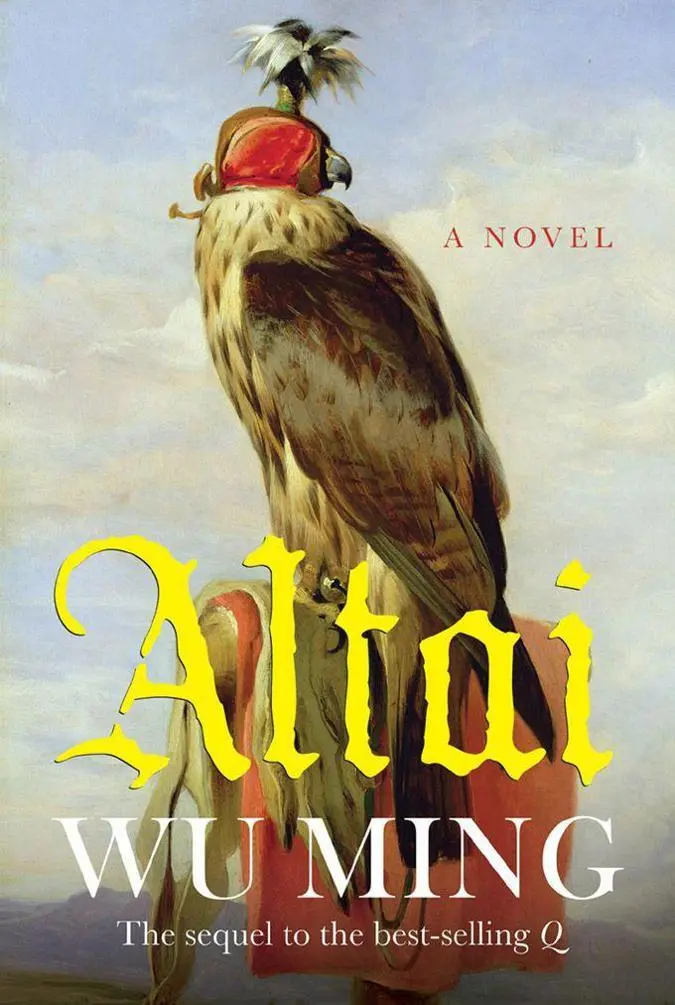
- Название:Altai
- Автор:
- Издательство:Verso
- Жанр:
- Год:2013
- ISBN:нет данных
- Рейтинг книги:3 / 5. Голосов: 1
-
Избранное:Добавить в избранное
- Отзывы:
-
Ваша оценка:
Altai: краткое содержание, описание и аннотация
Предлагаем к чтению аннотацию, описание, краткое содержание или предисловие (зависит от того, что написал сам автор книги «Altai»). Если вы не нашли необходимую информацию о книге — напишите в комментариях, мы постараемся отыскать её.
Through a series of deadly political games leading all the way to the Sultan’s palace in Constantinople, De Zante and his companions spiral headfirst toward a conflict in which the great empires of the Republic of Venice and the Ottomans threaten the very foundations of civilization.
Altai — читать онлайн бесплатно полную книгу (весь текст) целиком
Ниже представлен текст книги, разбитый по страницам. Система сохранения места последней прочитанной страницы, позволяет с удобством читать онлайн бесплатно книгу «Altai», без необходимости каждый раз заново искать на чём Вы остановились. Поставьте закладку, и сможете в любой момент перейти на страницу, на которой закончили чтение.
Интервал:
Закладка:
The Altai flew high over the countryside. We went on, each in his own disguise, still not suspecting the carnival that would see us dancing together.
25
The midday sun erased the shadows from the dock at Uskudar and scattered drops of gold in the puddles left by the nighttime rain. The reflections dazzled the eye. It was hot, perhaps for the first time since I had come to the city, and the sea’s bright hues spoke of summer. Men and goods crowded the big open space on the Bosphorus; products from Asia and Europe went up and down between carts and holds, unloaded from the backs of stevedores and the humps of camels. Nothing seemed to stop for as long as a breath.
We took shelter from the light and the crowd beneath the big loggia of the mosque, which loomed over the slipway from the top of a platform.
I had grown used to asking the names of Muslim temples, because in Constantinople they tend to be named not after saints and prophets, but instead after the people who financed their construction, powerful men and women — the more influential, the more remarkable the architecture. Knowing the kulliye of the city is a way of knowing the personalities of the empire, whether past or present.
Ismail told me that the person responsible for this particular mosque was Mihrimah Sultan, a name famous even in Venice, where I had heard various rumors about her. Some said that her father, Suleyman the Magnificent, had besieged Malta just to make her happy, and they hinted at incestuous love. Some maintained that Mihrimah was an odalisque, an unscrupulous concubine, whose beauty had so bewitched Suleyman that he was impelled into that ruinous military campaign.
I asked Ismail if he knew which of those stories was true, and he laughed. “None,” he replied. “The princess herself financed the expedition against Malta.” He added that Mihrimah, Selim II’s big sister, was the oldest woman in the Sultan’s family. The siblings’ mother, the legendary Roxelana, had in fact been dead for some time. So, along with Nurbanu, Mihrimah was one of the most powerful women in the empire.
“In Europe, no one can imagine the women of the harem capable of moving money, fleets, armies. This demonstrates how little we know about what’s happening here.” He shrugged. “Besides, the matter is reciprocal.”
The boat that awaited us, a felucca with a lateen sail, was now ready to set off. Ali beckoned us over. We climbed on board and the sailors hurried to pick up their oars. The boat bore us off, away from the hubbub of the port. Soon we found ourselves on the open sea, heading south.
As evening fell, I realized that I hadn’t exchanged a word with a living soul since we had weighed anchor. The sun set slow and red. Everyone stopped to pray. After that, each of us returned to his own place, waiting.
All but Mukhtar. The young woman traced a geometrical figure on the planks of the deck with a piece of white chalk, then aligned her feet with some of the marks and began to move in a dance that appeared to be simulating an act of combat. Her body seemed that of a reptile, or a lynx. I had seen great fighters and fencers practicing their movements bare-handed, and although the girl’s were much more graceful and less direct, her limbs seemed to contain a strength not unlike that of a coiled spring, or a serpent ready to strike.
Ali must have noticed my puzzlement and imagined my reflections. He came over and said in a low voice, “In the land from which she comes, it is not unusual for girls to be sent to fight. They are trained in places like convents, under the direction of a sheik who also understands medicine and astrology. It is a skill practiced by idolaters, but also by those who have embraced the true religion. You see the figure she has drawn on the floor? In their language, that is called kalam . It conveys the precise steps and effective angles of attack and defense. In the language of the Book , kalam means ‘the word of God.’”
“So Mukhtar’s movements run through the word of God?” I asked him.
Ali thought for a moment before replying, “Yes, I think you could say that. But you could say it about any one of our movements, because everything that happens is the fruit of His creative will.”
The figure danced on, with the sea all around and the sunset in the background.
That night, beneath a sky with stars clustered thick as cherry blossoms, I struggled to fall asleep. The placid rhythm of the boat would have encouraged rest had I not been enchanted by that dangling moment. We were far from land, in perfect equilibrium between the vast mass of water and the dark blue vault of the sky, sometimes barely distinguishable from one another. The two young Indians had recited their prayers along with Ali and were now sitting back to back, they, too, enchanted by the spectacle of the night, while the other lay down on his mat.
Ismail crouched downwind, in the prow. I studied his dark silhouette and thought of Tuota. Who knew what had become of him. It was fate that put the men in my way who led me out on the sea. I went and sat next to Ismail, and we said nothing for a while, as if we were afraid to disturb the silence of the night. It was he who spoke first.
“There’s something you want to ask me and something that’s keeping you from it.”
His insight made me smile. “You know what I used to do for a living. I don’t know how you would interpret my curiosity.” He in turn gave me an amused glance.
“You were a policeman. Who’s to say that I haven’t done even worse things than that?” He was right. I knew little or nothing about him, and that was precisely the reason for my curiosity.
“You told the Great Falconer that the causes of the war are an impenetrable tangle. Have you fought?”
He stared at the dark expanse ahead of us. “In Germany, many years ago.”
“Were you a soldier?”
I thought he wasn’t going to reply, and sat counting my breaths. As I drew the fifth, he spoke: “Have you ever heard of the city of Münster, in Westphalia? I was there, in the year of our Lord 1534. And before that I was with the insurgent German peasants, at the battle of Frankenhausen.”
Münster. All kinds of stories were associated with that name. It was a kind of curse: “Münster” summed up the madness of the world. It was said that the Anabaptist heretics had abolished all the sacraments there, all traces of religion, of human and divine order. It was said that they were guided by the devil himself, in the false guise of a new David. It seemed impossible that I found myself in the presence of a witness of such far-off events. This man came from another world, the horrors of which I had heard talked about in Venice.
I stirred myself and tried to resume the thread of my questions. “You wanted to found the kingdom of God on earth, didn’t you?”
He looked into the distance again, drawn by the darkness, as his fingers slipped along his chest and rummaged under his shirt. “We wanted justice. And a reason to live and die. I had the good fortune to come out of it alive and meet people who explained something about the world to me. Something you don’t find written in the Bible or the Koran, but in account books and registers.” He fell silent. The weight of his memories couldn’t have been easy to bear.
“I suppose that one of those people, the ones who opened your eyes, was Yossef Nasi.”
He nodded, running his fingers through his beard. “I met him in Venice, after lengthy peregrinations, and when the Inquisition forced us to leave Europe, we chose Constantinople, where Yossef and Beatriz, or Donna Gracia, obtained an audience with Suleyman the Magnificent and offered him their services. I was there too that day, at the Seraglio. A heretic in the presence of the Sultan.” He turned to look at me. “Satisfied?” Then he wrapped himself up in his cloak, stretched his legs, leaned his back against the wall and closed his eyes.
Читать дальшеИнтервал:
Закладка:
Похожие книги на «Altai»
Представляем Вашему вниманию похожие книги на «Altai» списком для выбора. Мы отобрали схожую по названию и смыслу литературу в надежде предоставить читателям больше вариантов отыскать новые, интересные, ещё непрочитанные произведения.








Обсуждение, отзывы о книге «Altai» и просто собственные мнения читателей. Оставьте ваши комментарии, напишите, что Вы думаете о произведении, его смысле или главных героях. Укажите что конкретно понравилось, а что нет, и почему Вы так считаете.