Wu Ming - Altai
Здесь есть возможность читать онлайн «Wu Ming - Altai» весь текст электронной книги совершенно бесплатно (целиком полную версию без сокращений). В некоторых случаях можно слушать аудио, скачать через торрент в формате fb2 и присутствует краткое содержание. Год выпуска: 2013, Издательство: Verso, Жанр: Историческая проза, на английском языке. Описание произведения, (предисловие) а так же отзывы посетителей доступны на портале библиотеки ЛибКат.
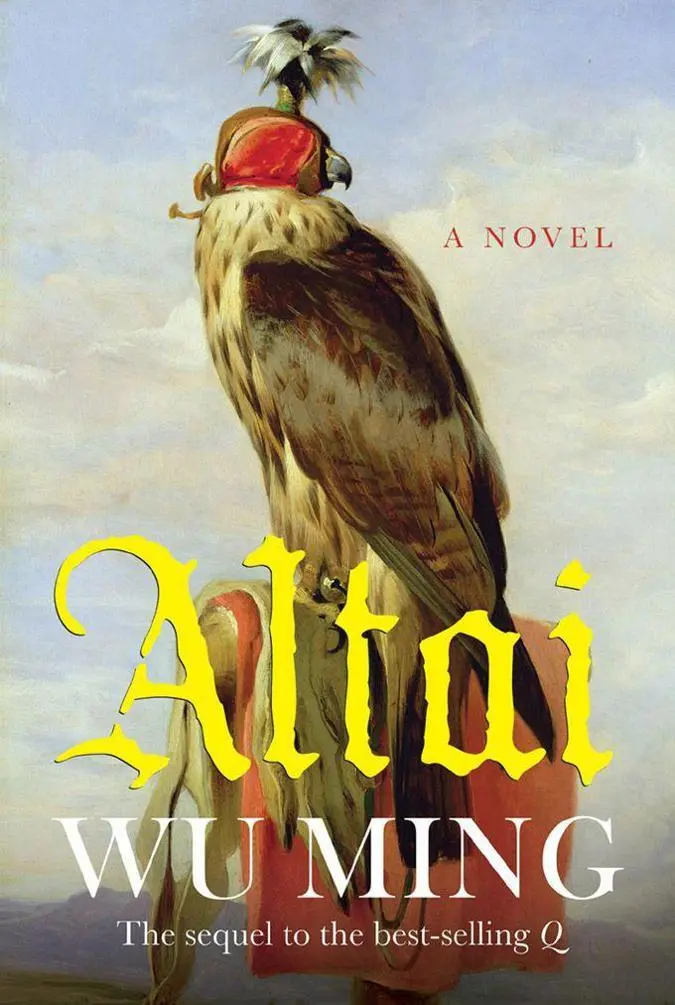
- Название:Altai
- Автор:
- Издательство:Verso
- Жанр:
- Год:2013
- ISBN:нет данных
- Рейтинг книги:3 / 5. Голосов: 1
-
Избранное:Добавить в избранное
- Отзывы:
-
Ваша оценка:
Altai: краткое содержание, описание и аннотация
Предлагаем к чтению аннотацию, описание, краткое содержание или предисловие (зависит от того, что написал сам автор книги «Altai»). Если вы не нашли необходимую информацию о книге — напишите в комментариях, мы постараемся отыскать её.
Through a series of deadly political games leading all the way to the Sultan’s palace in Constantinople, De Zante and his companions spiral headfirst toward a conflict in which the great empires of the Republic of Venice and the Ottomans threaten the very foundations of civilization.
Altai — читать онлайн бесплатно полную книгу (весь текст) целиком
Ниже представлен текст книги, разбитый по страницам. Система сохранения места последней прочитанной страницы, позволяет с удобством читать онлайн бесплатно книгу «Altai», без необходимости каждый раз заново искать на чём Вы остановились. Поставьте закладку, и сможете в любой момент перейти на страницу, на которой закончили чтение.
Интервал:
Закладка:
The old man knelt down on the carpet, beside the brazier that had warmed me too. He put a pile of cushions between his back and the wall and gestured to us to make ourselves comfortable. He pointed to the Indian twins: “These are Hafiz and Mukhtar. They come from the Malabar coast of India.”
Hafiz, the boy, said something to him in Arabic, and the old man thanked him, using the only word I knew in that language: “ Shukraan .” Then he returned to Turkish: “I’m listening.” I realized that he spoke that language instead of Italian because his friends were there and he didn’t want to exclude them from our conversation.
“The other evening we were left with a question,” Nasi announced, also in Turkish. “It concerned the last letter my aunt wrote to you. Perhaps it won’t be the answer you’re looking for, but here it is. A few days have passed, and already your help would be invaluable to me.” With a gesture of his hand he attracted my attention. “Master Cardoso will tell you what it’s about.”
I was careful not to be caught off guard by this investiture, and talked about the bailiff’s letters, the Jewish doctor’s slippers, Sokollu’s intrigues, Traverso and his voyages. The German listened in silence. When I’d finished, Nasi made one last remark: “Manuel has done an excellent job, and to bring it to the best possible conclusion we need a gang of pirates to board Ashkenazi’s ship and put it off course. I remember that you used to keep company with certain people, and I know that you could find them again.”
Hafiz set down a tray with three steaming cups in the middle of the room. It was the drink I had heard them describe at Palazzo Belvedere: shells that looked like nuts, but with the flavor of coffee, left to infuse in boiling water.
We each took one, being careful not to burn our fingers. Ismail al-Mokhawi smoothed his white beard and cleared his throat.
“If I’ve understood correctly, it’s a matter of putting the Grand Vizier, his secretary and the Venetian bailiff in check all at once.” Nasi nodded, the old man burned his lips with kishir and started talking again. “Wouldn’t it be enough to denounce Traverso as a spy and have him captured by the janissaries on Ashkenazi’s ship before it left the harbor?”
“I don’t trust the janissaries, my friend. Sokollu could easily manipulate them, get rid of the evidence.”
“And yet,” Ismail remarked, “before I came here I was in Tiberias and I saw janissaries on every street corner. And your kingdom of Cyprus, won’t the janissaries and Selim’s troops be the ones to conquer it?”
This time Nasi spread his arms in a gesture of impatience. “And how could it be otherwise? We Jews, in the Ottoman Empire, can’t even go around with a razor blade. That’s why we need the Sultan and the janissaries. At least for the time being.”
I tried to work out what he could be talking about, but Ismail’s words started troubling me again.
“Isn’t that how it started, the enslavement of your people in Egypt? A Jewish dreamer who was a friend of the Pharaoh, covered with honors and prestigious duties? Then the Pharaoh died and the Jews were enslaved for four hundred years.”
The reference to Joseph hit me like a slap. A few days before, I myself had superimposed that image over Don Yossef, like a grid over a coded message, but I had stopped at the first lines, and the message I had drawn from it was totally different.
“I like it when you quote my people’s history,” Nasi replied. “Joseph was a man of God, but I hope to do as Judith did, when she went to Holofernes’s banquet and cut his head off. If you like, you could help me sharpen the sword.”
Nasi was playing a game of chance. I thought of the time, in the stinking cell in Ragusa, when I had thrown my rough dice and they had replied, “Live.” Here, every phrase from my mentor was a throw of the dice. Pause, check the result, roll again.
That last throw clattered away down the room, without giving any sign of stopping.
“Fine,” the old man said at last. “I just hope you have a firm grip on your sword.”
Nasi moved his hand up and down as if to say Give me time, have trust .
Ismail summoned Ali and the twins. He asked if they’d understood what we’d asked them to do, and added that we’d need a few days of research and may even have to leave the city.
The three of them consulted in low-voiced Arabic, then signaled their agreement with a nod of the head. Nasi thanked them, and then turned back to his friend.
“I’d like you to take Manuel. It’s thanks to his intuitions that you’ve got this far.”
“Yes, and you have to keep an eye on me.” The old man stung him, and I couldn’t work out whether he was joking or not. Then, looking at me, “I was right, about that poplar pollen and the hill of Pera. Well, the appointment’s fixed for tomorrow, after the first prayer, at the caravanserai of the Suleymaniye Mosque. I’ll show you ambushes of a different kind.”
24
We left the caravanserai on five haggard-looking bay horses. I was wearing Muslim clothes, to get round the law against infidels riding horses like everyone else. To my right was an Indian girl disguised as a man, then a man who looked like a girl, and finally a German in a cloak and turban. I wondered if the Moor Ali, behind his red beard, mightn’t be hiding unexpected features.
We went down the third hill of the New Rome, the one upon which stood the Suleymaniye Mosque, and reached the Imperial Road. In spite of his age, Ismail sat straight in the saddle and rode at a good pace. I spurred my horse to catch up with him.
“Where are we going?”
“Out of the city,” he replied crisply.
We headed westward, the only direction on the peninsula that doesn’t lead to the sea.
“We’re visiting a pirate, not a peasant,” I said, in a bid to melt the old man’s reticence.
Ismail raised his chin. “We’re not going to see him, we’re going to see the man who can tell us where to find him.”
By now we were near the Column of Arcadius, and the voices from the Grand Bazaar drowned out our words. As we crossed the square, I noticed with surprise that they were female voices, and that behind the stalls and shops selling henna, candles, flowers and yogurt, there were veiled women, most of them peasants, and that the clientele was made up of women, too.
Once we were out of the crowd, I learned from Ismail that this was Avrat Pazari , the only market in the city where Muslim women could buy and sell in peace, without servants or brothers keeping an eye on them.
Our riding party carried on past the Cannon Gate, leaving the Byzantine walls behind. We passed through the suburbs and found ourselves in the open countryside. Low hills followed one after the other, run through with waves of green. I saw snakes darting in and out by the side of the track. Ali told me not to worry, because none of them were poisonous. And the horses remained calm.
Then the countryside assumed tones of yellow and ocher, as sunflower fields filled the horizon. Sparrows and bee-eaters chirped on the branches of the few trees. Their rainbow feathers filled me with unexpected joy. At about midday, Ismail made an announcement.
“Here we are, Cardoso. Nearly there.”
The landscape was unchanged. Grass and sunflowers as far as the eye could see; nothing else. We crested a hill, and on the slope of the next one I spotted a group of men on horseback. Around them, a dance of birds flying in high circles and plunging in dives. They were falconers.
Years before, I had been the guest of a nobleman in the Trevisan marches, carrying out a task for my old bosses. Hunting with falcons was his great passion, but I could hardly say it was mine. I was pursuing different prey. On that occasion I had been bored, and had soon tired of standing with my nose in the air following the movements of the raptors. The nobleman had then bored me further with a long litany of complaints about the decadence of tempora and mores , which put such distinguished birds of prey on the forearms of unworthy priests and courtesans, though they were meant only for men of quite different status. In the end, thank God, he gave me the information I was looking for.
Читать дальшеИнтервал:
Закладка:
Похожие книги на «Altai»
Представляем Вашему вниманию похожие книги на «Altai» списком для выбора. Мы отобрали схожую по названию и смыслу литературу в надежде предоставить читателям больше вариантов отыскать новые, интересные, ещё непрочитанные произведения.







Обсуждение, отзывы о книге «Altai» и просто собственные мнения читателей. Оставьте ваши комментарии, напишите, что Вы думаете о произведении, его смысле или главных героях. Укажите что конкретно понравилось, а что нет, и почему Вы так считаете.