Wu Ming - Altai
Здесь есть возможность читать онлайн «Wu Ming - Altai» весь текст электронной книги совершенно бесплатно (целиком полную версию без сокращений). В некоторых случаях можно слушать аудио, скачать через торрент в формате fb2 и присутствует краткое содержание. Год выпуска: 2013, Издательство: Verso, Жанр: Историческая проза, на английском языке. Описание произведения, (предисловие) а так же отзывы посетителей доступны на портале библиотеки ЛибКат.
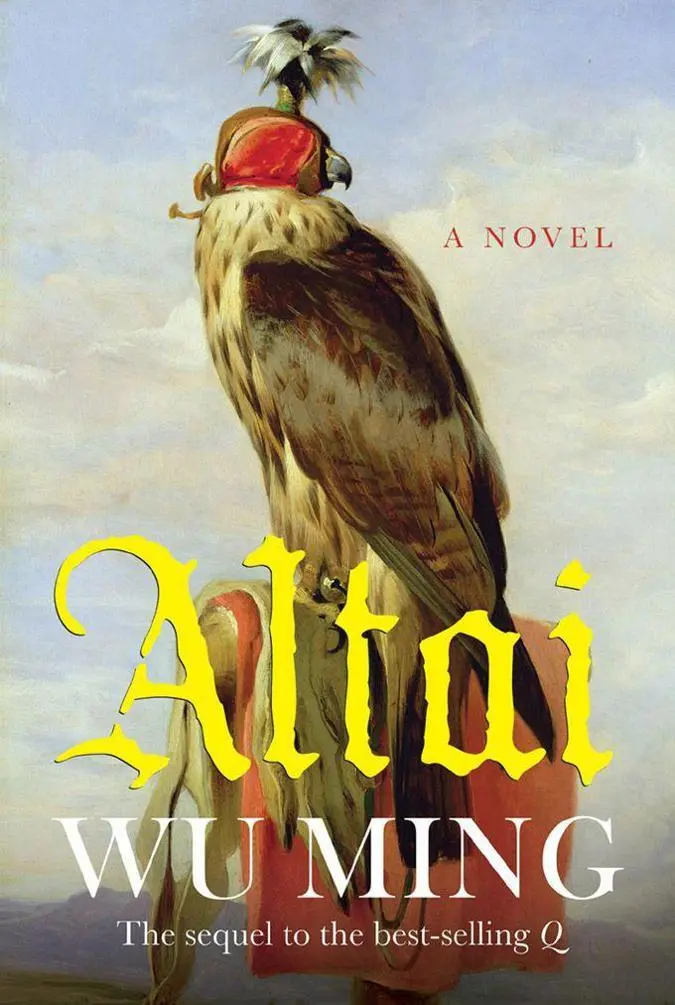
- Название:Altai
- Автор:
- Издательство:Verso
- Жанр:
- Год:2013
- ISBN:нет данных
- Рейтинг книги:3 / 5. Голосов: 1
-
Избранное:Добавить в избранное
- Отзывы:
-
Ваша оценка:
Altai: краткое содержание, описание и аннотация
Предлагаем к чтению аннотацию, описание, краткое содержание или предисловие (зависит от того, что написал сам автор книги «Altai»). Если вы не нашли необходимую информацию о книге — напишите в комментариях, мы постараемся отыскать её.
Through a series of deadly political games leading all the way to the Sultan’s palace in Constantinople, De Zante and his companions spiral headfirst toward a conflict in which the great empires of the Republic of Venice and the Ottomans threaten the very foundations of civilization.
Altai — читать онлайн бесплатно полную книгу (весь текст) целиком
Ниже представлен текст книги, разбитый по страницам. Система сохранения места последней прочитанной страницы, позволяет с удобством читать онлайн бесплатно книгу «Altai», без необходимости каждый раз заново искать на чём Вы остановились. Поставьте закладку, и сможете в любой момент перейти на страницу, на которой закончили чтение.
Интервал:
Закладка:
It was the prayer of thanks for the fruit of the vine, and it was also the first of the marriage blessings that come before the libation by the bride and groom.
We kissed for a long time, swapping sips of wine. I found it very hard to resist the desire to take her and lie down there, on the grass, beneath that carob tree that made her a child again, but I didn’t want to risk anyone discovering our secret.
We drained our glasses in a final sip, and then I told her I had to get back. I had to talk to Nasi about Bernardo Traverso’s sea crossings. We exchanged one last kiss, only brushing each other’s lips, and then she got up and let me out of her garden.
22
“Bartolomeo Nordio must have been proud of you.” Nasi received my account with these words, then asked me to help him assess what needed to be done. We had to get our hands on the bailiff’s letters and at the same time unmask Ashkenazi, while making sure that Sokollu didn’t get his clutches on our net and free the prey. That was why I hadn’t seized the letters at the hammam; if I had, the Jewish doctor would have coped, and his dealings with Traverso wouldn’t have come to light. Besides, Don Yossef added, we couldn’t carry out a large-scale action in the city, where we had neither men nor weapons. We had to make careful preparations, wait for Traverso’s first voyage and strike him on the sea.
“On the sea?” I asked. “How?”
“We’ll force Ashkenazi’s ship to make an unscheduled stopover. The ship will be inspected, and the rest you can imagine.”
“How will we force it to make a stopover?”
“Pirates. The waters between here and Candia are full of them.”
At first I thought he was joking. Just as when you’re a child and you make up a story, adding one character after another, Nasi had introduced sea-robbers into the tale, the same ones who were to act as a pretext for the war on Venice, the same ones that my father, Gioanbattista De Zante, had fought on countless expeditions. That Don Yossef could resort to pirates if necessary was a piece of information out of nowhere as far as I was concerned.
I showed my surprise, and the future King of Cyprus nodded with an inspired expression on his face. “Fortune willed that an old friend would decide to come back to town. Someone who has spent his whole life in the worst possible company. Ismail al-Mokhawi might be able to help us.”
Pirates and Anabaptists. That remark left me more baffled than ever. I remembered my mentor’s saturnine mood the day after his nighttime visit to his old friend.
Nasi guessed the nature of my reflections. “I know David talked to you about Ismail. You see, the man is a gentile, but to me he’s a brother. Have you ever had a brother?”
No, just a stillborn sister. “Not that I know of,” I replied.
“There are a lot of proverbs about being brothers, but they say everything and its opposite. It’s a bond that no one can explain. ‘ Amor di fratelli, amor di coltelli ,’ they say in Italy. ‘Brotherly love is a matter of knives.’ ‘An offended brother is more unyielding than a fortified city,’ it says in the Mishlê Shlomoh .”
I found the image appropriate: thick walls of stone. I was ignorant about too many things, and the bond between Nasi and the man from Mokha was impenetrable to me.
“Ismail’s return filled me with joy, and yet knowing that he is here torments me. He’s a rock hanging above my head.”
“Why did he come back?”
“Gracia wrote to him.”
I didn’t tell him I knew about that already, for I wanted to keep Dana out of our conversation. Nasi went on, “She asked him to help me with one last mission. She said no more than that, and she’s no longer here to put our doubts to rest.”
The explanation struck me as obvious, so much so that I couldn’t help myself.
“Perhaps she wanted to see the two of you together at the conquest of Cyprus, building up the kingdom.”
Nasi shook his head doubtfully. “Ismail hates kingdoms, sovereigns and princes. Gracia knew that better than anyone. I set out our plan for him, but his heart remained cold.”
“If that’s the case, why do you want him to help you now?”
“Chiefly because he’s the right person. And because the rock’s hanging there. We know it’s going to fall, but we don’t know where or when. I don’t want to leave these decisions to a gust of wind. I want to be the one who does the pushing.”
“Will he agree?”
“There are two things el Alemán has never held back from: favors to friends and pranks played on the powerful.”
23
The caïque bound for Üsküdar, propelled by four oars, was thin and pointed as a gondola. The Bosphorus looked like the Grand Canal of a vast rural Venice. The villages on the Asian shore were colored jewels, linked together by a chain of villas, yali , stilt-dwellings, wooden jetties. The dark water welcomed dozens of other fishing boats, as well as freighters, big merchant mahonas , a galley armed with cannon, feluccas, and punts that looked empty but concealed lovers busy swapping sweet endearments.
Once they had reached the opposite shore, the oarsmen moored the boat and we jumped out onto the uneven planks of the dock.
In the last light of day, the fishermen sat mending nets against upturned hulls. A group of children ran about between the waterside and the alleyways, and women pulled in the clothes they had hung out in the morning. No one paid us much attention.
We reached the house where I’d spent my first night in Constantinople. Don Yossef called Ismail’s name from outside without getting a reply, and then the Indian girl appeared on the terrace. “Ismail?” asked Nasi.
“Over there.” She stretched out her arm, pointing to a spot in the distance. “At the top of the street.”
A cluster of houses climbed the side of a hill. We set off, and when we were behind the dwelling I saw the red-bearded Arab leaning against a wall. Beside him there was a door, closed only by a piece of blue fabric.
“ As-Salaam ’Alaykum ,” he said, poking out first his chin and then his forehead.
“ Wa ’Alaykum As-Salaam ,” Nasi replied. “We’re looking for Ismail al-Mokhawi.”
He leaned inside, and the old man’s head appeared a moment later. He barely glanced at me, greeted Nasi, and asked us to wait. Then he disappeared into the house again.
“What’s happening?” Nasi asked the Arab.
The other man replied in a foreign accent, “A child has a high fever, and his parents have sent for Ismail.”
We waited for half an hour, until the curtain opened again and the old man re-emerged from the darkness, followed by a short, squat man. They exchanged a few words, then said good-bye.
“So you became a sawbones as well, down in Mokha?” Nasi asked.
“I just got old,” Ismail replied in Turkish. “These people think my advice lengthens your life.” He turned to me. “Good evening, Sior Cardoso.” I replied, and he introduced the red-bearded Arab to me: “This is my friend Ali Hassan al-Najib, the man who promised God he would convert me to the Mohammedan faith.”
The Arab greeted me again with a nod of the head. Ismail asked him to step into the house ahead of us, and warn the others that there were guests for dinner.
On the open terrain by the water we bumped into a fisherman who gave the old man a few big sea bream, and an old woman with her face veiled handed him a basket of apricots. Ismail thanked her, exchanged a few words and chased away a gang of begging children, pretending to run after them with his stick. Then he turned on his heel and we went into the house.
Читать дальшеИнтервал:
Закладка:
Похожие книги на «Altai»
Представляем Вашему вниманию похожие книги на «Altai» списком для выбора. Мы отобрали схожую по названию и смыслу литературу в надежде предоставить читателям больше вариантов отыскать новые, интересные, ещё непрочитанные произведения.











Обсуждение, отзывы о книге «Altai» и просто собственные мнения читателей. Оставьте ваши комментарии, напишите, что Вы думаете о произведении, его смысле или главных героях. Укажите что конкретно понравилось, а что нет, и почему Вы так считаете.