Wu Ming - Altai
Здесь есть возможность читать онлайн «Wu Ming - Altai» весь текст электронной книги совершенно бесплатно (целиком полную версию без сокращений). В некоторых случаях можно слушать аудио, скачать через торрент в формате fb2 и присутствует краткое содержание. Год выпуска: 2013, Издательство: Verso, Жанр: Историческая проза, на английском языке. Описание произведения, (предисловие) а так же отзывы посетителей доступны на портале библиотеки ЛибКат.
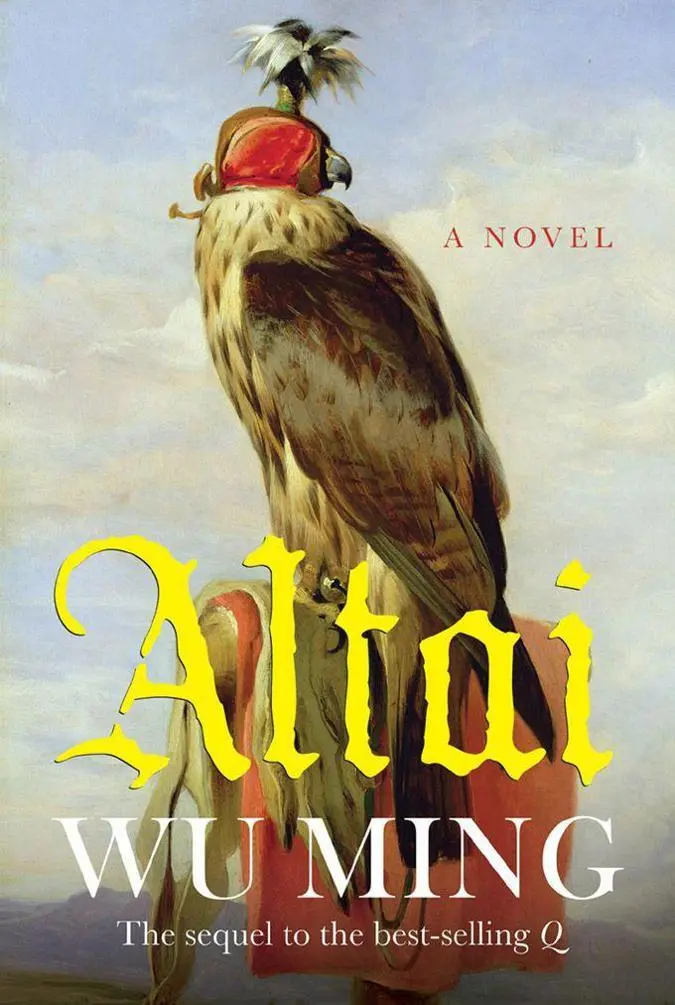
- Название:Altai
- Автор:
- Издательство:Verso
- Жанр:
- Год:2013
- ISBN:нет данных
- Рейтинг книги:3 / 5. Голосов: 1
-
Избранное:Добавить в избранное
- Отзывы:
-
Ваша оценка:
Altai: краткое содержание, описание и аннотация
Предлагаем к чтению аннотацию, описание, краткое содержание или предисловие (зависит от того, что написал сам автор книги «Altai»). Если вы не нашли необходимую информацию о книге — напишите в комментариях, мы постараемся отыскать её.
Through a series of deadly political games leading all the way to the Sultan’s palace in Constantinople, De Zante and his companions spiral headfirst toward a conflict in which the great empires of the Republic of Venice and the Ottomans threaten the very foundations of civilization.
Altai — читать онлайн бесплатно полную книгу (весь текст) целиком
Ниже представлен текст книги, разбитый по страницам. Система сохранения места последней прочитанной страницы, позволяет с удобством читать онлайн бесплатно книгу «Altai», без необходимости каждый раз заново искать на чём Вы остановились. Поставьте закладку, и сможете в любой момент перейти на страницу, на которой закончили чтение.
Интервал:
Закладка:
At the mention of Gracia Nasi and her last moments, the listeners became lost in thought, the speakers’ voices grew more serious in tone, and the conversation thinned out. In a few minutes, the cluster of people had dissolved and everyone had returned to their own tasks.
I opened my eyes. Standing in front of me was Yossef Nasi.
“Did you hear them?” he said. “The world traveler has returned.”
18
Nasi was in a strange mood, melancholy and thoughtful. The event everyone was talking about, Ismail’s strange secret meeting with Reyna, the trip to Üsküdar at dead of night. . My mentor wore it all stamped on his face, on his forehead and around his eyes, in the wrinkles at the sides of his mouth, in the shadow of a beard that covered his cheeks. All stamped in plain sight, but in characters that I didn’t yet know how to read.
I told him that I had something to report: I had worked out how the dispatches were leaving the bailiff’s house. “Let’s go to the library,” he replied. He told a servant to call David Gomez, and off we set.
In the doorway to the book-lined room, we met the kabbalist Meir, pale in the face as I had always seen him, the black velvet kippah covering his bald skull. “The German has returned, hasn’t he, Don Yossef?” asked the man whose mind revolved around permutations and calculations.
“Yes, master. Ismail is back amongst us.”
“So, this is a sign, and it will need to be interpreted.”
“What do you see in it?”
“The man with many names defies the Gematria,” said Meir. “Which letters will we match up with a number?”
“You know, everyone has called him Ismail for years,” Nasi replied.
“Yes, Ishmael ,” repeated the kabbalist, pensive and gloomy, pronouncing the name in Hebrew.
The story of Ishmael is well known to my people. The son of Abraham and the servant Hagar, he was removed from Sarah along with his mother, for mocking his stepbrother Isaac. In the desert, mother and son were helped by an angel, who showed them a spring and urged them not to be afraid, because a great people would be born of the boy’s loins. The Moors saw him as their prophet and the father of their tribe.
If a German heretic had taken that name, did it mean he had turned Muslim?
Anyway, in those letters— Yod, Shin, Mem, Ayin, Aleph, Lamed —there must have been something more, because Meir remained silent, plunged in who knows what computation, his eyes fixed on nothing, and Nasi coughed, in an attempt to bring him back among us. “Don’t weary yourself, master. If you had to ruminate like this on all the names that man has had, you would keep yourself busy for a very long time. When I knew him his name was Ludovico, to others he was Tiziano, and yet others remembered him as Gert. Just leave it; el Alemán has always defied all calculations.”
I remembered what Dana had said to me: Ismail was a river that evaporates and becomes a cloud, to cross the desert and rain on the mountains.
The kabbalist stirred himself and took his leave. At that moment we were joined by David Gomez. The three of us came into the library at the same time, and stood around the big table. At last I told them my suspicions about Ashkenazi and his slippers.
“Ingenious,” said Gomez. “Precisely because it’s trivial.”
“Stay glued to Ashkenazi’s shadow,” Nasi broke in. “I want confirmation. Discover who the letters are passing to and how they are leaving Constantinople.” Then he left.
“Why is he so troubled by the arrival of this German?” I asked Gomez. Rather than replying, he began nosing around among the shelves, examining the backs of the books. He said, “You know that the first printing press was brought to Constantinople by the Sephardim, in 1493? Jews and books always go together.”
He pulled a book that sat on the shelf at eye level, and set it down on the table with a theatrical gesture. A small yellow volume. I picked it up, studied it and recognized its title. It was a forbidden book, one that had caused a scandal in Venice and throughout the whole of Italy many years before. I opened it at random and read a few lines.
. . the righteousness of Christ will suffice to make us righteous, and sons of grace without any of our good works, which cannot be good if, before we do them, we are not first made good and righteous by faith.
Calvin’s heresy, justificatio sola fide . Words that came from a world now far away. Gomez said, “ Il Beneficio di Cristo . Do you know it?”
“Of course. It’s the most famous heretical text of our times.”
“It was we who printed and distributed it, to sow discord among the papists.”
“ ‘We,’ who?” I asked him. Meanwhile I was mulling over a phrase I had heard a moment before.
When I knew him his name was Ludovico, to others he was Tiziano .
“The Nasi family paid the typographers. A bookseller by the name of Perna worked in the field, and with him a great expert in the field of troublemaking. Someone who knew how by spreading certain ideas you can throw things off balance. And that was the old man whose return everyone is talking about.”
When I knew him his name was Ludovico, to others he was Tiziano . My mouth had dried up. When I joined the Consigliere’s secret service, the older agents still spoke of a heretic, a mysterious character who, years before, had passed through northern Italy, practicing blasphemous baptisms and driving the inquisitors mad. His name was often associated with the Beneficio di Cristo .
“Are you telling me that Ismail al-Mokhawi is Tiziano the Anabaptist?”
“The very same. Then events gathered speed, the Inquisition began to tighten its grip, and Ismail escaped from Venice along with Gracia. Yossef, Samuel and I attended to some unfinished business, then joined them here. Ismail loved Gracia, but he soon realized that he was different from her, from the Nasis, from all of us. The fate of the Jews is to defend one another against the perils of the world. Often we are obliged by circumstances to befriend powerful men, but Ismail is a wanderer by choice, and for all of his life he has tried to bring the powerful down.”
I had never heard David Gomez talking at such length. That day, everything was going in the opposite direction. I looked at Takiyuddin’s clock. I was reassured to see the hands turning clockwise, as they always did.
19
Following a sedan chair along the byways of Constantinople is an easy business. The narrow, muddy streets force the vehicles to adopt a slow, uneven pace. And anyway, people who use them don’t do it to go faster, but rather to shelter their heads from inclement weather and keep their shoes clean — two advantages that I couldn’t help envying as I walked along, drenched by the storm. In the morning, when I left the palace, a tepid sun was shining. Shrubs and bushes were putting out their first flowers, and the scent of jasmine sweetened the air, like a drop of honey in a spicy brew. Then all of a sudden the wind had risen, and while Ashkenazi lurked in the bailiff’s rooms, a curtain of clouds had covered the blue.
The sedan chair passed down along rivers of mud until it reached the coast at Galata, where I lost sight of it in the crowd. Boatmen harried by the rain called out the price of a crossing to the opposite shore. Pickpockets, thanking the precipitation, robbed the passengers distracted by the cries. Taking care not to be among their victims, I boarded a parema and had myself ferried to the peninsula, sure that Ashkenazi would have done the same. And indeed, I found him at the Fishmonger’s Gate, ready to climb into a new chair.
Читать дальшеИнтервал:
Закладка:
Похожие книги на «Altai»
Представляем Вашему вниманию похожие книги на «Altai» списком для выбора. Мы отобрали схожую по названию и смыслу литературу в надежде предоставить читателям больше вариантов отыскать новые, интересные, ещё непрочитанные произведения.










Обсуждение, отзывы о книге «Altai» и просто собственные мнения читателей. Оставьте ваши комментарии, напишите, что Вы думаете о произведении, его смысле или главных героях. Укажите что конкретно понравилось, а что нет, и почему Вы так считаете.