Wu Ming - Altai
Здесь есть возможность читать онлайн «Wu Ming - Altai» весь текст электронной книги совершенно бесплатно (целиком полную версию без сокращений). В некоторых случаях можно слушать аудио, скачать через торрент в формате fb2 и присутствует краткое содержание. Год выпуска: 2013, Издательство: Verso, Жанр: Историческая проза, на английском языке. Описание произведения, (предисловие) а так же отзывы посетителей доступны на портале библиотеки ЛибКат.
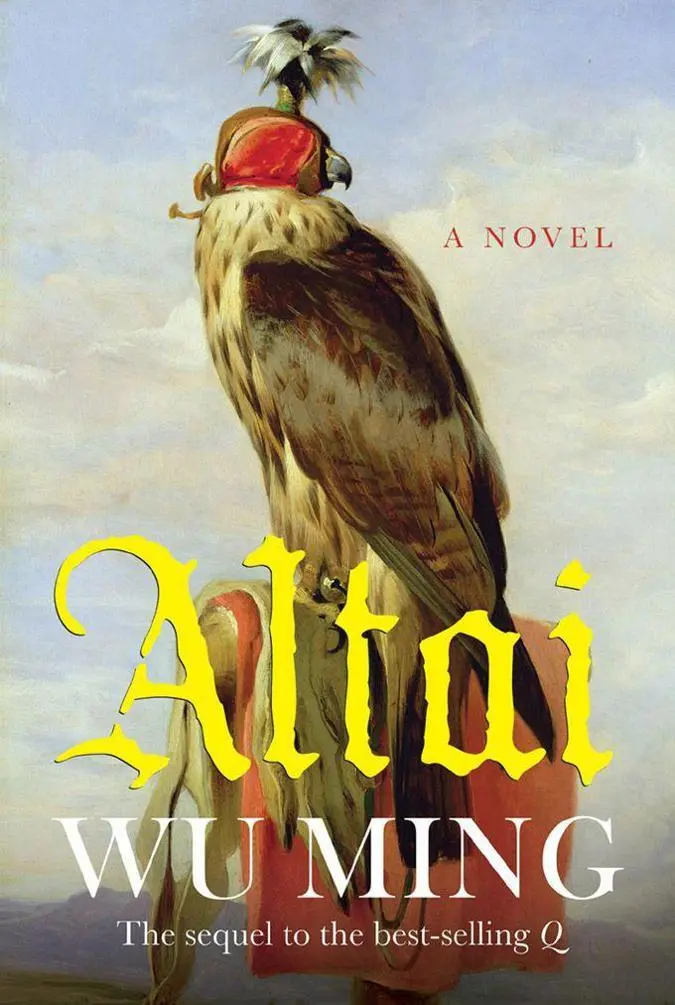
- Название:Altai
- Автор:
- Издательство:Verso
- Жанр:
- Год:2013
- ISBN:нет данных
- Рейтинг книги:3 / 5. Голосов: 1
-
Избранное:Добавить в избранное
- Отзывы:
-
Ваша оценка:
Altai: краткое содержание, описание и аннотация
Предлагаем к чтению аннотацию, описание, краткое содержание или предисловие (зависит от того, что написал сам автор книги «Altai»). Если вы не нашли необходимую информацию о книге — напишите в комментариях, мы постараемся отыскать её.
Through a series of deadly political games leading all the way to the Sultan’s palace in Constantinople, De Zante and his companions spiral headfirst toward a conflict in which the great empires of the Republic of Venice and the Ottomans threaten the very foundations of civilization.
Altai — читать онлайн бесплатно полную книгу (весь текст) целиком
Ниже представлен текст книги, разбитый по страницам. Система сохранения места последней прочитанной страницы, позволяет с удобством читать онлайн бесплатно книгу «Altai», без необходимости каждый раз заново искать на чём Вы остановились. Поставьте закладку, и сможете в любой момент перейти на страницу, на которой закончили чтение.
Интервал:
Закладка:
“Why are your mistress and Don Yossef barely talking to each other?”
“You must have noticed: Don Yossef doesn’t appreciate the attentions of women.”
It was true: I’d never seen him in the company of a woman, not even his wife. I hadn’t seen Gomez with a woman, either. In Venice Yossef Nasi was known as the Sultan’s catamite. In the secret service he was spoken of in low terms. On the streets of Constantinople I had heard similar allusions and obscene jokes.
“Incredible that such a man should be destined to live without heirs.”
“You could be his son. You’re the right age.”
In a different situation, the words might have irritated me, and I would have given a harsh reply, but I found myself saying something quite different. “My father was much older than Don Yossef.”
Just as the spinning of wool is followed by the doubling of the yarn, when two threads are twisted together to make one stronger one, in my mind the figures of two old men were superimposed upon one another, I still didn’t know to what end. I said, “This Ismail al-Mokhawi, the old man who arrived today. . What do you know about him?”
Dana shook her head and let her eye wander along the walls. “Not much. He left Constantinople before I got here. I know what Donna Gracia told me.”
“Down in the drawing room, he spent a long time sitting in silence by her portrait.”
“They loved each other,” said Dana. She must have seen me looking startled, and took advantage of it. “Do you love me?”
I didn’t know what to reply. I stammered something; I felt very stupid. Dana smiled and felt sorry for me. She picked up the story where she had broken it off.
“Before she died, Donna Gracia wrote him a letter. I was with her that evening. At sunset, the Bosphorus was beautiful.” She lost herself in her memory, and I avoided disturbing her with any further questions. A little later, it was she who broke the silence. She sat up in the bed, as if talking about Donna Gracia called for a more respectful posture. “She wanted to see him one last time before she died. She asked him to join her at Tiberias.”
“Why on earth did he leave her?”
“Donna Gracia never explained that to me. She once told me that, faced with a desert, a river has two choices: to hurl itself into the sand, determined to pass through it and irrigate it, at the risk of drying up and disappearing for ever, or else to evaporate and become a cloud, to fly above the desert and, raining down on the mountains, become a river again. She said that Ismail was the river that becomes a cloud.”
I was struck by the simile. “Was Donna Gracia the river that wanted to irrigate the desert?”
“Perhaps. Or perhaps she was referring to Don Yossef. What do you think?”
I replied impulsively, “That irrigating the desert is a difficult enterprise, but it’s worth trying.”
We said nothing more. We lay there side by side, waiting for sleep to overtake us.
“Ismail!”
The shout came from the drawing room and made us jump. Dana leaped to her feet, dressed in a flash, said good-bye to me and rushed from the room, swift as a fawn. All that remained was her scent, her perfume. Once I had put on my breeches and my shirt, I crossed the threshold. There was no one in the loggia. I leaned against the balustrade to look down and saw Nasi in the middle of the drawing room, which was lit only by a servant’s oil-lamp, with David Gomez next to him. They were talking to the manservant who had received the old man and called Donna Reyna.
Mulier in fabula , that was her, a dark outline below her mother’s portrait. Nasi saw her, and pointed at her, followed at a distance by Gomez. From the loggia I couldn’t make out every word; their conversation reached me in scraps.
. . staying here at the palace?
The tone couldn’t be misunderstood.
. . his old house in Üsküdar. . with his retinue. .
Bitterness, detachment.
. . miles to get here. . he was supposed to be our guest. .
Resentment, aged fury.
. . you know yourself why he doesn’t want. .
Then they stopped talking. A lull of silence settled in the room. Then Nasi bowed to his wife and turned on his heel. “Let’s go,” he said to Gomez.
I saw them leaving like arrows in flight, fired from the bow in the direction of Üsküdar.
17
The Palazzo Belvedere was abuzz with voices. Servants and sutlers, general dogsbodies, gardeners, wood suppliers and whoever happened to be passing through, everyone was coming and going, questions required answers, little knots of people clustered rapidly before scattering like ears of wheat when duty called and reassembling elsewhere, in the drawing room, in the kitchen, in the pantry, in the corridors and even outside, in the park, at the start of the tree-lined avenue. The women tidied up the rooms, talking about the German, el Alemán , back from Arabia after all these years, kon una barba blanka ke lo faze pareser un profeta , with a white beard that made him look like a prophet, and accompanied by three Moors ke tienen fachas de lókos , with the faces of madmen, it would have frightened you to look at them, but if they’re friends of his they must be decent people. A cook said that el barbarroja had asked her for five cups of boiling water, and then he’d put some nutshells into them, offered a cup to each of his friends and the last one to her, to try this drink, because apparently they weren’t actually nuts, but a kind of coffee. And it was so good that the woman had asked them to give her a handful, and if anyone wanted to try it she could make it in a moment, kishir . The two Indians, meanwhile, had beguiled the time by dancing in the park. What do you mean, dancing, it was a fight, didn’t you see when they drew out their shields and whips? What agility! Did you see when one of the two jumped the other with his feet pressed together?
I turned round, slightly puzzled, in the whirl of voices and stories. No one seemed to be paying me any attention; the day’s news was the reappearance of the old man. Everyone who had known Ismail before he had gone to Mokha — which is why he was known as the Mokhan — seemed to hold him in great esteem, and there was a certain solemnity in the way they talked about him, replying to the questions of new arrivals, boys and girls who had served Don Yossef and Donna Reyna for only a few years, some for only a few months. They listened with admiration to the stories that danced their way from mouth to mouth. They nodded and returned to their tasks filled with more curiosity than before, anxious to see el Alemán , when someday soon he would come back to the palace.
I followed these stories, too. They announced themselves as vague references, two sentences thrown there as if to say pay attention to me, I know what’s going on , and then they were referred to, commented upon, provided with the kind of glosses applied to ancient poems, and through those glosses they merged together and poured into one another, assuming new forms and consistencies. The old man appeared now in one country, now in another: He had been in Africa and France, in Chipango and Cathay. He had known Martin Luther, I heard a cook saying to a young scullery maid in the doorway to the kitchen. I was listening from behind a column, my back resting against the cool marble, my eyes closed. The woman spoke an enchanting Ladino that reminded me of my childhood, every sentence ending on a high note, a bit like when in Italy you hear people from Ascoli or Ancona talking. Her voice was intoning the story of Ismail and Luther, luring new people to stop and listen.
The old man hadn’t just known Luther, he’d been with him that day when they nailed a big piece of paper on the door of a church in some German city, a paper that was read by lots of people and infuriated the pope. And what had he written on it? That the relics of the saints are nothing but filth, bones to be thrown to the dogs. Such courage! Certainly, but what foolhardiness! Indeed, but such love of truth. But when did Luther die? The replies came flying: Luther’s still alive. No, what are you talking about, he died twenty years ago and he was over a hundred— el Alemán is old, certainly, but not that old; pay no heed to such nonsense. But it’s true that the papists pursued him halfway around the world, because he’s a heretic of the first water. I’ve heard all sorts of things being said about them. And who told you? Lots of people. I’ve also heard them being told to Don Yossef. I just know that he was Donna Gracia’s lover, a male voice said at last, in the tone of someone bringing castles in the air down to the ground. It’s true, a girl added. They say that she died in his arms, down in Tiberias.
Читать дальшеИнтервал:
Закладка:
Похожие книги на «Altai»
Представляем Вашему вниманию похожие книги на «Altai» списком для выбора. Мы отобрали схожую по названию и смыслу литературу в надежде предоставить читателям больше вариантов отыскать новые, интересные, ещё непрочитанные произведения.








Обсуждение, отзывы о книге «Altai» и просто собственные мнения читателей. Оставьте ваши комментарии, напишите, что Вы думаете о произведении, его смысле или главных героях. Укажите что конкретно понравилось, а что нет, и почему Вы так считаете.