Wu Ming - Altai
Здесь есть возможность читать онлайн «Wu Ming - Altai» весь текст электронной книги совершенно бесплатно (целиком полную версию без сокращений). В некоторых случаях можно слушать аудио, скачать через торрент в формате fb2 и присутствует краткое содержание. Год выпуска: 2013, Издательство: Verso, Жанр: Историческая проза, на английском языке. Описание произведения, (предисловие) а так же отзывы посетителей доступны на портале библиотеки ЛибКат.
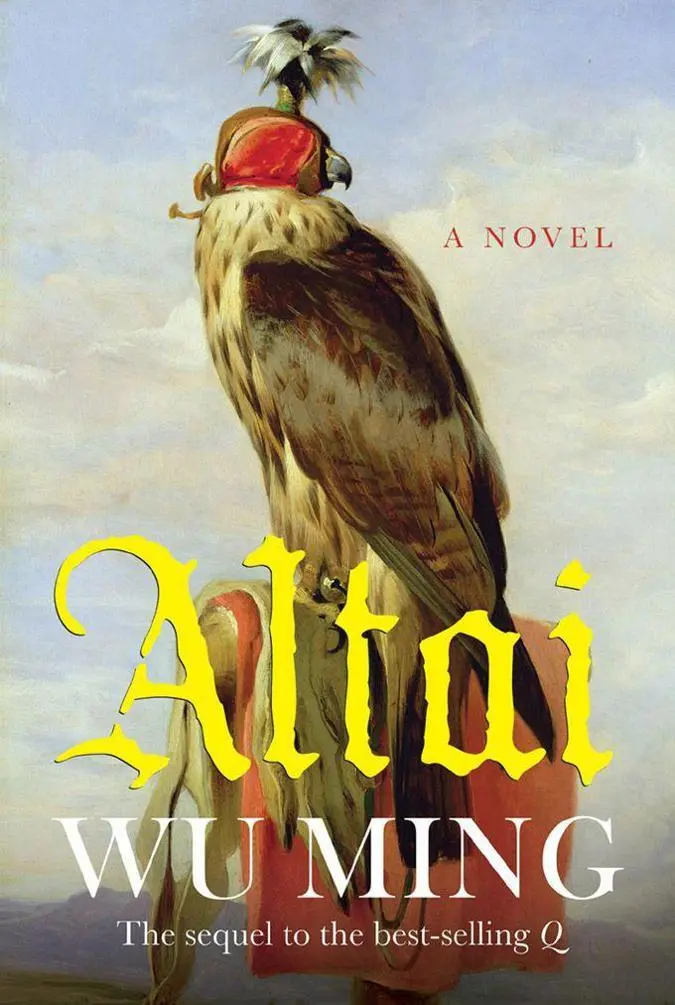
- Название:Altai
- Автор:
- Издательство:Verso
- Жанр:
- Год:2013
- ISBN:нет данных
- Рейтинг книги:3 / 5. Голосов: 1
-
Избранное:Добавить в избранное
- Отзывы:
-
Ваша оценка:
Altai: краткое содержание, описание и аннотация
Предлагаем к чтению аннотацию, описание, краткое содержание или предисловие (зависит от того, что написал сам автор книги «Altai»). Если вы не нашли необходимую информацию о книге — напишите в комментариях, мы постараемся отыскать её.
Through a series of deadly political games leading all the way to the Sultan’s palace in Constantinople, De Zante and his companions spiral headfirst toward a conflict in which the great empires of the Republic of Venice and the Ottomans threaten the very foundations of civilization.
Altai — читать онлайн бесплатно полную книгу (весь текст) целиком
Ниже представлен текст книги, разбитый по страницам. Система сохранения места последней прочитанной страницы, позволяет с удобством читать онлайн бесплатно книгу «Altai», без необходимости каждый раз заново искать на чём Вы остановились. Поставьте закладку, и сможете в любой момент перейти на страницу, на которой закончили чтение.
Интервал:
Закладка:
“Tell me, you who are observing me: Is it only indiscretion on your part, or have you some other motive?”
I froze. I was sure that he hadn’t turned his head in my direction. In spite of the clothes he was wearing, he had spoken in Italian, and in an accent that was clearly European.
“Might I know who is asking?” I replied.
He turned and walked toward me. I stared at him, keeping the others in the corner of my eye. We found ourselves face to face, and I met his gaze, more out of curiosity than defiance. His eyes were gray and piercing. For some reason the memory of Tuota flashed through my mind.
“I am Ismail al-Mokhawi,” he said. “I deal with the Nasi family’s affairs in the Yemen.”
My sixth sense told me there was more to this than he was letting on. I didn’t yet know the extent to which my presentiment was correct. “Arab name, German accent,” I observed.
“Congratulations; you have a good ear. And your name?”
“My name is Manuel Cardoso.” I gave a slight bow that the old man didn’t return.
“Spanish name, Venetian accent,” he announced, as if we were having a riddling competition. “Are you a businessman, too?” he asked. “Are you in business with João? I don’t think so, or I’d have heard your name mentioned.” He touched my right hand with his stick. “Of course you don’t work with those. No recent marks, only old scars.”
I brushed his stick away. “Your eyesight is enviable, in spite of your age.”
“Indeed. If I’m not mistaken, what you have on your jacket is poplar pollen.”
I instinctively checked my sleeves. On the green of the fabric, some barely visible filaments had appeared, the tiniest pinch. “I don’t remember poplars in the park at Palazzo Belvedere,” he went on. “But there are many in Pera.”
A secret agent should never be dumbfounded, so I maintained my self-control. I don’t know how our discussion would have continued, because we were interrupted by a voice from above: “Don’t upset our man Cardoso, Messer Ludovico. He’s Yossef’s new pupil.”
It was only the second time that I had seen her, and I was very struck. Not an ostentatious woman, but pride shone from her eyes. The old man smiled. He seemed already to have forgotten me and what had just happened.
My mind, meanwhile, was working quickly. He was German. He had introduced himself as Ismail, and Donna Reyna had called him Ludovico. He called Don Yossef and David Gomez by their Christian names. It was clear that he knew the Nasi family well, perhaps since before they had arrived in Constantinople.
With one hand, Donna Reyna pointed to the woman in the painting, her mother.
“Are you paying homage to one who is no more, Messer Ludovico?”
“I am paying homage to one who lives in my heart, Signora.” With these words he touched his chest and bowed to her.
Reyna vanished, reappearing in the drawing room a moment later. Once they stood facing one another, they held each other’s hands for a long time. I looked at the Arab and the two Indians, who remained impassive. I wondered if they had understood even one of the words that had just echoed around the room. In all likelihood they didn’t know Italian.
“It’s still hard to believe you’re here,” said Reyna, without letting go of the old man’s hands. “And yet you are. How much time has passed?”
“Eight years,” he answered, with a half smile. “And they have been a little more kind to you than they have to me.”
It was as if I had ceased to exist.
“You are exactly the same as the man I remember,” said Reyna. “And you have survived a very long journey. You will want to rest and refresh yourself.”
“What my friends and I need more than anything is a hot bath and a bed.” He smiled. “But I’m no longer used to the comforts of a palace. Tell João I will wait for him at Uskudar, in the house where I used to live.”
The woman seemed disappointed, but not very surprised. “You’re not staying here? Yossef will be mortified.” The last sentence sounded like a distant formality.
The reply was a whisper: “Between these walls, memories would keep me from resting.”
“I understand that very well,” said Reyna. “They keep me awake too, every night. And there is nowhere one can go to seek refuge.”
The skin below one of the old man’s cheekbones twitched. I thought that beneath his beard he had clenched his jaw. I wondered what was happening, and what messages were being passed, hidden in their words.
Reyna called a servant. “See to it that our guests are escorted to the other side of the Bosphorus.”
“Thank you, mia signora , but that isn’t necessary.” The old man bowed briefly, then turned, saw me and gave a start, as if he had only that moment remembered my existence. He collected himself and walked quickly across the room, using his stick occasionally, followed by the rest of his strange retinue.
The first to catch up with him was the Arab, who immediately addressed him in his own language. The Indian youngsters were slower, glancing around, moving with soft and even steps. They drew up alongside the other two and all four walked on like that, in a row, all talking together, on the path that led through the middle of the garden. Seen from behind, they looked like friends who had just emerged from an evening of drinking and idle chit-chat.
When they had disappeared, I turned back to Reyna.
“Who is that man?”
“He is the past,” she replied. “The past knocking at the door.” She took her leave with a nod of her head. We were left alone, I and the eyes of Donna Gracia. As if those presences had been mirages, the voices the ravings of a lunatic.
16
“You’ve found your place at last.”
Dana was resting her head on my chest. Before she spoke, I thought she had fallen asleep, and I was lost in reflection. My thoughts were rough wool that needed to be carded and spun, and they began with Ashkenazi’s slippers. I would have liked to communicate my suspicions about how the bailiff’s dispatches traveled, but Nasi and Gomez hadn’t yet come back, even though the sun had set an hour before. My thoughts returned to the meeting I had witnessed a few hours previously, with the weird old man and his entourage. Ismail, or Ludovico. Who knows where he and the Nasis had met. Maybe in Venice. I found myself thinking about Braun’s bank, at the Fondaco dei Tedeschi. My money was still there, the money I hadn’t been able to withdraw after fleeing from Arianna’s house.
After that brief deviation, here I was again at Palazzo Belvedere. I guessed that right under my nose, and without my understanding it, something important had happened that day.
“My place? What do you mean?”
“By Don Yossef’s side.”
It wasn’t strange to see things in that way. Nasi had given me the chance to return to my job. Basically it was the one I was best at: collecting information. I said as much to Dana. She lifted her face and folded her hands under her chin.
“Information? About Don Yossef’s enemies?”
“Particularly.”
“And who are the most fearsome of them?”
I let her hair glide through my fingers.
“Some of them are Jews like us. Envious men. They don’t support Don Yossef because he sees a hundred miles beyond their horizon. To avenge themselves on his intelligence, they prefer to serve the Venetians, or the Grand Vizier.”
Gusts of wind stirred the leaves in the park. A dogfight began in the distance.
“It was because of his dreams that the brothers sold Joseph to the Ishmaelites,” observed Dana.
Her words startled me. The similarities between the biblical Joseph and Yossef Nasi now struck me as obvious. Both had won the favors of a foreign sovereign. They had both obtained government positions, aristocratic titles, huge wealth. But not the trust of the family they served. Not immediately, at least, and not without a great deal of effort. A question came to my lips, the thin tail of an elephantine thought.
Читать дальшеИнтервал:
Закладка:
Похожие книги на «Altai»
Представляем Вашему вниманию похожие книги на «Altai» списком для выбора. Мы отобрали схожую по названию и смыслу литературу в надежде предоставить читателям больше вариантов отыскать новые, интересные, ещё непрочитанные произведения.










Обсуждение, отзывы о книге «Altai» и просто собственные мнения читателей. Оставьте ваши комментарии, напишите, что Вы думаете о произведении, его смысле или главных героях. Укажите что конкретно понравилось, а что нет, и почему Вы так считаете.