Wu Ming - Altai
Здесь есть возможность читать онлайн «Wu Ming - Altai» весь текст электронной книги совершенно бесплатно (целиком полную версию без сокращений). В некоторых случаях можно слушать аудио, скачать через торрент в формате fb2 и присутствует краткое содержание. Год выпуска: 2013, Издательство: Verso, Жанр: Историческая проза, на английском языке. Описание произведения, (предисловие) а так же отзывы посетителей доступны на портале библиотеки ЛибКат.
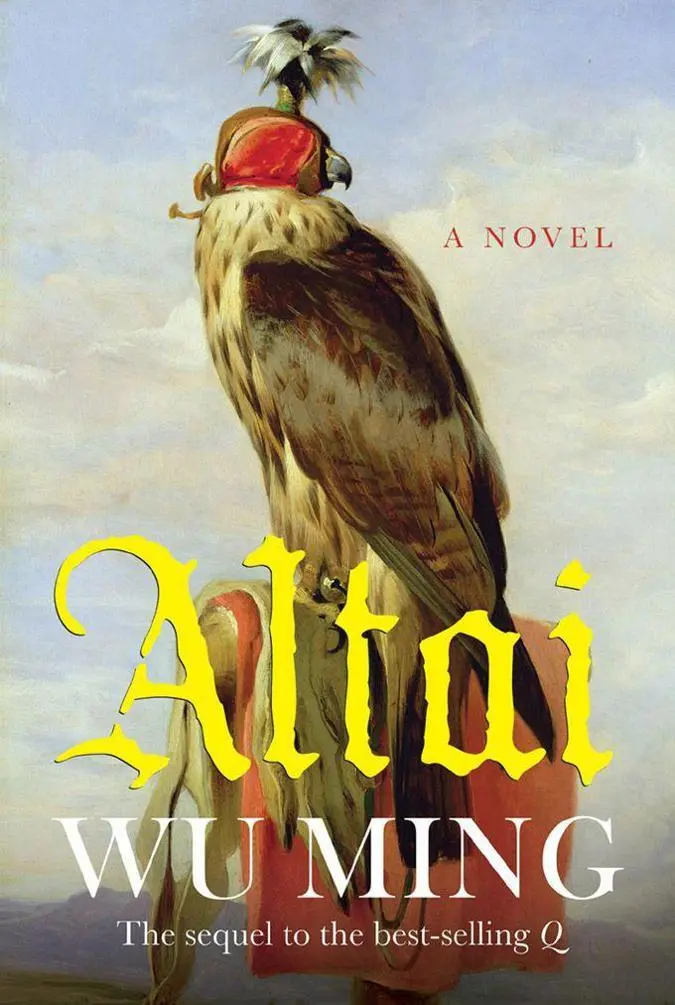
- Название:Altai
- Автор:
- Издательство:Verso
- Жанр:
- Год:2013
- ISBN:нет данных
- Рейтинг книги:3 / 5. Голосов: 1
-
Избранное:Добавить в избранное
- Отзывы:
-
Ваша оценка:
Altai: краткое содержание, описание и аннотация
Предлагаем к чтению аннотацию, описание, краткое содержание или предисловие (зависит от того, что написал сам автор книги «Altai»). Если вы не нашли необходимую информацию о книге — напишите в комментариях, мы постараемся отыскать её.
Through a series of deadly political games leading all the way to the Sultan’s palace in Constantinople, De Zante and his companions spiral headfirst toward a conflict in which the great empires of the Republic of Venice and the Ottomans threaten the very foundations of civilization.
Altai — читать онлайн бесплатно полную книгу (весь текст) целиком
Ниже представлен текст книги, разбитый по страницам. Система сохранения места последней прочитанной страницы, позволяет с удобством читать онлайн бесплатно книгу «Altai», без необходимости каждый раз заново искать на чём Вы остановились. Поставьте закладку, и сможете в любой момент перейти на страницу, на которой закончили чтение.
Интервал:
Закладка:
The room we entered was rather bare, intimate, and protected by a dome. The light entered through a big window screened by a shutter, and a red fabric sofa ran along three walls. On this divan sat the ministers of the Ottoman government. They wore turbans of different shapes and styles, some high and long, others puffy and round. The differences clearly were significant, but I was, sadly, unable to interpret them. The central place, raised slightly above the others, was occupied by a bearded giant, who was rendered still more majestic by a turban that sprouted from his head like a great white tulip. Higher up, a golden grille covered an opening in the wall. Nasi had explained to me that the Sultan often followed the viziers’ meetings from there.
I tried to spot a shadow through the golden mesh, but caught only a very vague impression. I bowed deeply and kissed the hem of the Grand Vizier’s robe. He welcomed me in my language, calling me “Signor De Zante.”
A man on my right, who must have been the chancellor, began reading from a register in a neutral, formal voice. The dragoman translated his words for me, because the language used by the dignitaries is very different from that of the people, stuffed with archaic Arabic and Persian terms. There is as much difference between plain Turkish and its Ottoman form as there is between the dialect of Chioggia and Cicero’s Latin.
“In the first instance, the Imperial Council wishes to know from the gentleman convened the extent of the damage done to the Venice Arsenal by the recent explosion of a powder house and the fire that followed from it.”
Nasi had predicted this request, and had advised me to stick to the facts. Certainly, to say that the fleet of Venice had been destroyed, as many patrons of the café maintained, would have helped the case for war against Cyprus. At any rate, four months after the event it was unimaginable that the Ottoman viziers had no clear information on the matter. So I had to prove myself to be honest and trustworthy. I described in detail what I had seen in my investigation. When I finished, the chancellor read again from his register.
“Secondly, the Imperial Council wishes to know the information in possession of the gentleman convened concerning the defenses of Nicosia and their alleged inadequacy.”
I described the map of the city that I had seen drawn by Savorgnan: a star with eleven bastions and three gates. I told them what I knew about the hundreds of families forcibly moved to make way for new barrages and the big trench. I said that Giulio Savorgnan had finished the work in the incredible time of eight months, and when he returned to Venice all he had left to do was the refacing of the bastions.
Here one of the viziers interrupted, in a fluting voice that matched oddly with the thick black mustache that framed it. I imagined he must be the Great Admiral, Ali Pasha, known as Muezzinzade, or son of the muezzin, because that was the profession of his father and it had been his own as well for many years, in a mosque very close to the Seraglio.
“Do you believe,” Muezzinzade asked, “that these bastions are still unfinished?”
“Savorgnan told me that he had made arrangements for them to be completed in his absence, but that for want of funds at least two of them had been left unfaced: Constanzo and D’Avila.”
The Great Admiral smoothed his mustache and smiled with satisfaction, exchanging a glance of agreement with a bearded old man who, judging by Nasi’s description, must have been Lala Mustafa Pasha, the fifth vizier, general of the land forces.
“We will have to hurry,” murmured another vizier, striking his hands on his knees, “before they have time to collect additional funds and properly complete the job.”
Sokollu turned toward him and gave him an icy stare. “Haste is never good advice, Piyale Pasha. This information is precious, but we need to assess the cost and the time needed for this campaign. Remember Malta.”
As soon as the Grand Vizier finished speaking, three sharp blows rang out against the golden grille above his head. The Giant froze, and so did the other dignitaries.
Then Sokollu Mehmed Pasha dismissed me with words of thanks, to which Muezzinzade added a personal encomium, in Italian, for the “ straordinario servigio ” that I had rendered the Sultan. Seven other viziers showed their approval, nodding their turbaned heads vigorously, like a clump of crocuses bent by the wind. And so ended my audience below the dome of the Divan.
When we were outside again, a radiant and emotional Nasi hugged me.
He explained that on a few occasions the Sultan resorted to striking the grille, to suspend the meeting so he might speak in private with the Grand Vizier. About what the two men were speaking to one another as we climbed back into our carriage, Yossef had no doubt. It was not within the power of the Grand Vizier to oppose the war, but he could still delay it.
“Sokollu knows full well that it is not such a simple matter to unleash this conflict. There is a peace treaty between Venice and the Ottoman Empire, signed by Suleyman and confirmed by Selim. At least two things would be needed to break it. First of all a fatwa from the Grand Mufti, justifying the war on religious grounds. Then they would need a casus belli , a political pretext. The island of Cyprus pays a regular tribute to the Sultan. No Ottoman subject has been mistreated or offended. The only excuse seems to be the pirates.”
“What pirates?” I asked in surprise.
“In the peace treaty,” he explained to me, “it is written that when the Cypriots capture Muslim pirates, they must send them for trial to Constantinople.”
The carriage passed through the outer walls of the palace and set off down the hill toward the Golden Horn.
“I have never heard of such a practice.”
“Indeed. That demonstrates how seldom the clause is honored. It is a feeble pretext, but the only one there is.” He cracked his fingers. “The game has begun, Manuel,” he said, with a complicit glance. “Let us prepare our moves.”
12
That night, I didn’t hear Dana when she came in to bring me my evening meal. I was looking at the sky, turning the constellations into a firmament of thoughts. Orion and his dog Sirius were confronting the Bull, and I wondered what hunting strategy Nasi had in mind, and what my intended place was in the chase. I had revealed the information in my possession to the Divan, and at least on paper, my job in the city was done. And yet Nasi’s words after the audience seemed to allude to new prospects. I didn’t know the city well, I spoke its language with an Italian accent, and I was a foreigner, a Jew, forbidden to carry weapons. What use could I be to him now?
Dana’s voice distracted me from the stars.
“I’ve brought you something to eat.” She had already set it down on the desk and poured wine into a copper beaker. In a bowl I noticed some sweets that I had never seen before, like the ones that the Turks call halva but with a more spicy, pungent aroma.
Dana’s eyes gleamed with mischief. “After a day like that, I thought you might want some comfort to calm your mind. These sweets will help you to find it.”
I thanked her for her solicitousness and sat down to eat. She went on, “It’s very cold tonight. Do you want me to revive the fire?” I gave another gesture of agreement and started soberly eating, as I always did in the evening. Dana knelt in front of the stove, filled it with wood and blew on the embers to encourage the flames. I saw her breasts swelling beneath her blouse. The curve of her buttocks on her heels made me sigh, and without realizing I was doing so I found myself stroking the table as if it were the smooth skin of a woman’s back.
Читать дальшеИнтервал:
Закладка:
Похожие книги на «Altai»
Представляем Вашему вниманию похожие книги на «Altai» списком для выбора. Мы отобрали схожую по названию и смыслу литературу в надежде предоставить читателям больше вариантов отыскать новые, интересные, ещё непрочитанные произведения.








Обсуждение, отзывы о книге «Altai» и просто собственные мнения читателей. Оставьте ваши комментарии, напишите, что Вы думаете о произведении, его смысле или главных героях. Укажите что конкретно понравилось, а что нет, и почему Вы так считаете.