Wu Ming - Altai
Здесь есть возможность читать онлайн «Wu Ming - Altai» весь текст электронной книги совершенно бесплатно (целиком полную версию без сокращений). В некоторых случаях можно слушать аудио, скачать через торрент в формате fb2 и присутствует краткое содержание. Год выпуска: 2013, Издательство: Verso, Жанр: Историческая проза, на английском языке. Описание произведения, (предисловие) а так же отзывы посетителей доступны на портале библиотеки ЛибКат.
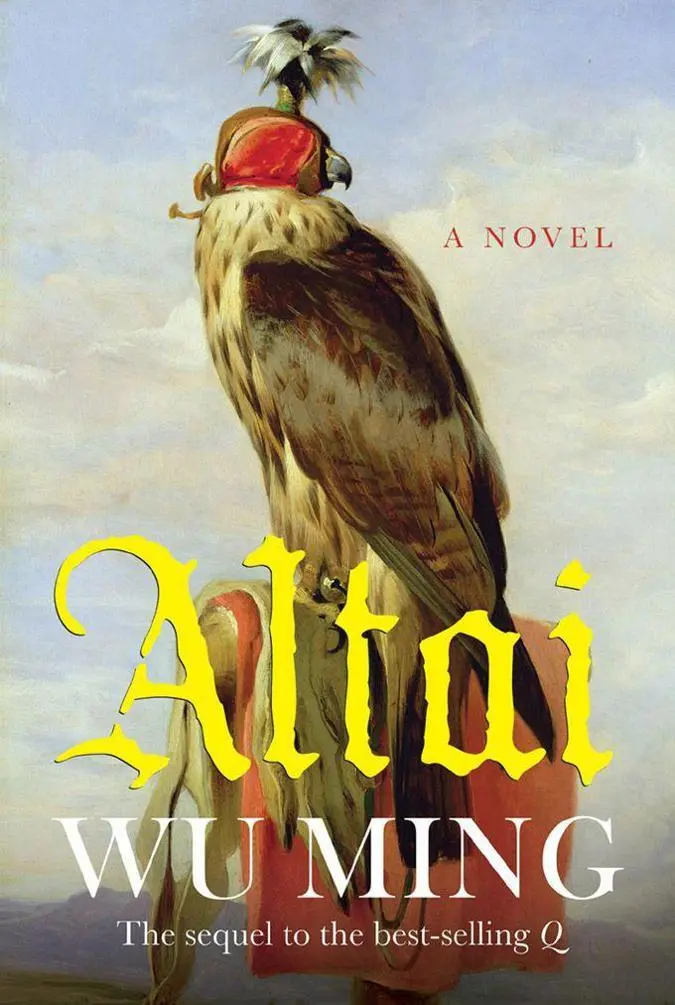
- Название:Altai
- Автор:
- Издательство:Verso
- Жанр:
- Год:2013
- ISBN:нет данных
- Рейтинг книги:3 / 5. Голосов: 1
-
Избранное:Добавить в избранное
- Отзывы:
-
Ваша оценка:
Altai: краткое содержание, описание и аннотация
Предлагаем к чтению аннотацию, описание, краткое содержание или предисловие (зависит от того, что написал сам автор книги «Altai»). Если вы не нашли необходимую информацию о книге — напишите в комментариях, мы постараемся отыскать её.
Through a series of deadly political games leading all the way to the Sultan’s palace in Constantinople, De Zante and his companions spiral headfirst toward a conflict in which the great empires of the Republic of Venice and the Ottomans threaten the very foundations of civilization.
Altai — читать онлайн бесплатно полную книгу (весь текст) целиком
Ниже представлен текст книги, разбитый по страницам. Система сохранения места последней прочитанной страницы, позволяет с удобством читать онлайн бесплатно книгу «Altai», без необходимости каждый раз заново искать на чём Вы остановились. Поставьте закладку, и сможете в любой момент перейти на страницу, на которой закончили чтение.
Интервал:
Закладка:
She laughed, lifting her chin and revealing her throat. I felt a desire to kiss her, but then I remembered the dagger. She wrapped herself up in her woolen cloak, tugging it up under her chin, perhaps because of the cold wind, or perhaps so as not to throw other temptations my way. Then she started to tell a story, accompanied by the song of the goldfinch.
On the coast of the Morea, in a fishing port, there was a corner of the world identical to this one, with wild roses, the bench and the wall of white stones. The only major difference was the size of the carob tree down there, which was rough-barked and centuries old.
It was in that port that a Jewish child called Dana had spent the first ten years of her life, until a corsair had taken her away from home to give her to Prince Selim.
In the harem of the future Sultan, Dana had soon attracted attention because of her personal qualities, and had entered the group of jariye taking care of the favorite, the Princess of Light, Nurbanu Sultan.
They dressed her, they combed her hair, they prepared her hot bath and, every day after dinner, they served her a sherbet of carob and lemon peel. It was her favorite drink, and to make sure she never went without it, at the end of every summer they had to peel thousands of carob berries, extract the pulp and prepare the syrup. Dana always set aside a few seeds or, more often, she found them on herself, stuck in a fold of her gown, and enjoyed planting them in the four corners of the garden. But with the first frost, the shoots that had just appeared died of cold. Only one managed to survive, for three winters, protected by the wall of the stables and the giant umbrella of an oak tree.
During the fourth winter, after his father’s death, Prince Selim moved from Kutaya to the capital, and Dana made the journey in a cart, with her little tree between her knees. The festivities for the new sultan went on for weeks, and Nurbanu granted freedom to her most loyal jariye . She arranged a marriage for each of them, and Dana was matched with an old provincial bey, meaning an even worse form of slavery than before. But thanks to a Jewish woman who supplied the harem with fabrics and perfumes, Dana had made sure that Don Yossef approached the Sultan and saved her from that unwelcome marriage. A few days afterward, she and the little carob tree were settled at Palazzo Belvedere.
A trill from the goldfinch embellished the end of the story like an inky flourish.
So I was sitting in the replica of a memory, the clearest one that Dana had kept of her own land. Perhaps every now and again, when her memory restored a detail to her, she added it and enlarged the picture. I asked her if she hadn’t ever thought of going back home, of seeing the village she had been torn from.
“They didn’t tear me from it,” she replied. “I think my father agreed. I don’t remember any violence, just my sister weeping.”
I remembered some prints I had seen in Venice, with Turkish-looking corsairs dragging women onto ships. I had been sure that the Sultan’s female slaves came only from war and piracy. I said this to Dana, and she corrected me.
“Not all. The harem is more like a monastery than a private brothel. You learn to read and write, to sew, play music, dance, prepare a bath, cook. You become ideal wives for the Sultan’s pages and administrators. Many fathers couldn’t offer a daughter anything better.”
I had never heard this account of things before. “Are you trying to tell me that it’s a kind of school in there, that you had happy years?”
“Not by a long way. I had to forget I was Jewish, learn the Muslim prayers, obey rigid rules, stay afloat on a sea of envy. But most of all, they accustomed me to thinking that a whim on the Sultan’s part might improve my life.”
“And did that happen?”
“No, but you know that it might happen any day, so each day is the child of his will, and cancels your own.”
She stopped there and, in silence, began pulling up blades of grass and throwing them in front of her, as if trying to tell her own fortune.
I said that I, too, had been a child in a Mediterranean port. Then my father, a corsair-hunter, had taken me away to offer me a better life. I, too, had had to change my faith, and, I too, had displayed myself in a kind of harem, albeit a masculine one, where the Sultan laid claim not to the obedience of sex, but the obedience of death.
“And perhaps I, too,” I concluded, “managed to escape thanks to Yossef Nasi.”
The last phrase drew a shiver from me, and the twilight air prolonged it. I had come outside in my shirtsleeves, and the damp cold was already slipping under the fabric and into my skin. The smell of a storm and wet earth rose from the Bosphorus.
Dana noticed that I was trembling and unhooked the cage from the carob branch, and together we went back toward the palace, beneath the white sickle of a still, lifeless moon.
10
I’m getting to know you, capital of the empire. I’m adapting myself to the way you punctuate your time.
Twenty-eighth day of the month of Shabban, nine hundred and seventy-seven winters after the Hejira.
I’m getting to know you, Byzantium, New Rome, Rūmiyya al-Kubrā, Qostantiniyye, Istanbul, city of damp, heavy air. On mornings when the sky is clear, I dream of rising into the wind and flying, seeing you from above, but the wind is heavy, thick with smells from the tanning works of Yedikule, the glue factories, the guts being turned into ropes. Every city has a background smell: Venice is mold and brackishness; Salonika reeks of piss; Constantinople breathes wet earth and weariness and dreams.
I’m getting to know you, frozen city with the narrow, dirty streets along which cruel winds blast. Pyraz blows from the north, Karayel from the Balkans, Lodos from the south. They take turns like a team of flagellators, they rummage through your clothes, they beat your bones mercilessly. When it rains, the streets turn into pools, and feet and legs sink into the mud.
I’m getting to know your men and your veiled women, to catch allusions and double meanings beneath the dirty crust of your Turkish, to imagine dreams and smiles behind the thin linen veils.
As we walked, David Gomez and I, we tried to avoid the most treacherous of the puddles. We left Palazzo Belvedere often, and from Ortaköy we headed southwest. Reaching Galata, we went inside a kahvehane a few steps from the Golden Horn. I treasured the sounds, the smells, the warmth of the place. A new experience for me, afternoons spent in a coffeehouse. I had never devoted myself to idleness. My days had been made of orders, men to follow and interrogate, detailed reports, weapons training. I felt the need to act, but Nasi’s plans required more time than expected. Time spent getting the Sultan drunk, reassuring the Treasurer, discussing matters with the viziers, bringing gifts to the Great Mufti and the most influential imams. So all I had to do was wait, and my curiosity about the thousand faces of the capital was the secret diversion that kept me from dying of boredom.
Even in its cold season, Constantinople knew how to flatter you and lend you affectations. You just had to see the effects of its bustle on Gomez: solid as a tree trunk and well on in years, and yet light in his movements, able with a single step to look like a dancer, like a pen drawing in the air. He walked ahead of me along a street that flowed with torrents and impromptu waterfalls, and his trousers didn’t even seem to get damp.
The voices from the kahvehane came closer. In a minute, I would plunge into the scents and vapors, the music played on flutes and violins, the thousand tongues and dialects of the city. I was getting to know you, Tzarigrad, Konstantinopla, city of the five thousand mosques, of peramas and caïques that carried you from one shore to the other, of people who arrived every day from every corner of the empire, of Jewish businessmen, of Jewish craftsmen, of Jewish merchants dealing in slaves from Russia or the Caucasus, city where I never met a single beggar but saw a thousand sellers of nightingales, city of eskici , strolling rag-and-bone men who defied the wind and rain with barrows filled with rubbish.
Читать дальшеИнтервал:
Закладка:
Похожие книги на «Altai»
Представляем Вашему вниманию похожие книги на «Altai» списком для выбора. Мы отобрали схожую по названию и смыслу литературу в надежде предоставить читателям больше вариантов отыскать новые, интересные, ещё непрочитанные произведения.









Обсуждение, отзывы о книге «Altai» и просто собственные мнения читателей. Оставьте ваши комментарии, напишите, что Вы думаете о произведении, его смысле или главных героях. Укажите что конкретно понравилось, а что нет, и почему Вы так считаете.