Wu Ming - Altai
Здесь есть возможность читать онлайн «Wu Ming - Altai» весь текст электронной книги совершенно бесплатно (целиком полную версию без сокращений). В некоторых случаях можно слушать аудио, скачать через торрент в формате fb2 и присутствует краткое содержание. Год выпуска: 2013, Издательство: Verso, Жанр: Историческая проза, на английском языке. Описание произведения, (предисловие) а так же отзывы посетителей доступны на портале библиотеки ЛибКат.
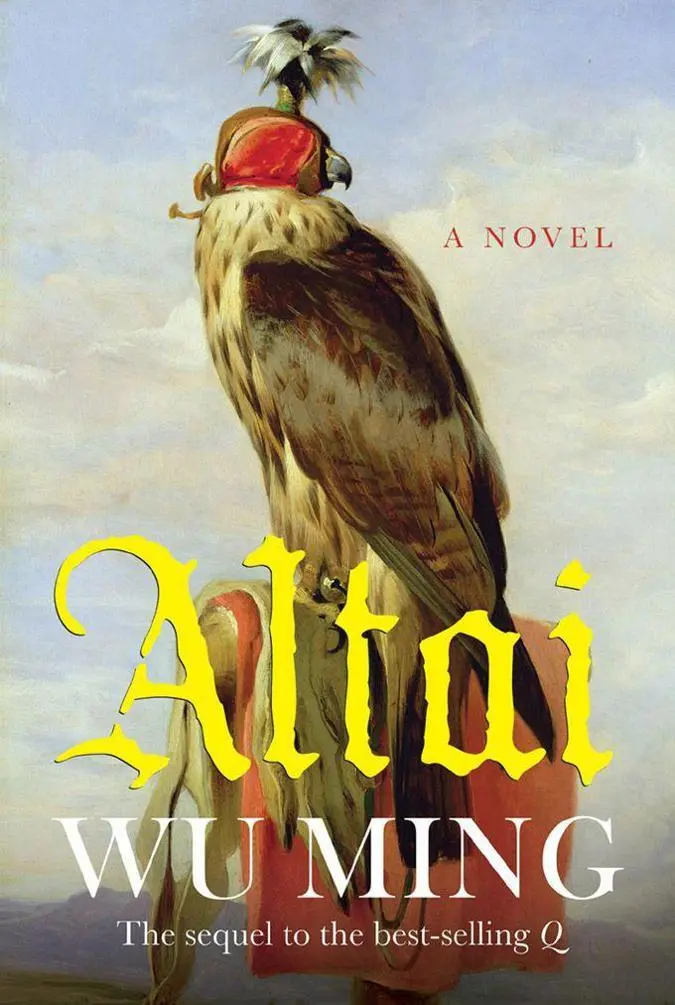
- Название:Altai
- Автор:
- Издательство:Verso
- Жанр:
- Год:2013
- ISBN:нет данных
- Рейтинг книги:3 / 5. Голосов: 1
-
Избранное:Добавить в избранное
- Отзывы:
-
Ваша оценка:
Altai: краткое содержание, описание и аннотация
Предлагаем к чтению аннотацию, описание, краткое содержание или предисловие (зависит от того, что написал сам автор книги «Altai»). Если вы не нашли необходимую информацию о книге — напишите в комментариях, мы постараемся отыскать её.
Through a series of deadly political games leading all the way to the Sultan’s palace in Constantinople, De Zante and his companions spiral headfirst toward a conflict in which the great empires of the Republic of Venice and the Ottomans threaten the very foundations of civilization.
Altai — читать онлайн бесплатно полную книгу (весь текст) целиком
Ниже представлен текст книги, разбитый по страницам. Система сохранения места последней прочитанной страницы, позволяет с удобством читать онлайн бесплатно книгу «Altai», без необходимости каждый раз заново искать на чём Вы остановились. Поставьте закладку, и сможете в любой момент перейти на страницу, на которой закончили чтение.
Интервал:
Закладка:
“They call them Aaron and Asser. They’re young, they’ve just entered the house of catechumens so they can become Christians. One of them’s from the ghetto; the other one’s from Poland.”
A report in tiny, neat handwriting. Rizzi hands it to me smugly. I swallow my mouthful and clear my throat. “Is there anything urgent, Sior Rizzi? Some Jews who have only just come to their senses want to become Christian and live in the grace of God. Nothing too dreadful so far. What else have they been up to?”
“That’s easy. It seems that it’s the fault of this guy, a porter they call the Cunt. He’s set the two catechumens to work and cursed the Madonna.” I nod. Rizzi goes on. “Then that one from the ghetto, on Saturday he gets on his clean Sunday shirt, and he goes around saying as how when he’s a Christian he’ll have a fine set of clothes, and it’ll get him a long way.”
“A cheeky fellow, then. But blasphemy and scandal is none of our business.”
But the cook Rizzi has saved his finest course for the end: “They’re both workshop assistants to a printer from the ghetto. His name’s Zanetti.”
I stand up uneasily; that meat will have to wait. Books and printers are always our business.
Facing Tavosanis and Rizzi, the two of them are on their best behavior. They deny the insults to the saints and the Madonna. They confirm their intention to have themselves baptized, although perhaps not right away. Tavosanis conducts the interrogation. Not badly, but all too predictably. The first boy has ready answers.
“So why did you change your shirt that Saturday?”
“It was dirty, so I put on a clean one.”
“They say that in the house of catechumens you’re always quarrelling with the prior, that you plague him with questions.”
“And where’s the sin in that? I ask him all those questions so I can understand the truth.”
He’s a clever young man; he defends himself well. You don’t need to press such people, you don’t need to keep on at them. Better just to let them talk. Scare them a bit and keep listening.
I tell Rizzi to warm his hands, and gesture to Tavosanis to say that’s enough.
A little while later, we know where the books are hidden. Zanetti didn’t present them to the Office for examination, and that’s enough for confiscation and a bonfire. Three hundred copies of the same text. On the frontispiece, Hebrew characters that I read instinctively, without noticing.

And now here they are, in front of my eyes, in the library of Palazzo Belvedere. Mahzor Sephardim . The collection of rites and prayers of my mother’s people.
In Venice, the name Sephardim had slipped away among my thoughts. Back then I was Emanuele De Zante, Venetian, member of the apostolic Roman Catholic Church, and these were Jewish books. “Sephardim” had a faraway sound, like the name of a remote population of the Caucasus.
“A very rare copy you’re holding in your hands,” said someone behind me. I turned around and recognized the Englishman, Ralph Fitch, dressed as he had been on the evening when I first saw him. He pointed to the shelves around us and said, “Many of these works escaped the flames, the fanaticism that is intoxicating Europe.”
Again I lowered my eyes to the Mahzor . Meanwhile Fitch went on talking, in his singsong, slightly gloomy Italian. I wasn’t listening to him, it was just a sea of syllables, but eventually he stopped and I became aware of the silence.
I looked up again. “Forgive me, you were saying?”
He laughed faintly. “I was saying that this place is precious,” and again he looked around, before adding, “It’s a refuge for runaway books.”
8
I read greedily, as if to satisfy an ancient hunger. Every day I spent in the library was a new apprenticeship on a long trajectory that urged me toward its conclusion.
I looked at the walls filled with books and they seemed to me a mountain I must climb, to glimpse from its summit a horizon I had never seen before.
I thought of my mother and heard in my ears the echo of her voice. Around me, lined up on the shelves, there were volumes that a good Jew should love. Some of them I had struggled through during my schooldays, others I didn’t know, but they all attracted me like treasures. Perhaps fate had chosen an intricate path to fulfill Sarah Cardoso’s last wish.
I soon found myself remastering the Hebrew letters, even if the meaning of what I was reading sometimes escaped me. I found a Hebrew-Latin dictionary, compiled by a Dominican friar, and this discovery helped me considerably.
I started studying the Moreh Nevuchim , the Guide for the Perplexed by Moses Maimonides. I realized that I knew the Torah as a donkey knows the carter’s whip. I plunged into the commentaries on the Zohar, which many people held to be equal to the Talmud. Speculations, visions. My mind opened.
I spent whole days in there, while outside it had started snowing again and the garden of the palace was reduced to a narrow passage between white cumulus clouds and icy fountains.
In the morning I was always alone, but during the afternoon, I often met other users of the library, and gradually I began talking to them about what they were reading. Apart from Ralph Fitch, I met a kabbalist called Meir, a poet of Azeri origin and a calligrapher of the Sultan’s, who was devoting his skill to copying out an ancient Mohammedan text.
One day the master of the house came to see me. I was concentrating so hard on the meaning of a sentence that I didn’t notice him entering and suddenly found him standing behind me.
“I see that you like reading, Manuel,” he said, peering at the pages from over my head. “My Aunt Gracia was a keen reader, too. She said that books have only two shortcomings.” He reached out his hand and tapped the cover of a big volume lying on the table. “They’re heavy,” he said. Then he looked up at the walls covered with shelves. “And they need space.”
“Then this room solves both problems,” I observed.
He shook his head and settled into the armchair next to mine. “Five hundred and eighty volumes is a troublesome legacy. Gracia also said that a Jew should never unpack his bags, but always keep them ready beside the door.”
“And does that apply even here?”
He narrowed his eyes as if trying to spot something in the distance. “Since I disembarked more than fifteen years ago, not a day has passed when I haven’t asked myself that very question. The Ottoman empire is safer than any other territory, but do you think it’s easy? Our business deals, our movements, our way of dressing. Everything falls under the control of the authorities. We aren’t free to cultivate our dreams. Have you ever had a dream, Manuel?”
The answer came out like a sob. “Yes: not to be Jewish. It was my father who fulfilled it.”
My frankness didn’t seem to bother him. “I understand you better than you imagine. Why be weak when you can become strong? But I’m not just content with transforming myself. I want to transform a people. From weak to strong. From divided to united. From unwelcome guests to masters of their own destiny. From fugitives to protectors of the fleeing. We’ve been running away for fifteen hundred years. The time has come to stop.”
That man went on disorienting me, as when a light enters a room and little by little the corners are illuminated, revealing it as different from the way we imagined it in the gloom.
He slipped a big key into one of the panels that ran along the base of the bookshelves. From the space behind it he took a roll of parchment and spread it out on the table in front of me. It was a map, showing the portion of the world that extends from Crete to the Holy Land, from the coasts of Anatolia to the sources of the Nile.
Читать дальшеИнтервал:
Закладка:
Похожие книги на «Altai»
Представляем Вашему вниманию похожие книги на «Altai» списком для выбора. Мы отобрали схожую по названию и смыслу литературу в надежде предоставить читателям больше вариантов отыскать новые, интересные, ещё непрочитанные произведения.








Обсуждение, отзывы о книге «Altai» и просто собственные мнения читателей. Оставьте ваши комментарии, напишите, что Вы думаете о произведении, его смысле или главных героях. Укажите что конкретно понравилось, а что нет, и почему Вы так считаете.