Wu Ming - Altai
Здесь есть возможность читать онлайн «Wu Ming - Altai» весь текст электронной книги совершенно бесплатно (целиком полную версию без сокращений). В некоторых случаях можно слушать аудио, скачать через торрент в формате fb2 и присутствует краткое содержание. Год выпуска: 2013, Издательство: Verso, Жанр: Историческая проза, на английском языке. Описание произведения, (предисловие) а так же отзывы посетителей доступны на портале библиотеки ЛибКат.
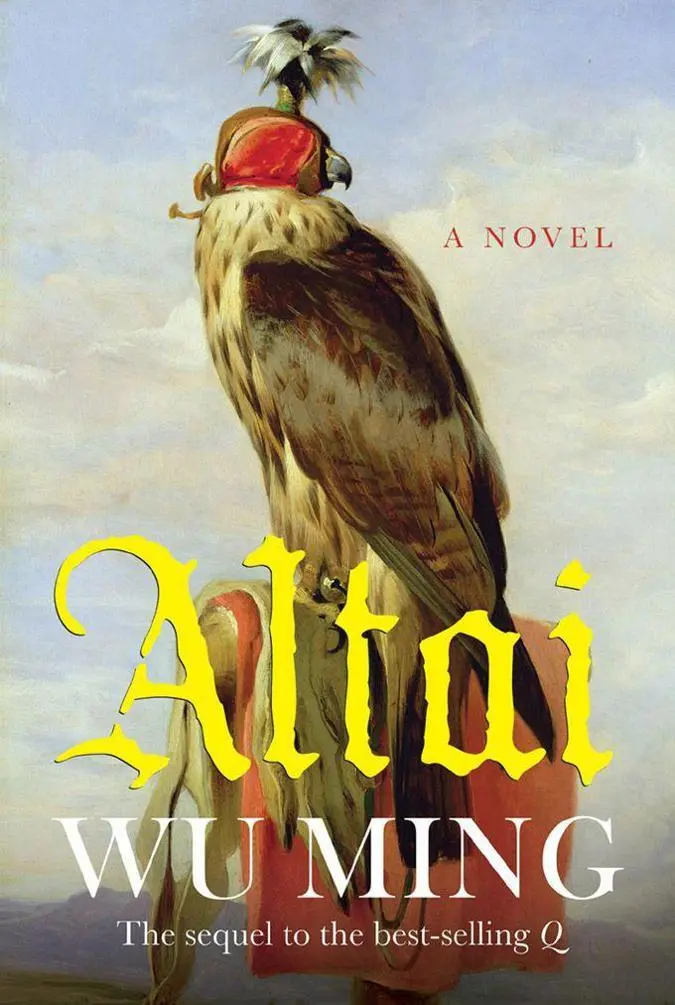
- Название:Altai
- Автор:
- Издательство:Verso
- Жанр:
- Год:2013
- ISBN:нет данных
- Рейтинг книги:3 / 5. Голосов: 1
-
Избранное:Добавить в избранное
- Отзывы:
-
Ваша оценка:
Altai: краткое содержание, описание и аннотация
Предлагаем к чтению аннотацию, описание, краткое содержание или предисловие (зависит от того, что написал сам автор книги «Altai»). Если вы не нашли необходимую информацию о книге — напишите в комментариях, мы постараемся отыскать её.
Through a series of deadly political games leading all the way to the Sultan’s palace in Constantinople, De Zante and his companions spiral headfirst toward a conflict in which the great empires of the Republic of Venice and the Ottomans threaten the very foundations of civilization.
Altai — читать онлайн бесплатно полную книгу (весь текст) целиком
Ниже представлен текст книги, разбитый по страницам. Система сохранения места последней прочитанной страницы, позволяет с удобством читать онлайн бесплатно книгу «Altai», без необходимости каждый раз заново искать на чём Вы остановились. Поставьте закладку, и сможете в любой момент перейти на страницу, на которой закончили чтение.
Интервал:
Закладка:
“She wanted to die in the land of our fathers, in Palestine.”
“Were you with her?”
I saw her face darken. “The Senyora didn’t want me. She ordered me to stay with Donna Reyna, her daughter.” She looked at me impatiently. “May I go now?”
I didn’t want to stay on my own. I knew already that I wouldn’t sleep. I remembered that when I was a child, to keep my mother by my bedside I used the excuse of my fear of the dark. Then my mother had been replaced by old Abecassi, and I had had to conquer my real nightmares on my own.
I thought of holding Dana back again, but it was clear that my presence irritated her.
It was hard to blame her: I was a spy of Venice, a renegade Jew, and I had just brazenly importuned her. I dismissed her with a word of thanks and prepared to fill my night alone.
I blew out the candles; the embers in the stove were my only source of light. For at least an hour I stayed on the bed, crushed by my thoughts, trying to impose a different rhythm on my heart. But none of it was any use: I couldn’t sleep, and anxiety drove me out to the loggia. Through the windows in the ceiling the moonlight fell on the mosaic floor, illuminating Spain, Italy, the Balkans. I heard faint sounds, apart from the murmur of the fountain. I leaned in, but the hall was deserted. Only a strip of light under the library door indicated that there was anyone there.
All of a sudden I felt my skin prickle, and realized that there was someone else there, a few feet away from me. The figure came forward, holding a candelabra.
A woman.
The flickering flame revealed a pale face and big, dark eyes. I was looking into the face of the ghost of Gracia Nasi, but she was a woman of flesh and blood.
“He is locked in there every night,” she said, “Studying maps. Cherishing his dream.”
My senses in a state of alarm, my throat dry, I watched her white fingers brushing a pillar. She stared, her big eyes boring into mine, and made me flinch.
“I don’t know what to wish for you. Love him unconditionally or really get to know him one day.”
She raised her hand as if to touch my face, but at the last moment she stopped.
“Dana is right,” she said. “You have honest eyes.”
Then, without another word, the woman disappeared into the shadows.
Again I dipped my memory in the spring of the long lessons I had learned in Venice. Donna Gracia’s daughter, Reyna, had been given in marriage to her cousin Yossef. Consigliere Nordio had taught me the story of the Nasis very well. He had always fought against them; it was his mission, and he had trained me to fear them and to defend the Republic against their traps. He had trained me so well that I still felt at fault in spite of everything. From one corner of my mind his feeble voice told me over and over again that I wasn’t equipped for the extreme sacrifice. I had failed in my mission. I hadn’t known how to do anything but end up in the arms of the enemy.
In the belly of Leviathan, or on top of the world.
5
A hole in the ground smeared with honey, a sweet and sticky trap. I might never get out of it. Gradually, with smiles and jokes, lavish meals and riddles, they would take over my soul and Nasi would add it to his collection.
Lying among the pillows, on that excessively soft bed, I could hear, beyond the wood of the doorway, the echo of little movements, as of a body settling down, assuming new positions to conquer stasis and tedium and thus to bring an assignment to its conclusion. Someone out there, someone, was keeping watch over me. I thought I could hear his breath, and I was like that, too, listening, my limbs aching, unable to sleep. My mind’s eye scoured the palace, to see if escape was possible. My soul wandered, tethered to my body by the leash of weariness, and my ears tried to catch every sound. The splash of the fountain in the palace drawing room. Distant voices. The creak of wooden boards, the soft clatter of feet.
I cursed the person I had been in Salonika, the one who had had the chance to flee and hadn’t done it. The one who had felt the shadow of affinity with his jailers. I cursed myself for not having tried to kill Nasi. For not killing the enemy, finally within arm’s reach.
I saw the scene. I clutched the man’s throat and tightened my grip. Rage and contempt sustained me. I felt the bones of the neck yielding, and then I started on his face. I wanted to wipe that ambiguous, self-important expression from his face. I wanted to erase Yossef Nasi from the category of the living, from my life, from my future memories. I struck at him doggedly, drowning his features in a lake of blood. I plunged into an uneasy half sleep.
It must have been the middle of the night by the time I stirred again. I felt my clothes burning. Something was running along my skin. Agitatedly, I undressed, and in the candle-light I tried to inspect every recess, every nook of myself, but I found no parasites, no fleas in my clothes or lice on my head.
It was only a sensation, a sign. I was in a Procrustean bed, and this was a portent of the suffering to come. I wouldn’t stay and wait for it.
I assessed all the possibilities. Only flight would make me free, but I would have nowhere to go. To return to my earlier life I would have to turn my fantasy into a plan: bring Nasi’s head to Venice, return to my responsibilities and, in fact, be the savior of the Republic.
Nordio would be proud of me, and his power and influence would increase, because one of his men would have got rid of Giuseppe Nasi, bringing an end to his sordid intrigues.
Yes. Having the Jew’s head. Killing him was a task within my scope. But going back to Venice?
It wasn’t impossible. Just difficult. A disguise, a ship. A basket with a head in it, salted, to keep it from stinking. Kill Nasi. Flee, perhaps in disguise. Reach the port. I had to get hold of some money, there must be plenty in the palace. . yes, even that was a problem that was easily solved. I would be meek. I would sting like a serpent in the breast. Yes. But first I had to rest. Rest.
I closed my eyes, and the inanity of my plan struck me from behind, like when you’re a child and one of your friends jumps out from behind a corner and shouts Boo! and you turn around and see him laughing. A thousand variables had to be aligned, like a favorable astral conjunction involving all the planets and the fixed stars. And even if everything went according to plan, if I reached Venice with my trophy in the basket, it wouldn’t change my nature. To Venice I was only a Jew. My place was the ghetto. Or rather, my place was under the ground. But not in the graveyard, not in consecrated ground.
And then it would no longer matter if I got away. What I needed wasn’t an escape plan, but the strength to act and forget myself with my final act of redemption. Kill the Jewish Dog and allow myself to be torn to pieces by his brigands. Show him that I was capable of making the ultimate sacrifice.
My mind ceased its intense conscious activity. I fell back into dull, dark sleep, peopled by voices and faces: Nordio, Arianna, my father. Those accents, Tavosanis’s from Friuli, Rizzi’s from Rovigo. Old Abecassi’s rough speech. The mute censure on Tuota’s face.
Then voices and faces became bodies and faces, lined up on a stage like actors in a play, masks lowered. They were calling to me to climb onto that stage, and all around were the loggias that opened onto the drawing room of Palazzo Belvedere. I struggled and managed to get up there. I wanted to join the masks; I walked towards the proscenium arch; but I discovered that I was still in bed, half asleep, unable to move a muscle, oppressed by a terrible weight, while the masks laughed at me and mocked me.
Читать дальшеИнтервал:
Закладка:
Похожие книги на «Altai»
Представляем Вашему вниманию похожие книги на «Altai» списком для выбора. Мы отобрали схожую по названию и смыслу литературу в надежде предоставить читателям больше вариантов отыскать новые, интересные, ещё непрочитанные произведения.







Обсуждение, отзывы о книге «Altai» и просто собственные мнения читателей. Оставьте ваши комментарии, напишите, что Вы думаете о произведении, его смысле или главных героях. Укажите что конкретно понравилось, а что нет, и почему Вы так считаете.