Wu Ming - Altai
Здесь есть возможность читать онлайн «Wu Ming - Altai» весь текст электронной книги совершенно бесплатно (целиком полную версию без сокращений). В некоторых случаях можно слушать аудио, скачать через торрент в формате fb2 и присутствует краткое содержание. Год выпуска: 2013, Издательство: Verso, Жанр: Историческая проза, на английском языке. Описание произведения, (предисловие) а так же отзывы посетителей доступны на портале библиотеки ЛибКат.
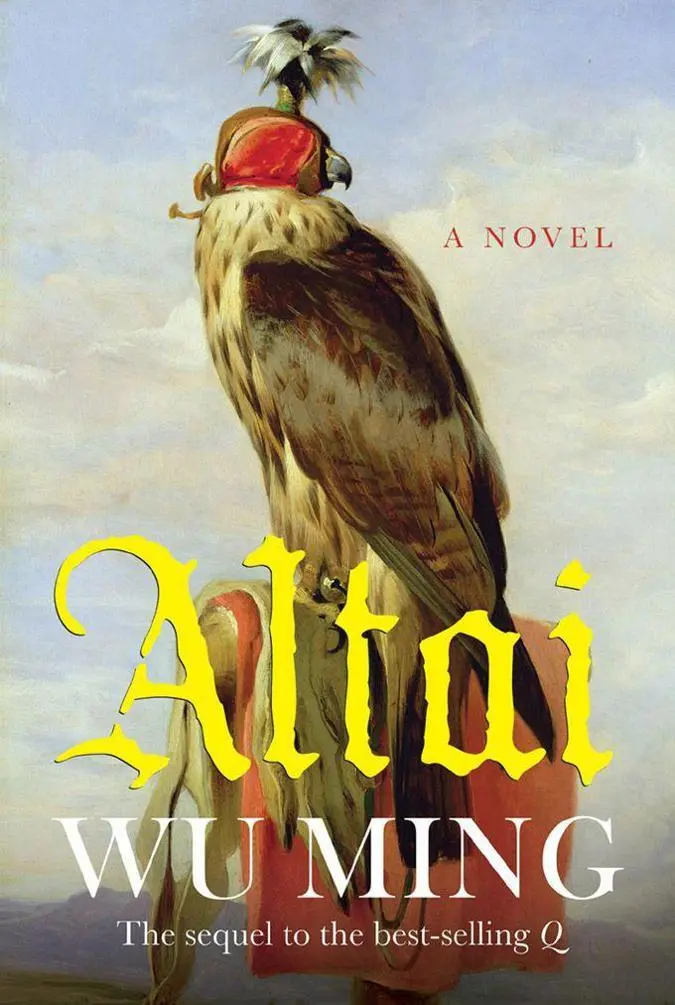
- Название:Altai
- Автор:
- Издательство:Verso
- Жанр:
- Год:2013
- ISBN:нет данных
- Рейтинг книги:3 / 5. Голосов: 1
-
Избранное:Добавить в избранное
- Отзывы:
-
Ваша оценка:
Altai: краткое содержание, описание и аннотация
Предлагаем к чтению аннотацию, описание, краткое содержание или предисловие (зависит от того, что написал сам автор книги «Altai»). Если вы не нашли необходимую информацию о книге — напишите в комментариях, мы постараемся отыскать её.
Through a series of deadly political games leading all the way to the Sultan’s palace in Constantinople, De Zante and his companions spiral headfirst toward a conflict in which the great empires of the Republic of Venice and the Ottomans threaten the very foundations of civilization.
Altai — читать онлайн бесплатно полную книгу (весь текст) целиком
Ниже представлен текст книги, разбитый по страницам. Система сохранения места последней прочитанной страницы, позволяет с удобством читать онлайн бесплатно книгу «Altai», без необходимости каждый раз заново искать на чём Вы остановились. Поставьте закладку, и сможете в любой момент перейти на страницу, на которой закончили чтение.
Интервал:
Закладка:
Our boat slipped by the hills of Pera, below the sumptuous villas of the foreign noblemen. One in particular drew my attention with the richness of its facade.
“The residence of the Venetian bailiff,” my companion said, winking, without adding anything else.
We made quickly for the opposite bank, aiming toward a large building, one both magnificent and menacing. Thinking about it again, I see in my mind the image of a many-eyed monster, squatting on the strait preparing to grab the vessels as they crossed. Hard to forget that all goods between the Mediterranean and the Black Sea passed before its jaws.
The boat reached a flight of stairs that descended from the garden of the palace and plunged into the water. The submerged steps were covered with dark weeds, stirred by the waves like sirens’ tresses.
“Welcome to Palazzo Belvedere.”
My guide walked ahead, past snowy flower beds and cypress trees, until he reached a second entrance. We went in, walking down a short corridor, then climbed a flight of steps and emerged into a loggia that led to a big drawing room dominated by a white marble menorah that rose from a pool full of water-lilies. Jets of water representing flames spouted from its seven branches. Then another loggia like the one that had welcomed us opened up before us, this one punctuated at regular intervals by a large number of doors. Wooden panels carved with floral motifs decorated the walls.
The floor of the drawing room was decorated with a mosaic depicting the Mediterranean surrounded by the shores of Europe, Africa and Asia.
The Strait of Gibraltar was covered by a long low table, where at least fifty people, squatting in the Turkish manner, waited with empty bowls for their food. There were old men, their faces weary and bewildered, and children, who bit into loaves of bread and munched handfuls of dried fruit. Around them stood the women, passing the bowls back and forth, dishing out soup, dipping their spoons into copper pots.
The smell of coriander and artichokes rose thickly to our nostrils.
“During the feast of Sukkoth,” the guide explained to me, “the oldest Jewish quarter in the city caught fire. It was opposite Galata, on the shore of the Golden Horn.”
I thought of the blackened ruins I had seen from the sea on the first day. A big fire in the Jewish quarter, opposite the Frankish city, in the capital of the Great Turk: It all suggested an act of revenge on the part of La Serenissima for the damage done to the Arsenal, but thinking about the dates, I realized this couldn’t be so.
On the day of the explosion, the Jews of Venice had been celebrating. Many people had accused them of gloating over the ruin of the Republic, but they were only celebrating the Jewish New Year. There were just two weeks between Rosh Hashana and Sukkoth — too short an interval for any news, however urgent, to get from Venice to Constantinople.
“Hundreds of families,” the voice beside me continued, “lost all their belongings: houses, beds, clothing. We put them in all possible shelters, but some of them remained outside, and with winter at the gates we couldn’t let that happen.”
I watched an old woman wiping the bottom of her bowl with a piece of bread. The accurate and meticulous gesture reminded me of old Abecassi, forever shouting at me not to waste my food. The woman got to her feet and hobbled across the drawing room. Before disappearing from view, she stood in the doorway of the internal courtyard, her eyes turned upward and her hands joined as though in prayer. Her eyes were staring at a painting, just above the architrave. A full-length portrait of a woman, seated, her opulent robes falling softly to her feet, her hand resting on a desk. Her eye proud, her brow wide, her hair arranged in an elaborate style.
“Donna Gracia Nasi,” said my companion, as if introducing me to a flesh-and-blood person. “I imagine that in Venice she is still known by the name of Beatriz de Luna Miquez.”
Although merely a painting, the woman was awe-inspiring, like certain portraits of saints or emperors. Our Senyora of the Sephardim. I had heard Jews invoking her name under torture, and recommending their souls to her before being executed. She was the matriarch of the family, the widow of a wealthy Jewish banker from Portugal. She had lived in Antwerp and had escaped the designs of the emperor before taking refuge in Venice. Her nephew João was her most trusted servant. The one who, in Constantinople, had assumed his own Jewish name: Yossef Nasi.
Some months previously, news had reached Venice that Donna Gracia Nasi was dead. Consigliere Nordio had been delighted.
“We are still in mourning. We all loved her very much. She was our beacon. Our queen.” The man lowered his head and sighed. “The past year has been very unhappy. Two months before Donna Gracia, from one day to the next, Samuel passed away.”
He didn’t explain who that was, nor did I ask. He must have been Nasi’s younger brother, known in Venice by the name of Bernardo.
The woman in the painting attracted my attention again. Now a devout little procession passed below her. Men and women bowed in front of her image before they left. Only the children lingered in front of the sumptuously laid table. I let my eye wander around the vast sitting-room. To me, this soup kitchen for the poor looked like the palace halls where European aristocrats display their trophies of war and the hunt. It wasn’t possible that there wasn’t another place in the whole building in which to give food to the evacuees. Nasi wanted his guests to see how great and good his heart was. He was like those Pharisees criticized in the Gospels, the ones who strike their chests in front of everyone when doing penance and ostentatiously give generous alms in order to be admired.
The guide took two steps back and reached the wall behind us. With a mechanical click, he released a wooden panel that covered it, revealing a concealed opening.
“This way, please.”
I entered a narrow, dark room, smelling of dust and wood shavings. There was just enough space to accommodate a bench, and we sat down side by side, facing the wall. My companion lifted a strip of wood and a blade of light struck my face. He beckoned to me to peer through the crack, just wide enough for the eyes.
A big hall opened up below us, the walls occupied by hundreds of bound volumes. We were in a secret chamber, built so that a watcher might observe the library without being seen.
“It’s better that you take a glance at the guests before meeting them.”
He spoke the advice in a smug and irritating tone, so irritating that I immediately wanted to leave off this spying game. But I rested my forehead against the wall and counted four people, composed and elegant, conversing in front of a big clock. The clock’s face, framed in a tall, narrow case, was filled with numbers, letters and smaller squares, above which needles of various lengths rotated, quickly or slowly — some so slowly that they looked as if they weren’t moving at all. Charon spoke close to my ear.
“They are impressed, and they’re quite right to be. That machine is a genuine marvel. Besides the hour, it shows the day of the year according to the Christian calendar, the Hejira, and the Jewish calendar. It arrived from Egypt a few days ago, a precious gift from its maker, the famous Takiyuddin.”
I had never heard his name, but then again, I wasn’t here to talk about clocks.
“Let me guess what’s about to happen,” I said. “I’m going to ask you who these gentlemen are, and you’re going to explain. Or do we have to talk about pinions and gear-wheels?”
The man maintained his dreamy tone. “Don’t underestimate machines, Senyor. Not even as a topic of idle conversation.” Then he settled himself more comfortably on the bench and began to describe the people there for my benefit.
Читать дальшеИнтервал:
Закладка:
Похожие книги на «Altai»
Представляем Вашему вниманию похожие книги на «Altai» списком для выбора. Мы отобрали схожую по названию и смыслу литературу в надежде предоставить читателям больше вариантов отыскать новые, интересные, ещё непрочитанные произведения.










Обсуждение, отзывы о книге «Altai» и просто собственные мнения читателей. Оставьте ваши комментарии, напишите, что Вы думаете о произведении, его смысле или главных героях. Укажите что конкретно понравилось, а что нет, и почему Вы так считаете.