Wu Ming - Altai
Здесь есть возможность читать онлайн «Wu Ming - Altai» весь текст электронной книги совершенно бесплатно (целиком полную версию без сокращений). В некоторых случаях можно слушать аудио, скачать через торрент в формате fb2 и присутствует краткое содержание. Год выпуска: 2013, Издательство: Verso, Жанр: Историческая проза, на английском языке. Описание произведения, (предисловие) а так же отзывы посетителей доступны на портале библиотеки ЛибКат.
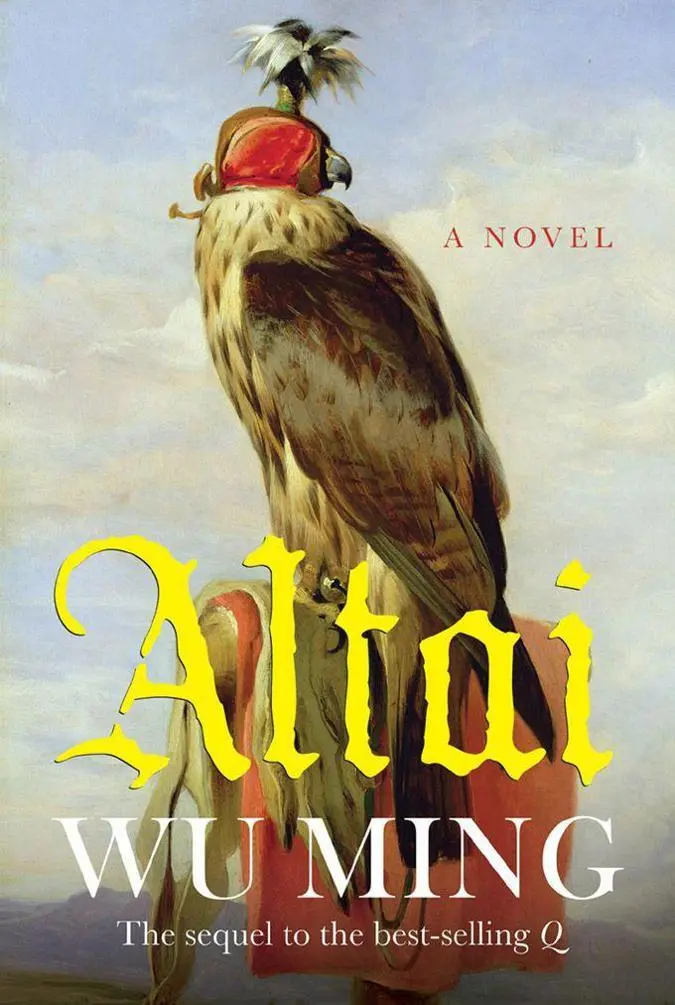
- Название:Altai
- Автор:
- Издательство:Verso
- Жанр:
- Год:2013
- ISBN:нет данных
- Рейтинг книги:3 / 5. Голосов: 1
-
Избранное:Добавить в избранное
- Отзывы:
-
Ваша оценка:
Altai: краткое содержание, описание и аннотация
Предлагаем к чтению аннотацию, описание, краткое содержание или предисловие (зависит от того, что написал сам автор книги «Altai»). Если вы не нашли необходимую информацию о книге — напишите в комментариях, мы постараемся отыскать её.
Through a series of deadly political games leading all the way to the Sultan’s palace in Constantinople, De Zante and his companions spiral headfirst toward a conflict in which the great empires of the Republic of Venice and the Ottomans threaten the very foundations of civilization.
Altai — читать онлайн бесплатно полную книгу (весь текст) целиком
Ниже представлен текст книги, разбитый по страницам. Система сохранения места последней прочитанной страницы, позволяет с удобством читать онлайн бесплатно книгу «Altai», без необходимости каждый раз заново искать на чём Вы остановились. Поставьте закладку, и сможете в любой момент перейти на страницу, на которой закончили чтение.
Интервал:
Закладка:
“Never again will our people know a woman like her.”
The old man kneels by the grave and murmurs incomprehensible words. Ben Adret asks Ali what language he is praying in.
“He isn’t praying. He’s speaking the language of ghosts.”
Incredulous, Ben Adret asks him who the old man is. The Yemeni replies, “He is the stories he tells. When he feels like it, which he seldom does. Usually he prefers to write them down.”
And why on earth have the others come with him, all the way here? Ali points to the two Indians. “He bought them from a Portuguese galley, then freed them. They follow him everywhere.” The reply is incomplete. Ben Adret waits.
Ali puts a hand on his heart: “I’m with him because God, the Merciful, the Compassionate, gave me the task of converting him to the true faith.”
Ben Adret hasn’t time to be startled, because the old man turns and calls to him. He asks him to recite a Jewish prayer. In the silence that follows, Ben Adret utters the words. Flowing sounds, pure sounds, and even those who don’t understand them bend their heads. As the words rise towards God, they will become everyone’s words.
. . ul’assaqa yathon l’chayyey ‘al’ma
ulmivne qarta dirushlem
ulshakhlala hekhleh b’gavvah. .
The boats move calmly on the lake, toward the bare hills on the opposite shore. The orchards of the plain can be seen in the distance.
Once the simple ritual is over, they return to the home of the Nasis. For a long time, the old man remains locked in a dark silence. When he opens his mouth again it is to ask why it was, as they approached the city, that they saw more soldiers than sheep in the fields.
Ben Adret tells him how things are. The inhabitants of the region treat the Jewish colonists as unwelcome guests. Before the siege there were mostly Christians and Muslims there. Yossef Nasi bought their lands, their plots, their pastures. He built houses and moved the colonists into them. Recently there have been raids against the farms, and fires and threats. Don Yossef persuaded Sultan Selim to reinforce the garrison.
“If our security depends on the janissaries, sooner or later they will end up in charge,” Ben Adret concludes bitterly. “We will have to be able to defend ourselves on our own. Don Yossef should get hold of weapons, not guards. But he doesn’t want to contradict his friend Selim, and if the rumors going around are true, things can only get worse.”
Ben Adret says nothing more, but the old man presses him. What rumors? What are people saying? Ben Adret hesitates, sighs, then replies, “They are saying that Yossef Nasi wants to make himself king.”
Gracia’s room contains only a bed, a carved wooden chest and an armchair upholstered in damask, luxurious enough to look out of place. The air smells of sandalwood and incense.
“The Senyora wanted to give away all her surplus furniture, her clothes, her books. And her tapestries.”
Ben Adret is on his feet, standing by the door. He lets Ismail come in and touch the deathbed of the woman who let him hope for a new start many years before.
The old man moves slowly, as if afraid of colliding with invisible presences. He stops in front of a shelf on the wall that holds a Hebrew Bible and a Talmud. The latter volume looks familiar. It was printed by Usque, a bookseller in Ferrara, many years before. The name makes him smile. He limps, without using his stick, to the chest and opens it. Inside, an old brocade blanket covers a few ornaments, a rolled-up carpet and a bundle. He picks this up, unties the knot that fastens it, and takes out two volumes: a Christian Bible written in Greek and the Koran. As he puts them back in, the spine of a third, much smaller book attracts his attention: Trattato utilissimo del Beneficio di Gesú Cristo Crocifisso, verso i cristiani.
In the evening, Ali finds the old man sitting in the doorway, covered with the cloak adopted by the Moors, the same color as the night. He doesn’t look sad, but weighed down by thoughts and memories. The Yemeni has never asked about the letter that has brought them there. He does so now. What was written on it?
“That she was dying,” the old man replies. Beatriz , as he calls her, was summoning him to Tiberias. She wanted to see him one last time.
“That’s all?”
The old man chews over his reply before giving it to his friend. Beatriz exhorted him to help her nephew Yossef at a difficult moment. Ali understands: the old man has made a decision. “We aren’t going back, are we?”
The old man huddles in the cloak. There is a debt to be honored, he says. Many years ago, the Nasi family brought him to safety when his fate was decided. At any rate, he adds, Ali is not obliged to follow him. The Arab studies the Crab fixed to the zenith of the sky.
“Well, here I am,” he murmurs. “I, too, have an undertaking to honor. To God, the Sublime and Munificent. Now you should sleep, old man. Constantinople is still a long way away.”
Part Two. Tikkun Olam, 2 Rajab 977–21 Safar 978 (December 11, 1569–July 25, 1570)
1
When I woke up, light was flooding in through the window. It must have been late morning. Someone had stirred the fire. By the brazier there was a wooden tub full of steaming water — an explicit invitation. My last bath had been in Salonika, two weeks before.
I pricked up my ears, but the house was entirely silent. I threw open the shutter and an enchanted picture presented itself to my view. A fabulous city stretched out before me. Houses, trees, boats, streets, domes, minarets were the warp and weft of a big sheet of white silk lace shot with threads of silver and gold, glittering under the sun, so bright it almost hurt the eyes.
The warmth of the bathwater made all thoughts evaporate. I stayed motionless, eyes closed, lulled by the crackle of the fire and the scent of burnt resin, until a voice made me start. “ Buenos dias .”
I turned around sharply. The new arrival leaped backward to avoid being splashed. We stared at one another, bewildered, and then the other man smiled and addressed me in Italian.
“I hope it’s still hot. I was careful to see that it was boiling, so that it would be the right heat when you woke up. But I hadn’t thought you would sleep so long. The journey must have been very tiring.”
I guessed that he must be about fifty. He had a thin moustache and a pointed beard. The fox-skin robe that reached to his knees opened over a leather waistcoat and a belt with an engraved buckle. On his feet he wore fur-lined boots. On his head was a black velvet hat with a blue feather. Of course, Nasi’s men never skimped on clothing.
“Who are you?”
“Your Charon,” the other man replied with apparent amusement. “I’m here to take you to Palazzo Belvedere.” He took a package from under his arm and set it down on the bed. “But not before dressing you appropriately.” He untied the strings, revealing the contents: new clothes. He handed me a towel to dry myself with and stood waiting for me to put them on. They were well made, heavy and warm. “Are you ready?”
“So Nasi’s very keen to meet me? I’m sure he isn’t worried that I’ll escape, given that I’m a pistol shot away from him now.”
He was silent for a few moments. Then he said, “The answer to the question is yes, you are expected at the palace for luncheon. It would be discourteous to keep the other guests waiting. As to fears that you might escape, we trust that you made your decision in Salonika. Efrem Del Burgo has given us a detailed account of your stay with him. But now come, we must hurry.”
Outside the house, three men wrapped in heavy cloaks waited to escort us to a little jetty. We climbed on board a slender boat, and the helmsman issued an order to the oarsmen, who propelled the boat into the middle of the current. My eyes were lost again among the whitened domes of the big mosques. There was something sensual in those shapes, and in their clear contrast to the minarets, erect toward the sky. Instinct called Arianna to mind, her smooth and sinuous body. Blasphemous thought, but since my coarse humiliation at the brothel in Salonika I hadn’t touched a woman, and desire chooses strange ways to manifest itself.
Читать дальшеИнтервал:
Закладка:
Похожие книги на «Altai»
Представляем Вашему вниманию похожие книги на «Altai» списком для выбора. Мы отобрали схожую по названию и смыслу литературу в надежде предоставить читателям больше вариантов отыскать новые, интересные, ещё непрочитанные произведения.








Обсуждение, отзывы о книге «Altai» и просто собственные мнения читателей. Оставьте ваши комментарии, напишите, что Вы думаете о произведении, его смысле или главных героях. Укажите что конкретно понравилось, а что нет, и почему Вы так считаете.