Wu Ming - Altai
Здесь есть возможность читать онлайн «Wu Ming - Altai» весь текст электронной книги совершенно бесплатно (целиком полную версию без сокращений). В некоторых случаях можно слушать аудио, скачать через торрент в формате fb2 и присутствует краткое содержание. Год выпуска: 2013, Издательство: Verso, Жанр: Историческая проза, на английском языке. Описание произведения, (предисловие) а так же отзывы посетителей доступны на портале библиотеки ЛибКат.
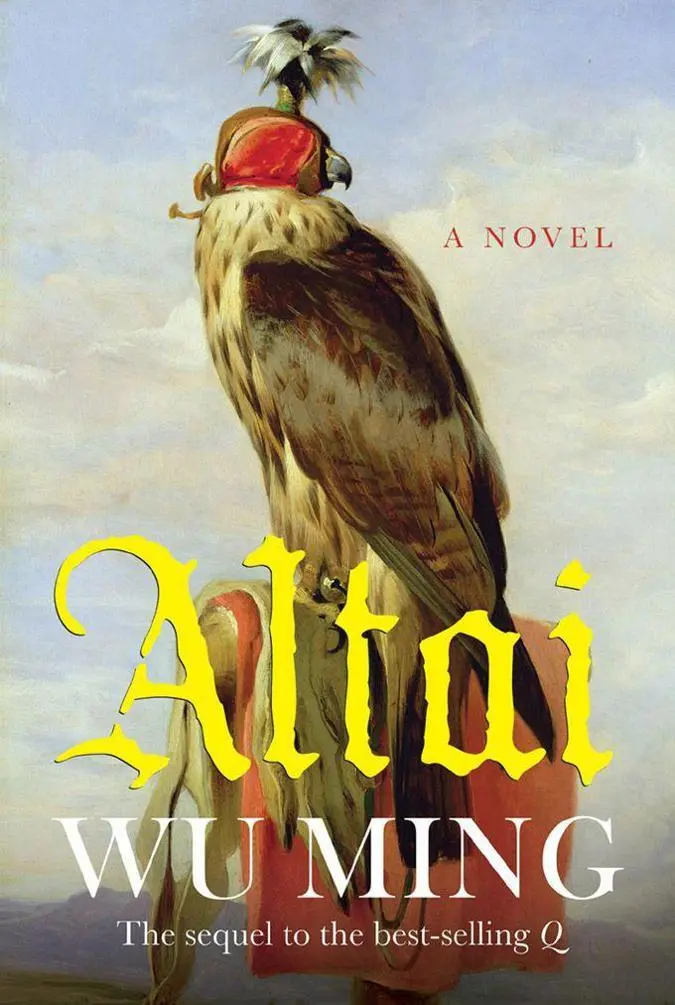
- Название:Altai
- Автор:
- Издательство:Verso
- Жанр:
- Год:2013
- ISBN:нет данных
- Рейтинг книги:3 / 5. Голосов: 1
-
Избранное:Добавить в избранное
- Отзывы:
-
Ваша оценка:
Altai: краткое содержание, описание и аннотация
Предлагаем к чтению аннотацию, описание, краткое содержание или предисловие (зависит от того, что написал сам автор книги «Altai»). Если вы не нашли необходимую информацию о книге — напишите в комментариях, мы постараемся отыскать её.
Through a series of deadly political games leading all the way to the Sultan’s palace in Constantinople, De Zante and his companions spiral headfirst toward a conflict in which the great empires of the Republic of Venice and the Ottomans threaten the very foundations of civilization.
Altai — читать онлайн бесплатно полную книгу (весь текст) целиком
Ниже представлен текст книги, разбитый по страницам. Система сохранения места последней прочитанной страницы, позволяет с удобством читать онлайн бесплатно книгу «Altai», без необходимости каждый раз заново искать на чём Вы остановились. Поставьте закладку, и сможете в любой момент перейти на страницу, на которой закончили чтение.
Интервал:
Закладка:
When I reached the door, Efrem opened it in person. He let me in without a smile, and I had a sense that he had been waiting for me. He fetched me coffee and clean clothes, with the solicitude normally reserved for someone who has just suffered an accident.
18
It was a rainy day, the sky outside the window was a grey veil, and yet Navarro seemed gaudy, as if light were emanating from under his clothes. The colors that covered him were excessive, the red of his ring was a heart torn from his breast. Even his words seemed to me to have a color: a bright blue, they floated in the air along with the steam from the coffee. Such miracles brightness performs: Before trying to flee I had been confused and irresolute, certain of nothing. The realization that I could only go forward had blown the fog from my eyes.
“You must really like this city, if you felt the desire to take another walk,” he said as I sat down.
“Salonika is only a bigger ghetto than the others. In fact it’s a collection of little ghettos. Calabrians and Spaniards, Romaniots and Portuguese, Puglians and Dalmatians.”
Navarro took a sip of coffee. He kept his eyes half closed, the better to enjoy the savor of the drink, and to take his time. The muscles in his neck moved slightly, he sighed with pleasure, and it was only then that he spoke.
“The ghettos are in your mind, De Zante. For a Jew in Christian Europe, the ghetto is the only place. Things are different here, you will understand with time.”
I didn’t reply. I would have thrown out my words at random and cut a poor figure before a man who always found the right words. “Time.” The time I had ahead of me. The time allotted me. “You could have escaped and you didn’t. Why not?”
“To balance the books, Navarro.”
He gave a start: I had done well with the little I had, obtaining the result of startling him. I had put a question in his head, and for the first time I had uttered his name, bringing us closer together. It was his turn now. I watched him thinking, struggling and finally surrendering. He gestured to me to go on.
“That’s enough about gratitude, and about how much I owe you. I could have escaped, and instead here I am. The books are balanced. So far, you’ve told me what will become of me if I don’t help you. It’s time to tell me what I will gain.”
His eyes narrowed slightly. From the start Navarro had studied me like a book; now, at last, I saw him turning the page.
“You’re a clever man, De Zante, congratulations. The truth is that you didn’t escape because you hadn’t the faintest idea where you could go. And yet you present it as if it’s a choice and you want to give me something in return.”
“Then I’ve passed the test. I’m a good Jew.”
He laughed to himself, snorting through his nostrils. He said he would give me money, a lot of money, if my revelations were useful to him. And a house, in a safe place of my choice. The chance of a new life. I asked why I should trust him.
Navarro replied, “Aren’t we all good Jews?” And he had my back against the wall again. From that point onward, I couldn’t move without giving him a shred of what he wanted.
He asked me about the Arsenal, about the damage caused by the fire.
I told him what I had seen: three burned galleys, some flooded docks, the collapse of the surrounding walls, the destruction of the powder grinders. A severe blow, but damage less severe than one might have imagined.
He asked me about the new wing of the Arsenal, the recent expansion. He wanted to know what went on in there.
“The dry-dock basins are used for the repair of old galleys, big merchant ships,” I replied. “Someone decided not to let them go on rotting in the port. In the event of war, they could be useful as troop carriers.”
Navarro handed me the coffee that I hadn’t yet touched. The glass was tepid, the liquid no longer steaming, I took a great sip. “So Venice is preparing for war,” he observed. “Do you have any idea what its goal will be?” The question was uttered in the same neutral tone as the others.
“Don’t pretend you don’t understand. The Sultan is preparing for war; he has been ever since he came to the throne. Some people say it will be against the Portuguese, to chase them from Hormuz. Some are convinced that he wants to support the revolt of the moriscos of Granada. Others say that he will besiege Tunis, Heraklion or Cyprus. The Doge, in Venice, fears a direct attack on the city. He has even recalled the architect Savorgnan from Cyprus to reinforce the whole defense system of the lagoon.”
That name produced a barely visible reaction on Navarro’s face, and made him even more alert and watchful. He leaned toward me slightly.
“Giulio Savorgnan? Did you know him?”
“Yes. The Consigliere employed me to ensure his personal security and the secrecy of his projects.” Cat’s eyes flashed in the gloom. You could almost hear him thinking.
“Do you know if he planned to return to Cyprus?”
I shrugged. “He didn’t say as much, but I shouldn’t imagine so.”
“And what sense did you have?”
“He was very out of sorts, even though he had made every arrangement for the work to be completed in his absence. The money had run out, so before he left Nicosia, he come up with the idea of a competition between the aristocratic families of the city: the one offering the most money could give their own name to one of the eleven bastions. It was the result of that lottery that constantly troubled him.”
“And in Famagusta?”
“He only managed an inspection there. He said the defenses were very antiquated.”
Navarro paused for a long time. It was clear that he was making a decision. When at last he got up, I realized that he had resolved the dilemma.
“I’m sorry, De Zante,” he said, “but I’ve decided to send you away. You will leave tomorrow.”
“What?” My alarm was like a long flaming branch that had been passed from hand to hand for an hour, growing shorter and shorter, until it was finally scorching my fingers. “You said I could choose where to go!”
“And that’s true,” he said without batting an eyelid. “You will choose, but not today. Other people must hear what you have said to me. You will go to Constantinople. Don’t worry, you’ll like it.” He waited for a moment before adding, “Even more than Salonika.”
Then he bade me farewell and left. I peered out of the doorway, still stunned by the news, and I heard him say to Efrem, “Tomorrow el mansévo will leave for Konstantinopla. You’re going to go with him , apronta todo .”
In my right pocket, my hand touched my dice.
19
I was on the deck, still under guard, but I didn’t feel like a prisoner. Exposed to the south wind, which fills the sails and makes men skittish as horses, I felt alive, ready to take on anything, lucid and alert. Efrem brought me food and we swapped some words in Ladino. The sailors talked to each other in lingua franca, and increasingly often in Turkish, as we approached our destination. I had spoken the language since my childhood in Ragusa, and I hadn’t stopped in Venice, but what I heard now sounded strange to me, mixed with Greek, and I imagined that in Constantinople they spoke yet another variant. Or rather, a hundred variants, and more.
Off the coast of Lemnos, the sailors hauled a tunafish on board. It died in the sun, struggling under their blows, amid the victorious shouts of the crew.
The first time I saw a big fish dying, I was still a little boy, in the port at Ragusa. I saw it opening its mouth and its gills, twisting and leaping. It was impossible for it to turn both eyes to the sky. One eye was dazzled by the sun; the other was pressed against the stone of the dock. Perhaps it was screaming, but its scream of death could be heard only in the world of fish, under the sea.
Читать дальшеИнтервал:
Закладка:
Похожие книги на «Altai»
Представляем Вашему вниманию похожие книги на «Altai» списком для выбора. Мы отобрали схожую по названию и смыслу литературу в надежде предоставить читателям больше вариантов отыскать новые, интересные, ещё непрочитанные произведения.







Обсуждение, отзывы о книге «Altai» и просто собственные мнения читателей. Оставьте ваши комментарии, напишите, что Вы думаете о произведении, его смысле или главных героях. Укажите что конкретно понравилось, а что нет, и почему Вы так считаете.