Wu Ming - Altai
Здесь есть возможность читать онлайн «Wu Ming - Altai» весь текст электронной книги совершенно бесплатно (целиком полную версию без сокращений). В некоторых случаях можно слушать аудио, скачать через торрент в формате fb2 и присутствует краткое содержание. Год выпуска: 2013, Издательство: Verso, Жанр: Историческая проза, на английском языке. Описание произведения, (предисловие) а так же отзывы посетителей доступны на портале библиотеки ЛибКат.
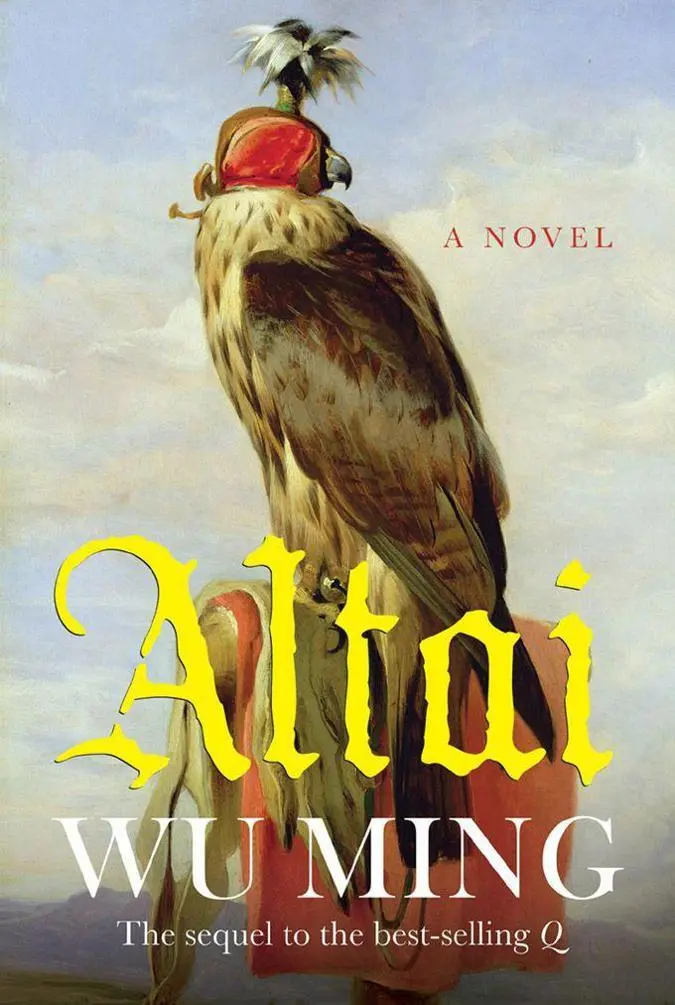
- Название:Altai
- Автор:
- Издательство:Verso
- Жанр:
- Год:2013
- ISBN:нет данных
- Рейтинг книги:3 / 5. Голосов: 1
-
Избранное:Добавить в избранное
- Отзывы:
-
Ваша оценка:
Altai: краткое содержание, описание и аннотация
Предлагаем к чтению аннотацию, описание, краткое содержание или предисловие (зависит от того, что написал сам автор книги «Altai»). Если вы не нашли необходимую информацию о книге — напишите в комментариях, мы постараемся отыскать её.
Through a series of deadly political games leading all the way to the Sultan’s palace in Constantinople, De Zante and his companions spiral headfirst toward a conflict in which the great empires of the Republic of Venice and the Ottomans threaten the very foundations of civilization.
Altai — читать онлайн бесплатно полную книгу (весь текст) целиком
Ниже представлен текст книги, разбитый по страницам. Система сохранения места последней прочитанной страницы, позволяет с удобством читать онлайн бесплатно книгу «Altai», без необходимости каждый раз заново искать на чём Вы остановились. Поставьте закладку, и сможете в любой момент перейти на страницу, на которой закончили чтение.
Интервал:
Закладка:
Or perhaps it really was mute, as they said, and this, along with having its eyes on either side of its head, was a very sad fate to endure.
When we entered the Sea of Marmara, the wind changed direction. What we Italians would call the bora began to blow shards of ice all the way down to the lower deck, and if you ventured up to the top it sliced the skin of your face. In Istria they say that the bora is born in Segna, gets married in Fiume and dies in Trieste. I didn’t know where that wind coming down from the Black Sea was born, but it seemed less tense and fierce than the furious breath of Aeolus that I knew so well, and that, in the Adriatic, would have prevented us from sailing.
The ship struggled on, impelled by oarsmen, battling against the waves and currents. The walls creaked, like scaffolding about to collapse. In the midst of this cacophony of wood, wind and foam, I could barely hear the curses of the crew, and it seemed to me that everyone was speaking incomprehensible, alien languages. I was grateful for the excellent manufacture of the Turkish clothes I had been given in Salonika: a raw-wool cap, thick breeches that reached below the knee, thick stockings. When the temperature fell still further, Efrem gave me a fur coat.
One December morning, the outskirts of Constantinople came into view. I climbed on deck, only to be welcomed by a dense blast of rain and frozen snow. Then, all of a sudden, the wind ceased. Snowflakes started falling slowly, sparse at first, then gradually in greater numbers. It was as if the running sand had slowed in time’s hourglass. I watched the snow melting on the rocking surface of the waves, then I looked at the coast, keen to give a name to places and palaces that Efrem had pointed out to me on a map.
In spite of the inclement weather, boats of every style and size clogged that stretch of sea. They were seeking shelter, heading toward the Golden Horn, the only safe landfall along the shores of the Bosphorus.
We passed by a fortress, the seven towers that gave their name to the suburb of Yedikule. A brackish stench caught my nose, a stench of death and human waste. I was being given an appropriate welcome. I looked at Efrem, who was standing beside me on the deck. He replied without waiting for questions, through a handkerchief with which he was protecting his nostrils. He said it was the tanning works. And the rope works. And the abattoirs.
The ship ran alongside the imposing walls that had enclosed the city for more than a thousand years. A veil of snow was starting to cover the roofs of the wooden houses, but even on that leaden day the gilded domes gave off light. Minarets, towers and steeples, walls enclosing seraglios, gardens were all coated in white. I caught myself counting the hills on which the Second Rome stretched, to check whether there really were seven. I counted only five, but thought it might depend on my observation point.
After rounding the tail end of Europe, the home of emperors, divinities and sultans, the ship slipped into the Golden Horn. It looked like a river estuary, so sheltered and protected, it seemed a work more of art than of nature. It was crowded with vessels of very kind. Big merchant lighters, round-bowed caïques, European carracks. On the left bank, where the Turkish city lay, ruins, the remains of a big fire, appeared like ghosts on the water. Behind them, a huge black swath of charcoal and ashes slashed through the dense network of warehouses and palaces, trees and mosques. The first layer of snow on these burnt carcasses made the scene an Apocalypse painted in black ink. Judging by the ruins, the fire at the Arsenal had been a trifle compared to this catastrophe.
I turned toward the opposite side, Galata, the Christian city, and nostalgia hit me like a sudden whiplash. I wondered if I would ever see St. Mark’s again, if I would ever again walk down the calli and canals of the city to which I owed everything, not least my downfall. I thought of my house, of Arianna. I saw Galata reflected in the sea, and below the surface of the water everything was transfigured. The reflection was Venice, and I had a lump in my throat. Beside me, Efrem smiled and stretched out a hand toward the quay.
“ Sobre este mar, todas las sivdades son la misma sivdad. ”
Yes, on this sea all cities are the same city. His words consoled me. As the ship approached the dock, Galata seemed to be slipping into the sea: Even though my feet had not yet stepped on dry land, by now I felt I was inside the city; I was aware of its comings and goings, the smells of its inns, the movements of its stevedores, the streets, febrile even under the falling snow.
The impression of opulence and relaxed grandeur that I had received from a distance was replaced by disappointment. The houses were small, dirty, made of wood, few of them taller than a single story, and the streets were narrow.
As the crew got to work on the cargo, Efrem asked me to follow him — me and the two guardian angels, who didn’t take their eyes off me. He had to deliver a number of letters in person, and he had to hurry before the alleyways turned into a bog.
Rough streets, dark and encased. The houses looked as if they wanted to crush us. We continued on foot, up and down exhaustingly steep slopes. Carts and coaches couldn’t pass that way, and the few horses to be seen were forced to adopt a gait even slower than ours. Now I understood the agitation of the inhabitants: They had to get their business done before the snow blocked those filthy streets entirely. Struggling along in the sludge, we met men from all parts of the world. Groups of Italians, Venetians and Genoese, red-faced Dutchmen, Frenchmen, Muscovites wrapped in fur. And turbaned Bosnians, Gypsies, Persians and Arabs, Greeks, Turks, stout Armenians. I was at the foot of the tower of Babel, just after God had confused our minds and tongues. The only people missing were the savages of the Americas.
The street opened into a square with a church looming in the middle. It struck me that there were as many churches here as there were in Venice. We passed by a group of men building a house. They went on working even in the snow, since their method of construction allowed them to do so. They had prepared a wooden framework, as you do with ships, and now, after putting on the roof, they were placing boards like ribs between one pole and another. It didn’t look very solid, and I couldn’t see whether there were stone foundations, but at least the men were working in shelter.
Efrem did what he had to do, and we went on, soon reaching a dock just outside the city, where a four-oared boat was already waiting for us. Again I found myself on the sea. The snow fell and fell, but there was no wind. Ahead of me, Asia: the place they call Üsküdar, beneath a white pall. The crossing was brief and silent.
We landed. All I could see were wooden houses, exactly like the ones on the other shore, but less densely crowded. I was led into one of these, which leaned out over the water from the top of a slope. The interior was comfortable and well decorated. Efrem got to work lighting the brazier to heat the room. After a few attempts, the faggots caught fire. He turned his usual smile on me, but this time I knew he was saying good-bye: “I have other business to attend to in town before I go back.” The idea of being left on my own wasn’t entirely consoling.
“And I’m stopping here, really?”
Efrem shook his head. “You’re not quite there yet,” he said. He walked to a side door and threw it open, revealing a covered terrace. I joined him in the doorway, looking out at the white flakes that were still falling. Beyond the gray water stretched the city. Efrem pointed to the right, where the straits continued towards the Black Sea.
“The Palazzo Belvedere is on the far shore. The Nasi residence.”
Читать дальшеИнтервал:
Закладка:
Похожие книги на «Altai»
Представляем Вашему вниманию похожие книги на «Altai» списком для выбора. Мы отобрали схожую по названию и смыслу литературу в надежде предоставить читателям больше вариантов отыскать новые, интересные, ещё непрочитанные произведения.






Обсуждение, отзывы о книге «Altai» и просто собственные мнения читателей. Оставьте ваши комментарии, напишите, что Вы думаете о произведении, его смысле или главных героях. Укажите что конкретно понравилось, а что нет, и почему Вы так считаете.