Wu Ming - Altai
Здесь есть возможность читать онлайн «Wu Ming - Altai» весь текст электронной книги совершенно бесплатно (целиком полную версию без сокращений). В некоторых случаях можно слушать аудио, скачать через торрент в формате fb2 и присутствует краткое содержание. Год выпуска: 2013, Издательство: Verso, Жанр: Историческая проза, на английском языке. Описание произведения, (предисловие) а так же отзывы посетителей доступны на портале библиотеки ЛибКат.
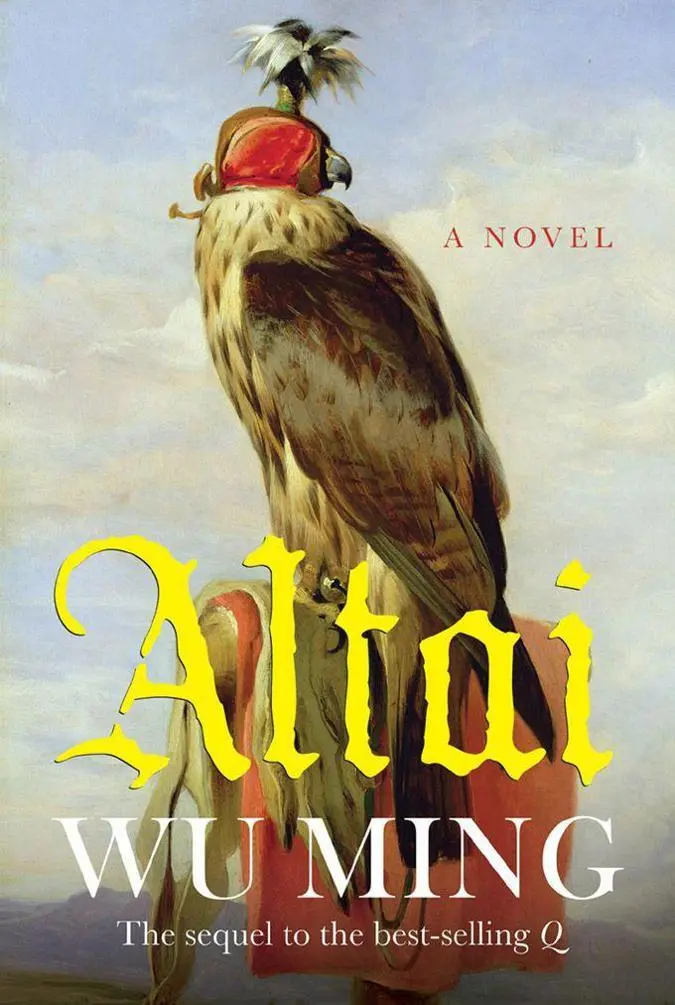
- Название:Altai
- Автор:
- Издательство:Verso
- Жанр:
- Год:2013
- ISBN:нет данных
- Рейтинг книги:3 / 5. Голосов: 1
-
Избранное:Добавить в избранное
- Отзывы:
-
Ваша оценка:
Altai: краткое содержание, описание и аннотация
Предлагаем к чтению аннотацию, описание, краткое содержание или предисловие (зависит от того, что написал сам автор книги «Altai»). Если вы не нашли необходимую информацию о книге — напишите в комментариях, мы постараемся отыскать её.
Through a series of deadly political games leading all the way to the Sultan’s palace in Constantinople, De Zante and his companions spiral headfirst toward a conflict in which the great empires of the Republic of Venice and the Ottomans threaten the very foundations of civilization.
Altai — читать онлайн бесплатно полную книгу (весь текст) целиком
Ниже представлен текст книги, разбитый по страницам. Система сохранения места последней прочитанной страницы, позволяет с удобством читать онлайн бесплатно книгу «Altai», без необходимости каждый раз заново искать на чём Вы остановились. Поставьте закладку, и сможете в любой момент перейти на страницу, на которой закончили чтение.
Интервал:
Закладка:
I didn’t return his farewell. Without saying another word, the Sphinx took his leave.
17
Dawn came like a deliverance, after a dull, sleepless night. I raised my head, and it was as if a homunculus had started hammering on it from inside. I had gone to sleep with my clothes on, and the smell of wine still hung heavily in the room. The bottle, a kind concession from Efrem for good behavior during my questioning, lay empty on the floor. Rather than carrying out the task assigned to me by Navarro, I had chosen to get drunk, to dodge the boredom of confinement or, more probably, to fog my mind and remove the nagging doubts that I had brought with me from Ragusa, from Venice.
The Consigliere had betrayed me, he had thought I could be sacrificed to the greater glory of La Serenissima, and yet I felt no desire for revenge. Was that what they had trained me to do? Sacrifice everything to the cause, even myself? No one had ever said as much explicitly, but in the secret service we had always known it.
It wasn’t revenge that I sought, but a way out. A way to lift myself out of the bog, or perhaps a reason to do so. The Sephardim had brought me to safety, but they had nothing to offer. Good wine and coffee, a visit to a brothel. When I had told them everything I knew, what would happen to me? They might kill me or send me back to Venice. They could, in fact, keep me a prisoner here forever.
I slipped down from the bed and reached the window. I threw it wide open, as if the air of the room were poisoned with lime.
Outside, the light was still faint, but I needed to move; I wanted to get out of there, even if it meant getting my guards out of bed. I walked over the door, determined to knock loudly. Before I did, I instinctively tried the handle.
The door opened.
I poked my head into the inner courtyard: no one. The house was still plunged in sleep. I held my breath; there was no time to thank fate or a lucky star. I walked down the pathway lit by the light of dawn and reached the front door. I lifted the peg that held it shut, then pulled the big iron chain, and the outside world was there, just beyond the threshold. All that was left was for me to start walking, quickly, but without running, so as not to draw attention at that time of the morning.
The streets already breathed with the hubbub of Parasheve . The eve of the Sabbath was dedicated to concluding the most urgent deals, salting the meat and the fresh fish, using up the supplies of fruit and vegetables. Come on, I had to get as far away as possible. How long did I have left before they discovered my escape? Storekeepers and vendors were already opening their shops, arranging their goods on stalls, and craftsmen were getting ready for work. I could recognize the Jews from their way of bustling about — small rodents preparing for hibernation, the chosen people leaving Egypt. It was as if the habit of packing their luggage and changing countries was relived every week in the ritual of preparations for Shabat . There was something irrevocable in their gestures, a haste unknown to Greeks and Ottomans, because all activity had to cease at sunset. The next day, performing any of these actions would impede the coming of the Messiah, since it is written that he will come when all the Israelites have observed the Sabbath two weeks in a row.
As I crossed the city, my childhood memories reemerged at every street corner, in every face, as they had in Ragusa. The market already echoed with the cries of the vendors.
Berendjenas! Guevos! Aubergines! Eggs!
I understood these cries better than I had in Campo San Polo, where a Slavonian or a Brescian might have uttered familiar words in an obscure way.
Poyo! Sevoya! Chicken! Onions!
The ingredients of the chamin echoed from one stall to the other; they filled cloth bags, and already I thought I could smell them as they cooked with chickpeas and rice, all night long, to be ready and hot for lunch the following day with no need for cooking on the Sabbath.
I kept on walking blindly, my only aim to gain ground, to increase my distance from my starting point. They must have discovered my escape by now. Gaining distance on your pursuers in a market is impossible, I knew: hunting people down was my trade. Or at least it had been.
I recalled the escape attempts of a trafficker in forbidden books, a Slav by the name of Gigek, suspected of spying for the Turks. When he realized he was being followed, be had started running through the stalls. Catching him had been easy. A cry of “Stop, thief!” and the crowd itself had immobilized him.
I left the market behind me, my senses alert. My ribs still ached, although they were getting better. A single punch would have left me breathless on the ground. I couldn’t afford to be caught; I could never manage to wriggle free.
I glimpsed the sea, the pennants of the ships standing out against the sky like pennons on the tips of lances. Without thinking, I made for an open horizon, toward a means of transport to take me away from there.
It was at that point that I saw them: Efrem’s two guards, his henchmen, who had come out in search of me. I just had time to hide behind a tarpaulin that had been hung out to dry. I spied on them as they eyed the comings and goings of the port, checking that I hadn’t turned up there in search of a boat.
Again I imagined the past, when I had made others flee. I remembered the face of a man who had managed to get away from me, thanks to a flash of genius, a brilliant intuition. His name was Baldan. He had pretended to stumble, toppling against my men before diving into the water of the canal. I had stopped short of the water’s edge so as not to ruin the fine gown I was wearing. I had seen Baldan swimming to the opposite bank, a few strokes away, and hoisting himself out, dripping, with a grin of triumph on his face. I had taken aim and fired my pistol and shot him in the leg.
Now I could expect a similar fate, if not a worse. I quickly set off again. I chose a street off to the right, then one to the left, like a throw of the dice, realizing too late that it was a blind alley. Turning back was too risky. In front of the wall at the end of the alley there was a cart. I slipped underneath it and crept over the mud until I reemerged in the narrow space between cart and wall. A stench of piss and rot. All I could do was wait. Leaving the city in darkness would be easier. I lay down on the ground and stared at the thin strip of sky.
The sound of children singing came from the high windows. Perhaps it was a synagogue.
If I forget thee, O Jerusalem, let my right hand be forgotten .
Again, my childhood memories. The song came from a psalm, the one about the rivers of Babylon. I, too, had learned it at their age. The song became clearer and more confident.
May my tongue cleave to the roof of my mouth if I do not remember thee, if I do not consider Jerusalem my highest joy.
They were the voices of children born here, children of parents who had fled from who knows where. Here, in the greatest landfall of refugees that I had ever seen.
My mother’s face emerged as if from a dream.
Si me olvidaré de ti, oh Jerusalem, mi diestra sea olvidada .
I have forgotten, mother.
Something burned in my chest until it hurt, something that only now appeared in all its clarity. Escape.
To go where? Drifting, like a beggar, a tramp.
For the Venetians, I was a traitor in the service of Nasi.
For the Jews of Salonika, I was still a Jew.
For a fleeing Jew there was no safer refuge than this city.
I stayed like that, lying in the dirt, letting time pass above me. An hour passed, two, who knows. Then, without haste, I got up and returned to the street. I didn’t need to take my bearings. The street was on a slope and I knew my way was uphill.
Читать дальшеИнтервал:
Закладка:
Похожие книги на «Altai»
Представляем Вашему вниманию похожие книги на «Altai» списком для выбора. Мы отобрали схожую по названию и смыслу литературу в надежде предоставить читателям больше вариантов отыскать новые, интересные, ещё непрочитанные произведения.






Обсуждение, отзывы о книге «Altai» и просто собственные мнения читателей. Оставьте ваши комментарии, напишите, что Вы думаете о произведении, его смысле или главных героях. Укажите что конкретно понравилось, а что нет, и почему Вы так считаете.