Wu Ming - Altai
Здесь есть возможность читать онлайн «Wu Ming - Altai» весь текст электронной книги совершенно бесплатно (целиком полную версию без сокращений). В некоторых случаях можно слушать аудио, скачать через торрент в формате fb2 и присутствует краткое содержание. Год выпуска: 2013, Издательство: Verso, Жанр: Историческая проза, на английском языке. Описание произведения, (предисловие) а так же отзывы посетителей доступны на портале библиотеки ЛибКат.
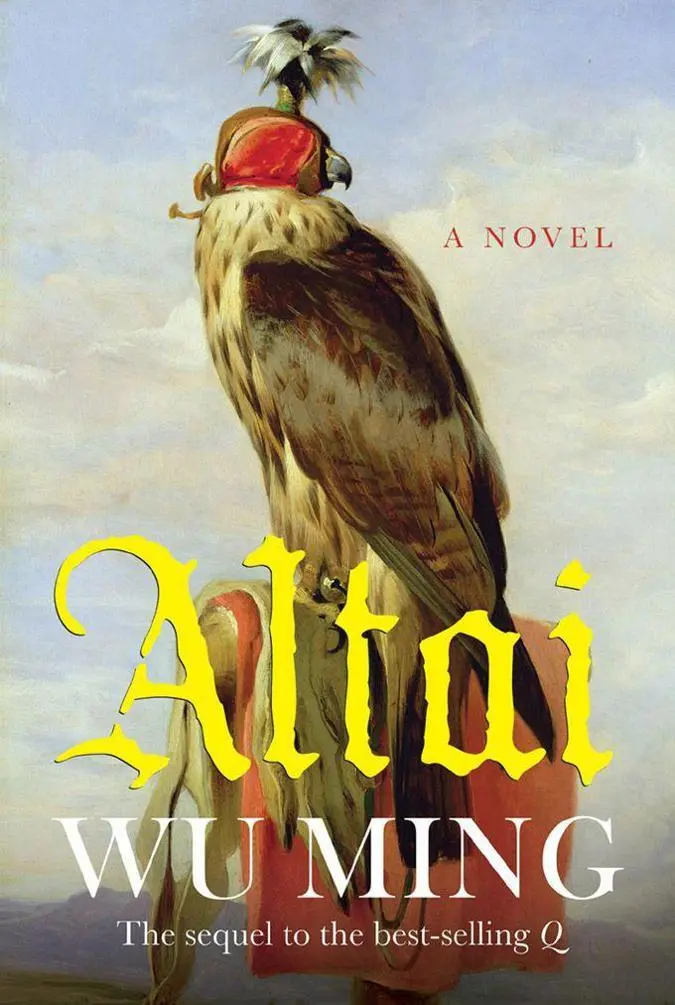
- Название:Altai
- Автор:
- Издательство:Verso
- Жанр:
- Год:2013
- ISBN:нет данных
- Рейтинг книги:3 / 5. Голосов: 1
-
Избранное:Добавить в избранное
- Отзывы:
-
Ваша оценка:
Altai: краткое содержание, описание и аннотация
Предлагаем к чтению аннотацию, описание, краткое содержание или предисловие (зависит от того, что написал сам автор книги «Altai»). Если вы не нашли необходимую информацию о книге — напишите в комментариях, мы постараемся отыскать её.
Through a series of deadly political games leading all the way to the Sultan’s palace in Constantinople, De Zante and his companions spiral headfirst toward a conflict in which the great empires of the Republic of Venice and the Ottomans threaten the very foundations of civilization.
Altai — читать онлайн бесплатно полную книгу (весь текст) целиком
Ниже представлен текст книги, разбитый по страницам. Система сохранения места последней прочитанной страницы, позволяет с удобством читать онлайн бесплатно книгу «Altai», без необходимости каждый раз заново искать на чём Вы остановились. Поставьте закладку, и сможете в любой момент перейти на страницу, на которой закончили чтение.
Интервал:
Закладка:
When she had finished, Dana stood up and made as if to leave.
I asked her to stay and invited her to come and sit next to me. She looked me in the eyes and made herself comfortable on the cushions. We divided the sweets that she had brought, savoring on our tongues the taste of pistachios and a resin with a strange relaxing effect. My body was filled with languor, a light, diffuse intoxication. The effect of the drug on Dana seemed less intense.
Our eyes met again. Like men at arms following orders in perfect concurrence, we approached one another. I embraced her; our mouths met. Filled with a delicious frenzy, we began freeing ourselves of our clothes, which in the land of the Turks are rather more easily and quickly unlaced. The wide breeches fell, and the shirts. I heard a metallic sound. Something had slipped to the floor. I gave it a sidelong glance.
The dagger, which the skin of my throat had felt weeks before. The bronze handle glinted blood-red.
Dana. Through her strong, myrtle-scented flesh, I reached a place that had long been closed to me, an earthly paradise where I had dwelt with Arianna in a past life.
Our bed is green with leaves, the beams of our house are of cedar, our walls are cypress trees.
The rise and fall, the dip of the groin, the mounds of buttocks and breasts: I enjoyed Dana, her every facet and gesture, her voice and her taut, young, lithe body. Sweet war, whose gestures are acts that some would call bestial. In the end I discharged my male burden with a long groan. Dana put her hand over my mouth.
“Don’t make too much noise. No one must know.”
I reassured her and rested her head on my chest, then began to stroke her, my mind empty, as our breathing subsided. I let my eye wander over her body and mine. Her left leg concealed my manhood. It was the first time I had lain with a woman of my people.
It was the first time I hadn’t paid for a woman’s favors.
I studied the dagger, abandoned among the clothes, on the floor. “At our first meeting, you threatened to kill me if I touched you. Today you should take a thousand lives from me.”
Dana smiled, and without saying a word, she roused herself, collected her clothes and hastily dressed. When she reached the door, before closing it behind her, she turned.
“I was a thousand times more harmless to you when I held my dagger.”
13
Five years earlier, in 1565, the fleets of the Turk had laid siege to Malta. At the head of that expedition had been the same men now seated at the Divan: Muezzinzade, Lala Mustafa and Piyale Pasha. They had thrown the whole of the Ottoman fleet at the bastions of St Elmo’s Fort but could not bring it down. Under the protection of Saint John, the Knights Hospitaller had resisted for four months, until the Turks had finally been forced to give up.
That failed enterprise was a serious humiliation, the specter raised by Sokollu, the same ghost that Nasi had to exorcize from the mind of the vizier. He said he was convinced that for the Sultan’s troops Cyprus would not be a second Malta, it was too big for that. Neither would there be any great bloodshed, because once Nicosia had fallen the Turks would push their way inland, forcing the Venetians to negotiate a surrender.
“Six months at the most and it will all be over. But the invasion will have to happen soon, before the summer.”
It was late winter, so there was no more time to lose.
Palazzo Belvedere was a hive of activity in the weeks that followed. Sometimes Nasi invited me to sit in the little secret room with him, to show me some of the new guests.
“The thin man with the long beard is Emin Mustafa, a former member of the Ulema Council and cousin of the Grand Mufti. His wisdom is boundless, and so is his vanity. On his right, the old man with the cataract is Eli Ben Haim, our chief rabbi. A tough old character. You’d better have him against you than on your side. And never behind you.”
Ralph Fitch, the English guest, was among the most assiduous users of the library. He had a deep liking for books and read them unselfconsciously, many pages a day.
The news came early in the spring. The envoy from the Sublime Porte had sent Venice the order to cede Cyprus. The excuse used was pirates, as Nasi had anticipated.
The event was celebrated with a bottle of the finest wine. But our anxieties did not diminish, not even when, after the Doge’s refusal, the Grand Mufti appealed to the Muslims to reconquer Cyprus “because peace with the infidel is legitimate only when one derives from it use and advantage for the generality of Muslims.” Even the Prophet, in the eighth year of the Hejira, had broken peace with the infidel to conquer Mecca.
During those feverish days, the Venetian ambassador to Constantinople was arrested in his residence.
“ The die is cast ,” was Nasi’s first comment.
He had brought me with him to the Bosphorus, on one of those outings that he said helped him to think. We had taken the smallest boat, with four oarsmen. David was sitting in the bow, and Nasi stayed with me in the stern. It was a bright, hot day, the first really pleasant one since I had come to the city.
“Last year, Pope Ghislieri expelled our people from the territories of the Church. He ordered that all sign of our presence be erased from the city, even from the cemeteries. There are families who escaped from Ferrara with their dead on their backs. For some time he has wanted to unite the Catholic powers for a new crusade. For a bulldog like him, the dispute over Cyprus is excellent news.”
The picture was beginning to take shape as the boat slipped on, and Nasi kept adding details. France and Poland would not take sides. As to Spain, Philip II had no intention of investing his money in an expedition to help Venice. On the contrary, he would pay any sum of money to see St. Mark’s sink into the lagoon. Still, the Catholic world could not oppose the pope’s invitation. They would take their time, trying to guide the war toward Algiers or Tripoli rather than committing themselves to the defense of Cyprus.
“If I know the Catholic sovereigns at all, they will never reach an agreement,” Nasi said firmly. It wasn’t their alliance that concerned him for the time being. He pointed to the building on the coast in front of him, on the slopes of Pera Hill. It was the same one he had pointed out to me the first time I had come to Palazzo Belvedere, on that same boat: the residence of the bailiff, the Venetian ambassador, Marcantonio Barbaro.
“We know for certain that he is communicating with the outside world, and that his messages are reaching Venice.”
“You mean his imprisonment is a farce?”
“It saves face, given that Venice and the Sultan are now in open conflict. But as I have already told you, in Constantinople the party of the friends of Venice is a strong one. And if Venice and Constantinople reach an agreement, our plan could still go up in smoke.”
“Are you referring to resistance on the part of the Grand Vizier?”
“The vision of Mehmet Sokollu is broad and deep, and he has grand projects that might turn out to be useful to us as well. He wants to dig a canal connecting the Red Sea and the Mediterranean. Can you imagine? You could get to India with ten thousand miles’ less sailing. Cyprus would become a hugely important port of call. But Sokollu likes to take his time, and he doesn’t like risky undertakings. He’s a strategist, not a merchant.”
By now we had reached the city, and the Imperial Seraglio loomed magnificently on the edge of the promontory.
Nasi explained to me that Sokollu could count upon support inside the palace: “Nurbanu Sultan, Princess of Light, Selim’s favorite wife. She was raised Muslim, but she is also the niece of Admiral Venier. She certainly wouldn’t be too pleased if her husband declared war on La Serenissima.”
Читать дальшеИнтервал:
Закладка:
Похожие книги на «Altai»
Представляем Вашему вниманию похожие книги на «Altai» списком для выбора. Мы отобрали схожую по названию и смыслу литературу в надежде предоставить читателям больше вариантов отыскать новые, интересные, ещё непрочитанные произведения.









Обсуждение, отзывы о книге «Altai» и просто собственные мнения читателей. Оставьте ваши комментарии, напишите, что Вы думаете о произведении, его смысле или главных героях. Укажите что конкретно понравилось, а что нет, и почему Вы так считаете.