Wu Ming - Altai
Здесь есть возможность читать онлайн «Wu Ming - Altai» весь текст электронной книги совершенно бесплатно (целиком полную версию без сокращений). В некоторых случаях можно слушать аудио, скачать через торрент в формате fb2 и присутствует краткое содержание. Год выпуска: 2013, Издательство: Verso, Жанр: Историческая проза, на английском языке. Описание произведения, (предисловие) а так же отзывы посетителей доступны на портале библиотеки ЛибКат.
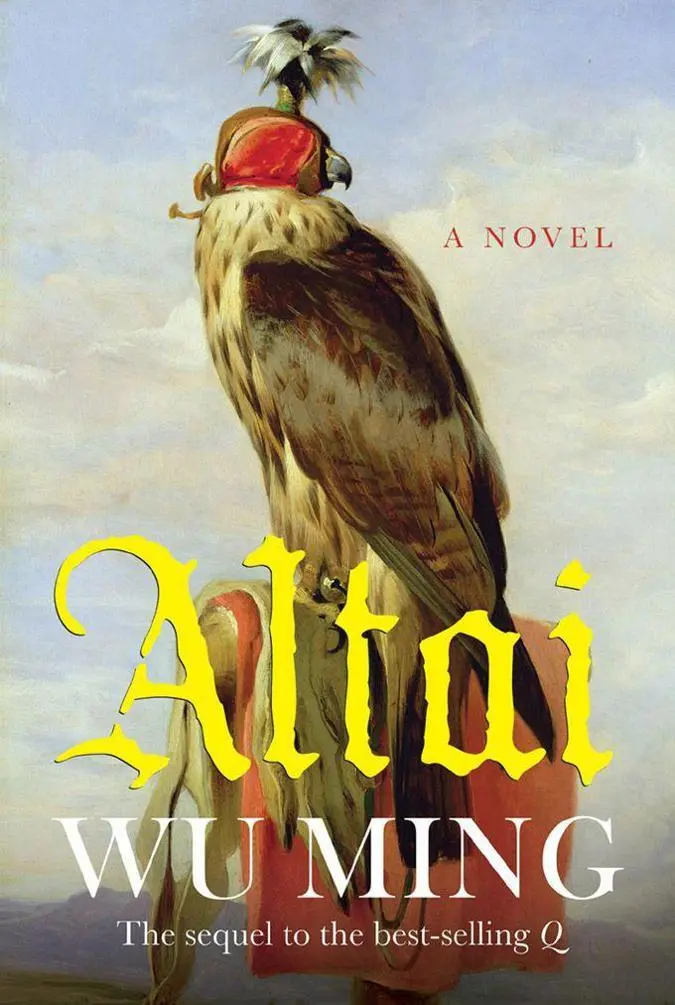
- Название:Altai
- Автор:
- Издательство:Verso
- Жанр:
- Год:2013
- ISBN:нет данных
- Рейтинг книги:3 / 5. Голосов: 1
-
Избранное:Добавить в избранное
- Отзывы:
-
Ваша оценка:
Altai: краткое содержание, описание и аннотация
Предлагаем к чтению аннотацию, описание, краткое содержание или предисловие (зависит от того, что написал сам автор книги «Altai»). Если вы не нашли необходимую информацию о книге — напишите в комментариях, мы постараемся отыскать её.
Through a series of deadly political games leading all the way to the Sultan’s palace in Constantinople, De Zante and his companions spiral headfirst toward a conflict in which the great empires of the Republic of Venice and the Ottomans threaten the very foundations of civilization.
Altai — читать онлайн бесплатно полную книгу (весь текст) целиком
Ниже представлен текст книги, разбитый по страницам. Система сохранения места последней прочитанной страницы, позволяет с удобством читать онлайн бесплатно книгу «Altai», без необходимости каждый раз заново искать на чём Вы остановились. Поставьте закладку, и сможете в любой момент перейти на страницу, на которой закончили чтение.
Интервал:
Закладка:
Suddenly I heard an agitated voice calling out a name that must have been the captain’s. Another group of janissaries appeared, this one more tightly organized, and began to move the crowd back with more conviction.
A squat man, dressed in the Turkish style, pushed his way through with short but certain steps, accompanied by a janissary, who seemed to be a high-ranking officer, followed by other soldiers. They came straight toward the middle of the arena and interposed themselves between Ismail and the captain.
“ As-Salaam ’Alaykum ,” said the senior officer.
“ Wa ’Alaykum As-Salaam ,” the captain replied, without taking his eyes off us.
“You were about to commit an unpardonable error. Luckily Mimi Reis, here, requested that I intervene. This man,” he said, pointing to Ismail, “enjoys the esteem of illustrious people. He even knew Suleyman the Magnificent. Many in Istanbul respect him like a father. Touching a hair on his head, or the heads of his companions, would mean finding yourself on the Persian border in a very short time, and for a very long time.”
The squat man interjected, “May that never transpire, Captain. We want you here to defend us and ensure the safety of our trade.”
The captain decided to take his eye off Ismail. He took his leave politely, and retreated quietly with his janissaries in the direction of the lighthouse. The senior official turned back to Ismail. “I would like to have you as my guest, Ismail al-Mokhawi, but I know you are traveling on important business. I hope that God may allow us to meet again.”
“If God so wills.”
Then those Turks took their leave as well, in a more formal and courteous way, and we were left on our own with the short man. He turned toward Ismail. “It’s really you! I thought you’d been dead for ages,” he said.
“I wasn’t far off it.”
They smiled, hugged, and kissed each other’s beards.
“But I see that your habits have not changed. You’re still in trouble. Yes, but you travel under a lucky star. That star, today, is Mimi,” he said, patting his chest with his open palm. “Come, all of you come to my house. You are my guests.”
We had come in search of a man, and he had found us.
So it was that I met Mimi Reis.
27
On reaching Mimi Reis’s house, we went upstairs and sat on damask cushions on the floor. Two windows lit the room: One looked out onto the street and the other onto the garden.
Our guide’s accent was familiar to me; that of the inhabitants of Puglia, opposite Ragusa, which made me like him, not least because he was almost a compatriot of mine. We asked him to speak in Turkish so that everyone could understand.
Two maids came in, carrying a huge metal tray upon which lay half a roasted kid. They set it down on a stool, and together the two objects became a table. All we had to do was move our cushions around it and start eating.
“I’ve brought my sisters specially from Bari, to teach the maids to cook,” said the master of the house. He sang the praises of his native dishes, listing all the ingredients of dips and sauces. Ali asked if the animals had been butchered in the halal way, and it was only when he had received that reassurance that he and the Indians began to eat. Meanwhile, my attention was drawn to a Byzantine icon, right above a table beside the fireplace, surrounded by candles. Mimi Reis noticed my interest, and raised his right hand.
“ Sanda Necole , patron saint of sailors.”
With these words, he pulled up his shirt to show us his chest and abdomen. Drawn just above his sternum was a bluish crucifix. Further down a group of women, and on his belly a sailing ship, manned by sailors carrying a trunk.
“You see?” he said, touching his ribs, “these are the three virgins of the miracle, and this one in the middle is my ancestor Benuzzo, who came back to Bari along with his companions, bearing the bones of the saint. They came to get them right here in Turkey, in Myra, on the coast opposite Cyprus.”
Ali couldn’t conceal a certain disgust at this spectacle, perhaps because of the nakedness on display, or perhaps because of the sharp smell emanating from the Italian’s chest. His expression didn’t escape our host, who suddenly looked contrite.
“Now I know that having your body carved is an insult to God’s work,” he hastened to say as he lowered his shirt. “But the Christians in my part of the world say it’s proof of faith, and also a protection, because if someone has these drawings on him it’s harder for the Turks to take him away; he’s like a rotten apple.”
“And what about you?” Ali asked curiously. “How did you become a Muslim?”
“The Turks took me anyway; they weren’t picky. I was eighteen, and my name was Domenico, Mimi to everybody. Since then I’ve been Mehmet.”
“So your faith was imposed upon you,” Ali said with regret.
The other protested: “Not at all. The pope is a tyrant, God is great and Mohammad is his Prophet. Saint Nicholas was born before him, so we can’t blame him for not being a Muslim. In my crew, when I was a corsair, the Albanians and Bosnians venerated him as much as I did: They called him imam , and if the sea swelled we prayed to him together to keep us afloat.”
The arrival of a tray of cakes interrupted his story. I was full by now, my head was heavy, and the warm air that day wasn’t helping me to stay awake. I missed a few lines of conversation, and perhaps I even closed my eyes, until the scent of coffee reached my nostrils.
“Of these people’s recipes, the only one we should imitate,” our host announced, bringing the cup to his lips, and when we had emptied ours, he asked us if we wanted anything else. The request was polite but superfluous, after the mountain of food that he had served us.
“I want to talk business,” said Ismail.
Mimi Reis stretched his arms out along the edges of the big pillow behind his back. He said, “It must be important business if it made you come back from Yemen. Or was it the Zaydi rebellion that dislodged you?”
Ismail smiled. “Rebellions don’t scare me; you should know that. And besides, what should a man who has reached my age be afraid of? On the other hand, what made you leave Constantinople?”
The Pugliese tightened every muscle in his face, assuming an expression that was the quintessence of regret. “Aaah, a lot has changed since you were there. There are a lot of things that you wouldn’t recognize. Some people worked their way up the ladder, and some people got stuck. And then there are the people who had to leave. Particularly the ones who didn’t have saints to help them to Paradise, as we say— senza sande nan s’va en ’mbaravise . We also say that ’u pèsce gruesse nan pote sci mmocch’a cudde peccenunne —the big fish doesn’t fit in the little fish’s mouth. The little one has to go and swim somewhere else, you understand?”
“I understand,” said Ismail. “Anyway, I’ve come to suggest a transaction on behalf of a big fish. Yossef Nasi.”
Mimi Reis narrowed his eyes and scratched his chin. “And I’m listening to you because you’re you.”
“Are you still in touch with your Greek friends?”
The Pugliese nodded, his nose tilted upward as if sniffing every word. Ismail gestured to me to speak.
“At the end of the month,” I explained, “there’s a ship bound straight for Crete. It has to go off course and put in somewhere else, on the island of Naxos.”
The Pugliese pondered the request. “Whose ship is it?”
“It belongs to Solomon Ashkenazi.”
Mimi Reis pulled a disgusted face. “This is a rott ’n cule , a filthy trickster, servant of the Venetians. The Venetians are impostors. They tried to take Saint Nicholas’s bones, and when we got them back, rather than accepting the fact, they launched a crusade all the way here to tell us that we’d made a mistake and they’d found the real tomb.” He struck his chest and shook his head. “Infidel dogs.”
Читать дальшеИнтервал:
Закладка:
Похожие книги на «Altai»
Представляем Вашему вниманию похожие книги на «Altai» списком для выбора. Мы отобрали схожую по названию и смыслу литературу в надежде предоставить читателям больше вариантов отыскать новые, интересные, ещё непрочитанные произведения.








Обсуждение, отзывы о книге «Altai» и просто собственные мнения читателей. Оставьте ваши комментарии, напишите, что Вы думаете о произведении, его смысле или главных героях. Укажите что конкретно понравилось, а что нет, и почему Вы так считаете.