Wu Ming - Altai
Здесь есть возможность читать онлайн «Wu Ming - Altai» весь текст электронной книги совершенно бесплатно (целиком полную версию без сокращений). В некоторых случаях можно слушать аудио, скачать через торрент в формате fb2 и присутствует краткое содержание. Год выпуска: 2013, Издательство: Verso, Жанр: Историческая проза, на английском языке. Описание произведения, (предисловие) а так же отзывы посетителей доступны на портале библиотеки ЛибКат.
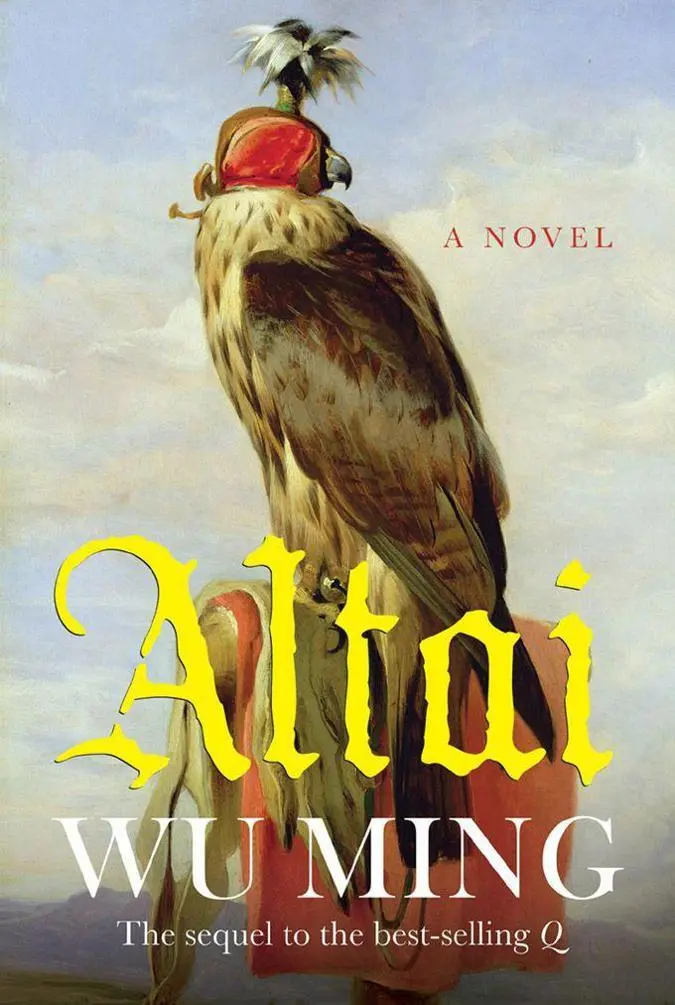
- Название:Altai
- Автор:
- Издательство:Verso
- Жанр:
- Год:2013
- ISBN:нет данных
- Рейтинг книги:3 / 5. Голосов: 1
-
Избранное:Добавить в избранное
- Отзывы:
-
Ваша оценка:
Altai: краткое содержание, описание и аннотация
Предлагаем к чтению аннотацию, описание, краткое содержание или предисловие (зависит от того, что написал сам автор книги «Altai»). Если вы не нашли необходимую информацию о книге — напишите в комментариях, мы постараемся отыскать её.
Through a series of deadly political games leading all the way to the Sultan’s palace in Constantinople, De Zante and his companions spiral headfirst toward a conflict in which the great empires of the Republic of Venice and the Ottomans threaten the very foundations of civilization.
Altai — читать онлайн бесплатно полную книгу (весь текст) целиком
Ниже представлен текст книги, разбитый по страницам. Система сохранения места последней прочитанной страницы, позволяет с удобством читать онлайн бесплатно книгу «Altai», без необходимости каждый раз заново искать на чём Вы остановились. Поставьте закладку, и сможете в любой момент перейти на страницу, на которой закончили чтение.
Интервал:
Закладка:
The ceremonies were starting to get on my nerves. In my life, I had always taken the trouble to ensure that I was not left in the dark about anything. Perhaps in returning to my trade I was also reacquiring my old obsessions. “How many cannon do you think it would take to defend an island the size of Cyprus?”
The tone of the question betrayed my state of mind, but Nasi didn’t turn a hair.
“Hundreds.”
The reply had come from Fitch. His pointed moustache and the beard on his chin looked like sharpened swords. “Please, Master Fitch, do continue,” said my mentor.
The Englishman thanked him. “Do you know where Sussex is, Signor Cardoso?”
“In England, I suppose.”
“Indeed it is,” he agreed. “It is a region of forests, oak for the most part, with land rich in iron and springs. Water, wood, metal: even the ancient Romans smelted swords and coins over there. But they didn’t know that the iron in Sussex is of a particular kind.” He struck his hand on the breech of the cannon. “Very malleable. The first person to notice this peculiarity was the Reverend William Levett, vicar of Buxted, a man who has spent the whole of his life cultivating two great passions: Jesus Christ and artillery.”
It occurred to me that the juxtaposition wasn’t too bold. The foundries of La Serenissima chiefly produced bells and cannon.
“The Reverend Levett,” Fitch continued, “wanted to resolve the age-old problem of iron cannon. Unlike bronze, which allows guns to be forged in a single casting, iron can only be turned into smoothed bars, which are then pressed together into a series of rings. Obviously, with wear and tear cannons of this kind tend to fall apart after a short time.”
What the Englishman said was true, as I myself had witnessed. I had been present at the forging of cannon at the Arsenal in Venice, and at shooting tests on the Lido beach, under the direction of the engineer Varadian. The Armenian’s practice was to try out different guns of various lengths and calibers. Iron cannons were the worst: They cracked, and sometimes they exploded. One bombardier had had an arm sheared off by a flying splinter.
Fitch walked around the cannon and then rested his hand on it.
“As I am sure you will know, bronze is an alloy of brass and copper, two minerals that are in short supply in Europe. This makes bronze cannons extremely expensive. The Reverend Levett, God bless him, wanted to find the perfect match between resilience and convenience. And he managed to do so, thanks to this iron from Sussex—” and he repeated the strange gesture of resting his hand on the cannon as if introducing an old friend. “After a series of experiments, thirty years ago he produced the first English cannon in cast iron, in the royal foundries at Newbridge. A weapon made all in one piece, at a cost five times lower than any bronze cannon. Thirty years of experience since then have allowed our craftsmen to discover all the tricks for improving these weapons. The lifetime of these cannons remains shorter, in fact, but that doesn’t mean they are not advantageous, given the reduced cost. One could arm an entire fleet with these, were it not for the recoil that prevents them from being used on ships. And as to their weight, it is a hindrance if they have to be transported, but not if they are placed on a rampart and not moved from there.”
He paused, as if waiting for a question, but I was still too confused. From clocks with alarms to a tube that intensified eyesight, from a self-propelled spit to cast-iron cannons, that morning my journey through the world of machines had been a headlong trip.
“Her Majesty Elizabeth I,” Fitch continued, “is so jealous of the Sussex cannons that she is thinking of preventing them by law from being sold to Catholic states, but there is no prohibition on their being purchased by a Jewish king.”
A masterpiece of diplomacy. England was looking for a commercial outlet in the East. England had excellent cannons at the lowest prices on the market. Yossef would become king of an island in the eastern Mediterranean. Do ut des .
Fitch resumed his thread. “The future kingdom of Cyprus will receive an annual supply of one hundred cast-iron cannons, in exchange for exclusive commercial capitulations for English vessels in the ports of Larnaca, Limassol, Paphos and Famagusta.”
“What are your credentials for such an agreement?” I asked.
Fitch remained unflappable. “The word of Her Majesty Elizabeth I, whose envoy I am pleased to declare myself. And I guarantee, Signor Cardoso, that Her Majesty does not waste her breath. She is willing to seal the agreement as soon as Yossef Nasi is king of Cyprus.”
A long silence followed, after which it was Nasi who spoke. His words were directed at me alone. “When everything is concluded we will continue to maintain good relations with the Sultan. We will pay the annual tribute and fill his cellars with the most excellent wine, but we will defend ourselves on our own, and remain independent. Cyprus will become the commercial base for trade between the Ottoman Empire and England. And when Sokollu’s plan to cut a canal through the Isthmus of Suez is realized, our kingdom will be the crossroads of trade between three continents.” He rested his hand on my shoulder. “Wealth, strength, freedom. We should put it on our flags.”
I looked down at the cannon and touched it with my fingers. Yossef Nasi had just shown me that his plans were not molded from the stuff of dreams. They were forged from English iron.
At last I understood the true difference between the two men who had guided my steps as an adult. Consigliere Nordio had forced me to hunt for him like a bloodhound, muzzle lowered along the narrow calli of Venice. Nasi, on the other hand, had made me lift my head and fly like a falcon, like the Altai that I had seen taking flight from the arm of Hassan Agha and soaring proudly above the fields. He had put in my hands one of those tubes invented by Takiyuddin, and with it I could see Cyprus and the world, and read fate in the stars.
Interlude. Three days of fever, 4–7 Rabi’at Thani 978 (September 5–8, 1570)
The old man kneels on the mat, in front of his writing board. Evening is falling outside, but enough light is still filtering through the window, and the lamps are out. He has spent the whole afternoon in the room, leaving his pen only to drink kishir with Ali and receive a merchant from Scutari in search of advice on a cargo of coffee.
He dries the page and stacks it on the pile to his left: It’s a hand’s span high, ten years of memories for each finger. Worn-out paper, ink scars, written in a Latin that is by now threadbare, patched by the old man with Turkish, Arabic, German, and Venetian terms. Saints Jerome and Augustine would not recognize their chosen language.
He rereads his last words, his head heavy, then gets up and stretches his back. He needs to move, to smell the salt, silence the voices and listen to the sea.
In the doorway, Mukhtar holds him back by his shoulder. “You look like you’ve seen a ghost, sheik. Are you sure you don’t want to lie down?” Ismail touches her hand with his fingers and shakes his head.
Leaning on his stick, he slowly walks up the hill. As he does every evening, he punctuates his walk with greetings and quick visits to people’s houses, he eats a borek stuffed with mince, quenches his thirst at the fountain of the big cemetery of Karaca Ahmet. The scent of hundreds of cypresses fills his lungs. When he comes down to the shore, near the site of Chalcedon, the profile of the old city is already a dark shadow against the purple of the sky. Flocks of storks fly down along the Bosphorus, migrating toward a place that they call home.
Читать дальшеИнтервал:
Закладка:
Похожие книги на «Altai»
Представляем Вашему вниманию похожие книги на «Altai» списком для выбора. Мы отобрали схожую по названию и смыслу литературу в надежде предоставить читателям больше вариантов отыскать новые, интересные, ещё непрочитанные произведения.







Обсуждение, отзывы о книге «Altai» и просто собственные мнения читателей. Оставьте ваши комментарии, напишите, что Вы думаете о произведении, его смысле или главных героях. Укажите что конкретно понравилось, а что нет, и почему Вы так считаете.