Wu Ming - Altai
Здесь есть возможность читать онлайн «Wu Ming - Altai» весь текст электронной книги совершенно бесплатно (целиком полную версию без сокращений). В некоторых случаях можно слушать аудио, скачать через торрент в формате fb2 и присутствует краткое содержание. Год выпуска: 2013, Издательство: Verso, Жанр: Историческая проза, на английском языке. Описание произведения, (предисловие) а так же отзывы посетителей доступны на портале библиотеки ЛибКат.
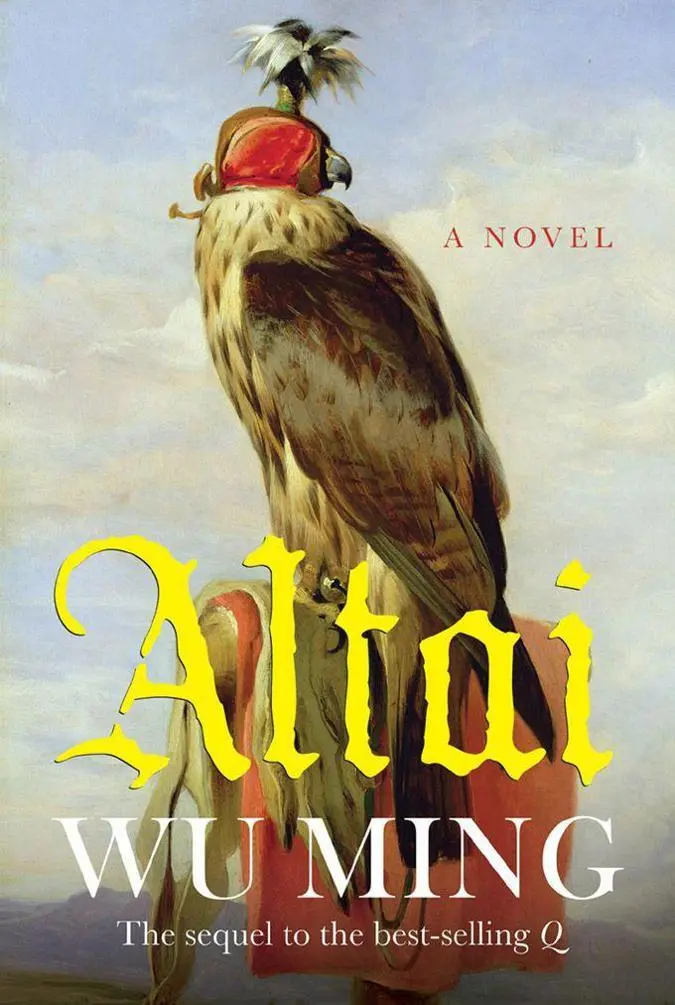
- Название:Altai
- Автор:
- Издательство:Verso
- Жанр:
- Год:2013
- ISBN:нет данных
- Рейтинг книги:3 / 5. Голосов: 1
-
Избранное:Добавить в избранное
- Отзывы:
-
Ваша оценка:
Altai: краткое содержание, описание и аннотация
Предлагаем к чтению аннотацию, описание, краткое содержание или предисловие (зависит от того, что написал сам автор книги «Altai»). Если вы не нашли необходимую информацию о книге — напишите в комментариях, мы постараемся отыскать её.
Through a series of deadly political games leading all the way to the Sultan’s palace in Constantinople, De Zante and his companions spiral headfirst toward a conflict in which the great empires of the Republic of Venice and the Ottomans threaten the very foundations of civilization.
Altai — читать онлайн бесплатно полную книгу (весь текст) целиком
Ниже представлен текст книги, разбитый по страницам. Система сохранения места последней прочитанной страницы, позволяет с удобством читать онлайн бесплатно книгу «Altai», без необходимости каждый раз заново искать на чём Вы остановились. Поставьте закладку, и сможете в любой момент перейти на страницу, на которой закончили чтение.
Интервал:
Закладка:
A question formed on my lips. “Have you killed many men?”
He passed the wick into the barrel of the pistol. “Yes. I won’t say they deserved it; it’s not up to me to judge.” He fell silent for a moment, then added, “And you? Have you ever killed anyone?”
“I was a servant of the state. The executioner got his hands dirty on my behalf.”
My own words produced horrible noises in my mind, the echo of screams mixing with vivid memories: the pain inflicted in Venetian prisons. An altar of torment built for the security of the state. “Do you know what we’re going to find down there, do you really know?”
He didn’t reply. He bent over his weapons again and got on with the business of cleaning them.
The next day, in the light of dawn, we made out the dark line of the coast of Cyprus. Along with the two young Indians, I ran to the starboard side, where we found Ismail, as if he had been there since the night before. Young Hafiz said something in Arabic.
“What did he say?” I asked the old man.
“I’m not sure, but I think he said it looks like a fish.”
“Not a fish,” said Ali, who had just joined us.
The boy mimed the spouting of a whale.
5
Even before the city was in view, bits of Famagusta came to meet us. Wreckage, charred planks, bottomless barrels. A woman’s dress floated on the waves, along with a threadbare banner riddled with bullet holes. The body and golden wings of the Lion of Saint Mark could still be seen on it. Where the maned head and the book should have been, there was nothing but a gaping hole.
The distant outline of the city walls looked shattered: piles of stone in an arid, desiccated landscape. Clouds of dust rose up in the wind that blew across the land, and there were no trees to contain them. They carried a slow cadence to the ears, like a drum beaten in the center of the earth. It was the Turks firing at the city. Lengths of fortification collapsed, detritus rained down among clouds of sand. Surrounded by siege fortresses higher than the walls, Famagusta was still resisting. Far away, outside the range of the Venetian cannon, the tents and banners of the encampment seemed to be resting in the haze.
We were now close to the shore. We had met several Turkish galleys that were blocking access to the port, which was in turn obstructed by a long chain.
Having passed the port and rounded the little islands that closed it off, we moored in a place called Beach of Gardens, near the southwestern side of the walls. That section of the fortifications was in pitiful condition. The tower had collapsed: More than a building, it looked like a natural formation eroded by thousands of years of water and wind.
As soon as we disembarked, we were struck by the smell of Famagusta. Penetrating, hard to define. It was disgusting even to us, accustomed by now to the stench of the ship. It smelled of gunpowder and rotten wood, pitch and saltpeter. And of corpses, cooked by the sun and ravaged by violent death.
The Beach of Gardens was a barren place. Perhaps before the war it had deserved its name, but now it looked like a desert. The Turks had set up a service port there: a kind of shack, its walls cobbled together from planks and bales of wet cotton, rose behind a fortress; from the fortress, cannons bombarded the Venetian vessels still in the port. I found out later that there were three vessels in all.
An officer of janissaries checked our credentials. He read and reread them with affected attention, stroking his moustache with his left hand, then told an orderly to alert Lala Mustafa Pasha. He turned back to us.
“How many of you are going? You will need an escort to get your bearings in the trenches. The Franks are still firing, just a few broadsides a day. They’re hitting targets further up, toward the encampment.”
“There will be three of us,” I replied. “Accompanied b two crewmen carrying the trunk.”
The officer looked us up and down. “Have a wash first. Lala Mustafa Pasha can’t bear bad smells.” He paused. During that brief silence I heard a sound like a landslide, in the distance, and music. The officer resumed, “That must be one of the reasons for his ill humor.”
After cleaning ourselves up, we entered the trenches. This was a labyrinth of earthworks and extremely narrow ditches, supported by wooden beams and planks, with storehouses and gun emplacements protected by gabions. The excavations were so deep that a man on horseback could pass along them without being seen from outside, and they twisted at sharp angles, first to the right, then to the left. Every suitable surface was covered with tiny script, most of it in Moorish characters. Perhaps messages to the next shift, or prayers, or curses. The human landscape that we slowly encountered, men who lived in this city of earth and dust, seemed to have been assembled by a madman. A bend, and here were infantrymen quartered in the most wretched conditions, torn and dusty uniforms, a terrified sentry peering through the loopholes. Another bend, and here were smartly dressed soldiers, blue and red uniforms a brave defiance of the soldiers at the tops of the walls. They must have been the next shift, newly arrived. In a roomier section, a group of musicians played warlike tunes dominated by the beating of huge drums. As we passed, the music suddenly got louder, and the wind instruments whinnied out of a kind of challenge, accompanied by crashing cymbals.
Further on, we struggled through the place where the wounded were assembled, many of them in desperate conditions. The stink of spilled guts and clotted blood was unbearable. The groans were a sorrowful, endless murmur. The dead were dragged away by the feet and piled up to wait for burial.
When we emerged at last, far from the walls, the smells were the first thing to change. The stench of men crammed together, but also the smell of wood and cooked food. This was the encampment, tents and fires as far as the eye could see, groups of cooks around huge pots. Lala Mustafa’s tent was distinguished from the others by its size and the number of banners and standards that crowned it. Their letters, embroidered in gold and silver, were dazzling. The sky was a slab of blue.
The general’s residence was protected by circles of sentries, who received the trunk from the hands of Hafiz and Mukhtar. Ismail gestured to them to wait, gesturing also to Ali, whose seraphic air seemed entirely unaffected by the almighty chaos all around us. An officer took charge of Nasi’s letter and brought it inside the tent.
Ismail played nervously with the handle of his stick.
After a short wait, the entrance to the tent opened up and a janissary invited us to step inside. Lala Mustafa was seated on a bronze stool, with the letter in his hands. Standing impassively on either side of him were two huge janissaries. The general invited us to step forward. He was older than I remembered from our audience at the Divan. The months of war must have tested him sorely. Nonetheless, he had the solid, stubborn air of the true man of arms. His voice was cold, formal.
“Nasi Bey’s passion for this venture is such as to send you, his pupil, to pressure me to ensure that Mağusa falls as soon as possible.” I was about to reply, but he cut me off, turning instead to Ismail. “But he didn’t send you alone. For a moment I thought my eyes deceived me. But no, here is a man I thought lost on the borders of the empire.” Ismail bowed, and Lala did the same, bringing his fingers to his forehead.
“The years of our hunting parties are a distant memory,” said the general.
“Now you are pursuing rather larger quarry,” Ismail replied.
Lala Mustafa laughed comfortably. “But I haven’t lost my old passion.”
He moved toward a corner of the tent and showed us two hooded hunting falcons on a perch. The general took some scraps of raw meat from a tray. Their beaks snapped and ripped the food to shreds.
Читать дальшеИнтервал:
Закладка:
Похожие книги на «Altai»
Представляем Вашему вниманию похожие книги на «Altai» списком для выбора. Мы отобрали схожую по названию и смыслу литературу в надежде предоставить читателям больше вариантов отыскать новые, интересные, ещё непрочитанные произведения.









Обсуждение, отзывы о книге «Altai» и просто собственные мнения читателей. Оставьте ваши комментарии, напишите, что Вы думаете о произведении, его смысле или главных героях. Укажите что конкретно понравилось, а что нет, и почему Вы так считаете.