Wu Ming - Altai
Здесь есть возможность читать онлайн «Wu Ming - Altai» весь текст электронной книги совершенно бесплатно (целиком полную версию без сокращений). В некоторых случаях можно слушать аудио, скачать через торрент в формате fb2 и присутствует краткое содержание. Год выпуска: 2013, Издательство: Verso, Жанр: Историческая проза, на английском языке. Описание произведения, (предисловие) а так же отзывы посетителей доступны на портале библиотеки ЛибКат.
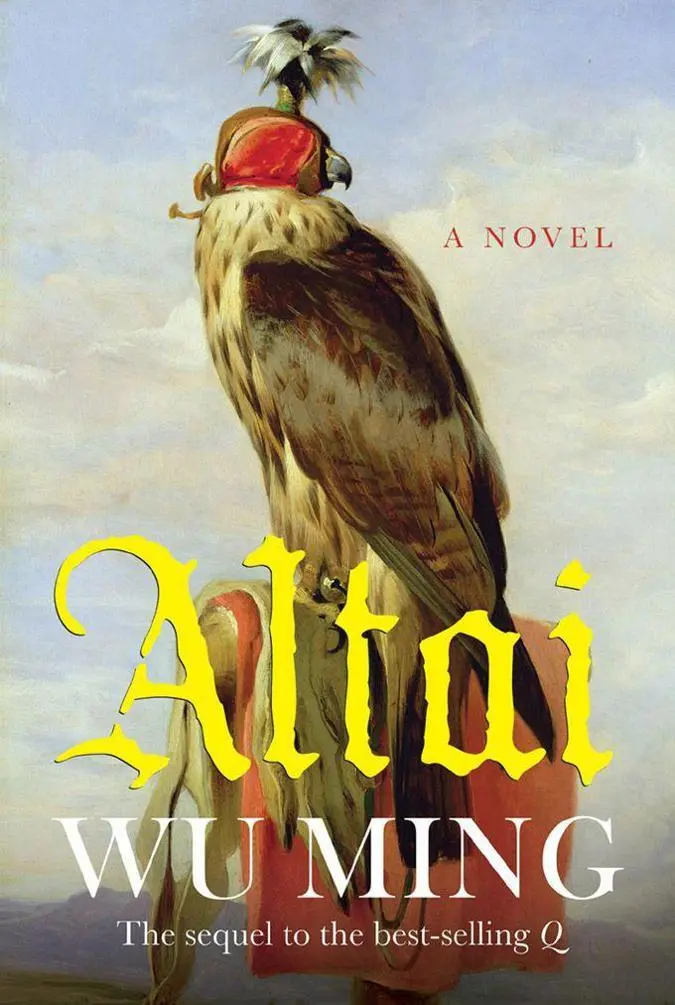
- Название:Altai
- Автор:
- Издательство:Verso
- Жанр:
- Год:2013
- ISBN:нет данных
- Рейтинг книги:3 / 5. Голосов: 1
-
Избранное:Добавить в избранное
- Отзывы:
-
Ваша оценка:
Altai: краткое содержание, описание и аннотация
Предлагаем к чтению аннотацию, описание, краткое содержание или предисловие (зависит от того, что написал сам автор книги «Altai»). Если вы не нашли необходимую информацию о книге — напишите в комментариях, мы постараемся отыскать её.
Through a series of deadly political games leading all the way to the Sultan’s palace in Constantinople, De Zante and his companions spiral headfirst toward a conflict in which the great empires of the Republic of Venice and the Ottomans threaten the very foundations of civilization.
Altai — читать онлайн бесплатно полную книгу (весь текст) целиком
Ниже представлен текст книги, разбитый по страницам. Система сохранения места последней прочитанной страницы, позволяет с удобством читать онлайн бесплатно книгу «Altai», без необходимости каждый раз заново искать на чём Вы остановились. Поставьте закладку, и сможете в любой момент перейти на страницу, на которой закончили чтение.
Интервал:
Закладка:
“Remarkable specimens,” said Ismail.
“The best. They come from Central Asia. If you wish, I may have the opportunity to let you see them at work.” Then he seemed to remember me. “Show me the gifts, then,” he commanded.
I opened the trunk. “Your entry into Famagusta will mark an important moment in the long tale of your exploits,” I said. “And as you know, it will be an important moment for Yossef Nasi, too.” I took out the front plate of a Milanese cuirass. Blue steel, of the finest quality, on which Nasi had had engraved words from the Muslim Holy Book. The precious object glittered. Lala Mustafa looked at it with interest. He nodded to the two janissaries, who took the cuirass and fitted it on their commander’s chest. He stood straight on his feet, his arms outstretched, as the soldiers fastened the final laces.
“Important, you say. I have lost my son in this venture. But he was a soldier, and he has been rewarded with paradise. Has your mentor perhaps risked anything as precious?”
Without a moment’s hesitation, I replied, “Yossef Nasi sent me. He asked me to witness the army’s victory on his behalf. My eyes are his eyes.”
The general looked at me with satisfaction, then demanded to be brought a mirror.
“We don’t use steel breastplates,” he said, “but I will gladly wear it to enter Famagusta, as Nasi Bey suggests in his letter.”
He looked at himself for a long time, from various angles. “And don’t worry,” he added, before dismissing us, “I will show you everything from very close up.”
6
For the first part of the night I didn’t sleep a wink. The Turks played horns and drums to stir up the besieging forces and unnerve their adversaries. I thought about what I would tell Yossef Nasi I had seen. I had in front of me an exhausted city, tattered like a worm-eaten scrap of wool, and all around an invaded, swarming countryside, turned upside-down by the hand of man, dug into trenches to provide shelter, heaped into bridges and embankments to be used as instruments of conquest.
Shortly before dawn, we were wakened by a handful of janissaries. Lala Mustafa, as he had promised, was inviting us to take part in his reconnaissance from above.
We got up and, still groggy, reached the pasha’s tent, where he was ready to lead a short march, at its head, accompanied by a select guard. Lala Mustafa greeted us proudly and gestured to us to arrange ourselves around him.
To our rear was a muddy river of men. The agony of the fortress had attracted people of every sort, waiting to pounce on the leftovers, to gnaw on the bones of the prey. Lala Mustafa held a flask of perfume under his nose to mask the worst of the stench.
Hidden by the trenches and the wall of men protecting us, we reached the foot of one of the towers that we had seen from the sea. It was an old fortification in wood, like a ghost castle, made of planks, faggots, wicker baskets full of stones, the whole thing barely held together by ships’ hawsers. The side exposed to the cannonballs was padded with cotton. Its bulk provided the only shadow for a radius of several yards.
Looking up from below, it seemed to me that the fortress was moving and about to fall on top of me. I worked out that this impression was created by the movement of the clouds.
We climbed the tower, leaving most of our escort at its foot. The wooden ladders led us easily upward. On the first floor stood falconets and culverins, ready to fire.
When we reached the top, I could see the entire city spread before me, no more than two hundred yards away. The Turks had opened various breeches in the counterscarp and climbed down into the moat. Lala Mustafa explained to us that covered pathways had been dug into it, so his soldiers could break down the defenses one stone at a time and lay mines without being shot at. They had raised barriers of masonry perpendicular to the moat and as high as the walls, to use as embankments and bridges, and as defenses so they could enter the moat without being shot from the side towers. I saw men using hooks and picks to shatter, one stone at a time, the stretches of the barrier already broken by cannon shot, shielding themselves with tables covered with wet skins.
Only a few defenders remained on the walls, and they were further up, behind a high barricade of barrels, wood, and cotton bales, sheltered by big tables bristling with nails and daggers.
The arsenal tower had collapsed at various points. The Ravelin, Famagusta’s land gate, was a terrifying pile of masonry. The city, inside the walls, had a desolate appearance, its buildings beaten down by months of cannonades.
Thick, black smoke rose outside the gates of Limassol. A huge, untidy pyre of planks and resinous tree trunks was being consumed by the flames, but I couldn’t work out to what end.
Devastation, as far as the eye could see.
I was stirred from my thoughts by the voice of Lala Mustafa.
“Bragadin is an obstinate man. And his commander, Baglioni, is a smart fighter. Even so, they haven’t a hope. Yesterday I made a request for surrender: They rejected it. Today I plan to dine on partridge pie.” He held out his right hand, palm upward. “In there.”
He lowered his arm and an explosion split the sky, shaking our emplacement like a fruit tree. A blast of rifle fire struck the ramparts and barricades that shielded the city’s defenders. The Turks’ war cries rang out three times.
Thousands of foot soldiers in leather and chain mail leaped from the trenches and launched themselves toward the walls.
The half-light of dawn faintly illumined a vast and terrible scene. A sea of banners flapped in the wind and war music sounded, strident and monotonous. I thought the Cypriot defenses would collapse under the pressure. The rage of that first assault seemed irresistible. Columns of pikemen, of foot soldiers carrying light weapons, of janissaries were attacking the masonry of the Ravelin and the Limassol gates. The hair stood up on the back of my neck and the blood thumped in my temples.
As the wind changed, the smells of battle reached my nostrils. Pitch, turpentine, saltpeter. Blood freshly spilled and clotted, guts, roasted bodies, like the smell of a slaughterhouse. The sickly smell of piles of bodies already decomposing.
I looked and looked, even though the scene kept repeating itself cyclically, monotonously: assault troops passing over the torn bodies of their companions to keep their appointment with death; Famagusta, a relic abandoned in the sand, still resisting.
Behind the parapet that protected us, Hafiz and Mukhtar prayed along with Ali. Ismail stood motionless, leaning on his stick, his lower lip between his teeth. Lala Mustafa stopped frantically issuing orders and listening to information and turned to us. “You don’t need to worry,” he said. “This fort isn’t a useful target for the Venetians. They have very little gunpowder, hardly any ammunition, and they’ve got to concentrate on the attack.”
He had just finished speaking when a big boulder, after bouncing crookedly, raked a trench right below us, mangling legs and heads.
Bodies fell into the moat, slipped back into the dust, and others trampled them, stumbled and climbed toward the barricaded fortresses, where the enemy maintained its resistance in spite of everything: an enemy that had sent a whole generation to the other world on that hideous plain and went on fighting, throwing down fiery bucketfuls of pitch, shattering the masonry of the Ravelin with three-pointed nails, shouting Long live Saint Mark and firing again, and again preparing to fight with knives and swords.
A group of foot soldiers tried to enter at the side, where the fastnesses of the Venetians, though bristling with knives and daggers, seemed less well armed. A rain of bottles filled with inflammatory fluids drenched them, like sauce on cooked meat. The Turks fled in all directions, turned to human torches. Some of them dove into half barrels full of water. One headed straight toward us, running across the plain, under the sun, the fire disfiguring his skin and flesh. He looked as if he were swelling, growing. I saw his face devoured by the flames. His eyes were those of a living man, and they were screaming things that a mouth and lungs can’t say. His body was impelled past its own inanition, like an automaton. Another few steps and he fell, face down. The fire finally consumed him.
Читать дальшеИнтервал:
Закладка:
Похожие книги на «Altai»
Представляем Вашему вниманию похожие книги на «Altai» списком для выбора. Мы отобрали схожую по названию и смыслу литературу в надежде предоставить читателям больше вариантов отыскать новые, интересные, ещё непрочитанные произведения.






Обсуждение, отзывы о книге «Altai» и просто собственные мнения читателей. Оставьте ваши комментарии, напишите, что Вы думаете о произведении, его смысле или главных героях. Укажите что конкретно понравилось, а что нет, и почему Вы так считаете.