Wu Ming - Altai
Здесь есть возможность читать онлайн «Wu Ming - Altai» весь текст электронной книги совершенно бесплатно (целиком полную версию без сокращений). В некоторых случаях можно слушать аудио, скачать через торрент в формате fb2 и присутствует краткое содержание. Год выпуска: 2013, Издательство: Verso, Жанр: Историческая проза, на английском языке. Описание произведения, (предисловие) а так же отзывы посетителей доступны на портале библиотеки ЛибКат.
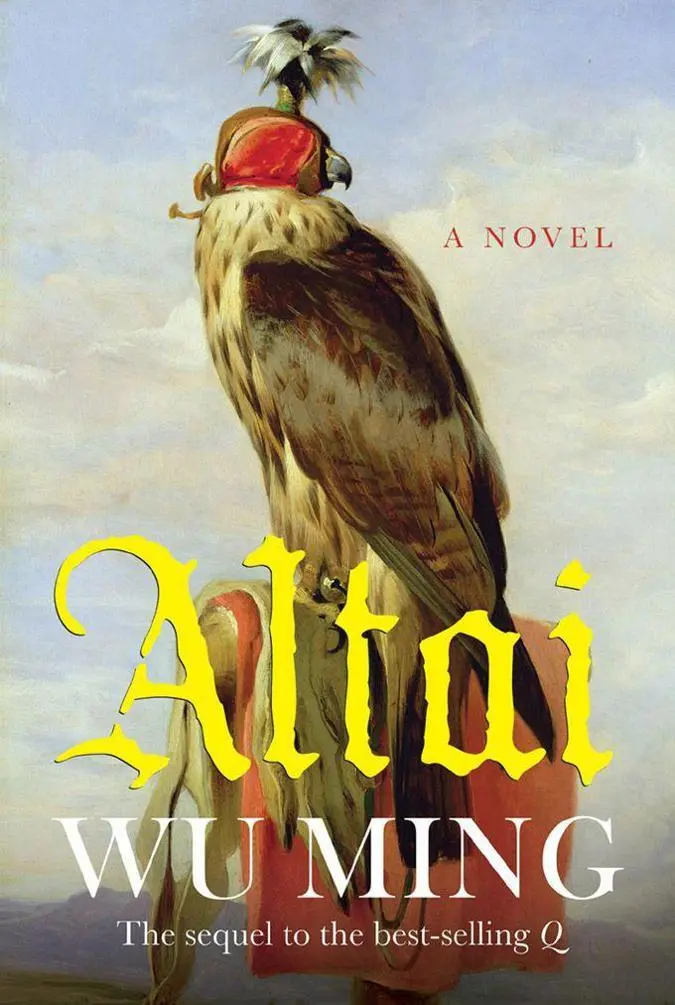
- Название:Altai
- Автор:
- Издательство:Verso
- Жанр:
- Год:2013
- ISBN:нет данных
- Рейтинг книги:3 / 5. Голосов: 1
-
Избранное:Добавить в избранное
- Отзывы:
-
Ваша оценка:
Altai: краткое содержание, описание и аннотация
Предлагаем к чтению аннотацию, описание, краткое содержание или предисловие (зависит от того, что написал сам автор книги «Altai»). Если вы не нашли необходимую информацию о книге — напишите в комментариях, мы постараемся отыскать её.
Through a series of deadly political games leading all the way to the Sultan’s palace in Constantinople, De Zante and his companions spiral headfirst toward a conflict in which the great empires of the Republic of Venice and the Ottomans threaten the very foundations of civilization.
Altai — читать онлайн бесплатно полную книгу (весь текст) целиком
Ниже представлен текст книги, разбитый по страницам. Система сохранения места последней прочитанной страницы, позволяет с удобством читать онлайн бесплатно книгу «Altai», без необходимости каждый раз заново искать на чём Вы остановились. Поставьте закладку, и сможете в любой момент перейти на страницу, на которой закончили чтение.
Интервал:
Закладка:
The pasha looked at him for a long time. Then he said, “For example, the two hundred Turkish prisoners who are still unaccounted for.”
A deathly silence fell. Bragadin looked quizzically at the other captains, but none of them spoke. “I still don’t understand, Signore.”
His obtuseness irritated Mustafa even more, and he raised his voice. “We have the testimonies of three survivors who escaped the city at the moment of the surrender. They maintain that the Turkish prisoners have been massacred.”
After listening to the translator, Bragadin turned pale. “That is incorrect, Signore. I have never given an order of that kind.”
“So you will be courteous enough to tell me what became of those men,” the general pressed.
“I have no idea, Signore. I spent the last days of the siege locked up in my rectory. I can tell you only that I never gave the order to murder the prisoners.”
“And yet they were killed,” Lala Mustafa shouted, “and thrown from the ramparts at night, is that not so?” He had risen to his feet, and his bulk loomed over the captains. “You didn’t want to go on feeding ‘useless mouths,’ did you? You decided to eliminate the prisoners and keep the little remaining food for yourselves.”
The silence that followed was thick with embarrassment. The captains looked at the ground. Only Bragadin met the pasha’s fiery gaze. “I repeat that I never gave that order.”
“Still, those men were under your protection,” Mustafa declared. “Hence I put their death down to you.” The general had come so close to his adversary that he was almost touching him. One of the captains leapt to his feet and sent the word betrayal echoing around the tent.
At a nod from the general, the janissaries obstructed the Venetians and tied their hands behind their backs. Startled by the commotion, one falcon uttered a shrill cry. I observed the scene with astonishment, and when Lala Mustafa gave the order to take the captains outside, I clutched Ismail furiously.
“We’ve got to do something!”
Outside, an ovation welcomed the Christians in chains.
We hurried from the tent, just in time to see the prisoners on their knees, with their heads lowered to the ground. Bragadin was held apart from the rest, and one of the guards held his head so that he was unable to look away. The prisoners were panting and snorting like beasts in a slaughterhouse.
Ali and the Indian twins came up behind us, questioning us with their eyes, but we gave them no reply. We had no reply to give.
Another nod from Lala Mustafa. The janissaries raised their scimitars. The blades glinted in the sun, then fell quickly and solemnly, severing the heads of the captains one by one. The cheers went up, even louder than before.
I gripped Ismail with all my strength. “It can’t end like this. Not with violated agreements and the slaughter of men who have surrendered! Cyprus will be stained with shame for ever; this bloodshed will never be redeemed.”
Ismail stood frozen.
Lala Mustafa ordered one of the soldiers from Bragadin’s escort, who had witnessed the scene with horror, to be brought into his presence. He asked him which was the head of Astorre Baglioni, and the poor young man was forced to turn over the bloody remains to recognize his captain.
Lala picked up the head of the man who had been in command of the defenses of Famagusta and who had for a year opposed his desire for conquest. He held it aloft, so that everyone could see it, and then he approached Marcantonio Bragadin. The translator hurried over to him — carefully keeping his distance from the dripping trophy.
“Now look at your captain,” said Lala Mustafa. “Did you perhaps hear me give the order to kill him? No. My soldiers know what I want from them. But unlike you, I don’t hide myself.” He threw Baglioni’s severed head to the soldiers thronging around him. Then, with another gesture, he unleashed their fury against the Italian foot soldiers, who were overwhelmed and thrown into the dust. Severed heads rolled in all directions, kicked far from the general pandemonium. The earth turned red and then black, as blood gushed over it, then flooded it. I closed my eyes.
God.
My God.
When I opened them again, I saw it was Bragadin’s turn. The executioner brought his blade down close to the captain’s head, without cutting it off. A stream of urine ran into the dust. The janissaries sniggered. Another blow through the air, for the entertainment of the troops, and then two crisp blows close together. Off came Bragadin’s ears. Where they had been, two red gouts of blood ran down his neck. The captain fell to the ground, writhing.
I felt my gorge rising. I gripped Ismail’s arm again and forced him to look at me.
“Stop him! Talk to him! He’ll listen to you.”
He didn’t even seem to hear me, lost as he was in his own nightmares.
I cursed and moved off, trying to get to the general, but one of his guards obstructed my path, his lance held across my chest. “I demand mercy for the prisoner,” I said.
Lala Mustafa looked as if he wanted to incinerate me. For a moment I was worried that he would pass the same sentence on me.
“I represent Yossef Nasi, and I can guarantee that this man’s life will be redeemed in gold.”
Mustafa seemed amused by my offer and allowed me to approach him. “A ransom, you mean? How much do you think his life might be worth?”
I stood in front of him. “You set the amount.”
He laughed and clicked his tongue. “Inform your master that not everything can be bought with gold. There are prices that are paid in blood.” Before I could reply, Ismail’s voice came from behind me.
“Lala Mustafa Pasha, listen to me.” The old man stood firmly, almost without needing to rely on his stick. He had stirred himself and was coming to my aid. “Kill this man and he won’t be Vercingetorix, he will be Leonidas,” he said. “Do you want Famagusta to be the Thermopylae of the Sultan’s army? Remember that the Christian fleet might already be on its way. Don’t defy destiny. Send this wretch home and let the ships weigh anchor. The glory is yours.”
Mustafa remained silent for a long time, meditating on these words, and I convinced myself that we would move him. As a shepherd saves from the lion’s mouth only two leg bones or a piece of an ear, so will the Israelites be saved. The words of Amos rushed into my mind, loudly, and at terrible speed.
The general was about to utter his verdict when shouts and cheers rose up from the edges of the encampment. A little tide of men had begun to move toward the city. The looters had found a gap, and rumor of it was spreading rapidly. The janissary officer turned toward Lala Mustafa, waiting for orders, but the general said nothing.
“Stop them, my lord,” I pleaded. “You can do it. It will be a massacre.”
He, too, turned to look toward Famagusta. “A massacre, you say? Look down there. Fifty thousand Turks are lying on the battlefield because of this man’s pride.” He pointed to Bragadin, kneeling on the ground, drenched in blood. “He is to blame for everything.” He turned to Ismail. “You are right. I won’t kill him. I will go on making him die. He will never be a Leonidas, because I will make a puppet of him, a figure of universal mockery.”
The officer of the janissaries was still waiting for the signal to make the soldiers intervene, but Lala said not a word. He withdrew to his tent. It was more than a retreat; it was the clearest order to break ranks. Now anything could happen.
I tried to find a prayer, just to know whether I had one left in my mind.
Ismail gave me a shake. “You want to do something? Then run.”
“What are you saying?”
Читать дальшеИнтервал:
Закладка:
Похожие книги на «Altai»
Представляем Вашему вниманию похожие книги на «Altai» списком для выбора. Мы отобрали схожую по названию и смыслу литературу в надежде предоставить читателям больше вариантов отыскать новые, интересные, ещё непрочитанные произведения.








Обсуждение, отзывы о книге «Altai» и просто собственные мнения читателей. Оставьте ваши комментарии, напишите, что Вы думаете о произведении, его смысле или главных героях. Укажите что конкретно понравилось, а что нет, и почему Вы так считаете.