Alix Christie - Gutenberg's Apprentice
Здесь есть возможность читать онлайн «Alix Christie - Gutenberg's Apprentice» весь текст электронной книги совершенно бесплатно (целиком полную версию без сокращений). В некоторых случаях можно слушать аудио, скачать через торрент в формате fb2 и присутствует краткое содержание. Год выпуска: 2014, Издательство: Harper, Жанр: Историческая проза, на английском языке. Описание произведения, (предисловие) а так же отзывы посетителей доступны на портале библиотеки ЛибКат.
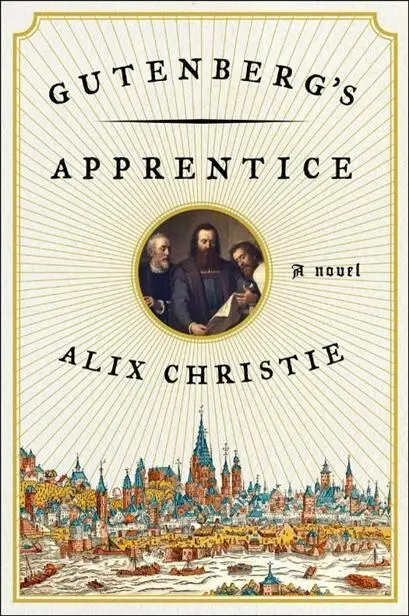
- Название:Gutenberg's Apprentice
- Автор:
- Издательство:Harper
- Жанр:
- Год:2014
- ISBN:нет данных
- Рейтинг книги:5 / 5. Голосов: 1
-
Избранное:Добавить в избранное
- Отзывы:
-
Ваша оценка:
Gutenberg's Apprentice: краткое содержание, описание и аннотация
Предлагаем к чтению аннотацию, описание, краткое содержание или предисловие (зависит от того, что написал сам автор книги «Gutenberg's Apprentice»). Если вы не нашли необходимую информацию о книге — напишите в комментариях, мы постараемся отыскать её.
Youthful, ambitious Peter Schoeffer is on the verge of professional success as a scribe in Paris when his foster father, wealthy merchant and bookseller Johann Fust, summons him home to corrupt, feud-plagued Mainz to meet “a most amazing man.”
Johann Gutenberg, a driven and caustic inventor, has devised a revolutionary — and to some, blasphemous — method of bookmaking: a machine he calls a printing press. Fust is financing Gutenberg’s workshop and he orders Peter, his adopted son, to become Gutenberg’s apprentice. Resentful at having to abandon a prestigious career as a scribe, Peter begins his education in the “darkest art.”
As his skill grows, so, too, does his admiration for Gutenberg and his dedication to their daring venture: copies of the Holy Bible. But mechanical difficulties and the crushing power of the Catholic Church threaten their work. As outside forces align against them, Peter finds himself torn between two father figures: the generous Fust, who saved him from poverty after his mother died; and the brilliant, mercurial Gutenberg, who inspires Peter to achieve his own mastery.
Caught between the genius and the merchant, the old ways and the new, Peter and the men he admires must work together to prevail against overwhelming obstacles — a battle that will change history. . and irrevocably transform them.
Gutenberg's Apprentice — читать онлайн бесплатно полную книгу (весь текст) целиком
Ниже представлен текст книги, разбитый по страницам. Система сохранения места последней прочитанной страницы, позволяет с удобством читать онлайн бесплатно книгу «Gutenberg's Apprentice», без необходимости каждый раз заново искать на чём Вы остановились. Поставьте закладку, и сможете в любой момент перейти на страницу, на которой закончили чтение.
Интервал:
Закладка:
“So be it, then. The purse prevails. But let me warn you.” Gutenberg recoiled from him, still holding Peter in the tight grip of his eyes. “The thing had better blind me with its brilliance.”
What kind of man was this? What kind of stunted and inhuman being, to whom Peter had been yoked? For all the years he worked with him, he tried to understand. The truth was that he never really knew. Peter came as close as anyone: he’d seen the master’s childlike wonder and delight, and then the darkness that erupted, demons lurking just beneath the surface every time. He was a man who made the weather. He was as changeable and dramatic as the Rhineland sky: sunny and expansive at one moment, black and pelting hail the next.
It seemed to Peter then that each of them contained his separate humor. Gutenberg was choleric, all fire and passion. Fust was sanguine, full of appetite. The Roman doctor Galen would have classified Peter himself as phlegmatic, as cool as air or water. The colors of their humors thus were black and red and white. But most of all it was the black of choler that prevailed.
That afternoon they were allowed to venture out. Hans had wangled it, somehow. If Gutenberg had had his way, they would have started on that missal then and there. Instead the master shut himself up in his study, and the crew received a sharp and sunny winter afternoon. They ambled to the Iron Market at the river’s edge, where Konrad made a beeline for the locks. He needed something small, to fit a chest.
The Mainzers, when they saw them, eyed them with suspicion. The story had circulated that these strangers made some trinkets for the pilgrim trade, which almost certainly would cut into business. Peter’s uncle had made clear that the goldsmiths’ guild would tolerate this cockeyed workshop just so far. Peter wondered how long Fust and Gutenberg could keep up this pretense. At least the priests and scribes of Mainz were far too fine to venture down along the docks — but just in case, he kept his cap pulled down.
The market overflowed with every metal object men could fashion, laid out on cloth or spilled from baskets: buckles and rings and hooks, tin plates and pans and candlesticks, brass salvers shaped like fish. The locks were sent from Nuremberg, whose smiths were known for their precision and their patience. Konrad fingered every shape and size on offer. None could touch the Nurembergers for a lock, or cogs or wheels and balanced shafts that ran the vital works of scales and clocks. He demonstrated how the tumbler dropped to lift the barrel. “As tough to crack as Keffer’s balls.” The pressman laughed. The big smith grinned to hear his name. “In point of fact.” He elbowed Peter, jerked his head toward the public baths.
“Another time,” Peter said, and pushed him playfully away. His head was ringing still with this fresh madness.
“You then,” Keffer said, and Konrad nodded, paying for and pocketing his lock. Hans made a face as they went off. “One thing on his mind, that lad,” he said, watching as they shouldered through the crowd.
Hans and Peter moved on southward on the empty towpath. The city had been cut off for four whole months. The market boats had drastically reduced their traffic, waiting for the haul downriver in Cologne, then linking in a long towline that only stopped to switch the teams in Mainz. The wind was all that now alighted in that excommunicated place; Peter walked against it, the folly of the morning turning in his mind. Hans plodded at his side; he’d never broach the topic. They crossed the frozen rill that cut the city from the quays of Selenhofen, where a huge new ship was being built. Workers swarmed its frame. Peter’s eyes rose above the busy scene and picked out the long row of roofs that was the Charterhouse, stretched like the beads of a great rosary along the bank. Inside each small peaked cell a monk sat writing, with his quire of parchment and his scripture and his quills.
“They’re mad.” It burst out of him. “Right off their heads, to think that we can do this.”
“Damn right.” Hans laughed. “Else none of us would be here.”
“Ten thousand letters, Hans. It can’t be done, not stroke by stroke.”
“You should have kept your trap shut, then.” Hans scanned the vacant shore, then squatted down and plucked a piece of reed. “Eight months, I reckon, give or take.”
“Monstrous.” Peter looked downriver, far away.
“You, a man of doubt?”
“Completely.” He dropped his cloak and sat.
Hans was fishing in his teeth with the thin reed. His eyes held Peter’s, weighing. “But we can’t use the one we’ve got.”
“I didn’t mean—”
Hans flapped his hand. “He doesn’t give a damn how it is done, so long as it gets done.”
“He’ll kill us all.”
“Well, I’m still standing,” Hans said, and stood, spat out the chewed stalk. He held a hand out and hauled Peter up.
“He doesn’t have a clue.”
“That’s where you’re wrong.” Hans scratched his grizzled beard and looked across the river toward the distant fields. “He knows damn well. He isn’t going to get another chance.” He pursed his lips. “He’ll have to throw it in, if it don’t work this time. And that would fair near kill him.”
“There’s nothing that could kill that man.”
“You’d be surprised. We’re not as young as we once were.” Hans pulled his cloak up higher on his neck. With his bare pate, his ring of hair, he might have been a barefoot friar. They walked on, came up to a rope that cordoned off the boat works.
“Quite a monster.” Hans whistled. “Windows out of glass.”
Though raw and keeled onto its side, the ship recalled to Peter Mainz as she had been. The hull was that of any Overlander, lifting high above the water, flat of keel to skim the river’s shifting sandbars. When it was sent downstream for painting, it would bear the Katzenelnbogen coat of arms — and quantities of tax-free fish and salt and wine the council had allowed, to sway the duke in their dispute with the archbishop.
“You people like ’em big,” Hans went on. “Burgundy’s not half so grand.”
Peter looked at him, surprised. “The Katzenelnbogens hold the toll,” he answered. “Downriver at Saint Goar.”
“Thieves. They’d melt the gilding off their fathers’ coffins.”
Peter laughed. “You’ve worked for nobles, then?”
“My old man’s shop hung on the Strassburg bishop’s orders.” Hans looked slyly at him. “I’ve seen my share, believe me too, with Henne.” He screwed his eyes up. “Nasty brutes, the lot. Always grinding at the prices, pitting brother against brother in the guild.” It was a speech, for Hans.
“I heard the master was a member there.”
Hans grinned. “He couldn’t carve to save his life. But he was damn sure tickled to be asked.” Hans turned, and as he did, whacked Peter on the back. “If it makes you any gladder, he’s as rude to all them high-and-mighties as he is to you.”
They walked back across the stream that cut the fishing village from the city proper. They’d almost reached the lower Rackgate when they heard the bell: a deep, commanding boom. The tower of St. Martin’s. Peter had not heard or felt that sound in years. The rumble of it tolled his very bones. Before they’d crossed the span and made their way inside, another bell rang, higher by an octave, and then a third: St. Stephan’s, St. Quintin’s. The voices of the churches opened one by one and swelled into a giddy chorus.
They made their way along the streets, filled suddenly with people rushing out. Strangers fell on strangers, hugging, laughing; Peter felt his own throat fill. The ban was lifted — there could be no doubt. The clamor of the bells drowned out all other sound. As Heilant had predicted, peace in time for Christmastide: Dietrich had released his fist. The crowd surged blindly, bearing them like sticks toward the marketplace and the cathedral. St. Martin’s doors were now flung wide. But at what price? Peter had the time to wonder, as the tide tossed them like dazed survivors at the Golden Mallet — where for once they entered undetected, raised their mugs, and drank to golden Mainz among their fellows.
Читать дальшеИнтервал:
Закладка:
Похожие книги на «Gutenberg's Apprentice»
Представляем Вашему вниманию похожие книги на «Gutenberg's Apprentice» списком для выбора. Мы отобрали схожую по названию и смыслу литературу в надежде предоставить читателям больше вариантов отыскать новые, интересные, ещё непрочитанные произведения.












Обсуждение, отзывы о книге «Gutenberg's Apprentice» и просто собственные мнения читателей. Оставьте ваши комментарии, напишите, что Вы думаете о произведении, его смысле или главных героях. Укажите что конкретно понравилось, а что нет, и почему Вы так считаете.