T. Binyon - Pushkin
Здесь есть возможность читать онлайн «T. Binyon - Pushkin» — ознакомительный отрывок электронной книги совершенно бесплатно, а после прочтения отрывка купить полную версию. В некоторых случаях можно слушать аудио, скачать через торрент в формате fb2 и присутствует краткое содержание. Жанр: unrecognised, на английском языке. Описание произведения, (предисловие) а так же отзывы посетителей доступны на портале библиотеки ЛибКат.
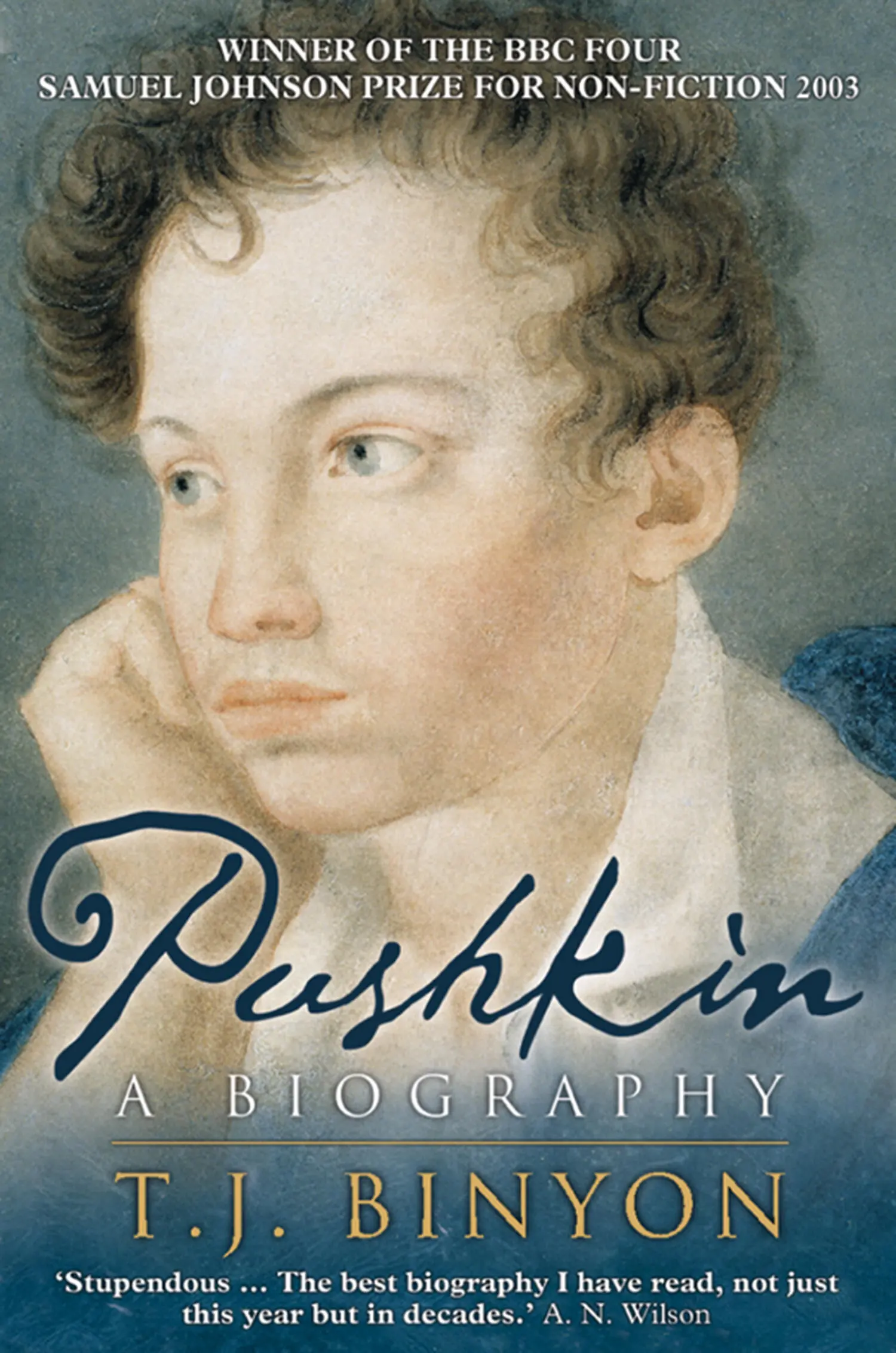
- Название:Pushkin
- Автор:
- Жанр:
- Год:неизвестен
- ISBN:нет данных
- Рейтинг книги:4 / 5. Голосов: 1
-
Избранное:Добавить в избранное
- Отзывы:
-
Ваша оценка:
Pushkin: краткое содержание, описание и аннотация
Предлагаем к чтению аннотацию, описание, краткое содержание или предисловие (зависит от того, что написал сам автор книги «Pushkin»). Если вы не нашли необходимую информацию о книге — напишите в комментариях, мы постараемся отыскать её.
Pushkin — читать онлайн ознакомительный отрывок
Ниже представлен текст книги, разбитый по страницам. Система сохранения места последней прочитанной страницы, позволяет с удобством читать онлайн бесплатно книгу «Pushkin», без необходимости каждый раз заново искать на чём Вы остановились. Поставьте закладку, и сможете в любой момент перейти на страницу, на которой закончили чтение.
Интервал:
Закладка:
Recognition led to a widening of Pushkinâs poetic acquaintance. Batyushkov had called on him in February; in September Zhukovsky â after Derzhavin, the best-known poet in Russia â wrote to Vyazemsky: âI have made another pleasant acquaintanceship! With our young miracle-worker Pushkin. I called on him for a minute in Tsarskoe Selo. A pleasant, lively creature! He was very glad to see me and firmly pressed my hand to his heart. He is the hope of our literature. I fear only lest he, imagining himself mature, should prevent himself from becoming so. We must unite to assist this future giant, who will outgrow us all, to grow up [â¦] He has written an epistle to me, which he gave into my hands, â splendid! His best work!â 49
In March 1816 Vasily Lvovich, who was travelling back to Moscow from St Petersburg with Zhukovsky, Vyazemsky and Karamzin, persuaded them to stop off at the Lycée; they stayed for about half an hour: Pushkin spoke to his uncle and Vyazemsky, whom he had known as a child in Moscow, but did not meet Karamzin. Two days later he sent Vyazemsky a witty letter, complaining of his isolated life at the Lycée: âseclusion is, in fact, a very stupid affair, despite all those philosophers and poets, who pretend that they live in the country and are in love with silence and tranquillityâ, and breaking into verse to envy Vyazemskyâs life in Moscow:
Blessed is he, who noisy Moscow
Does not leave for a country hut â¦
And who not in dream, but in reality
Can caress his mistress! â¦
Only a year of schooling remains, âBut a whole year of pluses and minuses, laws, taxes, the sublime and the beautiful! ⦠a whole year of dozing before the masterâs desk ⦠what horror.â 50
In April he received a letter from Vasily Lvovich, telling him that Karamzin would be spending the summer in Tsarskoe Selo: âLove him, honour and obey. The advice of such a man will be to your good and may be of use to our literature. We expect much from you.â 51 Nikolay Karamzin, who at this time had just turned fifty, was Russiaâs most influential eighteenth-century writer, and the acknowledged leader of the modernist school in literature. Though best-known as author of the extraordinarily popular sentimental tale Poor Liza (1792), his real achievement was to have turned the heavy and cumbersome prose of his predecessors into a flexible, supple instrument, capable of any mode of discourse. He arrived in Tsarskoe Selo on 24 May with his wife and three small children, and settled in one of Cameronâs little Chinese houses in the park to complete work on his monumental eight-volume History of the Russian State. He remained there throughout the summer, returning to St Petersburg on 20 September. During this time Pushkin visited him frequently, often in the company of another lycéen, Sergey Lomonosov. The acquaintance ripened rapidly: on 2 June Karamzin informs Vyazemsky that he is being visited by âthe poet Pushkin, the historian Lomonosovâ, who âare amusing in their pleasant artlessness. Pushkin is witty.â 52 And when Prince Yury Neledinsky-Meletsky, an ageing privy councillor and minor poet, turned to Karamzin for help because he found himself unable to compose the verses he had promised for the wedding of the Grand Duchess Anna with Prince William of Orange, Karamzin recommended Pushkin for the task. Pushkin produced the required lines in an hour or two, and they were sung at the wedding supper in Pavlovsk on 6 June. The dowager empress sent him a gold watch and chain.
Pushkinâs work â like that of Voltaire, much admired, and much imitated by him at this time â is inclined to licentiousness, but any coarseness is always â even in the Lycée verse â moderated by wit. Once Pushchin, watching from the library window as the congregation dispersed after evening service in the church opposite, noticed two women â one young and pretty, the other older â who were quarrelling with one another. He pointed them out to Pushkin, wondering what the subject of the dispute could be. The next day Pushkin brought him sixteen lines of verse which gave the answer: Antipevna, the elder, is angrily taking Marfushka to task for allowing Vanyusha to take liberties with her, a married woman. âHeâs still a child,â Marfushka replies; âWhat about old Trofim, who is with you day and night? Youâre as sinful as I am,â
In anotherâs cunt you see a straw,
But donât notice the beam in your own. 53
âPushkin was so attracted to women,â wrote a fellow lycéen, âthat, even at the age of fifteen or sixteen, merely touching the hand of the person he was dancing with, at the Lycée balls, caused his eye to blaze, and he snorted and puffed, like an ardent stallion in a young herd.â 54 The first known Lycée poem is âTo Natalyaâ, written in 1813, and dedicated to a young actress in the serf theatre of Count V.V. Tolstoy. He imagines himself an actor, playing opposite her: Philemon making love to Anyuta in Ablesimovâs opera, The Miller, Sorcerer, Cheat and Matchmaker , or Dr Bartolo endeavouring to seduce Rosina in The Barber of Seville. Two summers later he made her the subject of another poem. You are a terrible actress, he writes; were another to perform as badly as you do, she would be hissed off the stage, but we applaud wildly, because you are so beautiful.
Blessed is he, who can forget his role
On the stage with this sweet actress,
Can press her hand, hoping to be
Still more blessed behind the scenes! 55
When Elena Cantacuzen, the married sister of his fellow-lycéen Prince Gorchakov, visited the Lycée in 1814, he composed âTo a Beauty Who Took Snuffâ:
Ah! If, turned into powder,
And in a snuff-box, in confinement,
I could be pinched between your tender fingers
Then with heartfelt delight
Iâd strew myself on the bosom beneath the silk kerchief
And even ⦠perhaps ⦠But no! An empty dream.
In no way can this be.
Envious, malicious fate!
Ah, why am I not snuff! 56
There is far more of Pushkin in the witty, humorous light verse of this kind, when he can allow himself the expression of carnal desire, than in his love poems of the Lycée years â such as those dedicated to Ekaterina Bakunina, the sister of a fellow-lycéen. She was four years older than he and obviously attractive, for both Pushchin and the young Malinovsky were his rivals. In a fragment of a Lycée diary he wrote, on Monday 29 November 1815:
I was happy! ⦠No, yesterday I was not happy: in the morning I was tortured by the ordeal of waiting, standing under the window with indescribable emotion, I looked at the snowy path â she was not to be seen! â finally I lost hope, then suddenly and unexpectedly I met her on the stairs, a delicious moment! [â¦] How charming she was! How becoming was the black dress to the charming Bakunina! But I have not seen her for eighteen hours â ah! what a situation, what torture â But I was happy for five minutes. 57
There is, however, no trace of this artless sincerity in any of the twenty-three poems he devoted to his love between the summer of 1815 and that of 1817, which are, almost without exception, expressions of blighted love. No doubt Pushkinâs grief was real; no doubt he experienced all the torments of adolescent love. But the agony is couched in such conventional terms, is often so exaggerated, that the emotion comes to seem as artificial as the means of its expression. The cycle begins with the sadness he experiences at her absence; she returns, only for him to discover he has a successful rival; having lost her love, he can only wish for death. âThe early flower of hope has faded:/Lifeâs flower will wither from the torments!â he laments 58 â an image with which, in Eugene Onegin , he would mock Lenskyâs adolescent despair: âHe sang of lifeâs wilted flower/At not quite eighteen years of ageâ (II, x).
Читать дальшеИнтервал:
Закладка:
Похожие книги на «Pushkin»
Представляем Вашему вниманию похожие книги на «Pushkin» списком для выбора. Мы отобрали схожую по названию и смыслу литературу в надежде предоставить читателям больше вариантов отыскать новые, интересные, ещё непрочитанные произведения.








Обсуждение, отзывы о книге «Pushkin» и просто собственные мнения читателей. Оставьте ваши комментарии, напишите, что Вы думаете о произведении, его смысле или главных героях. Укажите что конкретно понравилось, а что нет, и почему Вы так считаете.