T. Binyon - Pushkin
Здесь есть возможность читать онлайн «T. Binyon - Pushkin» — ознакомительный отрывок электронной книги совершенно бесплатно, а после прочтения отрывка купить полную версию. В некоторых случаях можно слушать аудио, скачать через торрент в формате fb2 и присутствует краткое содержание. Жанр: unrecognised, на английском языке. Описание произведения, (предисловие) а так же отзывы посетителей доступны на портале библиотеки ЛибКат.
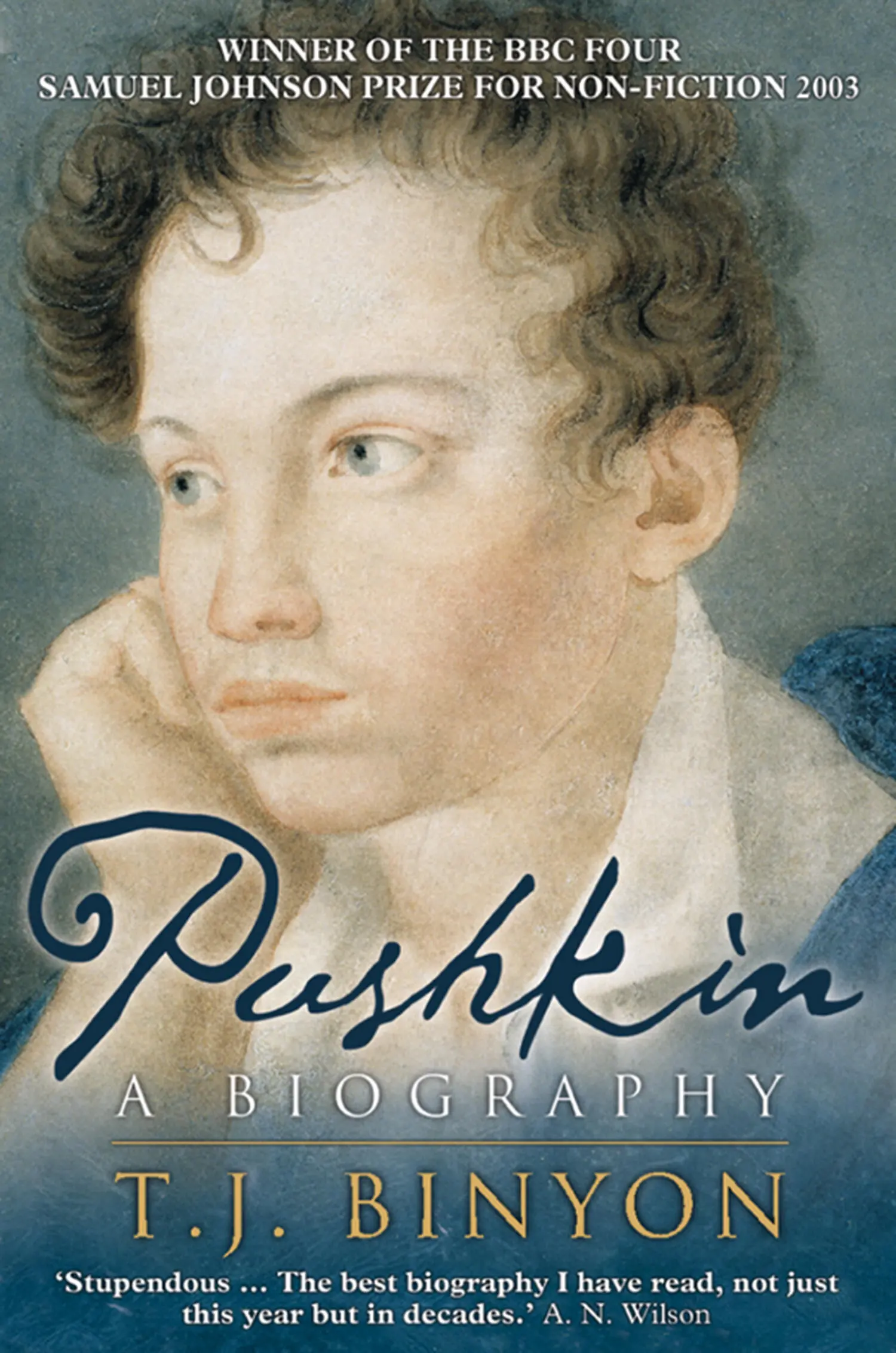
- Название:Pushkin
- Автор:
- Жанр:
- Год:неизвестен
- ISBN:нет данных
- Рейтинг книги:4 / 5. Голосов: 1
-
Избранное:Добавить в избранное
- Отзывы:
-
Ваша оценка:
Pushkin: краткое содержание, описание и аннотация
Предлагаем к чтению аннотацию, описание, краткое содержание или предисловие (зависит от того, что написал сам автор книги «Pushkin»). Если вы не нашли необходимую информацию о книге — напишите в комментариях, мы постараемся отыскать её.
Pushkin — читать онлайн ознакомительный отрывок
Ниже представлен текст книги, разбитый по страницам. Система сохранения места последней прочитанной страницы, позволяет с удобством читать онлайн бесплатно книгу «Pushkin», без необходимости каждый раз заново искать на чём Вы остановились. Поставьте закладку, и сможете в любой момент перейти на страницу, на которой закончили чтение.
Интервал:
Закладка:
*Until 1816 the school was under the direct supervision of the minister, Razumovsky, who controlled its activities down to the most trivial detail.
*Possibly also because of his use of coarse, smutty language and his obsession with sex, France being commonly associated with sexual immorality.
â âA boy of sixteen, prophesying in exact detail literary immortality to a boy of fifteen, and doing it in a poem that is itself immortal â this is a combination of intuitive genius and actual destiny to which I can find no parallel in the history of world poetryâ (Nabokov, III, 23).
*The brig carrying them wintered on the Svir River, between Lakes Ladoga and Onega: on its return most of the books were found to be spoilt by water.
*âWhen a fountain of pent-up songs/Would ceaselessly replenish itself each dayâ, Faust , 154â5.
*Their society is adequately characterized by Molostvovâs mot , âThe best woman is a boy, and the best wine vodkaâ (Modzalevsky (1999), 480).
3 ST PETERSBURG 1817â20
I: Literature and Politics
A weak and cunning ruler,
A balding fop, an enemy of labour,
Fortuitously favoured by Fame,
Reigned over us then.
Eugene Onegin , X, i
WHEN PUSHKIN ARRIVED in St Petersburg, he had just turned eighteen. This âugly descendant of negroesâ, as he called himself, was small in stature â just under five foot six. 1 He had pale blue eyes, curly black hair, usually dishevelled, and extraordinarily long, claw-like fingernails â often dirty â of which he was inordinately proud. When the actress Aleksandra Kolosova â just sixteen when Pushkin met her in 1818 â tried to hold his hands so that her mother could punish him for some prank by âclipping his clawsâ, âhe screamed loud enough to bring the house down, feigned sobs, groans, complained that we were insulting him, and reduced us to tears of laughterâ. 2 He promenaded the streets in a long black frock-coat âin the American styleâ and silk top-hat â à la Bolivarâ: funnel-shaped, with a wide, upturned brim, and carrying a heavy cane. * 3 In a pencil sketch he made as a guide to the illustrator of the first chapter of Eugene Onegin , he depicts himself and Eugene leaning on the granite parapet of the Neva Embankment, gazing across at the Peter-Paul fortress. He is seen from behind: a shortish man in the Bolivar top-hat, with thick curly hair down to his shoulders, wearing tapering pantaloons and a frock-coat nipped at the waist, with two buttons in the small of the back and long, bell-shaped skirts. A note underneath instructs the illustrator that Pushkin should be made âgood-lookingâ. * 4 Though often morose and silent in large gatherings, or among those he did not know well, in the company of his friends and intimates he displayed an extraordinary, superabundant liveliness and gaiety, combined with a continual restlessness. âHe could never sit still for a minute,â Kolosova wrote; âhe would wriggle, jump up, sit somewhere else, rummage in my motherâs work-basket, tangle the balls of yarn in my embroidery, scatter my motherâs patience cards â¦â 5
When Pushkinâs mother had moved to the capital in 1814 she had taken a seven-room apartment on the upper floor of a large house on the right, or north embankment of the Fontanka canal, near the Kalinkin Bridge. Now Pushkin moved into the apartment, joining his parents and the nineteen-year-old Olga. Lev had left the Lycée and moved to a St Petersburg boarding-school. The lodgings were in the Kolomna quarter, an unfashionable district, âneither metropolitan nor provincial [â¦] here all is tranquillity and retirement, all the sediment of the capitalâs traffic has settled hereâ. 6 Pushkin came to feel some affection for the area, lodging the hero of The Bronze Horseman here, and making it the setting for his comic narrative poem The Little House in Kolomna. The apartment below the Pushkins was occupied by the Korffs, whose son, Modest, had been a fellow lycéen. According to him the Pushkinsâ âlodging was always topsy-turvy; valuable antique furniture in one room, in another nothing but empty walls or a rush-bottomed chair; numerous, but ragged and drunken servants, fabulously unclean; decrepit coaches with emaciated nags, and a continual shortage of everything, from money to glasses. Whenever two or three extra people dined with them they always sent down to us, as neighbours, for cutlery and china.â 7 Ashamed of the shabbiness of the apartment, Pushkin concealed his address from most of his acquaintance. Those given the entrée might find him in dishabille, as did Vasily Ertel, who was taken there by Delvig in February 1819. âWe went up the stairs, the servant opened the door, and we entered the room. By the door stood a bed on which lay a young man in a striped Bokhara dressing-gown with a skull-cap on his head. Near the bed, on a table, lay papers and books. The room united the characteristics of the abode of a fashionable young man with the poetic disorder of a scholar.â 8
On 13 June 1817, two days after arriving in St Petersburg, Pushkin, together with the other lycéens who had joined the Foreign Ministry, was presented to the Foreign Minister, Count Nesselrode. Two days later, at the ministry on the English Embankment, he took and signed an oath of allegiance, and was given the decrees of Peter the Great and Catherine II relating to the foreign service to read. From the beginning the sole attraction of the ministry was that it provided him with a rank in the civil service and a minimal income. There are no references to his work there in his correspondence; his attendance soon became desultory and his diligence non-existent: âI know nothing about [Pushkin],â Engelhardt wrote in January 1818, âother than that he does nothing at the Ministry.â 9 On 3 July he applied for leave until 15 September, to travel with his family to his motherâs estate at Mikhailovskoe. The journey of some 288 miles took three days, passing through Tsarskoe Selo, Luga, Porkhov, Bezhanitsa and Novorzhev, and producing an epigram:
There is in Russia the town of Luga
In the Petersburg region;
One could not imagine
A worse dump than this,
If there didnât exist
My Novorzhev. 10
In 1742 the Empress Elizabeth had made a large grant of land in the Pskov province to Abram Gannibal. This estate, some five thousand desyatins in extent, included forty-one villages, populated by â according to the census of 1744 â 806 serfs. * Through it ran a small river, the Sorot, fed by a chain of lakes. A few miles to the south, on the Sinichi hills, lay the small settlement of Svyatye Gory, crowned by the white walls and silver spire of the Svyatogorsky monastery. Although Abram, first occupied with his military duties and later preferring to retire to his estate at Suida, spent little time here, he arranged for the construction of a manor house at Petrovskoe, on the north-east bank of Lake Kuchane. On his death in 1781 the lands in the Pskov province were divided between his three younger sons, Petr, Osip and Isaak. Petr took Petrovskoe, Osip Mikhailovskoe and Isaak Voskresenskoe.
At Petrovskoe Petr knocked down the old house and built another, much larger, further from the lake, and laid out a small park, with an alley of lime trees leading from the lawn behind the house to the lake shore. In 1817 he was seventy-five, and was living here by himself, having seen little or nothing of his wife and children since he had packed them off, with a meagre allowance, to his estate near St Petersburg in the 1780s.
Voskresenskoe, Isaakâs patrimony, was some eight miles to the east of Petrovskoe, on the road to Novorzhev. Here, on a hill overlooking Lake Belogul â twice the size of Lake Kuchane â he built an unassuming, but capacious one-storey manor to house his large family: eight sons and seven daughters. On the slope of the hill descending to the lake was a large park with alleys, ponds and summer-houses. On the other side of the house a drive flanked with birch trees, concealing numerous outbuildings and servantsâ quarters, led to the road. Isaak had died in 1804, heavily in debt, and having had to mortgage and then sell the greater part of his estate. His wife, Anna Andreevna, remained at the manor house, visited each summer by some of her numerous brood, together with their wives, husbands and children.
Читать дальшеИнтервал:
Закладка:
Похожие книги на «Pushkin»
Представляем Вашему вниманию похожие книги на «Pushkin» списком для выбора. Мы отобрали схожую по названию и смыслу литературу в надежде предоставить читателям больше вариантов отыскать новые, интересные, ещё непрочитанные произведения.









Обсуждение, отзывы о книге «Pushkin» и просто собственные мнения читателей. Оставьте ваши комментарии, напишите, что Вы думаете о произведении, его смысле или главных героях. Укажите что конкретно понравилось, а что нет, и почему Вы так считаете.