T. Binyon - Pushkin
Здесь есть возможность читать онлайн «T. Binyon - Pushkin» — ознакомительный отрывок электронной книги совершенно бесплатно, а после прочтения отрывка купить полную версию. В некоторых случаях можно слушать аудио, скачать через торрент в формате fb2 и присутствует краткое содержание. Жанр: unrecognised, на английском языке. Описание произведения, (предисловие) а так же отзывы посетителей доступны на портале библиотеки ЛибКат.
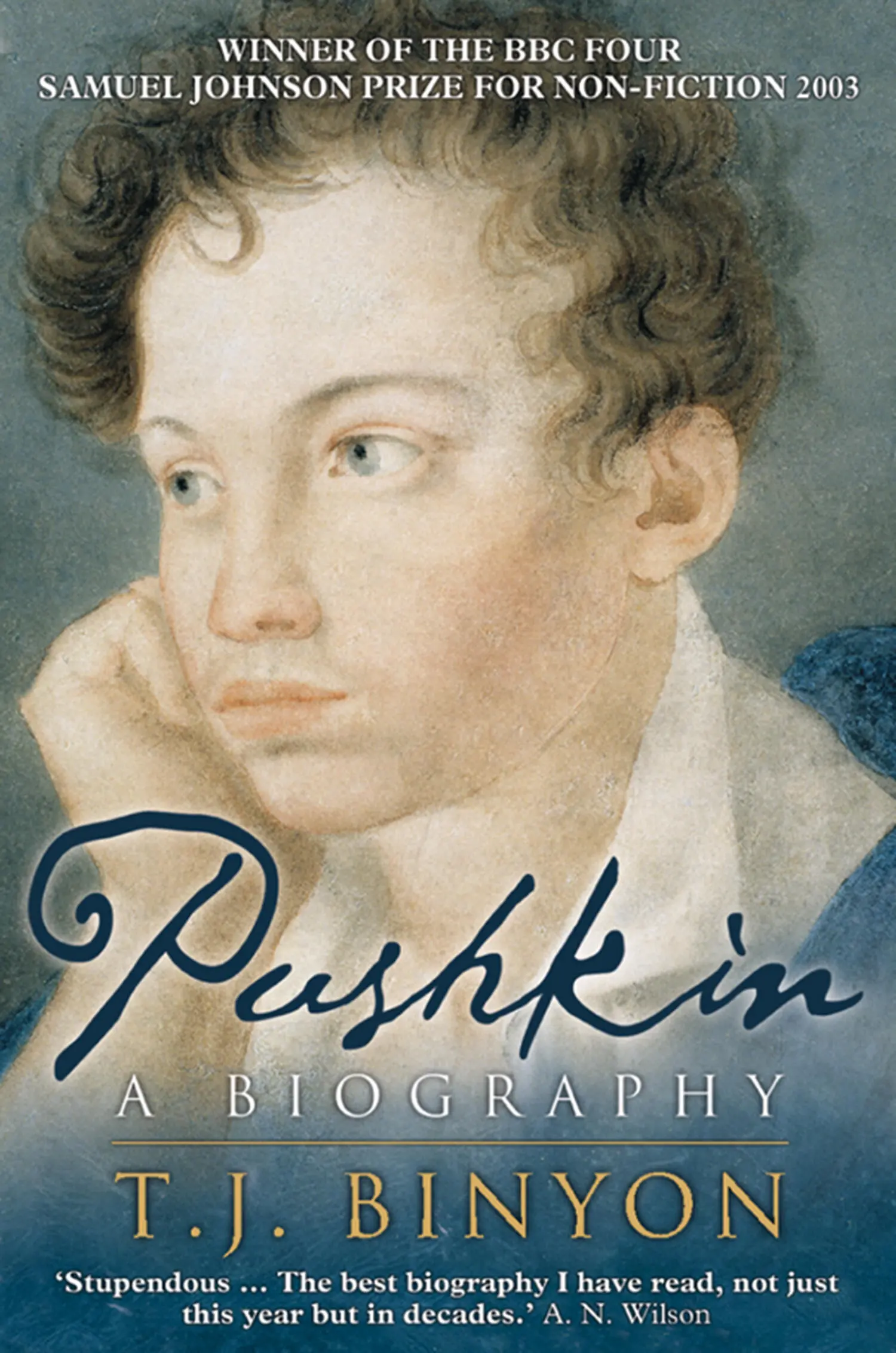
- Название:Pushkin
- Автор:
- Жанр:
- Год:неизвестен
- ISBN:нет данных
- Рейтинг книги:4 / 5. Голосов: 1
-
Избранное:Добавить в избранное
- Отзывы:
-
Ваша оценка:
Pushkin: краткое содержание, описание и аннотация
Предлагаем к чтению аннотацию, описание, краткое содержание или предисловие (зависит от того, что написал сам автор книги «Pushkin»). Если вы не нашли необходимую информацию о книге — напишите в комментариях, мы постараемся отыскать её.
Pushkin — читать онлайн ознакомительный отрывок
Ниже представлен текст книги, разбитый по страницам. Система сохранения места последней прочитанной страницы, позволяет с удобством читать онлайн бесплатно книгу «Pushkin», без необходимости каждый раз заново искать на чём Вы остановились. Поставьте закладку, и сможете в любой момент перейти на страницу, на которой закончили чтение.
Интервал:
Закладка:
While still at the Lycée Pushkin had taken an eager interest in the literary debate, naturally ranging himself on the side of his friends against Shishkov and the Symposium. He learnt of the foundation of Arzamas , and was soon addressing Vyazemsky as âdear Arzamasiteâ, 19 and calling his uncle âthe Nestor of Arzamas â. 20 He already felt himself spiritually to be a member: in âTo Zhukovskyâ (1816), calling on the âsingers, educated/In the happy heresy of Taste and Learningâ, to âstrike down the brazen friends of Ignoranceâ â the Shishkov circle â he signs himself âAn Arzamasiteâ. 21 Shortly after he arrived in St Petersburg he was elected to the society, and given the name of the Cricket. The reality he encountered was rather different from the ideal of âTo Zhukovskyâ: though the Arzamasites were a congenial, convivial set, they were hardly that band of brothers devoted to the cause of art envisaged in the epistle. He arrived, too, at a time when the society was beginning to lose its point. Derzhavin had died in July 1816; the Symposium ceased its existence not long afterwards, and Arzamas , whose whole essence was parody, could, like a reflection in a mirror, hardly remain once the original had disappeared. The last formal meeting of the society was held in the spring of 1818; though some of the members continued to come together informally thereafter, Arzamas had come to an end.
Long after it had ceased to exist it still remained a pleasant memory for Pushkin: âIs your swan-princess with you? Give her the respects of an Arzamas goose,â he wrote to Vyazemsky in 1825. 22 He felt for it, too, something akin to that loyalty inspired by the Lycée â though the feeling was, naturally, far less deep. As a literary group, it was, paradoxically, more important to him before he became a member than subsequently. While he was at the Lycée it represented for him the forces of enlightenment, ranged against those of darkness and ignorance; after his election it became merely a circle of acquaintances, some of whom â Zhukovsky, Vyazemsky, Batyushkov, Aleksandr Turgenev â were already close friends, while others â Bludov, Dashkov, Wiegel, Poletika, and, to a lesser extent, Zhikharev â were to become so. * Indeed, this gathering of diplomats and civil servants, of literary practitioners and dilettantes, represented such a heterogeneous collection of views â ranging from Kavelinâs dogmatic conservatism to Nikolay Turgenevâs radical republicanism â that it could in no way have had an influence, as a whole, on one who was a part of it. But among its members were some of the liveliest minds in Russia at the time, and Pushkin undoubtedly absorbed much from his intercourse with them: particularly, perhaps, from Nikolay Turgenev.
The Turgenev brothers shared an apartment on the Fontanka Embankment, on the top floor of the official residence of Prince A.N. Golitsyn, the Minister of Spiritual Affairs and Education. Aleksandr Turgenev was indolent, easy-going, an intellectual flâneur ; Nikolay energetic, single-minded, with far more radical political views. Pushkin visited them often, to be berated by Aleksandr for his laziness, and urged by Nikolay to abandon the Anacreontic muse of the Lycée and turn to more serious themes. A third, younger brother, Sergey, was at this time with the diplomatic mission attached to the Russian forces of occupation in France. At the beginning of December 1817 he noted in his diary: â[My brothers] write again about Pushkin, as a developing talent. Ah, let them hasten to breathe liberalism into him, and instead of self-lamentation let his first song be: Freedom.â 23 He showed remarkable prescience, for towards the end of the month Pushkin produced âLiberty. An Odeâ. 24
The Turgenevsâ apartment looked out across the canal at the gloomy Mikhailovsky Castle, the scene of the Emperor Paulâs assassination in 1801. According to Wiegel, one of the âhigh-minded young freethinkersâ gathered in the apartment, gazing out at the castle, jokingly suggested it to Pushkin as the subject for a poem. âWith sudden agility he leapt on the large, long table before the window, stretched out, seized pen and paper and, laughing, began to write.â 25 The poem opens with the dismissal of the poetâs former muse, Aphrodite, âthe weak queen of Cytheraâ. In her stead Pushkin invokes âthe proud songstress of Freedomâ to indict the present age: âEverywhere iniquitous Power/In the inspissated gloom of prejudice/Reigns.â The proper society is the state in which âwith sacred Liberty/Powerful Laws are firmly boundâ. The rule of law applies to tyrant and mob alike: the French revolution, an infraction of law by the people, led to the despotism of Napoleon, âthe worldâs horror, natureâs shame,/A reproach on earth to Godâ. Three brilliant stanzas â a vivid contrast to the abstract rhetoric that has gone before â follow. The âpensive poetâ, gazing at midnight on the Mikhailovsky Castle, imagines the assassination of Paul on the night of 11 March 1801:
in ribbons and in stars,
Drunk with wine and hate
The secret assassins come,
Boldness on their face, fear in their heart.
A final stanza, added later, reverts to the preceding style and draws a general conclusion.
Yakov Saburov, one of the hussar officers whom Pushkin frequented in Tsarskoe Selo, later told Pushkinâs biographer, Annenkov, that the poem was known to the emperor, âbut [he] did not find in it cause for punishmentâ. 26 Indeed, the ideas of the poem are those of Kunitsyn, who had told the lycéens, âPreparing to be protectors of the laws, you must learn yourselves first to respect them; for a law, broken by its guardians, loses its sanctity in the eyes of the people,â adding a quotation from the Abbé Raynal, one of the French Encyclopédistes , âLaw is nothing if it is not a sword, which moves indiscriminately above all heads and strikes everything which rises above the level of the horizontal plane in which it moves.â 27 Pushkin echoes this almost verbatim,
grasped by trusty hands
Above the equal heads of citizens
Their sword sweeps without preference.
âLiberty. An Odeâ is Pushkinâs first great mature poem, but is far from being a revolutionary one; it expresses, rather, a conservative liberalism, defending the monarchy, provided that the monarch respects the law that binds him as well as his subjects. Opinion, however, seizing on the poemâs title and ignoring its content, held it to be subversive, and it came to have talismanic significance for the younger generation. Manuscript copies were widely circulated. D.N. Sverbeev, a coeval of Pushkin, then a junior civil servant, read to his colleagues âthis new production of Pushkinâs then desperately liberal museâ. 28 A copy was confiscated on the arrest of a certain Angel Galera in 1824; another was among the âdisloyal writings possessed by officers of the Kiev Grenadier Regimentâ in 1829. Herzen published the ode in London in 1856, but it did not appear in its entirety in Russia until 1906. 29
Pushkinâs other great poem of this period, âThe Countryâ, was written during a second visit to Mikhailovskoe in the summer of 1819. An idyllic description of the countryside and its ability to inspire the poet is followed by an eloquent denunciation of serfdom:
Savage Lordship here, feelingless, lawless,
With violent rod has appropriated
The peasantâs labour, property and time.
Bowed over anotherâs plough, to whips obedient,
Читать дальшеИнтервал:
Закладка:
Похожие книги на «Pushkin»
Представляем Вашему вниманию похожие книги на «Pushkin» списком для выбора. Мы отобрали схожую по названию и смыслу литературу в надежде предоставить читателям больше вариантов отыскать новые, интересные, ещё непрочитанные произведения.







Обсуждение, отзывы о книге «Pushkin» и просто собственные мнения читателей. Оставьте ваши комментарии, напишите, что Вы думаете о произведении, его смысле или главных героях. Укажите что конкретно понравилось, а что нет, и почему Вы так считаете.