T. Binyon - Pushkin
Здесь есть возможность читать онлайн «T. Binyon - Pushkin» — ознакомительный отрывок электронной книги совершенно бесплатно, а после прочтения отрывка купить полную версию. В некоторых случаях можно слушать аудио, скачать через торрент в формате fb2 и присутствует краткое содержание. Жанр: unrecognised, на английском языке. Описание произведения, (предисловие) а так же отзывы посетителей доступны на портале библиотеки ЛибКат.
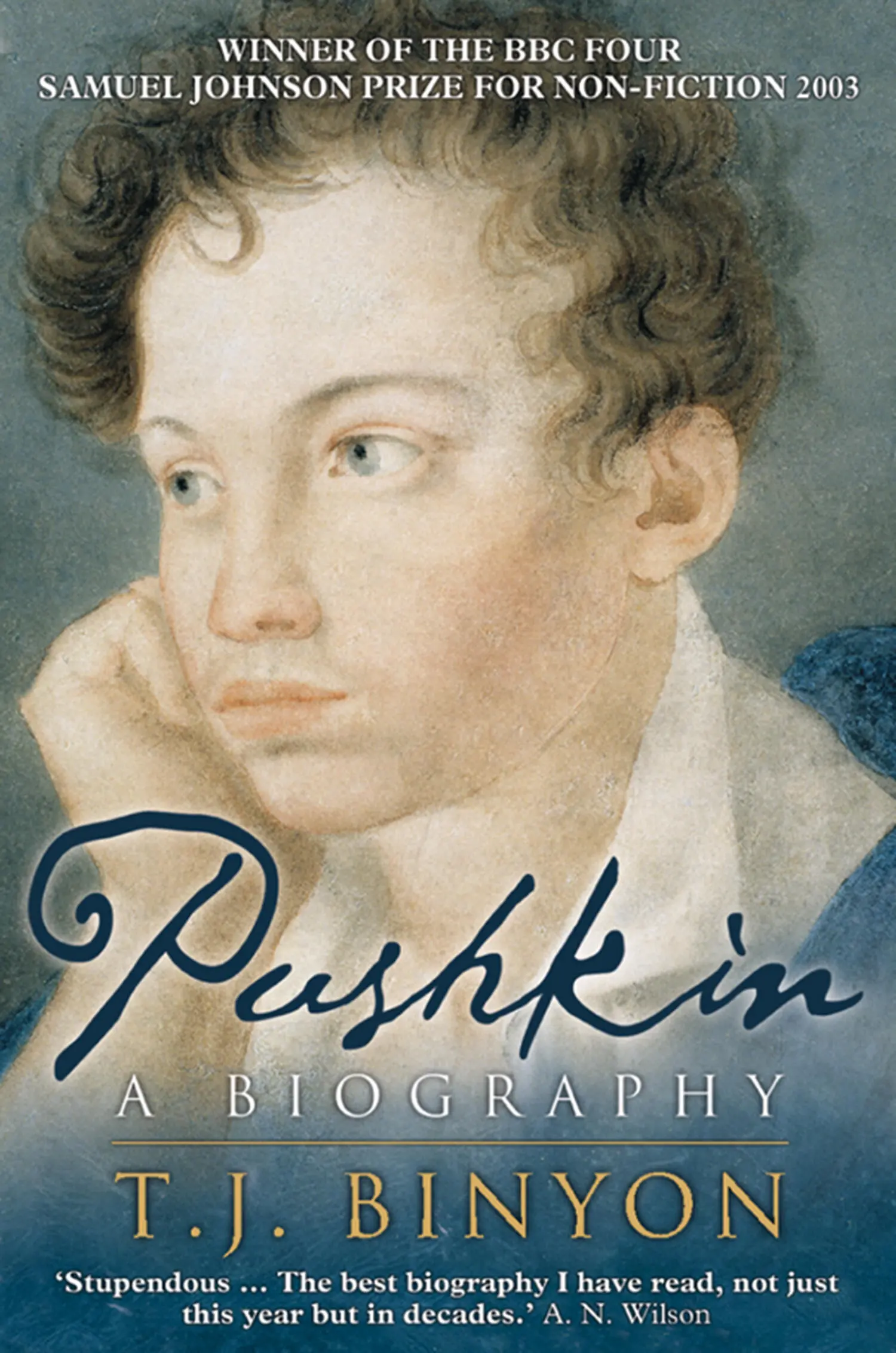
- Название:Pushkin
- Автор:
- Жанр:
- Год:неизвестен
- ISBN:нет данных
- Рейтинг книги:4 / 5. Голосов: 1
-
Избранное:Добавить в избранное
- Отзывы:
-
Ваша оценка:
Pushkin: краткое содержание, описание и аннотация
Предлагаем к чтению аннотацию, описание, краткое содержание или предисловие (зависит от того, что написал сам автор книги «Pushkin»). Если вы не нашли необходимую информацию о книге — напишите в комментариях, мы постараемся отыскать её.
Pushkin — читать онлайн ознакомительный отрывок
Ниже представлен текст книги, разбитый по страницам. Система сохранения места последней прочитанной страницы, позволяет с удобством читать онлайн бесплатно книгу «Pushkin», без необходимости каждый раз заново искать на чём Вы остановились. Поставьте закладку, и сможете в любой момент перейти на страницу, на которой закончили чтение.
Интервал:
Закладка:
Much ink has been spilt in debating the question of the extent of Pushkinâs knowledge of the conspiracy, and of his involvement in it. The simplest answer seems the most correct. A number of the future Decembrists were his close friends, and he was acquainted with many others. He frequented houses in which they held meetings; he shared many of the political views of their programme. Nevertheless, he was never, as far as we know, involved in the conspiracy, never invited to become a member of it, never â consciously â present at a gathering of the conspirators, and, though he had a vague suspicion that something was afoot, never knew what this was.
The clearest evidence of his lack of involvement comes from his closest friend at the Lycée, Pushchin. In the summer of 1817 the latter, then an ensign in the Life Guards Horse Artillery, was recruited into the Union of Salvation. âMy first thought,â he writes, âwas to confide in Pushkin: we always thought alike about the res publica .â But Pushkin was then in Mikhailovskoe. âLater, when I thought of carrying out this idea, I could not bring myself to entrust a secret to him, which was not mine alone, where the slightest carelessness could be fatal to the whole affair. The liveliness of his ardent character, his association with untrustworthy persons, frightened me [â¦] Then, involuntarily, a question occurred to me: why, besides myself, had none of the older members who knew him well considered him? They must have been held back by that which frightened me: his mode of thought was well known, but he was not fully trusted.â * 39
Pushkin was still ignorant of the societyâs existence in November 1820, when a guest on Ekaterina Davydovaâs estate at Kamenka, in the Ukraine. A number of the conspirators were present: Yakushkin, Major-General Mikhail Orlov, his aide-de-camp, Konstantin Okhotnikov, and Vasily Davydov, Ekaterinaâs son. Among the other guests were Vasilyâs elder brother Aleksandr and General Raevsky, half-brother to the Davydovs and soon to become Orlovâs father-in-law. According to Yakushkin, the behaviour of the conspirators aroused Raevskyâs suspicions; becoming aware of this, they resolved to dissipate them by means of a hoax. During the customary discussion after dinner, the arguments for and against the establishment of such a society were rehearsed. Orlov put both sides of the case, Pushkin âheatedly demonstrated all the advantages that a Secret society could bring Russiaâ. When Raevsky too seemed in favour, Yakushkin said to him: âItâs easy for me to prove that you are joking; Iâll put a question to you: if a Secret society now already existed, you certainly wouldnât join it, would you?â
âOn the contrary, I certainly would join it,â he replied. âThen give me your hand,â I said. He stretched out his hand to me, and I burst out laughing, saying to him: âOf course, all this was only a joke.â Everyone else laughed, except for A.L. Davydov, the majestic cuckold, â who was asleep, and Pushkin, who was very agitated; before this he had convinced himself that a Secret society already existed, or would immediately begin to exist, and he would be a member; but when he realized that the result was only a joke, he got up, flushed, and said with tears in his eyes: âI have never been so unhappy as now; I already saw my life ennobled and a sublime goal before me, and all this was only a malicious joke.â 40
Considered objectively, it is difficult to imagine that any serious conspirator belonging to a secret society which had the aim of overthrowing an absolute monarchy would wish to enlist a crackbrained, giddy, intemperate and dissolute young rake, whose heart and sentiments â as his poetry demonstrated â might have been in the right place, but whose reason all too often seemed absent. How could any conspiracy remain secret which had as one of its members someone who, in a theatre swarming with police spies, paid and amateur, was capable of parading round the stalls carrying a portrait of the French saddler, Louvel, who assassinated Charles, duc de Berry, in 1820, inscribed with the words âA Lesson to Tsarsâ? 41 Or who, again in the theatre, could shout out âNow is the safest time â the ice is coming down the Nevaâ? 42 â meaning that, since the pontoon bridges across the river, removed when it froze, could not yet be re-established, a revolt would not have to contend with the troops of the fortress.
In Rome he would have been Brutus, in Athens Pericles,
But here he is â a hussar officer, 43
Pushkin wrote of Petr Chaadaev, whom he first met at the Karamzins in Tsarskoe Selo in 1816. â Le beau Tchadaefâ, as his fellow officers called him, 44 had a pale complexion, grey-blue eyes and a noble forehead. He was always dressed with modish elegance: Eugene Onegin is dubbed âa second Chaadaevâ, for being in his dress âa pedant/And what we used to call a dandyâ (I, xxv). Yet at the same time he was curiously asexual: no trace of a relationship is to be discovered in his life. Wiegel, who disliked him intensely, attributes this to narcissism: âNo one ever noticed in him tender feelings towards the fair sex: his heart was too overflowing with adoration for the idol which he had created from himself.â 45 In December 1817 he moved to St Petersburg on his appointment as aide-de-camp to General Vasilchikov. Extremely learned, and with a brilliant mind â he was described by General Orlovâs wife as âthe most striking and most brilliant young man in St Petersburgâ 46 â he seemed on the threshold of a dazzling military career, and was widely expected to become aide-de-camp to Alexander himself. But in February 1821 he suddenly and inexplicably resigned from the army and, after undergoing a spiritual crisis so severe as to affect his health, went abroad in 1823, intending to live in Europe for the rest of his life. He was a Mason, and a member of the Society of Welfare, but played no active part in the Decembrist conspiracy, and later severely condemned the revolt of 1825. However, there is no doubt that, while at Tsarskoe Selo and St Petersburg, he was âdeeply and essentially linked with Russian liberalism and radicalismâ, 47 sharing the ideals of the future Decembrists.
In St Petersburg Chaadaev lived in Demouthâs Hotel, one of the most fashionable in the capital, on the Moika, but a stoneâs throw from the Nevsky. Here, according to Wiegel, he received visitors, âsitting on a dais, beneath two laurel bushes in tubs; to the right was a portrait of Napoleon, to the left of Byron, and his own, on which he was depicted as a genius in chains, oppositeâ. 48 Pushkin was a constant visitor, abandoning in Chaadaevâs presence his adolescent antics and behaving with sober seriousness. Chaadaevâs âinfluence on Pushkin was astonishingâ, Saburov â who knew both well â remarked. âHe forced him to think. Pushkinâs French education was counteracted by Chaadaev, who already knew Locke and substituted analysis for frivolity [â¦] He thought about that which Pushkin had never thought about.â 49 He not only introduced logic into Pushkinâs thought, he also widened his literary horizons. Pushkin was to be deeply grateful for Chaadaevâs sympathy and support in the first months of 1820, when he was both the victim of malicious slander, and being threatened by exile to the Solovetsky monastery on the White Sea for his writings. âO devoted friend,â he wrote in 1821, âPenetrating to the depths of my soul with your severe gaze,/You invigorated it with counsel or reproof.â 50 To express his gratitude, he gave Chaadaev a ring: engraved on the inner surface was the inscription âSub rosa 1820â. *
Читать дальшеИнтервал:
Закладка:
Похожие книги на «Pushkin»
Представляем Вашему вниманию похожие книги на «Pushkin» списком для выбора. Мы отобрали схожую по названию и смыслу литературу в надежде предоставить читателям больше вариантов отыскать новые, интересные, ещё непрочитанные произведения.










Обсуждение, отзывы о книге «Pushkin» и просто собственные мнения читателей. Оставьте ваши комментарии, напишите, что Вы думаете о произведении, его смысле или главных героях. Укажите что конкретно понравилось, а что нет, и почему Вы так считаете.