T. Binyon - Pushkin
Здесь есть возможность читать онлайн «T. Binyon - Pushkin» — ознакомительный отрывок электронной книги совершенно бесплатно, а после прочтения отрывка купить полную версию. В некоторых случаях можно слушать аудио, скачать через торрент в формате fb2 и присутствует краткое содержание. Жанр: unrecognised, на английском языке. Описание произведения, (предисловие) а так же отзывы посетителей доступны на портале библиотеки ЛибКат.
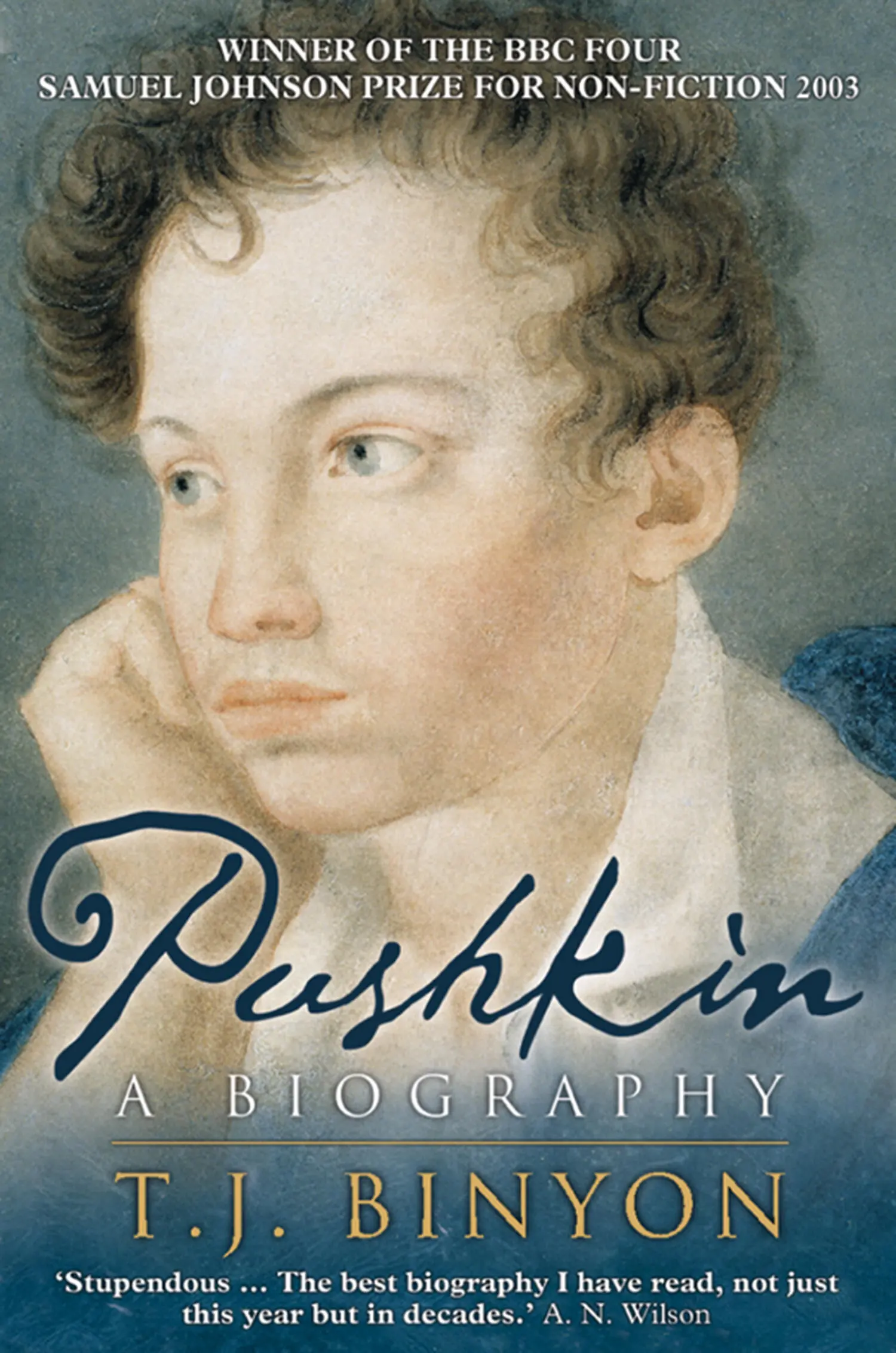
- Название:Pushkin
- Автор:
- Жанр:
- Год:неизвестен
- ISBN:нет данных
- Рейтинг книги:4 / 5. Голосов: 1
-
Избранное:Добавить в избранное
- Отзывы:
-
Ваша оценка:
Pushkin: краткое содержание, описание и аннотация
Предлагаем к чтению аннотацию, описание, краткое содержание или предисловие (зависит от того, что написал сам автор книги «Pushkin»). Если вы не нашли необходимую информацию о книге — напишите в комментариях, мы постараемся отыскать её.
Pushkin — читать онлайн ознакомительный отрывок
Ниже представлен текст книги, разбитый по страницам. Система сохранения места последней прочитанной страницы, позволяет с удобством читать онлайн бесплатно книгу «Pushkin», без необходимости каждый раз заново искать на чём Вы остановились. Поставьте закладку, и сможете в любой момент перейти на страницу, на которой закончили чтение.
Интервал:
Закладка:
Orlov in bed with Istomina
Lay in squalid nudity.
In the heated affair the inconstant general
Had not distinguished himself.
Not intending to insult her dear one,
Laïs took a microscope
And says: âLet me see,
My sweet, what you fucked me with.â 7
Among other new acquaintances a colleague at the Foreign Ministry, Nikolay Krivtsov, was a congenial companion. An officer in the Life Guards Jägers, Krivtsov had lost a leg at the battle of Kulm in 1813, but in England had acquired a cork replacement, so well fashioned as to allow him to dance. Pushkin saw much of him before he was posted to London in March 1818. Bidding him farewell, he gave him a copy of Voltaireâs La Pucelle dâOrléans â one of his own favourite works â inscribed âTo a friend from a friendâ, 8 accompanied by a poem:
When wilt thou press again the hand
Which bestows on thee
For the dull journey and on parting
The Holy Bible of the Charites? * 9
The two shared anti-religious, humanist views: âKrivtsov continues to corrupt Pushkin even from London,â Turgenev told Vyazemsky, who had been posted to Warsaw, âand has sent him atheistic verses from pious England.â 10
At this time he got to know two of Levâs friends: Pavel Nashchokin and Sergey Sobolevsky, the illegitimate son of a well-to-do landowner. Nashchokin was extremely rich, and was an inveterate gambler. His addiction later reduced him to poverty. Though he lived with his mother, he also kept a bachelor apartment in a house on the Fontanka, where his friends, either alone or with a companion, could spend the night. Sobolevsky, tall, and inclined to portliness due to a fondness for good food and drink, was a cynical and witty companion with a flair for turning epigrams. They were to be Pushkinâs closest non-literary friends; perhaps, indeed, his most intimate and trusted friends during the last decade of his life.
Of his fellows at the Lycée Delvig had taken lodgings in Troitsky Lane, which he shared with Yakovlev and the latterâs brother Pavel. Pushkin called here almost daily; together they frequented common eating-houses, or, like the London Mohocks, assaulted the capitalâs policemen. Küchelbecker, like Pushkin, had joined the Foreign Ministry, eking out the meagre stipend by teaching at the school for sons of the nobility where Lev and Sobolevsky were pupils. He religiously attended Zhukovskyâs Saturday literary soirées in the latterâs apartment on Ekateringofsky Prospect â Pushkin and Delvig were less regular â and often called at other times to read Zhukovsky his verse. Zhukovsky proffered an original excuse for not attending one social function: âMy stomach had been upset since the previous evening; in addition Küchelbecker came, so I remained at home,â he explained. 11 Vastly amused by this combination of accidents, Pushkin composed a short verse:
I over-ate at supper,
And Yakov mistakenly locked the door, â
So, my friends, I felt
Both küchelbeckerish and sick! 12
Insulted, Küchelbecker issued a challenge. They met in the Volkovo cemetery, to the south-east of the city. Delvig, as Küchelbeckerâs second, stood to the left of his principal. Küchelbecker was to have the first shot. When he began to aim, Pushkin shouted: âDelvig! Stand where I am, itâs safer here.â Incensed, Küchelbecker made a half-turn, his pistol went off and blew a hole in Delvigâs hat. Pushkin refused to fire, and the quarrel was made up. 13
He seemed determined to acquire a reputation for belligerence equal to that of his acquaintance Rufin Dorokhov â the model for Dolokhov in War and Peace â an ensign in a carabinier regiment noted for his uncontrolled temper and violent behaviour. At a performance of the opera The Swiss Family at the Bolshoy Theatre on 20 December 1818 he began to hiss one of the actresses. His neighbour, who admired her performance, objected; words were spoken, with Pushkin using âindecent languageâ. Ivan Gorgoli, the head of the St Petersburg police, who was present, intervened. âYouâre quarrelling, Pushkin! Shouting!â he said. âI would have slapped his face,â Pushkin replied, âand only refrained, lest the actors should take it for applause!â 14
Almost exactly a year later the incident was repeated when Pushkin, bored by a play, interrupted it with hisses and cat-calls. After the performance a Major Denisevich, who had been sitting next to him, took him to task in the corridor, waving his finger at him. Outraged by the gesture, Pushkin demanded Denisevichâs address, and appointed to meet him at eight the following morning. Denisevich was sharing the quarters of Ivan Lazhechnikov, then aide-de-camp to General Count Ostermann-Tolstoy, in the generalâs house between the English Embankment and Galernaya Street. At a quarter to eight Pushkin, accompanied by two cavalry officers, appeared and was met by Lazhechnikov. The latter, who was to be acclaimed as âthe Russian Walter Scottâ for his historical novels The Last Page (1831â3) and The Ice Palace (1835), takes up the story in a letter to Pushkin written eleven years later: âDo you remember a morning in Count Ostermannâs house on the Galernaya, with you were two fine young guardsmen, giants in size and spirit, the miserable figure of the Little Russian [Denisevich], who to your question: had you come in time? answered, puffing himself up like a turkey-cock, that he had summoned you not for a chivalrous affair of honour, but to give you a lesson on how to conduct yourself in the theatre and that it was unseemly for a major to fight with a civilian; do you remember the tiny aide-de-camp, laughing heartily at the scene and advising you not to waste honest powder on such vermin and the spur of irony on the skin of an ass. That baby aide-de-camp was your most humble servant.â 15 No wonder that Karamzinâs wife Ekaterina should write to her half-brother, Vyazemsky, in March 1820: âMr Pushkin has duels every day; thank God, not fatal, since the opponents always remain unharmedâ, 16 or that Pushkin, in preparation for an occasion when cold steel might be preferred to honest powder, should have attended the school set up in St Petersburg by the famous French fencing master Augustin Grisier. *
In St Petersburg Pushkin had been reunited with Nikita Kozlov, a serf from Sergey Lvovichâs estate at Boldino, who had looked after him as a child. Nikita became his body-servant, and remained with him until his death. Tall, good-looking, with reddish side-whiskers, he married Nadezhda, Arina Rodionovnaâs daughter. Like his master, he was fond of drink. Once, when in liquor, he quarrelled with one of Korffâs servants. Hearing the row, Korff came out and set about Nikita with a stick. Pushkin, feeling that he had been insulted in the person of his servant, called Korff out. Korff refused the challenge with a note: âI do not accept your challenge, not because you are Pushkin, but because I am not Küchelbecker.â 17 Pushkinâs way of life aroused a puritanical disgust in Korff:
Beginning while still at the Lycée, he later, in society, abandoned himself to every kind of debauchery and spent days and nights in an uninterrupted succession of bacchanals and orgies, with the most noted and inveterate rakes of the time. It is astonishing how his health and his very talent could withstand such a way of life, with which were naturally associated frequent venereal sicknesses, bringing him at times to the brink of the grave [â¦] Eternally without a copeck, eternally in debt, sometimes even without a decent frock-coat, with endless scandals, frequent duels, closely acquainted with every tavern-keeper, whore and trollop, Pushkin represented a type of the filthiest depravity. 18
Читать дальшеИнтервал:
Закладка:
Похожие книги на «Pushkin»
Представляем Вашему вниманию похожие книги на «Pushkin» списком для выбора. Мы отобрали схожую по названию и смыслу литературу в надежде предоставить читателям больше вариантов отыскать новые, интересные, ещё непрочитанные произведения.








Обсуждение, отзывы о книге «Pushkin» и просто собственные мнения читателей. Оставьте ваши комментарии, напишите, что Вы думаете о произведении, его смысле или главных героях. Укажите что конкретно понравилось, а что нет, и почему Вы так считаете.