T. Binyon - Pushkin
Здесь есть возможность читать онлайн «T. Binyon - Pushkin» — ознакомительный отрывок электронной книги совершенно бесплатно, а после прочтения отрывка купить полную версию. В некоторых случаях можно слушать аудио, скачать через торрент в формате fb2 и присутствует краткое содержание. Жанр: unrecognised, на английском языке. Описание произведения, (предисловие) а так же отзывы посетителей доступны на портале библиотеки ЛибКат.
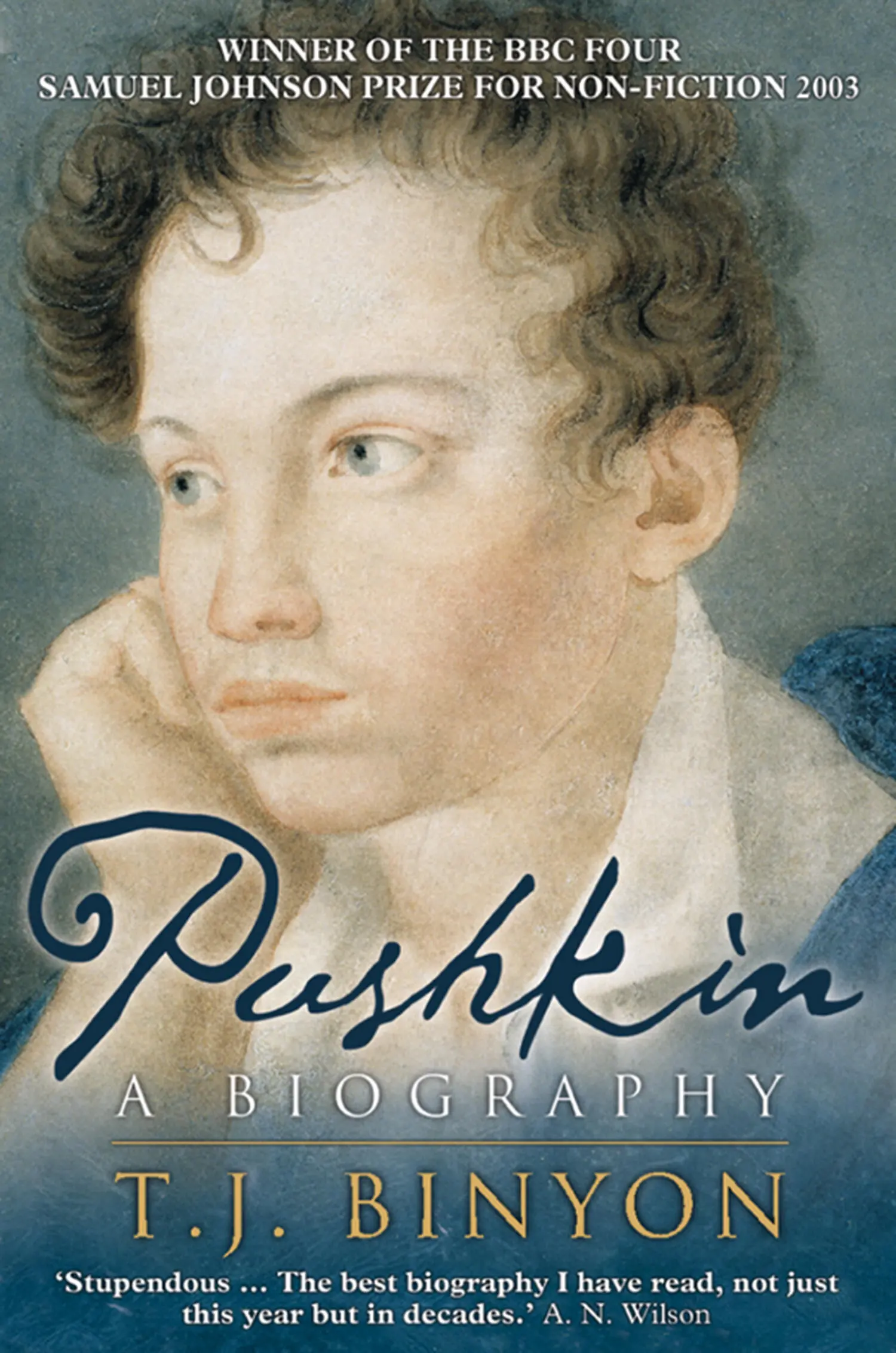
- Название:Pushkin
- Автор:
- Жанр:
- Год:неизвестен
- ISBN:нет данных
- Рейтинг книги:4 / 5. Голосов: 1
-
Избранное:Добавить в избранное
- Отзывы:
-
Ваша оценка:
Pushkin: краткое содержание, описание и аннотация
Предлагаем к чтению аннотацию, описание, краткое содержание или предисловие (зависит от того, что написал сам автор книги «Pushkin»). Если вы не нашли необходимую информацию о книге — напишите в комментариях, мы постараемся отыскать её.
Pushkin — читать онлайн ознакомительный отрывок
Ниже представлен текст книги, разбитый по страницам. Система сохранения места последней прочитанной страницы, позволяет с удобством читать онлайн бесплатно книгу «Pushkin», без необходимости каждый раз заново искать на чём Вы остановились. Поставьте закладку, и сможете в любой момент перейти на страницу, на которой закончили чтение.
Интервал:
Закладка:
The Bolshoy Theatre was huge. Behind the immense colonnade of its portico was a double ramp, enabling carriages to be driven up to the theatre entrance. Immediately inside were a succession of foyers: these, however, were only used when a ball was held at the theatre; they remained empty during the intervals, the audience preferring to circulate in the theatre itself. This consisted of a parterre, above which rose five tiers of boxes and galleries. The vast stage could accommodate several hundred performers at once, and was equipped with the most modern machinery for the production of spectacular effects, which were particularly appreciated by the audience. Performances took place every evening, with the exception of Saturday, * each performance usually comprising two works: a ballet and a comedy, for example, or an opera and a tragedy.
âBeneath the shade of the coulisses/My youthful days were spent,â Pushkin writes in Eugene Onegin (I, xviii). Only unforeseen circumstances could keep him away. When, at the end of October 1819, he arrived late for a performance of the âmagical balletâ Hen-Zi and Tao staged by the French ballet master Charles Didelot, it was with the excuse that an exciting event in Tsarskoe Selo had delayed his return. A bear had broken its chain and escaped into the palace gardens where it could have attacked the emperor, had he chanced to be passing. He ended the anecdote with the regretful quip: âWhen a good fellow does turn up, heâs only a bear!â 26
In August 1817, during an interval at the Bolshoy, Pushkin was introduced to Pavel Katenin, an officer in the Preobrazhensky Life Guards. Kateninâs regiment left for Moscow shortly afterwards, but when he returned the following summer, Pushkin came to see him: âI have come to you as Diogenes came to Antisthenes,â he said. âBeat me, but teach me.â 27 âRound-faced, with full, red cheeks, like a toy cherub from a Palm Sunday fairâ, 28 Katenin was a poet, playwright, critic and literary theorist, closer in his views to the Archaic school than that of Karamzin; influential in the theatre, his chief service was to introduce Pushkin into theatrical circles. In early December 1818 he took him to see Prince Shakhovskoy, who lived with his mistress, the comic actress Ekaterina Ezhova, on the upper floor â known as âthe garretâ â of a house in Srednyaya Podyacheskaya Street. Extraordinarily ugly â he was immensely stout, with a huge, beak-like nose â Shakhovskoy was not only a playwright, but also the repertoire director of the St Petersburg theatres, instructing the performers in acting and declamation. His methods, however, were not to the taste of all. âHis comic pronunciation with its lisp, his squeaky voice, his sobs, his recitatives, his wails, were all intolerable,â one actress commented. âAt the same time he showed one at which line one had to put oneâs weight on oneâs right foot, with oneâs left in the rear, and when one should sway on to oneâs left, stretching out the right, which to his mind had a majestic effect. One line had to be said in a whisper, and, after a âpauseâ, making an âindicationâ with both hands in the direction of the actor facing one, the last line of the monologue had to be cried out in a rapid gabble.â 29 He was, however, extremely charming, and Pushkin, walking back with Katenin after the first meeting, exclaimed: âDo you know that at bottom heâs a very good fellow?â, and expressed the hope that he did not know of âthose schoolboyâs scribblingsâ: an epigram on him Pushkin had written at the Lycée. 30
Shakhovskoy entertained most evenings after the theatre, and Pushkin became a constant visitor to these Bohemian revels, remembering one occasion as âone of the best evenings of my lifeâ. 31 Vasily Pushkin was saddened when he heard of the visits; he remained true to the hostile view of Shakhovskoy taken by Arzamas. âShakhovskoy is still in Moscow,â he wrote to Vyazemsky in April 1819. âHe told me that my nephew visited him practically every day. I said nothing, but only sighed quietly.â 32 The main attraction of the garret lay perhaps not so much in the personality of the host, as in the presence of young actresses, in whose careers Shakhovskoy took a paternal interest, assisting them not only by instruction in elocution, but also by bringing them together with rich young officers. âHe is really a good chap, a tolerable author and an excellent pander,â Pushkin commented to Vyazemsky. 33 In 1825 the playwright Griboedov, another of Pushkinâs colleagues at the Foreign Office, wrote to a friend: âFor a long time I lived in seclusion from all, then suddenly had an urge to go out into the world, and where should I go, if not to Shakhovskoyâs? There at least oneâs bold hand can rove over the swanâs down of sweet bosoms etc.â 34
At the garret Pushkin met the nineteen-year-old actress Elena Sosnitskaya, to whose album he contributed a quatrain:
With coldness of heart you have contrived to unite
The wondrous heat of captivating eyes.
He who loves you is, of course, a fool;
But he who loves you not is a hundred times more foolish. 35
âIn my youth, when she really was the beautiful Helen,â he later remarked, âI nearly fell into her net, but came to my senses and got off with a poem.â 36 He was also seduced by the more mature charms of the singer Nimfodora Semenova, then thirty-one, more renowned for her appearance than her voice: âI would wish to be, Semenova, your coverlet,/Or the dog that sleeps upon your bed,â he sighed. 37 More serious was his infatuation â despite the fact that she was thirteen years his senior â with Nimfodoraâs elder sister, the tragic actress Ekaterina Semenova. The essay âMy Remarks on the Russian Theatreâ, composed in 1820, though purporting to be a general survey of the state of the theatre, is merely an excuse for praising Semenova. âSpeaking of Russian tragedy, one speaks of Semenova and, perhaps, only of her. Gifted with talent, beauty, and a lively and true feeling, she formed herself [â¦] Semenova has no rival [â¦] she remains the autocratic queen of the tragic stage.â 38 He bestowed the manuscript on her. Somewhat unfeelingly she immediately handed it on to her dramatic mentor, Gnedich, who noted on it: âThis piece was written by A. Push-kin, when he was pursuing, unsuccessfully, Semenova, who gave it to me then.â 39
Semenova had, however, a stage rival: the seventeen-year-old Aleksandra Kolosova, who made her debut at the Bolshoy on 16 December 1818 as Antigone in Ozerovâs tragedy Oedipus in Athens. The following Easter Pushkin, who had admired her demure beauty at the Good Friday service in a church near the Bolshoy, made her acquaintance. But he naturally took Semenovaâs side in the rivalry, all the more as he fancied Kolosova had slighted his attentions: she should âoccupy herself less with aide-de-camps of his imperial majesty and more with her rolesâ. âAll fell asleep,â he added, at a performance of Racineâs Esther (translated by Katenin), on 8 December, in which she took the title role. 40 âEverything in Esther captivates usâ begins an epigram; her speech, her gait, her hair, voice, hand, brows, and âher enormous feet!â 41
When Eugene enters the theatre Evdokiya Istomina, the great beauty among the ballet-dancers, is on the stage:
Brilliant, half-ethereal,
Obedient to the violinâs magic bow,
Surrounded by a crowd of nymphs,
Stands Istomina; she
Touching the floor with one foot,
Slowly gyrates the other,
Читать дальшеИнтервал:
Закладка:
Похожие книги на «Pushkin»
Представляем Вашему вниманию похожие книги на «Pushkin» списком для выбора. Мы отобрали схожую по названию и смыслу литературу в надежде предоставить читателям больше вариантов отыскать новые, интересные, ещё непрочитанные произведения.











Обсуждение, отзывы о книге «Pushkin» и просто собственные мнения читателей. Оставьте ваши комментарии, напишите, что Вы думаете о произведении, его смысле или главных героях. Укажите что конкретно понравилось, а что нет, и почему Вы так считаете.