T. Binyon - Pushkin
Здесь есть возможность читать онлайн «T. Binyon - Pushkin» — ознакомительный отрывок электронной книги совершенно бесплатно, а после прочтения отрывка купить полную версию. В некоторых случаях можно слушать аудио, скачать через торрент в формате fb2 и присутствует краткое содержание. Жанр: unrecognised, на английском языке. Описание произведения, (предисловие) а так же отзывы посетителей доступны на портале библиотеки ЛибКат.
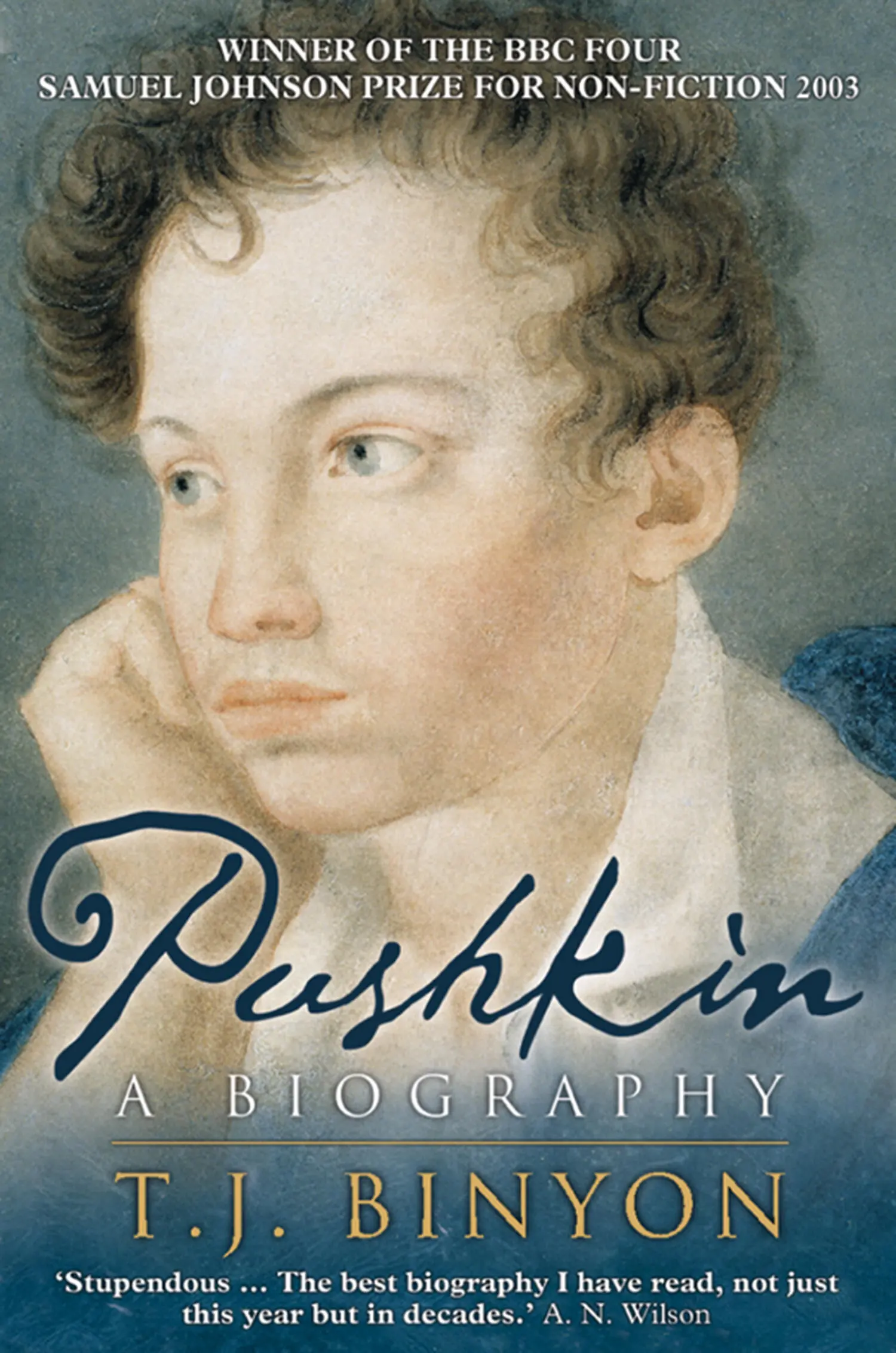
- Название:Pushkin
- Автор:
- Жанр:
- Год:неизвестен
- ISBN:нет данных
- Рейтинг книги:4 / 5. Голосов: 1
-
Избранное:Добавить в избранное
- Отзывы:
-
Ваша оценка:
Pushkin: краткое содержание, описание и аннотация
Предлагаем к чтению аннотацию, описание, краткое содержание или предисловие (зависит от того, что написал сам автор книги «Pushkin»). Если вы не нашли необходимую информацию о книге — напишите в комментариях, мы постараемся отыскать её.
Pushkin — читать онлайн ознакомительный отрывок
Ниже представлен текст книги, разбитый по страницам. Система сохранения места последней прочитанной страницы, позволяет с удобством читать онлайн бесплатно книгу «Pushkin», без необходимости каждый раз заново искать на чём Вы остановились. Поставьте закладку, и сможете в любой момент перейти на страницу, на которой закончили чтение.
Интервал:
Закладка:
And suddenly jumps, and suddenly flies,
Flies, like fluff from Aeolusâs lips;
Now bends, now straightens,
And with one quick foot the other beats.
(I, xx)
Pushkin pursued her too, but with less zeal than Semenova: he was only one of a crowd of admirers. An amusing sketch, executed by Oleninâs son, Aleksey, shows a scene at Priyutino: a dog, with the head and neck of the dark-haired Istomina, is surrounded by a host of dog admirers with the heads of Pushkin, Gnedich, Krylov and others. 42
Another visitor to Shakhovskoyâs garret was Nikita Vsevolozhsky, Pushkinâs coeval, a passionate theatre-goer, âthe best of the momentary friends of my momentary youthâ. * 43 He was the son of Vsevolod Vsevolozhsky, known, for his wealth, as âthe Croesus of St Petersburgâ, who, after the death of his wife in 1810, had caused a long-lasting scandal in society by taking to live with him a married woman, Princess Ekaterina Khovanskaya. The injured husband, Petr Khovansky, complained publicly of the insult done to him, and went so far as to petition the emperor for the return of his wife, but without success. In the end, financially ruined, he was forced to accept Vsevolozhskyâs charity, and lived with the family until his death. To complicate the situation further, Nikita Vsevolozhsky later married Khovanskyâs daughter, Princess Varvara. Pushkin, intrigued by the family history, in 1834â5 planned to incorporate it in a projected novel entitled A Russian Pelham. Vsevolozhsky, who received a large income from his father, had an apartment near the Bolshoy and a mistress, the ballet-dancer Evdokiya Ovoshnikova. âYou remember Pushkin,â runs a letter of 1824, âPushkin, who sobered you up on Good Friday and led you by the hand to the church of the theatre management so that you could pray to the Lord God and gaze to your heartâs content at Mme Ovoshnikova.â 44
In March 1819 Vsevolozhsky set up a small theatrical-literary society among his friends. It met fortnightly, in a room at his apartment, and became known as the Green Lamp after the colour of the lamp-shade. Besides Pushkin and Vsevolozhsky the members included Delvig, Nikolay Gnedich, Nikitaâs elder brother, Aleksandr, Fedor Glinka, Arkady Rodzyanko, a lieutenant in the Life Guards Jägers, and a poet whose work is an odd mixture of high-minded poems on civic themes and pornographic verse: Pushkin later dubbed him âthe Piron of the Ukraineâ 45 (a reference to the seventeenth-century French poet Alexis Piron, author of the licentious Ode to Priapus ); and another âmomentary friendâ of this period, Pavel Mansurov, an ensign in the Life Guards Jäger Horse, who, after his marriage to Princess Ekaterina Khovanskaya, became Vsevolozhskyâs brother-in-law. â
The tone of Pushkinâs relationship with Mansurov â and hence with most of the Green Lampâs members â is conveyed by a verse epistle in which Pushkin urges his âbosom friendâ to persevere in his pursuit of the young ballerina Mariya Krylova, then still a pupil at the Theatre Academy, for
soon with happy hand
She will throw off the school uniform,
Will lie down before you on the velvet
And will spread her legs; 46
and by a letter written to Mansurov after the latter had been posted to Novgorod province:
Are you well, my joy; are you enjoying yourself, my delight â do you remember us, your friends (of the male sex) ⦠We have not forgotten you and at 1/2 past seven every day in the theatre we remember you with applause and sighs â and say: our darling Pavel! What is he doing now in great Novgorod? Envying us â and weeping about Krylova (with the lower orifice, naturally). Each morning the winged maiden * flies to rehearsal past our Nikitaâs windows, as before telescopes rise to her and pricks too â but alas ⦠you cannot see her, she cannot see you. Letâs abandon elegies, my friend. Iâll tell you about us in historical fashion. Everything is as before; the champagne, thank God, is healthy â the actresses too â the one is drunk, the others are fucked â amen, amen. Thatâs how it ought to be. Yurevâs clap is cured, thank God â Iâm developing a small case [â¦] Tolstoy is ill â I wonât say with what â as it is I already have too much clap in my letter. The Green Lampâs wick needs trimming â it might go out â and that would be a pity â there is oil (i.e. our friendâs champagne). 47
The note struck here suggests that the Green Lamp was a Russian version of the Hell-fire Club. This was certainly the view taken by earlier biographers of Pushkin, Annenkov, for example, writing: âResearches and investigations into this group revealed that it ⦠consisted of nothing more than an orgiastic society.â 48 Unfortunately, the reality was somewhat less than orgiastic. Though no doubt a good deal of champagne and other wines was consumed during and after the meetings â Küchelbecker puritanically refused to join, âon account of the intemperance in the use of drink, which apparently prevailed thereâ 49 â and the younger members were in constant pursuit of actresses and ballerinas, the actual proceedings of the society were of a more serious nature.
One of the policies of the Supreme Council of the Union of Welfare was to âset up private societies. These, directed by one or two members of the Union, whose existence was not revealed to the societies, did not form part of the Union. No political aim was intended for them, and the only benefit that was hoped for was that, guided by their founders or heads, they could, especially through their activity in literature, art and the like, further the achievement of the aim of the Supreme Council.â 50 Besides Trubetskoy, three other members of the society were Decembrists: Tolstoy, the usual president at its meetings, Glinka and Tokarev; and there is no doubt that under their direction the Green Lamp became a society of this type. Its name, fortuitously chosen, came to have emblematic significance; Tolstoy, in his deposition to the Committee of Investigation in 1826, remarked that it âconcealed an ambiguous meaning and the motto of the society consisted of the words: Light and Hope ; moreover rings were also made on which a lamp was engraved; each member was obliged to wear one of these rings.â 51 Pushkin used his to seal his letter to Mansurov. Rodzyanko later remarked that at each meeting âwere read verses against the emperor and against the governmentâ, 52 and Tolstoy speaks of âsome republican verses and other fragmentsâ. 53 But it was never a political society with a definite programme and specific aims. It was, however, a secret society, in that its existence had not been officially sanctioned, and its members were hence to some extent at risk, given the climate of the time: a fact which brought about its dissolution at the end of 1820.
The meetings usually opened with a review, hastily written by Barkov, of the theatre production its members had witnessed that evening. Then followed contributions from those present. On 17 April 1819, for example, Delvig read his poems âFannyâ â addressed to a prostitute he and Pushkin frequented â and âTo a Childâ; Ulybyshev followed with a political article; a fable by Zhadovsky, two poems by Dolgorukov, and one by Tolstoy ended the proceedings. Only two contributions by Pushkin are listed in the â incomplete â records of the society. Of these the more interesting â and the better poem â is the verse epistle to Vsevolozhsky on the latterâs departure for Moscow, read on 27 November 1819. Urging his friend to avoid high society there, he imagines a far more congenial scene:
Читать дальшеИнтервал:
Закладка:
Похожие книги на «Pushkin»
Представляем Вашему вниманию похожие книги на «Pushkin» списком для выбора. Мы отобрали схожую по названию и смыслу литературу в надежде предоставить читателям больше вариантов отыскать новые, интересные, ещё непрочитанные произведения.





Обсуждение, отзывы о книге «Pushkin» и просто собственные мнения читателей. Оставьте ваши комментарии, напишите, что Вы думаете о произведении, его смысле или главных героях. Укажите что конкретно понравилось, а что нет, и почему Вы так считаете.