T. Binyon - Pushkin
Здесь есть возможность читать онлайн «T. Binyon - Pushkin» — ознакомительный отрывок электронной книги совершенно бесплатно, а после прочтения отрывка купить полную версию. В некоторых случаях можно слушать аудио, скачать через торрент в формате fb2 и присутствует краткое содержание. Жанр: unrecognised, на английском языке. Описание произведения, (предисловие) а так же отзывы посетителей доступны на портале библиотеки ЛибКат.
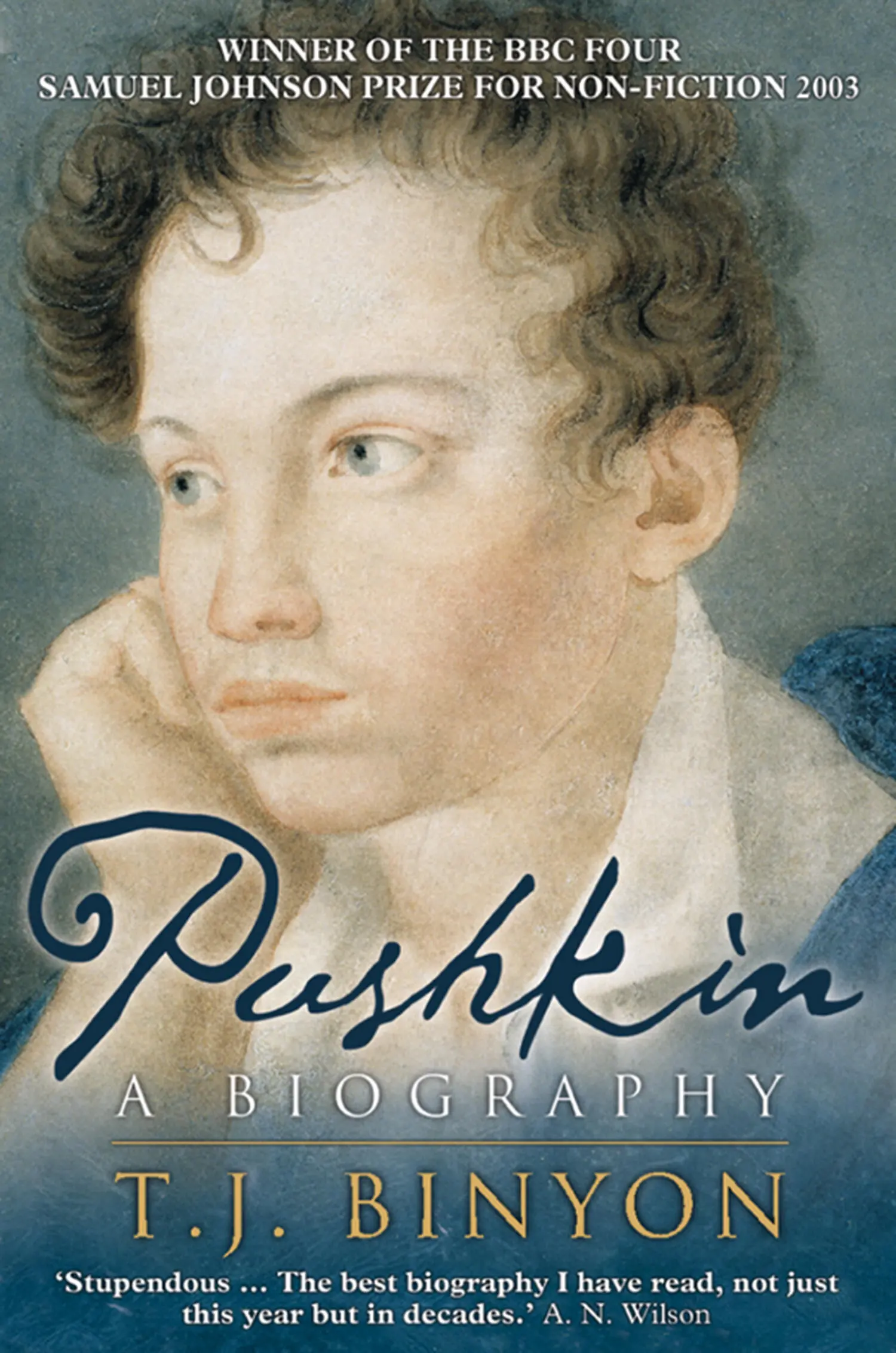
- Название:Pushkin
- Автор:
- Жанр:
- Год:неизвестен
- ISBN:нет данных
- Рейтинг книги:4 / 5. Голосов: 1
-
Избранное:Добавить в избранное
- Отзывы:
-
Ваша оценка:
Pushkin: краткое содержание, описание и аннотация
Предлагаем к чтению аннотацию, описание, краткое содержание или предисловие (зависит от того, что написал сам автор книги «Pushkin»). Если вы не нашли необходимую информацию о книге — напишите в комментариях, мы постараемся отыскать её.
Pushkin — читать онлайн ознакомительный отрывок
Ниже представлен текст книги, разбитый по страницам. Система сохранения места последней прочитанной страницы, позволяет с удобством читать онлайн бесплатно книгу «Pushkin», без необходимости каждый раз заново искать на чём Вы остановились. Поставьте закладку, и сможете в любой момент перейти на страницу, на которой закончили чтение.
Интервал:
Закладка:
But then I see you, hear you,
And so? ⦠man is weak!
Losing freedom for ever,
I adore captivity with my heart. 76
But her attractions were purely spiritual; this was an ethereal love devoid of any taint of physicality. Other desires had to be satisfied elsewhere. âIn the mornings Pushkin tells Zhukovsky where he spent the night without sleep; he spends the entire time paying visits to whores, to me, and to Princess Golitsyna, and in the evenings sometimes plays bank,â Turgenev noted. 77 After meeting the princess in Moscow in June 1818, Vasily Pushkin wrote to Vyazemsky: âI spent the entire evening with her and we talked much about you. She loves you and respects you. My nephew Aleksandr called on her every day. She gladdened me by saying that he was a very good, very clever young fellow.â 78 By this time Pushkinâs emotions had begun to cool, and by December the episode was over.
âPushkin is possessed,â Turgenev wrote to Vyazemsky on 12 November 1819. âI catch a glimpse of him only in the theatre, he looks in there in his free time from the animals. In general his life is spent at the office where one obtains admission tickets to look at the animals that have been brought here, among which the tiger is the most tame. He has fallen in love with the ticket-girl and has become her cavalier servant ; meanwhile he is observing the nature of animals and noticing the difference from the swine he sees gratis.â Vyazemskyâs reply is somewhat cryptic but undoubtedly indecent: âPushkinâs love is surely my friend, who tortured me for a whole night ⦠at a masked ball. Do me a favour and ask him to convey my respects to them; there should be two of them. One lion was in love with her, and when she caressed him, he displayed a leonine sceptre. Does Pushkin know about his rival? However, itâs more difficult getting a man away from a woman than having a tug-of-war with a donkey.â 79 The girl â she seems to have been called Nastasya â sold tickets for one of the travelling menageries which visited St Petersburg at Easter, Shrove-tide and other times, setting up their booth, alongside others occupied by fortune-tellers, trained canaries, dancing dogs, jugglers, magicians, tight-rope walkers and the like, on Admiralty Square, Theatre Square in front of the Bolshoy, or on Tsaritsyn Field.
He also knew, and admired â but was never in love with â the eighteen-year-old Pole Sofya Potocka, whom he met in 1819. Her family history was an intriguing one. Her mother, Sofya Clavona, was a Greek from Constantinople, who had, it was said, been bought from her mother for 1,500 piastres by the Polish ambassador. As she was journeying to Poland with her protector, at Kamenets-Podolsk in the Ukraine she met Major Joseph Witt, who fell in love with her, married her secretly and took her to Paris. The portraitist Elisabeth Vigée-Lebrun saw her here in the early 1780s, noting that she âwas then extremely young and as pretty as it is possible to be, but tolerably vain of her charming faceâ. 80 Later Sofya attracted the attention of Potemkin, Catherineâs favourite, who, besotted with her, made her husband a general and a count, took her as his mistress and bestowed on her an estate in the Crimea. In 1788 she became the mistress of General Stanislaw-Felix Potocki, a claimant to the throne of Poland with huge estates in the Ukraine. He paid Witt two million zlotys to divorce her, and married her in 1798, after the death of his wife. He hardly received full value for his money, since she soon began an affair with his son, later living openly with him in Tulchin. Her husband died in 1805, and his son soon afterwards. Her two daughters, Sofya and Olga, rivalled their mother in beauty: Sofya married Pushkinâs friend General Kiselev in 1821, but separated from him in 1829, supposedly on learning that he had had an affair with her sister (who had married General Lev Naryshkin).
Vyazemsky met the Potocki family in Warsaw in October 1819, and immediately succumbed to Sofyaâs attractions. âWith us for a few days longer are Potocka and Sofya, who is as beautiful as Minerva in the hour of lust,â he informed Turgenev, and a fortnight later wrote: âGive my respects to all our acquaintance; and, if you see her and get to know her, â to the sovereign of my imagination, Minerva in the hour of lust, in whom everything is not earthly, apart from the gaze, in which there glows the spark of earthly desire. Happy is he who will fan the spark: in it the fire of poetry glows.â 81 In December Turgenev told Vyazemsky of Pushkinâs new verses; he had written âan epistle to a masturbator, and, really, it can be read even by the most bashful ⦠How Sofyaâs roses fade, because she allows no one to pick them.â In January he sent Vyazemsky the poem in question, together with a request for enough striped black velvet to make a waistcoat, since it was unobtainable in St Petersburg. âPushkinâs verses are charming!â Vyazemsky replied. âDid he not write them to my lustful Minerva? They say she deals in that business.â 82 Vyazemsky was right; the poem, ironically enitled âPlatonic Loveâ, was addressed to Sofya Potocka. In 1825, when preparing his verse for publication, Pushkin wrote on the margin of the poemâs manuscript: âNot to be included â since I want to be a moral person.â 83
*I.e. La Pucelle : the Charites were the daughters of Zeus, goddesses personifying charm, grace and beauty.
*Grisier was a friend of Alexandre Dumas, who mentions him in The Count of Monte Cristo , and based a novel, Le Maître dâarmes (3 vols, Paris, 1840â1), on his experiences in St Petersburg.
Duelling had been banned in France from 1566, in England from 1615, and in Russia from 1702. The relevant ukase of Peter the Great runs: âInhabitants of Russia and foreigners residing there shall not engage in duels with any weapon whatsoever, and for this purpose shall not call out anyone nor go out: whosoever having issued a challenge inflicts a wound shall be executedâ ( Duel Pushkina s Dantesom-Gekkerenom , 104). However, in all three countries there always had been a very wide gap between ban and enforcement. This was especially true of Russia, where the authorities would usually turn a blind eye to rencontres which did not have a fatal result; in the case of those which ended with the death of one combatant, the fate of the survivor often depended on the arbitrary whim of the tsar. Ivan Annenkov, a lieutenant in the Chevalier Guards, who killed an officer of the Life Guards Hussars in a duel, was, on Alexanderâs orders, given the extraordinarily light sentence of three months in the guard-house. And when, in June 1823, General Kiselev, the chief of staff of the Second Army, killed Major-General Mordvinov, Alexander took no action at all: Kiselev remained in his post and underwent no punishment.
*Elizaveta Markovna was related to Praskovya Osipova, the owner of Trigorskoe: her brother, Petr Poltoratsky, had married Ekaterina Vulf, the sister of Praskovyaâs first husband, Nikolay Vulf.
*The theatres were also closed from the Monday of the first week of Lent to the Sunday after Easter.
*The phrase is an adaptation of a line in a poem of 1820, âExtinguished is the orb of day â¦â [âPogaslo dnevnoe svetilo â¦â], II, 146.
â The known other members are Sergey Trubetskoy, Fedor Yurev, Dmitry Barkov, Yakov Tolstoy, Aleksandr Tokarev, Ivan Zhadovsky, Aleksandr Ulybyshev, and Prince Dmitry Dolgorukov.
*I.e. Krylova: the Russian for wing is krylo.
*Vyazemsky had almost filial feelings for Karamzin: after his fatherâs death in 1807 (his mother, an OâReilly, had died in 1802) Karamzin, whose second wife was Vyazemskyâs illegitimate half-sister, had come to live on the family estate at Ostafevo, near Moscow, and had acted as the young princeâs guardian.
Читать дальшеИнтервал:
Закладка:
Похожие книги на «Pushkin»
Представляем Вашему вниманию похожие книги на «Pushkin» списком для выбора. Мы отобрали схожую по названию и смыслу литературу в надежде предоставить читателям больше вариантов отыскать новые, интересные, ещё непрочитанные произведения.








Обсуждение, отзывы о книге «Pushkin» и просто собственные мнения читателей. Оставьте ваши комментарии, напишите, что Вы думаете о произведении, его смысле или главных героях. Укажите что конкретно понравилось, а что нет, и почему Вы так считаете.