T. Binyon - Pushkin
Здесь есть возможность читать онлайн «T. Binyon - Pushkin» — ознакомительный отрывок электронной книги совершенно бесплатно, а после прочтения отрывка купить полную версию. В некоторых случаях можно слушать аудио, скачать через торрент в формате fb2 и присутствует краткое содержание. Жанр: unrecognised, на английском языке. Описание произведения, (предисловие) а так же отзывы посетителей доступны на портале библиотеки ЛибКат.
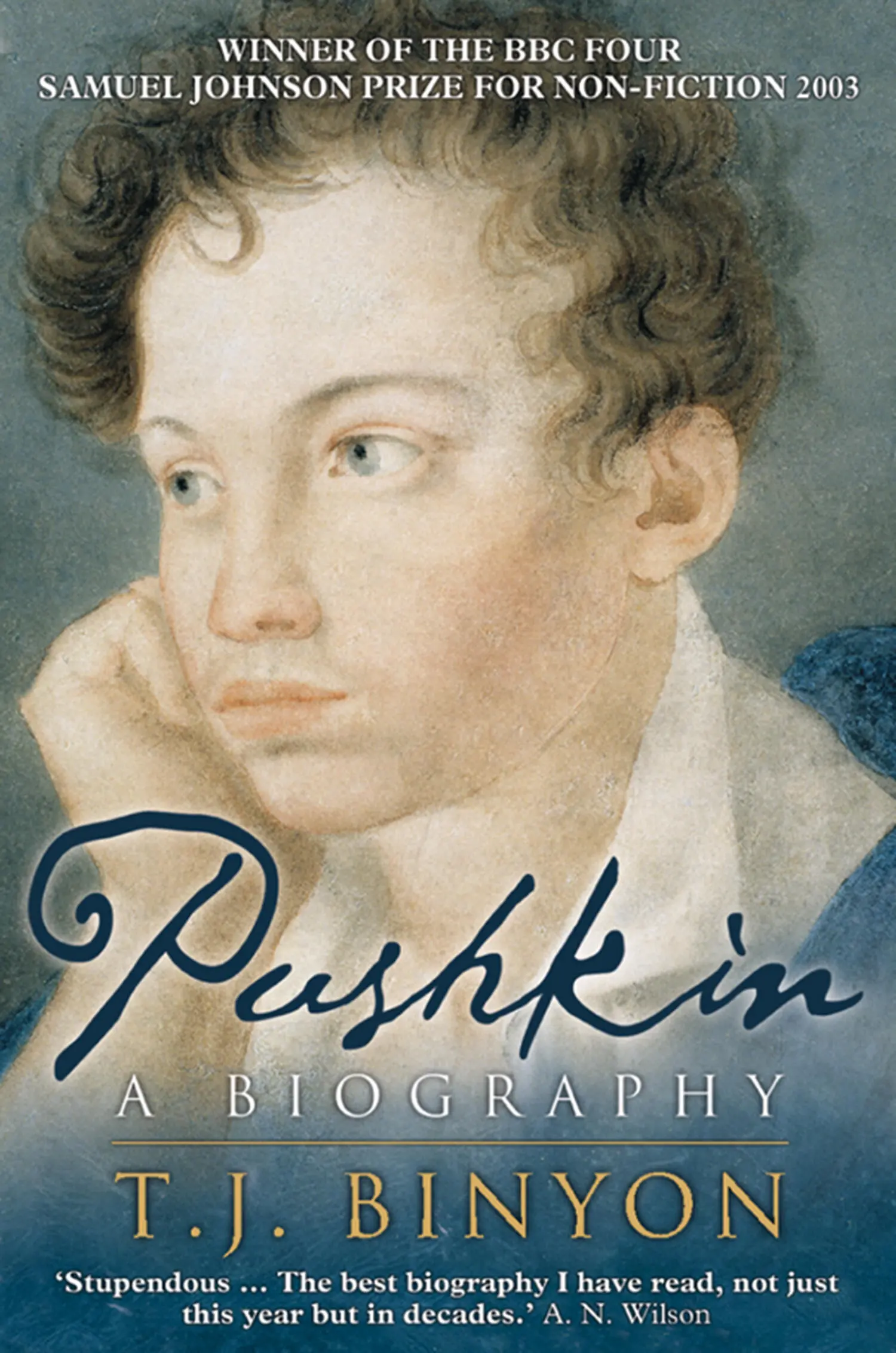
- Название:Pushkin
- Автор:
- Жанр:
- Год:неизвестен
- ISBN:нет данных
- Рейтинг книги:4 / 5. Голосов: 1
-
Избранное:Добавить в избранное
- Отзывы:
-
Ваша оценка:
Pushkin: краткое содержание, описание и аннотация
Предлагаем к чтению аннотацию, описание, краткое содержание или предисловие (зависит от того, что написал сам автор книги «Pushkin»). Если вы не нашли необходимую информацию о книге — напишите в комментариях, мы постараемся отыскать её.
Pushkin — читать онлайн ознакомительный отрывок
Ниже представлен текст книги, разбитый по страницам. Система сохранения места последней прочитанной страницы, позволяет с удобством читать онлайн бесплатно книгу «Pushkin», без необходимости каждый раз заново искать на чём Вы остановились. Поставьте закладку, и сможете в любой момент перейти на страницу, на которой закончили чтение.
Интервал:
Закладка:
âCount Tolstoy the American is here,â Turgenev wrote to Vyazemsky from St Petersburg in October 1819. âHe is staying with Prince Shakhovskoy, and therefore we will probably see each other rarely.â 18 Pushkin, however, as a regular visitor to Shakhovskoyâs garret, soon met Tolstoy, and was soon, unwisely, playing cards with him. Noticing that Tolstoy had slipped a card from the bottom of the pack, he commented on this. âYes, Iâm aware of that myself,â Tolstoy replied, âbut I donât care to have it pointed out to me.â 19 Whether because of this, or whether out of sheer malice, Tolstoy, on returning to Moscow, wrote a letter to Shakhovskoy in which he asserted that, on the direct orders of the tsar, Count Miloradovich, the military governor-general of St Petersburg, had had Pushkin flogged in the secret chancellery of the Ministry of the Interior. Shakhovskoy made the libel known to the frequenters of his garret. Though other friends, such as Katenin, energetically refuted it, it spread quickly through literary and social circles. Pushkin eventually learnt of it â though not of its author â from Katenin. Humiliated and infuriated, he oscillated between thoughts of suicide and of reckless defiance of authority.
Though, with Chaadaevâs help, he overcame his initial despair â âThe voice of slander could no longer wound me,/Able to hate, I was able to despiseâ 20 â he burnt with the desire to avenge himself. In the draft of a letter to the emperor (which was never sent), composed in 1825 in Mikhailovskoe, he wrote, âthe rumour spread that I had been brought before the secret chancellery and whipped. I was the last to hear this rumour, which had become widespread, I saw myself as branded by opinion, I became disheartened â I fought, I was 20 in 1820.â 21 There is no direct evidence that Pushkin fought a duel early in 1820 over this matter. However, in June 1822 the seventeen-year-old ensign Fedor Luginin recorded in his diary a conversation with Pushkin in Kishinev: âThere were rumours that he was whipped in the Secret chancellery, but that is rubbish. In Petersburg he fought a duel because of that.â 22 If he did fight a duel, it has been suggested that his opponent was the poet and Decembrist Kondraty Ryleev. 23 The conjecture is based on a letter of March 1825 from Pushkin to Ryleevâs friend Bestuzhev. âI know very well that I am his teacher in verse diction â but he goes his own way. He is a poet in his soul. I am afraid of him in earnest and very much regret that I did not shoot him dead when I had the chance, but how the devil could I have known?â 24 He certainly met Ryleev a number of times between September 1819 and February 1820 (when Ryleev returned to his wifeâs parentsâ estate near Voronezh) and preserved a sufficiently vivid memory of him to sketch, in January 1826, his profile, with ski-jump nose, protruding lower lip and lank hair next to a portrait of Küchelbecker on a page of the manuscript of the fifth chapter of Eugene Onegin. 25 But whether a duel did take place, and, if it did, whether Ryleev was his opponent are questions which cannot be answered without more evidence.
Pushkin did not learn that Tolstoy had been responsible for the rumours until the autumn of 1820. Then he took partial revenge with an epigram, an adaptation of which he inserted into an epistle to Chaadaev in April 1821. Tolstoy is called a âphilosopher, who in former years/With debauchery amazed the worldâs four corners,/ But, growing civilized, effaced his shame/Abandoned drink and became a card-sharp.â 26 The poem appeared in Son of the Fatherland in August. Tolstoy had no difficulty in recognizing his portrait, and composed his own epigram in reply. âThe sharp sting of moral satire/ Bears no resemblance to a scurrilous lampoon,â he wrote, advising Pushkin to âSmite sins with your example, not your verse,/And remember, dear friend, that you have cheeks.â 27 He too submitted his lines to the Son of the Fatherland , which, however, declined the honour of printing them.
Pushkin had no intention of avenging himself with the pen, rather than the pistol. âHe wants to go to Moscow this winter,â Luginin wrote in his diary, âto have a duel with one Count Tolstoy the American, who is the chief in putting about these rumours. Since he has no friends in Moscow, I offered to be his second, if I am in Moscow this winter, which overjoyed him.â 28 But Pushkinâs exile did not end, as he had hoped, in the winter of 1821, and the following September he wrote to Vyazemsky, âForgive me if I speak to you about Tolstoy, your opinion is valuable to me. You say that my lines are no good. I know, but my intention was not to start a witty literary war, but with a sharp insult to repay for his hidden insults a man from whom I parted as a friend, and whom I defended with ardour whenever the occasion presented itself. It seemed amusing to him to make an enemy of me and to give Prince Shakhovskoyâs garret a laugh at my expense with his letters, I found out about all this when already exiled, and, considering revenge one of the first Christian virtues â in the impotence of my rage showered Tolstoy from afar with journalistic mud. [â¦] You reproach me for printing, from Kishinev, under the aegis of exile, abuse of a man who lives in Moscow. But then I did not doubt in my return. My intention was to go to Moscow, where only I could completely clear myself. Such an open attack on Count Tolstoy is not pusillanimity.â 29 The burning feeling of insult, exacerbated by the impossibility of redeeming it in the only honourable way, remained with Pushkin throughout exile: his first action, on the day he reached Moscow in 1826, was to send Sobolevsky round to Tolstoy with a challenge. Luckily, the count was away from Moscow.
In November 1819 V.N. Karazin, a forty-six-year-old Ukrainian landowner, joined the Private Society of Amateurs of Russian Literature , * established three years earlier in St Petersburg. The societyâs president was Count Sergey Saltykov, but Glinka, the vice-president, was effectively in control. Obedient to the orders of the Union of Welfareâs Supreme Council, he set about turning the society, like the Green Lamp , into one of those which would further the aims of the Union through its activities and discussions. â
Karazin was an idealistic, romantic conservative who had come to Alexander lâs attention in 1801, when âhe left on the emperorâs study-table an anonymous letter, greeting his accession in exalted terms and appealing to him to lead Russia to a glorious new ageâ. 30 Alexander discovered his identity, embraced his admirer and showed him great favour for a time, appointing him to the new Ministry of Education. In 1804 Karazin resigned to found a university at Kharkov, which opened in January 1805. For some time thereafter he lived on his estate, opened a tanning factory, made efforts to found a meteorological observatory, forwarded to the Ministry of War his method of preparing food concentrates, and wrote articles on a variety of subjects, such as âThe description of an apparatus for distilling spiritâ, âOn the possibility of adapting the electric forces of the upper layers of the atmosphere to the needs of manâ and âOn baking a tasty and healthy bread from acornsâ.
Now, on his return to St Petersburg, Karazin was appalled by the political atmosphere of the city, the lack of respect for authority in the discussions, the conversations and jokes he heard, and the poems and epigrams recited at meetings of the society. âSome young brat, Pushkin, a pupil of the Lycée, in gratitude , has written a despicable ode, in which the names of the Romanovs are insulted, and the Emperor Alexander called a wandering despot [â¦] Whither are we going?â * 31 he commented in his diary on 18 November 1819. He went to see Prince Kochubey, the Minister of the Interior, whom he had known when at the Ministry of Education, and offered to inform him of the proceedings of the society and of what he might hear elsewhere, promising to keep âan unsleeping eyeâ on âsuspicious personsâ such as Prince Sergey Volkonsky, Küchelbecker, Ryleev, Glinka, who was âall the more dangerous because through the especial trust of the governor-general he was employed to collect in secret rumours going about the town for the information of the emperorâ, and, finally, Pushkin. 32
Читать дальшеИнтервал:
Закладка:
Похожие книги на «Pushkin»
Представляем Вашему вниманию похожие книги на «Pushkin» списком для выбора. Мы отобрали схожую по названию и смыслу литературу в надежде предоставить читателям больше вариантов отыскать новые, интересные, ещё непрочитанные произведения.







Обсуждение, отзывы о книге «Pushkin» и просто собственные мнения читателей. Оставьте ваши комментарии, напишите, что Вы думаете о произведении, его смысле или главных героях. Укажите что конкретно понравилось, а что нет, и почему Вы так считаете.