T. Binyon - Pushkin
Здесь есть возможность читать онлайн «T. Binyon - Pushkin» — ознакомительный отрывок электронной книги совершенно бесплатно, а после прочтения отрывка купить полную версию. В некоторых случаях можно слушать аудио, скачать через торрент в формате fb2 и присутствует краткое содержание. Жанр: unrecognised, на английском языке. Описание произведения, (предисловие) а так же отзывы посетителей доступны на портале библиотеки ЛибКат.
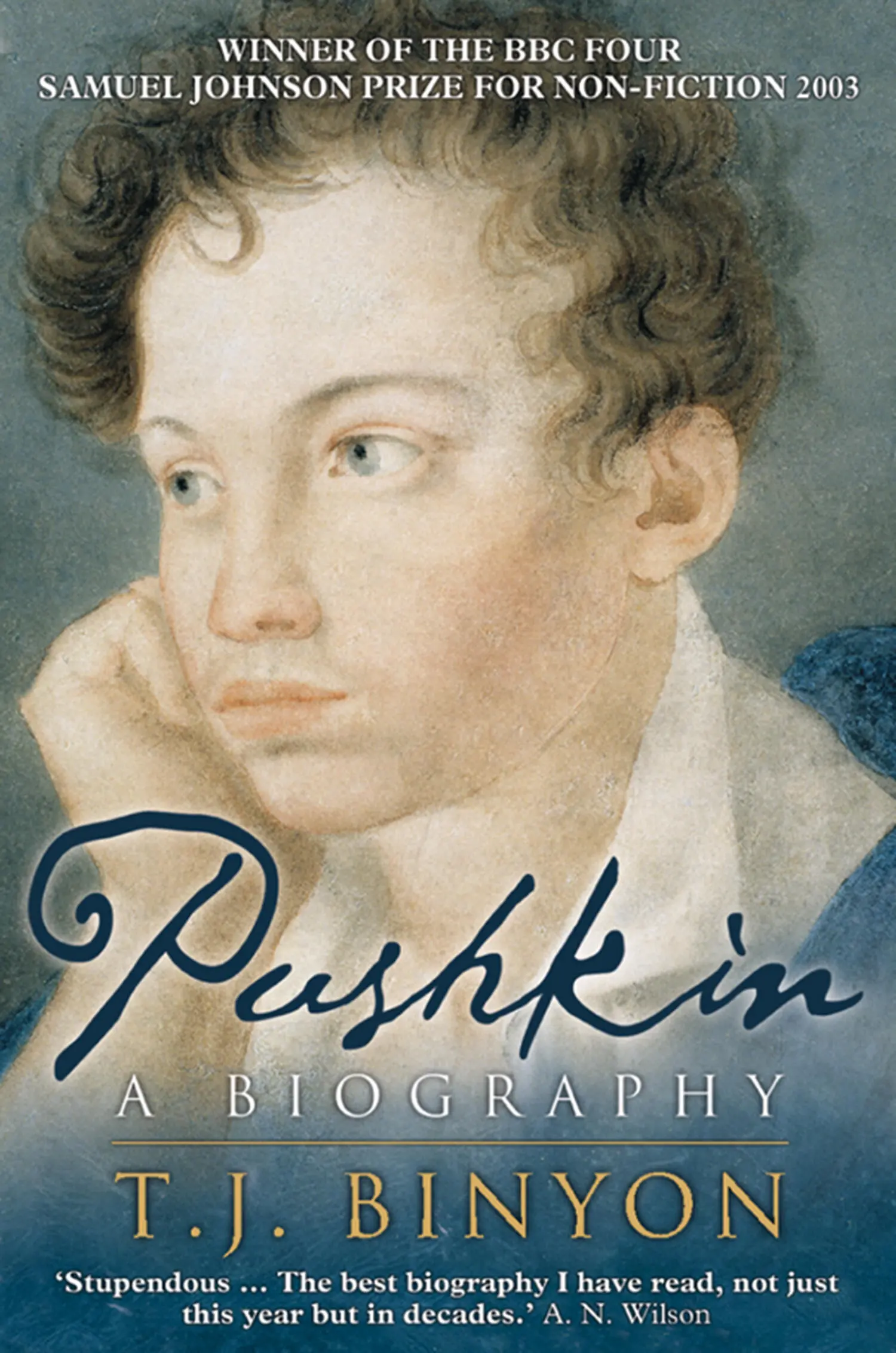
- Название:Pushkin
- Автор:
- Жанр:
- Год:неизвестен
- ISBN:нет данных
- Рейтинг книги:4 / 5. Голосов: 1
-
Избранное:Добавить в избранное
- Отзывы:
-
Ваша оценка:
Pushkin: краткое содержание, описание и аннотация
Предлагаем к чтению аннотацию, описание, краткое содержание или предисловие (зависит от того, что написал сам автор книги «Pushkin»). Если вы не нашли необходимую информацию о книге — напишите в комментариях, мы постараемся отыскать её.
Pushkin — читать онлайн ознакомительный отрывок
Ниже представлен текст книги, разбитый по страницам. Система сохранения места последней прочитанной страницы, позволяет с удобством читать онлайн бесплатно книгу «Pushkin», без необходимости каждый раз заново искать на чём Вы остановились. Поставьте закладку, и сможете в любой момент перейти на страницу, на которой закончили чтение.
Интервал:
Закладка:
By the end of March he had collected a good deal of what he considered to be subversive literature â including Pushkinâs epigram on Sturdza â which he incorporated into a report sent to Kochubey on 2 April. Though this consisted largely of a disquisition on the present state of Russia, combined with proposals for a number of reforms, it included an attack on the Lycée, where, he wrote, âthe emperor is educating pupils who are ill-disposed both to him and to the fatherland [â¦] as is demonstrated by practically all those who graduate from it. It is said that one of them, Pushkin, was secretly punished by imperial command. But among the pupils more or less each one is almost a Pushkin, and they are all bound together by some kind of suspicious union, similar to Masonry, some indeed have joined actual lodges.â To this remark he appended a note: âWho are the composers of the caricatures or epigrams, such as, for example, on the two-headed eagle , on Sturdza in which the person of the emperor is referred to very indecently and so on? The pupils of the Lycée! Who make themselves known to the public with suggestive songs at an age when honesty and modesty are most decorous? They do.â 33
Having submitted this report to the emperor, Kochubey invited Karazin to call on him on the evening of 12 April. After their conversation Karazin made an emotional note of its content on the back of the invitation. He was extremely disconcerted to discover that the emperor was not at all interested in the substance of his paper, neither in his analysis of the situation nor his proposals for reform. Its sole result, he wrote, âwas the desire of his majesty to assure himself that the epigram mentioned in my note was actually written [â¦] that it was not my invention! [â¦] My God! [â¦] Itâs almost unbelievable! [â¦] What a sad but true picture of the position of the state is produced!â 34 He washed his hands of the whole affair, refusing Kochubeyâs request to obtain manuscript copies of the epigram.
Following this conversation Miloradovich, the military governor-general of St Petersburg, was ordered to impound Pushkinâs writings. He sent a police spy, Fogel, round to Pushkinâs apartment when the latter was out. Fogel offered Nikita fifty roubles for the loan of his masterâs poems, promising to bring them back in a short time. Nikita refused and, on Pushkinâs return, told him of the visitor. Pushkin immediately burnt his manuscripts. The following day he was summoned to see Miloradovich. Before going, he went to see Glinka â who had been the generalâs adjutant during the war and was now attached to his office â to ask his advice. âGo straight to Miloradovich, donât show confusion and donât be afraid. He is not a poet; but in his soul and in his chivalrous impulses there is much that is romantic and poetic: he is misunderstood. Go and rely unconditionally on the nobility of his spirit: he will not abuse your trust.â Heartened, Pushkin set off for Miloradovichâs house on the Nevsky. A few days later Miloradovich told Glinka of the meeting:
Do you know, my dear fellow, Pushkin was with me the other day! You see, Iâd been ordered to arrest him and impound all his papers; but I thought it more delicate to invite him to my house and ask him himself for his papers. Well, he turned up, very calm, with a bright face, and, when I asked about the papers, answered: âCount! all my poems are burnt! â you will find nothing of mine in my apartment, but if you please, everything is here (he pointed to his forehead with his finger). Order a quire of paper to be brought, Iâll write everything that Iâve ever written (of course, except that which has been printed), with a note : what is mine and what has been circulated under my name. â Paper was brought. Pushkin sat down and wrote, wrote ⦠and filled a whole note-book ⦠Here it is, look at that! Tomorrow Iâll take it to the emperor. And do you know? Pushkin charmed me with his noble tone and manner of behaviour. 35
Miloradovich had read the verses, laughed, and said to Pushkin: âIf youâve really decided to attack the government, why donât you write something about the Senate, which is nothing but a menagerie or pigsty.â He had concluded by pardoning Pushkin in the name of the emperor. 36
Alexander, however, extremely displeased with the idea that the Lycée was a hot-bed of revolutionary fervour, and outraged by Pushkinâs verse, was disinclined to ratify Miloradovichâs generous gesture. Meeting the director of the Lycée, Engelhardt, he expressed his feelings to him as they strolled through the palace garden at Tsarskoe Selo. âEngelhardt!â he said. âPushkin must be exiled to Siberia: he has flooded Russia with seditious verses; the entire youth knows them by heart. His frank conduct with Miloradovich pleases me, but that does not amend matters.â Engelhardt endeavoured to soften the tsarâs attitude, referring to Pushkinâs literary reputation, and adding: âExile could have a baneful effect on the ardent temper of this young man. I think that magnanimity, your majesty, would be more likely to make him sensible.â 37
Alarmed by the danger â it was rumoured that Pushkin would be sent, if not to Siberia, then to the Solovetsky monastery on the White Sea â his friends hurried to his aid. Chaadaev asked his superior, General Vasilchikov, to intercede with Alexander; and, going to Karamzin, persuaded him to speak with the dowager empress, Mariya Fedorovna, on Pushkinâs behalf. Zhukovsky and Aleksandr Turgenev used their influence at the court, and Gnedich visited Olenin, who promised to mention the matter to Alexander. Pushkin himself, somewhat cowed by events, swallowed his pride and called on Karamzin. After exacting a pledge that he should refrain from writing verse against the government for two years, Karamzin undertook to help him, and, going to the empress, asked her to intercede. The emperor relented. Pushkin was not to be banished, but was to be attached to the chancellery of General Ivan Inzov, the Chief Trustee of the Interests of Foreign Colonists in the Southern Territory of Russia, then stationed in Ekaterinoslav. â[Pushkinâs] liberal mouth has been closed for two years,â Aleksandr Turgenev wrote to Vyazemsky on 21 April. âHe has been saved from the misfortune into which he fell by my good genius and his good friends,â and, on 5 May, âHe has become quieter and more modest and, in order not to compromise himself, even avoids me in public.â 38 A few days later Vyazemsky heard from Karamzin: âPushkin, having been for a few days completely in unpoetical fear because of his verses on freedom and some epigrams, gave me his word to cease [â¦] He was, I think, moved by the emperorâs magnanimity, which was genuinely touching. It would take too long to describe the details, but if Pushkin does not reform now, he will be a devil long before he gets to hell.â 39
On 4 May 1820, Count Capo dâIstrias, the head of the Foreign Office, an honorary member of Arzamas , who, according to Wiegel, had âdared to point outâ to Alexander the cruelty of exiling Pushkin to Siberia, and had suggested that he should be transferred to Inzovâs chancellery, 40 composed a letter to Inzov which was signed the following day by the Foreign Minister, Count Nesselrode. âAt the Lycée,â Capo dâIstrias wrote, âhis progress was rapid, his wit was admired, but his character appears to have escaped the vigilance of the tutors.â He continued:
There is no excess in which this unfortunate young man has not indulged â as there is no perfection he cannot attain through the transcendent superiority of his talents [â¦] Some pieces of verse and above all an ode to liberty directed the attention of the government towards Mr Pushkin. Amid the greatest beauties of conception and style this latter piece gives evidence of dangerous principles drawn from the ideas of the age, or, more accurately, that system of anarchy dishonestly called the system of the rights of man, of liberty and of independence of nations.
Читать дальшеИнтервал:
Закладка:
Похожие книги на «Pushkin»
Представляем Вашему вниманию похожие книги на «Pushkin» списком для выбора. Мы отобрали схожую по названию и смыслу литературу в надежде предоставить читателям больше вариантов отыскать новые, интересные, ещё непрочитанные произведения.








Обсуждение, отзывы о книге «Pushkin» и просто собственные мнения читателей. Оставьте ваши комментарии, напишите, что Вы думаете о произведении, его смысле или главных героях. Укажите что конкретно понравилось, а что нет, и почему Вы так считаете.